Edwin Lord Weeks was born on January 23, 1849, in Boston, Massachusetts, into a comfortable and culturally aware American family. His upbringing took place during a period of national expansion and intellectual curiosity in the United States, when travel writing, illustrated journals, and foreign exhibitions stirred the imagination of young minds. From an early age, Weeks showed an aptitude for drawing and a fascination with distant places, especially architecture and costume. These early interests were encouraged rather than dismissed, giving him confidence to pursue art seriously.
Boston in the mid-19th century offered access to libraries, lectures, and imported books that exposed Weeks to the wider world. His family environment valued education and discipline, qualities that would later define his professional conduct. As a boy, he spent time copying illustrations and studying engravings of ancient cities and exotic markets. This habit trained his eye long before he received formal instruction.
Birth, Family Roots, and Early Influences
The cultural climate of Weeks’s youth was shaped by America’s growing confidence after the Mexican-American War and during the years leading up to the Civil War. Although he was still a child when the Civil War began in 1861, its aftermath fostered a renewed interest in global affairs and foreign cultures. Weeks absorbed this atmosphere of outward-looking curiosity. By his late teens, he had already resolved to pursue an artistic career that would extend beyond American subject matter.
His family did not push him toward business or politics, which allowed him a rare freedom of choice. This support proved critical when he later decided to leave the United States entirely for Europe. The seeds of a lifelong devotion to travel, accuracy, and visual truth were planted during these formative years. They would guide every major decision he made as an adult artist.
Artistic Education and European Training
Edwin Lord Weeks began his formal artistic training in the United States during the late 1860s, studying drawing and painting with seriousness and intent. Early instruction emphasized careful observation and draftsmanship, skills he would later refine to a high level. Yet Weeks quickly realized that true mastery required exposure to European academies. This realization led him to Paris, the undisputed center of academic art in the 19th century.
He relocated to France in the early 1870s, a decisive moment that permanently altered his artistic direction. Paris offered him access to museums, studios, and living traditions of classical training. The city’s intellectual rigor appealed to his disciplined temperament. He immersed himself fully in academic study rather than treating Europe as a brief cultural excursion.
Formal Studies and Influential Teachers
Weeks enrolled at the École des Beaux-Arts in Paris, where he studied under Jean-Léon Gérôme, one of the most respected academic painters of the era. Gérôme emphasized anatomical precision, historical accuracy, and controlled composition. Under this guidance, Weeks developed a methodical approach that distinguished him from more impressionistic or emotionally driven artists. He learned to build complex scenes through careful planning rather than spontaneity.
His training coincided with his graduation from student status into a working professional, a transition completed by the mid-1870s. The discipline instilled during these years became the backbone of his later success. Unlike many artists who rebelled against academic norms, Weeks embraced them as tools of truth. This foundation allowed him to depict unfamiliar cultures with clarity and restraint rather than fantasy.
First Major Travels and Eastern Encounters
After completing his formal education, Edwin Lord Weeks turned his attention toward extensive travel beyond Europe. His first journeys into North Africa and the Middle East took place in the mid-1870s, shortly after his academic training concluded. These travels were not casual tours but deliberate research expeditions. Weeks traveled with sketchbooks, notebooks, and a keen eye for daily life.

He visited regions that few Western artists had studied firsthand, including Morocco, Algeria, Egypt, and parts of the Levant. Weeks observed markets, religious buildings, and street life with patience and respect. He avoided sensational scenes, preferring quiet moments of routine and order. This approach gave his later paintings a sense of calm authenticity.
Journeys Through North Africa and the Middle East
Weeks’s travel method involved long stays rather than hurried movement from place to place. He sketched architecture stone by stone and recorded patterns of clothing with precision. These habits separated him from studio-bound Orientalist painters who relied on imagination. His experiences during the 1870s formed the visual library he would draw upon for decades.

The sensory impressions of heat, dust, light, and shadow became central to his work. Sunlit courtyards, shaded arcades, and expansive skies appeared again and again in his compositions. These travels also deepened his respect for order and tradition within Eastern societies. Rather than portraying chaos, Weeks presented structured environments governed by custom and faith.
Marriage, Personal Life, and Stability
In 1877, Edwin Lord Weeks married Katherine Maria Kennedy, marking an important personal milestone. The marriage provided emotional steadiness and financial balance, both essential for a life defined by travel and long periods abroad. Katherine supported his career and adapted to a life split between continents. Their union remained stable and free of scandal throughout his life.

Marriage did not end Weeks’s travels but gave them structure. He established reliable bases of operation in Europe, especially in France. This stability allowed him to plan extended journeys without professional disruption. His personal life remained largely private, reinforcing his reputation as a serious and respectable artist.
Family Life and Its Influence on His Career
The Weeks household functioned as a quiet center amid frequent movement. Katherine managed domestic concerns while her husband focused on research and painting. Their partnership enabled Weeks to maintain consistent productivity during the 1880s and 1890s. Few details of their private correspondence survive, suggesting a deliberate separation between public work and family life.
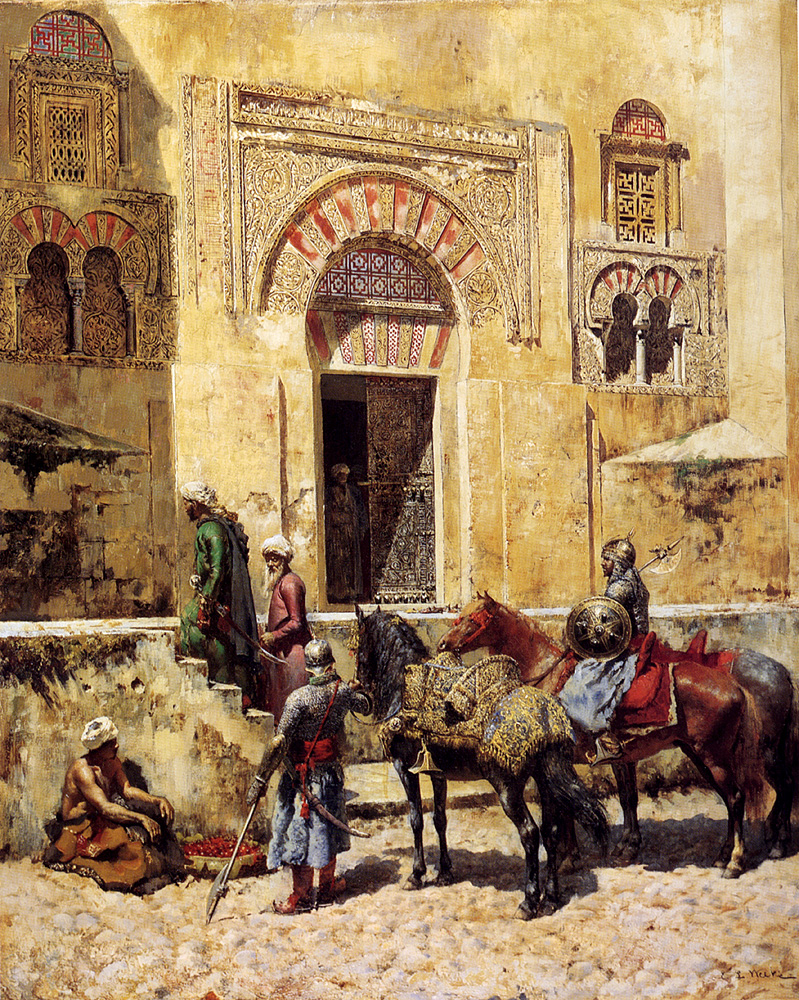
This balance contributed to his longevity as an artist. While many contemporaries struggled with financial or personal instability, Weeks maintained discipline. His calm domestic foundation supported a demanding career that required patience and endurance. Stability became one of his greatest professional advantages.
Artistic Maturity and Major Works
By the 1880s, Edwin Lord Weeks had entered his period of artistic maturity. His style was fully formed, combining academic structure with firsthand observation. He focused increasingly on scenes from India, Persia, and Islamic North Africa. These works displayed confidence, clarity, and technical control.

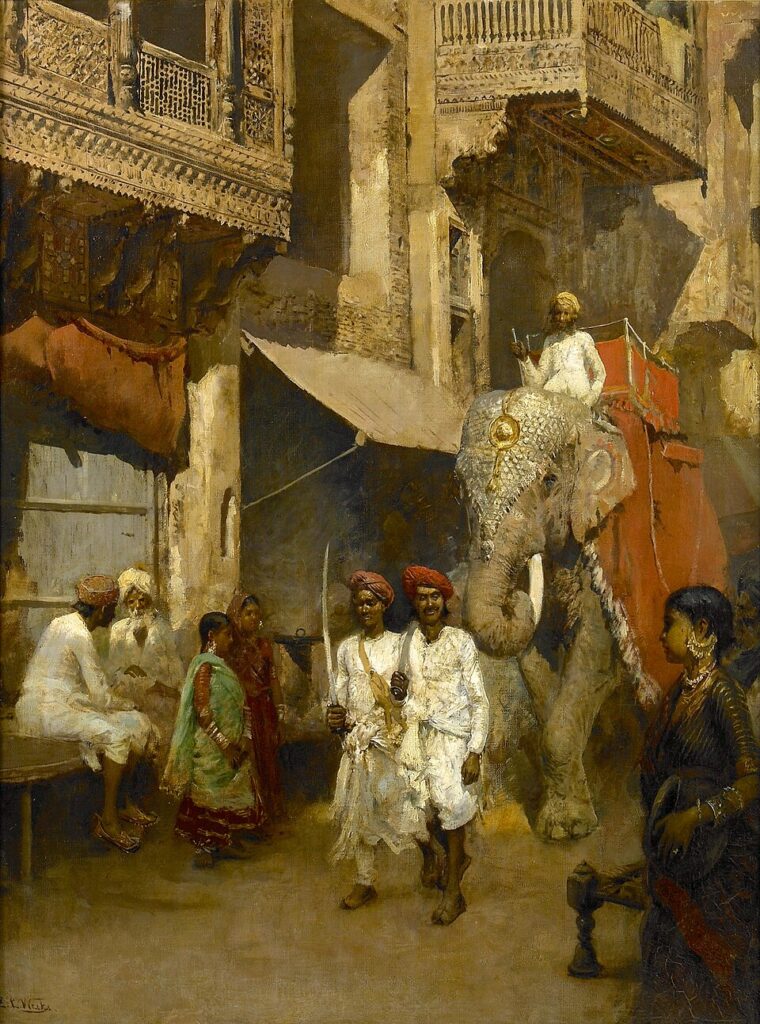
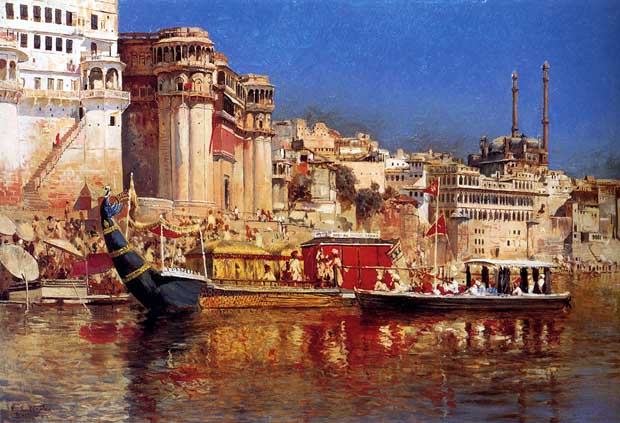
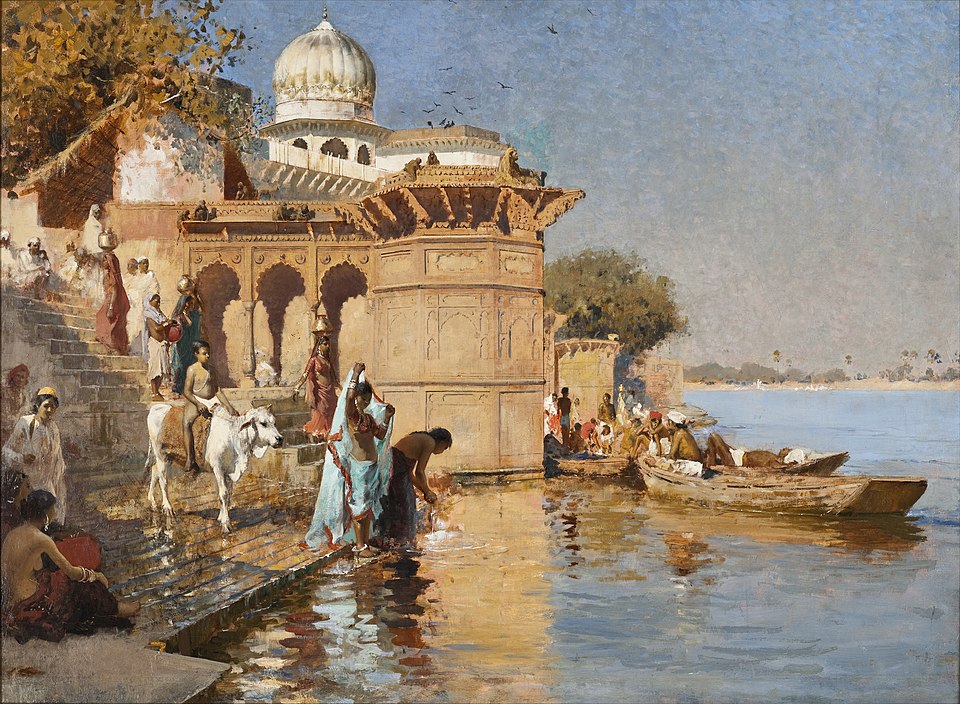
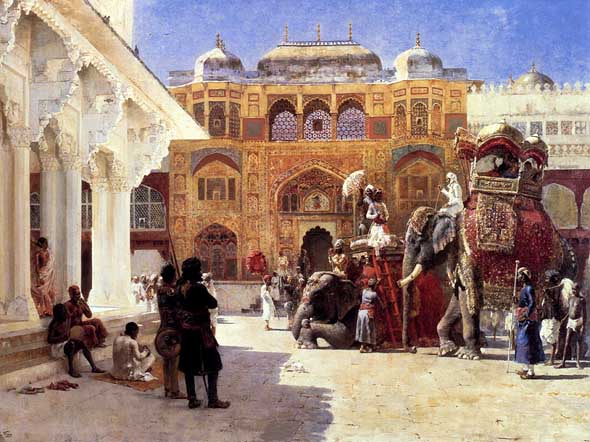
Weeks painted bazaars, mosques, caravan routes, and public squares with measured detail. His compositions avoided theatrical exaggeration in favor of balance and realism. Architectural elements were rendered with mathematical care. Figures were integrated naturally into their surroundings rather than staged.
Signature Paintings and Thematic Focus
Many of Weeks’s best-known works date from the 1880s and 1890s, when his travels expanded into the Indian subcontinent. He depicted cities such as Benares and Delhi with reverence and order. His paintings emphasized daily routines rather than dramatic conflict. Light and atmosphere were used to guide the viewer gently through the scene.

Compared to other Orientalist painters, Weeks stood apart for restraint. He sought truth rather than fantasy, observation rather than spectacle. This approach appealed to collectors who valued seriousness and craftsmanship. His work achieved a balance between beauty and documentation.
Exhibitions, Recognition, and Professional Success
Edwin Lord Weeks enjoyed consistent professional recognition during his lifetime. He exhibited regularly at the Paris Salon beginning in the late 1870s. These exhibitions brought his work before critics, collectors, and fellow artists. His reputation grew steadily rather than explosively.
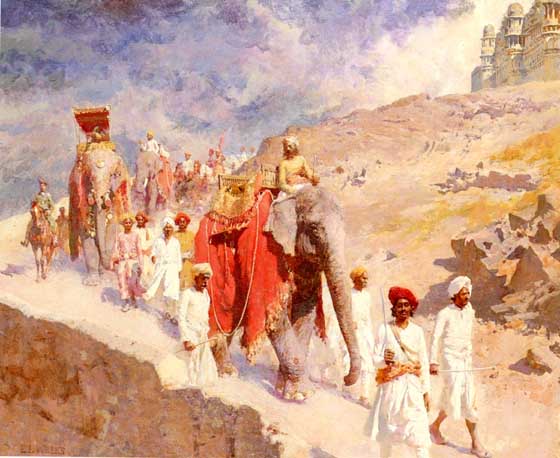
American collectors were particularly receptive to his paintings. They saw his work as both educational and refined. Museums and private patrons acquired his paintings throughout the 1880s and 1890s. Financial success followed, allowing him to continue traveling and working without compromise.
Exhibitions, Patrons, and Critical Reception
Weeks received favorable critical attention for his accuracy and discipline. Reviewers praised his avoidance of exaggeration and his commitment to firsthand study. He was awarded honors and medals during his career, reinforcing his standing within academic circles. Dealers valued his reliability and consistent quality.

His professional relationships were built on trust rather than controversy. Weeks collaborated respectfully with peers and maintained cordial ties with patrons. Unlike many artists of his era, he avoided public disputes. His career progressed through steady merit rather than trend-driven acclaim.
Final Years, Death, and Lasting Legacy
In his later years, Edwin Lord Weeks gradually reduced the intensity of his travels. By the late 1890s, he relied more on accumulated studies and sketches. Nevertheless, he continued painting and refining earlier themes. His technical precision remained intact.
Weeks spent much of his final years in Paris, a city that had shaped his career from early adulthood. His health declined slowly rather than suddenly. On November 17, 1903, he died in Paris at the age of fifty-four. His death marked the close of a disciplined and productive life.
Death, Reputation, and Art Historical Standing
Following his death, Weeks’s reputation remained solid though understated. He was remembered as a craftsman rather than a provocateur. Museums and collectors continued to value his work for its clarity and reliability. Over time, scholars recognized his importance within Orientalist painting.
Today, Edwin Lord Weeks is respected for integrity and observational rigor. His paintings serve as historical records as well as works of art. He stands as an example of how discipline, travel, and respect for tradition can produce enduring results. His legacy remains secure within 19th-century art history.
Key Takeaways
- Edwin Lord Weeks was born in Boston on January 23, 1849, and died in Paris on November 17, 1903.
- He studied at the École des Beaux-Arts under Jean-Léon Gérôme in the 1870s.
- Weeks married Katherine Maria Kennedy in 1877, gaining lifelong stability.
- His work emphasized firsthand travel and architectural accuracy.
- He achieved lasting success through discipline rather than controversy.
FAQs
- Who was Edwin Lord Weeks?
- Where did Edwin Lord Weeks study art?
- What regions did Edwin Lord Weeks travel to?
- When did Edwin Lord Weeks marry?
- Why is Edwin Lord Weeks important today?