Longwood Gardens is not just a place you walk through—it’s a place that quietly reshapes how you see nature itself. Set in the countryside of Kennett Square, Pennsylvania, it feels at once controlled and alive, precise yet constantly changing. Paths unfold like deliberate brushstrokes, fountains rise with mechanical certainty before falling back into organic motion, and glasshouses hold entire climates within their walls. What begins as a visit quickly turns into something deeper—a study in how human design and natural growth can coexist without canceling each other out. At its core, Longwood Gardens is not just about plants; it is about the art of shaping living space.
The History Behind Longwood Gardens
From Private Estate to Public Treasure
The story of Longwood Gardens begins in 1700 AD, when the land was first acquired by Quaker farmer George Peirce. Nearly a century later, in 1798 AD, the Peirce family established an arboretum, planting a wide range of trees that would become the foundation of the landscape. These early plantings were not random—they reflected a growing American interest in collecting and studying plant species. Some of those trees still stand today, offering a direct link to the property’s earliest vision. Even at this stage, the land carried a quiet sense of purpose.
By the early 1900s, that purpose was at risk. The property had declined, and plans were made to cut down the trees for timber. In 1906 AD, Pierre S. du Pont stepped in and purchased the land, initially to save the arboretum. What began as an act of preservation soon evolved into something far more ambitious. Du Pont saw potential not just for conservation, but for creation—an opportunity to build a place where nature could be shaped, studied, and shared.
Over the next several decades, the estate transformed steadily. The conservatory began construction in 1914 AD, opening a new chapter that brought indoor environments into the design. By 1921 AD, the gardens were welcoming visitors on select days, signaling a shift from private estate to public destination. The completion of the Main Fountain Garden in 1931 AD marked a turning point, introducing a level of scale and technical complexity rarely seen in American landscapes. When du Pont died in 1954 AD, the gardens were placed into a trust, ensuring their continued development and public access.
This gradual evolution matters. Longwood Gardens was not built in a single moment of inspiration—it was refined over time, shaped by decisions that balanced ambition with patience. That layered history is still visible today, giving the gardens a sense of depth that newer spaces often lack.
The Vision of Pierre S. du Pont
Pierre S. du Pont, born in 1870 AD, approached Longwood Gardens with a mindset shaped by both industry and curiosity. As a leading figure in a major American chemical company, he understood systems, precision, and long-term planning. Yet he also had a deep appreciation for beauty, particularly the formal gardens of Europe. His visits to France exposed him to landscapes where geometry, symmetry, and water were used to create order on a grand scale.
What makes his work at Longwood distinctive is that he did not simply imitate those models. Instead, he translated them into an American context. European gardens often emphasized control over nature, presenting landscapes as symbols of power. Du Pont adopted the structure but softened the message. His gardens feel disciplined, but not rigid; elegant, but not distant. They invite exploration rather than demand admiration from afar.
He was deeply involved in the process. Plans were reviewed personally, materials were carefully selected, and construction was closely monitored. This level of attention ensured that each addition fit within a broader vision. The result is a space where different elements—formal terraces, open meadows, enclosed glasshouses—work together rather than compete.
At the heart of his vision was a belief that beauty should be shared. Longwood Gardens was never meant to remain private. By opening the grounds to visitors, du Pont transformed what could have been a personal retreat into a public resource. That decision continues to shape the identity of the gardens, making them not just a work of design, but a place of access and learning.
Signature Attractions and Garden Highlights
The Conservatory and Indoor Gardens
The conservatory at Longwood Gardens is more than a greenhouse—it is a carefully constructed sequence of environments that feels almost architectural in its logic. Construction began in 1914 AD, and over time it expanded into a complex covering more than four acres. Inside, the transition from one room to another is deliberate, guiding visitors through shifting climates and visual moods. Moving through it can feel like stepping between continents in a matter of minutes.
Each space is designed with intention. Tropical rooms are dense and layered, with plants arranged to create a sense of immersion. Desert sections, by contrast, use open space and strong light to emphasize form and texture. Seasonal displays add another layer, transforming the conservatory throughout the year. Spring brings waves of color, summer deepens into lush greens, autumn introduces warmer tones, and winter turns the space into a structured celebration of light and arrangement.
Orchid displays stand out as particularly refined. These are not simply collections of flowers—they are compositions. Color, height, and spacing are carefully controlled, creating visual rhythms that echo principles found in painting and sculpture. The result is both natural and deliberate, a balance that defines much of Longwood’s design.
The conservatory also reveals something important about control. Climate, light, and moisture are all regulated, allowing plants to thrive outside their native environments. Yet despite this level of management, the space never feels artificial. Instead, it shows how structure can support life rather than restrict it—a theme that runs throughout the gardens.
The Main Fountain Garden
The Main Fountain Garden, completed in 1931 AD, represents one of the clearest expressions of Pierre du Pont’s design philosophy. At first glance, it appears as a display of water and architecture. Look closer, and it becomes something more precise—a system where engineering and aesthetics operate together with exact timing. The layout is symmetrical, anchored by a central basin and framed by terraces and columns that guide the eye.
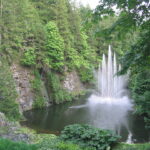
Water is the central medium here, but it behaves almost like a performer. Jets rise in controlled patterns, hold their form briefly, and then fall back, only to repeat in new sequences. There is a rhythm to this movement, one that feels closer to choreography than simple mechanics. During evening shows, music and light are added, reinforcing that sense of performance. The fountains do not simply operate—they present.
The 2017 AD restoration brought modern technology into this system without changing its visual identity. Pumps and controls were updated, allowing for more complex patterns and higher water arcs, some reaching over 175 feet. Despite these advancements, the experience remains rooted in the original design. The technology enhances the effect but does not overpower it.
What makes the fountain garden especially compelling is its balance between predictability and surprise. The structure is fixed, but the sequences change. Visitors know what they are looking at, yet the experience never feels repetitive. It’s a controlled environment that still manages to feel dynamic.
Outdoor Landscapes and Seasonal Beauty
Beyond the structured spaces, Longwood Gardens opens into a wide range of outdoor landscapes that feel more fluid and expansive. These areas reveal another side of the design philosophy—one that allows nature more room to lead. The Meadow Garden, introduced in 2014 AD, is a clear example. Covering 86 acres, it uses native plants arranged in a way that appears natural, though it is carefully managed behind the scenes.
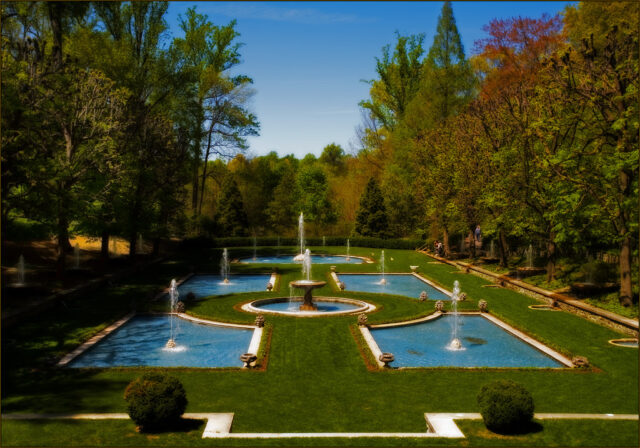
In contrast, the Italian Water Garden, completed in 1928 AD, returns to a more formal approach. Its geometric layout and reflective pools create a sense of calm through repetition and balance. The difference between these spaces is intentional. One emphasizes structure, the other openness, and together they show how varied design approaches can coexist within a single property.
Seasonal change plays a major role in shaping these landscapes. Spring introduces fresh growth and bright color, while summer brings fullness and movement. Autumn shifts the palette toward deeper tones, and winter strips the landscape down, revealing underlying structure. Each season highlights different aspects of the design, ensuring that the gardens never feel static.
This constant transformation is part of what makes Longwood Gardens so engaging. It is not a fixed display, but a living system that evolves over time. Visitors are not just seeing a place—they are seeing it at a specific moment, shaped by both design and season.
Visitor Experience: What to Know Before You Go
Tickets, Hours, and Best Times to Visit
A visit to Longwood Gardens benefits from thoughtful planning. Timed admission helps manage the flow of visitors, creating a more comfortable experience. By selecting an entry window, guests can avoid overcrowding and move through the gardens at a more relaxed pace. This system reflects the broader design philosophy—order supporting enjoyment.
Seasonal variation plays a major role in determining the best time to visit. Spring and summer offer the most vibrant displays, but they also attract the largest crowds. Autumn provides strong color with slightly fewer visitors, while winter offers a quieter experience, especially outside of holiday events. Each season has its advantages, depending on what you want to see.
Special events can significantly shape the experience. Fountain shows, seasonal exhibits, and festivals draw attention and increase attendance. Planning around these events can either enhance or simplify a visit, depending on personal preference. Some visitors seek the energy of a full schedule, while others prefer quieter moments.
Timing ultimately comes down to intention. Whether the goal is to see major displays or simply enjoy the space, choosing the right moment can make the experience feel more personal and less rushed.
Accessibility and Amenities
Longwood Gardens is designed to accommodate a wide range of visitors without compromising the integrity of its layout. Paths are carefully planned, with gentle slopes and clear routes that make movement easy. Accessibility features are integrated into the design rather than added as afterthoughts, which helps maintain the visual consistency of the space.
Amenities are positioned to support longer visits. Dining areas offer a range of options, allowing visitors to pause without leaving the grounds. Seating areas are placed throughout the gardens, providing places to rest while still remaining connected to the surroundings. These elements contribute to a sense of ease, making it possible to explore without feeling pressured.
Families and individuals experience the space differently, and the design accounts for both. Open areas allow for exploration and movement, while quieter sections offer a more reflective atmosphere. This balance ensures that the gardens can accommodate different expectations without conflict.
The overall effect is subtle but important. Comfort is built into the experience, allowing visitors to focus on what they came to see rather than on logistics.
Events and Seasonal Festivals
Events at Longwood Gardens add a layer of activity that shifts the atmosphere from observation to participation. Throughout the year, concerts, classes, and seasonal programs bring new energy into the space. These events are not separate from the gardens—they are integrated into them, using the existing landscape as a backdrop.
The winter season stands out for its transformation of the gardens into a structured display of light and decoration. Trees, pathways, and architectural elements are illuminated, creating a different kind of visual experience. Inside the conservatory, seasonal arrangements echo this theme, blending plant life with festive design.
Fountain performances remain a central attraction. These shows combine water, music, and lighting in a way that feels carefully orchestrated. Each performance has its own character, offering variety even for repeat visitors. The combination of technical precision and artistic presentation makes these events particularly memorable.
Top tips for first-time visitors:
- Arrive early to take full advantage of your entry window
- Wear comfortable shoes for extended walking
- Review event schedules before arriving
- Set aside time for evening fountain shows
- Consider visiting on weekdays for a quieter experience
These practical steps help ensure that the visit remains focused on the experience rather than on avoidable challenges.
The Cultural and Environmental Impact of Longwood Gardens
A Leader in Horticultural Education
Longwood Gardens has established itself as a major center for horticultural education. Its formal training program, launched in 1957 AD, provides hands-on experience for students preparing for careers in gardening and landscape design. This program reflects the same attention to detail seen throughout the gardens, emphasizing both technical skill and thoughtful design.
Educational efforts extend beyond professional training. Workshops, lectures, and guided tours offer visitors opportunities to learn more about plant care, design principles, and environmental management. These programs help bridge the gap between observation and understanding, turning a visit into a more informed experience.
Collaboration with academic and botanical institutions supports research and knowledge sharing. While specific partnerships evolve over time, the goal remains consistent: to advance the field of horticulture through practical and academic work. This ongoing effort ensures that Longwood Gardens contributes to more than its own grounds.
The result is a space that functions as both a destination and a resource. Visitors come to see the gardens, but they leave with a deeper understanding of how those gardens are created and maintained.
Conservation and Sustainability Efforts
Sustainability at Longwood Gardens is approached with the same level of planning seen in its design. Water management systems support the operation of fountains while reducing waste, showing how large-scale features can function responsibly. These systems are largely invisible, yet they play a crucial role in maintaining the gardens.
Plant conservation is another area of focus. The gardens maintain collections that include rare and significant species, contributing to broader efforts to preserve plant diversity. This work ensures that certain plants continue to exist, even as their natural habitats face challenges.
The Meadow Garden offers a clear example of sustainable design in practice. By using native plants and natural water systems, it creates a balanced environment that requires less intervention. This approach demonstrates how landscapes can be both visually appealing and environmentally responsible.
These efforts reflect a long-term perspective. Sustainability is not treated as a trend, but as a necessary part of maintaining a living landscape.
Influence on American Garden Design
Longwood Gardens has played a significant role in shaping garden design in the United States. Its combination of formal structure and natural elements has influenced both public and private spaces. Designers often look to it as an example of how different approaches can be integrated into a cohesive whole.
The gardens demonstrate that structure and flexibility are not opposites. Formal layouts can exist alongside open landscapes, each enhancing the other. This idea has shaped modern approaches to landscape design, encouraging a more balanced use of space.
Public access remains one of its most important contributions. By opening its grounds and maintaining high standards, Longwood Gardens set an example for how designed spaces can serve a broad audience. This model has been adopted by other institutions, extending its influence beyond its physical boundaries.
In the end, Longwood Gardens stands as more than a collection of plants and paths. It represents a way of thinking about space—one that values precision, beauty, and accessibility in equal measure.