Bread has been made for thousands of years, and the process has changed very little. Flour, water, and time are still the foundation. Because of this, artists have long been drawn to breadmaking—not just as a subject, but as a symbol of steady work and daily life. Instead of focusing on finished meals, many painters chose to show the quieter moments: hands pressing dough, tables dusted with flour, and ovens glowing in the background. These scenes reveal something simple but powerful. Breadmaking is not dramatic, yet it reflects discipline, patience, and survival.
Breadmaking as Domestic Labor in Art
The Kitchen as a Workspace
In many early paintings, the kitchen is shown as a place of work rather than comfort. Surfaces are worn, tools are scattered, and activity is constant. Breadmaking appears as part of a larger system of preparation. Artists did not isolate it, but they included enough detail to show its importance. Bowls filled with dough, cloths draped over rising loaves, and rough wooden tables appear again and again.
The act of kneading is one of the clearest visual markers of breadmaking. It gives the figure movement and purpose. The pressure of hands against dough creates a sense of effort that viewers can recognize instantly. This physical action helped artists communicate labor without exaggeration. It is direct and easy to understand.
A well-known example of a working kitchen appears in Kitchen Scene with Christ in the House of Martha and Mary, painted in 1552 AD by Pieter Aertsen. The painting shows a crowded interior filled with food preparation. Bread and dough sit among meat and vegetables, forming part of a larger process. While a religious moment unfolds in the background, the foreground is dominated by labor. This balance reflects the importance of everyday work.
Women and the Tradition of Baking
Breadmaking was often a responsibility carried out by women, especially in domestic settings. This reality is reflected clearly in art. Female figures appear focused and steady, rarely distracted. Their work is shown as necessary and continuous. Artists did not turn these scenes into displays of emotion. Instead, they emphasized skill and routine.
Posture plays a key role in these depictions. A woman leaning forward over a table, pressing dough with both hands, conveys strength and control. There is no need for dramatic gestures. The action itself is enough. This quiet approach gives the subject a sense of dignity.
In The Kitchen Maid, painted in 1738 AD by Jean-Baptiste-Siméon Chardin, the focus is on calm, steady work. The figure stands in a modest interior, surrounded by simple tools and food. Breadmaking is implied through the setting and objects. Chardin’s careful composition removes distraction and allows the viewer to concentrate on the rhythm of daily labor.
Common visual elements in breadmaking scenes include:
- Hands pressing and folding dough
- Flour scattered across wooden tables
- Earthenware bowls used for mixing
- Cloths covering dough as it rises
- Brick or clay ovens nearby
Breadmaking in Dutch and Flemish Genre Painting
Kitchen Industry and Structured Labor
During the 1500s AD, artists in the Netherlands and Flanders began to paint large scenes of kitchens and markets. These works often include several figures, each performing a different task. Breadmaking appears as part of a wider system of labor. It is not the main subject, but it is always present in some form.
Pieter Aertsen played a major role in developing this type of painting. His compositions are filled with activity. Food is prepared, arranged, and handled in the foreground. Bread appears alongside other ingredients, linking it to the full chain of production. These paintings show that bread does not exist on its own. It is part of a larger effort.
The structure of these scenes reflects order rather than chaos. Even with many objects and figures, everything has a place. This sense of organization mirrors the real work being done. Breadmaking fits naturally into this system because it follows a clear sequence of steps.
Preparation and Abundance in Market Scenes
Joachim Beuckelaer expanded on Aertsen’s approach later in the 1500s AD. His paintings often show markets or kitchens filled with food. Bread appears in different forms, including loaves and prepared dough. These scenes highlight abundance, but they also suggest the labor required to create it.
In The Cook, painted around 1566 AD, a central figure works at a table surrounded by ingredients. Bread and dough are part of the composition, though not isolated. The emphasis is on preparation. Nothing is finished yet, which gives the scene a sense of movement and progress.
These works help viewers understand breadmaking as part of a larger cycle. Grain must be harvested, ground, and mixed before it becomes bread. The artist shows only one stage, but the viewer can imagine the rest. This gives the painting depth beyond what is immediately visible.
Realism and the Physicality of Breadmaking
The Body at Work: Effort and Repetition
By the 1800s AD, artists began to focus more directly on labor. Realist painters rejected idealized scenes and chose to show everyday work as it was. Breadmaking became a natural subject because it required physical effort and repetition.
Kneading dough involves strength and endurance. Artists used this action to show the body in motion. Bent backs, firm hands, and steady posture all contribute to a sense of realism. These details make the work believable and grounded.
Painters often used muted colors and simple compositions. This removed distractions and kept attention on the task. Breadmaking is not shown as dramatic. Instead, it is presented as steady and necessary. This approach gives the subject weight without exaggeration.
Rural Life and Self-Sufficiency
In rural areas, bread was often made at home rather than purchased. This made breadmaking a central part of daily life. Artists who focused on rural subjects included this process as part of a larger system of labor.
Jean-François Millet, working in the mid-1800s AD, is known for his depictions of peasant life. His paintings show figures connected to the land and their work. While he often focused on farming, the themes in his work relate closely to breadmaking. Grain must be grown before it can be used.
This connection gives breadmaking a deeper meaning in realist art. It is not just a task performed in the kitchen. It is the result of long-term effort. Artists used this idea to show the link between labor and survival. Bread becomes a symbol of work completed over time.
Ovens, Fire, and the Transformation of Dough
The Oven as the Center of the Home
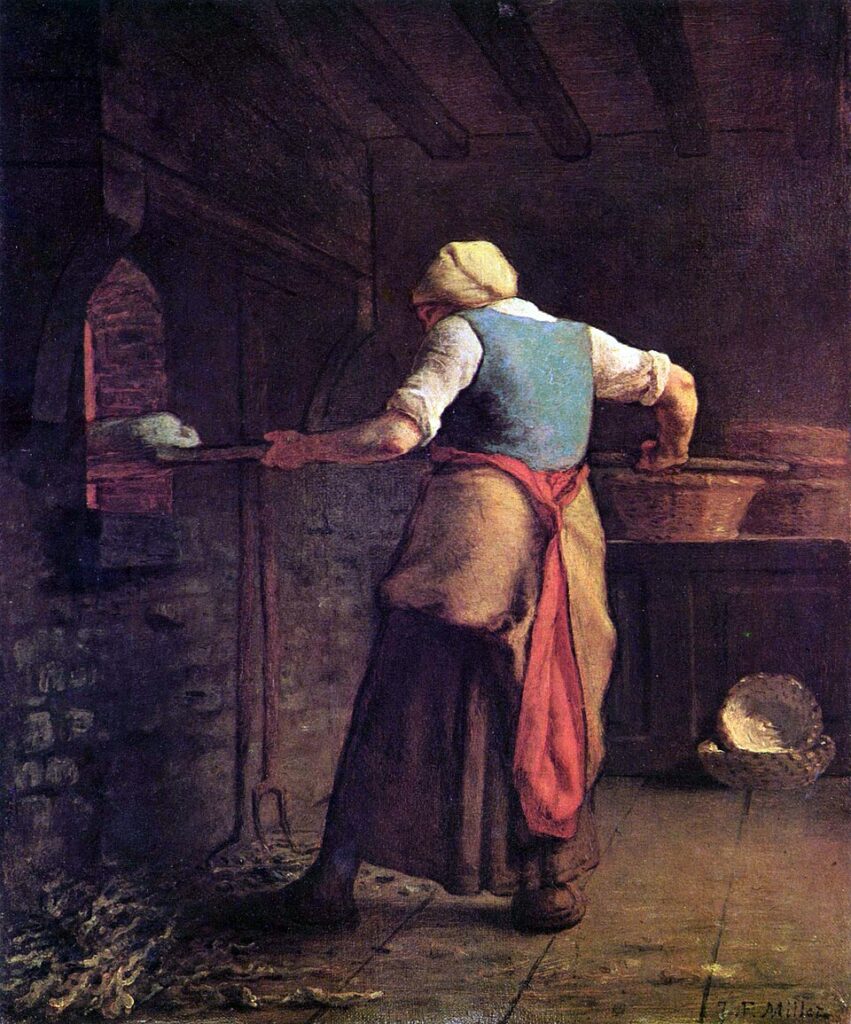
The oven is one of the most important elements in breadmaking scenes. It is often placed in a central position within the composition. This reflects its role in real life. The oven provided both heat and a place to cook, making it essential to the household.
Artists used the light from the oven to create contrast. The warm glow of fire highlights figures and objects, drawing attention to the act of baking. This lighting also adds atmosphere, giving the scene a sense of depth and focus.
In some cases, ovens were shared within a community. While this is not always shown directly, the idea of shared resources is part of the broader context. Breadmaking could be both a private and communal activity, depending on the setting.
From Dough to Bread: A Quiet Transformation
One challenge artists faced was how to show transformation. Breadmaking involves change over time, but a painting captures only one moment. To address this, artists included multiple stages within a single scene. Dough in a bowl, loaves near the oven, and finished bread on a table suggest progression.
These visual clues allow the viewer to imagine the full process. The scene becomes more than a single action. It represents a sequence of events, from preparation to completion. This adds depth without complicating the composition.
Stages of breadmaking often suggested in art include:
- Mixing flour and water
- Kneading the dough
- Letting it rise under cloth
- Baking in a heated oven
- Removing the finished bread
This transformation carries a sense of reward. It reflects patience and skill. Artists understood this and used it to give meaning to simple scenes. Breadmaking may appear ordinary, but it represents something lasting. It shows how steady effort leads to results, a theme that remains relevant across time.
Key Takeaways
- Breadmaking in art focuses on process and labor, not just finished food, highlighting kneading, preparation, and baking.
- Artists from the 1500s AD onward used kitchen scenes to show structured daily work, especially in Northern Europe.
- Domestic breadmaking is closely tied to women’s roles, often shown with quiet skill and repetition rather than drama.
- Realist painters in the 1800s AD emphasized the physical effort and connection to agriculture, linking bread to long-term labor.
- The oven and transformation of dough into bread serve as enduring symbols of patience, discipline, and completion.
FAQs
Why is breadmaking rarely shown as a standalone subject in art?
Because most artists preferred to show it as part of a larger kitchen or labor scene. Breadmaking was so common that it blended into daily life rather than standing alone as a dramatic subject.
What makes breadmaking visually interesting to artists?
The physical action of kneading, the textures of flour and dough, and the glow of ovens all provide strong visual elements without needing elaborate storytelling.
Which time period shows breadmaking most clearly?
The 1500s AD in Dutch and Flemish painting and the 1800s AD in Realist art offer the clearest depictions of breadmaking as labor.
Is breadmaking mainly associated with rural or urban settings in art?
It appears in both. Rural scenes show self-sufficiency, while urban scenes include workshops and organized production.
Why do artists focus on the process instead of the finished bread?
The process shows effort and time. Finished bread is static, but making it reveals skill, discipline, and the rhythm of daily life.