The Lyon Massacre was one of the bloodiest episodes of the French Revolution, taking place between August 1793 and early 1794. During this period, the city of Lyon—France’s second-largest city and a commercial hub—rebelled against the radical Jacobin government led by the National Convention. As a stronghold of royalist and Girondin sentiment, Lyon became a target of Revolutionary wrath. After a brutal military siege, Lyon was subjected to horrific retribution that shocked the nation and later became a focal point in art and memory.
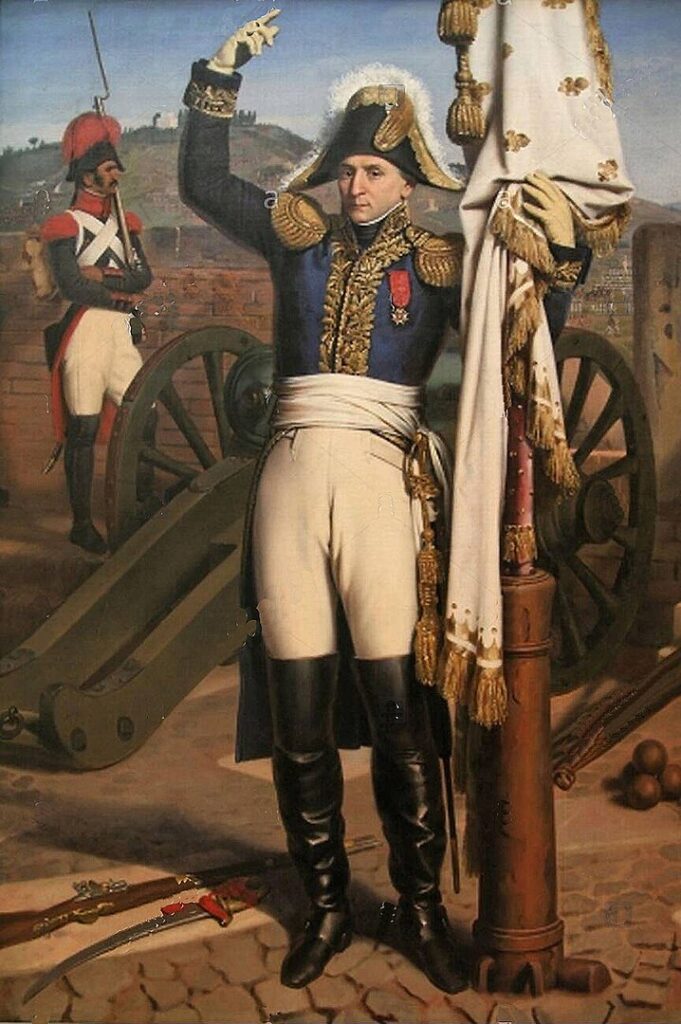
The siege of Lyon began in August 1793 and lasted until October 9 of that year. General Kellermann, acting under orders from the Convention, surrounded the city with Revolutionary forces. Following the surrender, the Convention ordered a program of mass executions, using grapeshot fired at prisoners lined up in ditches and courtyards. Between November 1793 and April 1794, estimates suggest over 2,000 people were executed in what would be one of the most infamous purges of the Reign of Terror.
The Siege and Aftermath (1793–1794)
The National Convention declared, “Lyon made war on liberty; Lyon is no more,” a chilling statement that became infamous. Public buildings were destroyed, churches looted, and entire neighborhoods razed in an effort to erase the city’s identity. Many prominent citizens, including merchants, clergy, and intellectuals, were executed without trial. The goal was to punish disloyalty to the Revolution and eliminate any hope of royalist revival.
The violence in Lyon served as a terrifying example to other cities. Parisian newspapers published lists of those condemned, and Revolutionary pamphlets portrayed the executions as justice served. However, the scale of the repression horrified even some Revolutionaries, including Camille Desmoulins, who criticized the bloodshed. This tension between revolutionary zeal and moral restraint would become central to how artists later portrayed the massacre.
Art as Witness: How Artists Depicted Revolutionary Violence
Art during the French Revolution was far from neutral. Artists were either enlisted to glorify the Revolution or struggled privately to document its darker side. The Lyon Massacre, in particular, attracted those who sought to reveal the grim cost of political ideology. This era saw a proliferation of visual art, particularly prints and engravings, that captured moments of execution, mourning, and devastation.
From 1793 onward, state-sponsored art was tightly controlled by the Jacobin regime. Artists like Jean-Baptiste Lesueur, born in 1749, had to navigate between personal truth and political allegiance. Many resorted to symbolism or allegory to avoid censorship. Even when violence was depicted, it was often framed as heroic purification, not criminality. Still, some artists found ways to express horror and sympathy for the victims without directly challenging Revolutionary doctrine.
Censorship and Propaganda
Visual propaganda played a major role in shaping how the Revolution was remembered. The Committee of Public Safety approved prints that demonized Lyon’s citizens while glorifying the Convention. Images of Liberty, armed with a pike, standing over dead bodies, were typical. Artists were often forced to blend artistic integrity with ideological necessity.
Jacques-Louis David, a key figure of the period, was not directly involved in portraying Lyon’s massacre, but his influence shaped the artistic tone. As a deputy to the Convention, David supported the Revolution yet retained a classicist style that lent gravity to scenes of death and sacrifice. His role blurred the line between art as political tool and moral reflection. This duality persisted in depictions of the Lyon massacre, where truth was filtered through layers of allegory and ideology.
Visualizing Lyon’s Destruction: Iconic Depictions of the Massacre
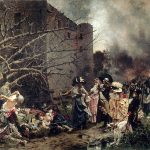
A handful of powerful prints and illustrations from the 1790s offer insight into how artists visualized the massacre in Lyon. One of the most circulated themes was the image of Revolutionary soldiers firing grapeshot into crowds of civilians. These depictions were often anonymous due to the risks involved in criticizing Revolutionary justice. The images showed not just execution, but chaos, fear, and loss.
Architecture played a prominent role in these images. Churches, arches, and civic buildings appeared broken or in flames, symbolizing the destruction of not only the physical city but also its moral and religious foundations. Women and children were frequently shown grieving or shielding their faces. The mood was somber, often dramatized through high-contrast shading and exaggerated gestures.
The “Execution of Lyonnais” Engravings
Among the most famous are the “Execution of Lyonnais” series, a set of engravings believed to have been produced in 1794. These prints show long rows of prisoners tied together, awaiting execution by cannon fire. The victims are nameless, faceless, and often depicted in classical poses, linking their suffering to ancient martyrdom. Grapeshot tears through bodies while Revolutionary officials stand by coldly.
Artists used symbolism carefully. Many prints feature a looming figure of Justice or Liberty in the background, either blessing the execution or weeping at its cruelty. Some engravings included Latin inscriptions or verses that compared the massacre to Biblical tragedies. The ambiguity allowed viewers to interpret the works either as patriotic or as veiled critiques. These images formed a visual archive of collective trauma that influenced art well into the 19th century.
Jacques-Louis David and Revolutionary Symbolism
Jacques-Louis David (1748–1825) was the most influential painter of the French Revolution, though he never directly illustrated the Lyon Massacre. His neoclassical style and political engagement set the tone for how revolutionary themes were portrayed. David’s compositions emphasized stoicism, sacrifice, and republican virtue, shaping the aesthetic of terror into something nearly sacred. His works became templates for other artists confronting events like Lyon.
David’s political allegiance to Robespierre and the Jacobins made him a controversial figure. In 1793, he joined the Committee of General Security and approved of revolutionary justice. Yet even within his official role, David infused his paintings with a deep emotional restraint. His best-known work from this period, “The Death of Marat” (1793), shows the murdered radical journalist as a serene martyr. The calmness amid carnage became a hallmark of revolutionary iconography.
The Death of Marat and Its Echoes
Other artists drew upon David’s model to depict events like the Lyon Massacre. The idealized death scene, where the victim is calm, bathed in soft light, and framed with classical balance, appeared again and again. While the brutality in Lyon did not lend itself easily to such stylization, artists still found ways to echo David’s visual language. Victims were shown lying gracefully, hands raised in prayer or resignation.
This aesthetic choice had political and moral implications. By mimicking David, later artists were able to insert a quiet protest into their compositions. The nobility of the victims in Lyon, especially women and priests, stood in contrast to the cold efficiency of their executioners. Through neoclassical restraint, artists conveyed revulsion without overt defiance. David’s influence shaped not only how Revolution was glorified, but how its failures were mourned.
Survivors, Exiles, and Memory: Post-Revolutionary Reflections in Art
Following the fall of Robespierre in 1794, France entered a period of relative calm known as the Thermidorian Reaction. During this time, many artists who had remained silent began to revisit the horrors of the Revolution. The Lyon Massacre reemerged in visual art as a symbol of suffering and injustice. Artists used emotion, memory, and historical realism to reinterpret what had once been suppressed.
By the early 1800s, the narrative shifted from glorifying the Convention’s justice to commemorating the innocent lives lost. Romantic painters, many influenced by the growing wave of historical consciousness, emphasized mood and individual grief. One such figure was Paul Delaroche (1797–1856), known for his emotionally rich and historically detailed works. Though he did not paint Lyon directly, his treatment of revolutionary executions deeply influenced commemorative art in the city.
Romanticism and the Politics of Memory
Romantic art favored drama, personal anguish, and the sublime. Paintings and prints began to portray widows, children, and clergy mourning the dead in ruined courtyards. Symbolism shifted from classical purity to emotional truth. Scenes featured dusk, candlelight, or stormy skies to reflect internal turmoil. The victims were no longer idealized martyrs, but real people caught in a political storm.
Commemorative prints circulated in Lyon and other royalist regions. These works often listed the names of the executed or included biblical verses about mercy and justice. The massacre was re-framed not as a necessary purge but as a tragic mistake. Art helped survivors process grief and preserve memory. The emphasis was on reconciliation, not vengeance, laying the groundwork for future public memorials.
Religious and Royalist Martyrdom in Art
As the Bourbon monarchy was restored in 1814 and again in 1815, the tone of art shifted dramatically. The Lyon Massacre was recast as a spiritual tragedy. Catholic and royalist artists painted the victims of 1793 not merely as political casualties, but as Christian martyrs. Churches commissioned works to honor those who died “for faith and crown,” and these pieces found their way into chapels, salons, and private homes.
In this new visual tradition, light played a crucial role. Victims were shown bathed in divine radiance, sometimes with angelic hosts overhead. Many compositions included crosses, chalices, or tears of the Virgin Mary. Executed priests were often painted in liturgical garments, sanctifying their death. The result was a powerful spiritual reframing of the massacre, turning political violence into religious sacrifice.
Sacred Victims: Visual Theology of the Massacre
Numerous churches in Lyon commissioned murals and stained-glass windows in the 1820s and 1830s that depicted the mass shootings and cannon executions. These religious images emphasized redemptive suffering. Some included inscriptions such as “Blessed are the persecuted” or “Their blood cries out from the ground.” Victims were likened to early Christian martyrs facing Roman persecution.
Artistic style shifted again, favoring more baroque and emotional elements over the cold neoclassicism of David. Figures were no longer stoic but expressive—sometimes shown looking toward heaven with tears. The audience was invited to mourn, not just reflect. These religious images helped reshape Lyon’s local identity from that of a rebellious city to a sacred site of martyrdom. Art became a way of restoring civic and spiritual honor.
The Lyon Massacre’s Legacy in Public Art and Monuments
By the late 19th century, the massacre had been fully absorbed into Lyon’s public memory. Monuments, plaques, and murals were erected across the city to honor the dead and educate future generations. Public art served not only as a historical record but also as a statement about moral truth and national reconciliation. These installations reflected evolving values—moving from partisan rhetoric to collective mourning.
Several key monuments were built between 1870 and 1920. One of the most notable is the Monument des Martyrs de Lyon, a granite and bronze structure that lists over 1,900 names. It stands near one of the original execution sites. Sculptures include weeping angels, broken chains, and flames of remembrance. Local artists often collaborated with civic leaders to design pieces that would unite rather than divide.
Commemorative Sculpture and Local Identity
Commemorative art turned the massacre into a foundational myth for Lyon. Schoolchildren were taken on tours of the sites, and local holidays were established to honor the fallen. These practices reinforced civic identity rooted in faith, suffering, and resilience. Artists often incorporated symbols of rebirth, such as lilies or phoenixes, to suggest a moral triumph over tyranny.
In the 20th century, new works continued to be added. Some modern murals included abstract representations—grids of names, red lines symbolizing bloodshed, or silhouetted crowds. While the artistic style evolved, the core message remained. Lyon had endured and remembered. Public art kept alive a story of tragedy transformed into spiritual and civic strength.
Key Takeaways
- The Lyon Massacre was a brutal punishment for royalist resistance during the French Revolution.
- Revolutionary art often masked violence through allegory and classical symbolism.
- Jacques-Louis David’s influence shaped depictions of revolutionary martyrdom.
- Romantic and religious artists reinterpreted the massacre as moral and spiritual tragedy.
- Public art in Lyon today continues to commemorate the victims and honor the city’s resilience.
FAQs
- What year did the Lyon Massacre occur?
The Lyon Massacre occurred primarily between November 1793 and April 1794. - Who led the siege of Lyon during the French Revolution?
General François Christophe Kellermann led the Revolutionary siege of Lyon. - Did Jacques-Louis David paint the Lyon Massacre?
No, but his style and themes influenced how other artists portrayed revolutionary violence. - How many people were executed during the Lyon Massacre?
Historians estimate that over 2,000 citizens were executed during the repression. - Are there monuments to the Lyon Massacre today?
Yes, Lyon has multiple memorials and public artworks commemorating the massacre’s victims.