The story of Nebraska’s art begins long before it was called Nebraska—before homesteads, railroads, or counties divided the land into grids. It begins with the cultures who lived here for centuries, whose art was neither separate from life nor elevated above it. For the Pawnee, Omaha, Ponca, Lakota, and other Plains Indian nations who moved through or settled in what is now Nebraska, art was function, ceremony, memory, and war—often all at once. Their traditions, though shaped by seasonal migration and the hard constraints of survival, produced forms of deep visual intelligence: hides painted with cosmologies, porcupine-quill regalia infused with spiritual meaning, and portable sculptures that bore the histories of families and nations. This was not a world without art—it was a world in which art could not be separated from how a person moved, dressed, mourned, hunted, or prayed.
Ceremony and Survival: The Art of Use and Devotion
There was no “fine art” in the sense Europeans would later define it, but neither was there an absence of aesthetic intent. Nearly every object a person carried or wore could be beautified—intensified by color, pattern, or sacred association. Clothing, for example, was not just protection but a statement of lineage, tribe, and status. Women of the Omaha and Ponca tribes created elaborately beaded dresses, moccasins, and cradleboards. The skill involved in such work was generational and exacting, with color combinations and motifs carrying specific meanings, often passed down through maternal lines. Certain patterns marked a girl’s transition to womanhood; others announced the prestige of her father or husband.
The art of quillwork—long predating European contact—was particularly revered. Quills from porcupines were softened, dyed, and flattened with teeth before being stitched into deerskin or wrapped around rawhide strips. The labor was immense. A single band on a pipe bag could take days. Its symbolic power, however, was equally strong. Quillwork not only required skill but spiritual preparation: fasting, dreams, and ceremony often accompanied the creation of important pieces.
Hides became both garment and canvas. Painted buffalo robes told stories of battles, visions, and journeys, often commissioned by warriors to commemorate their deeds. These were not private acts of memory but public displays of honor, worn during dances or used to teach young people about their tribe’s victories and losses. The images were not rendered with concern for European perspective or realism; rather, they followed a symbolic logic—a map of memory, not sight.
Time Without Clocks: Symbolic History in Winter Counts
Among the Lakota and other nomadic tribes, one of the most distinctive art forms was the waníyetu wówapi—or winter count. These were large hides or cloths painted with pictographs, one per year, each image recording a major event by which the entire community could remember that season. One might show a solar eclipse, a deadly battle, a disease outbreak, or the death of a chief. In the absence of a written language, these visual records became shared mnemonic tools.
The keeper of the winter count—often a respected elder—was both artist and historian. His duty was not only to paint the symbols but to recite their meanings aloud, transmitting them to the next generation. The artistry was minimal in the decorative sense, but profound in its conceptual power: a nonlinear history encoded in a spiral of signs, memory compressed into the outline of a bear, a fallen tipi, a red circle for blood.
By the mid-19th century, as tribes were increasingly displaced or confined to reservations, winter counts took on an added urgency. They became a form of resistance to historical erasure. Several of these records survive in museum collections today, including notable examples by the Yanktonai Lakota chronicler Lone Dog and others preserved by Jesuit missionaries near present-day Nebraska.
Trade and Hybridity: Art in the Age of Horses and Guns
European contact altered everything, including art. The introduction of horses in the 18th century expanded mobility, which in turn expanded both war and trade. Plains Indian art began to absorb new materials: glass beads replaced quills, trade cloth replaced animal hides, and metal tools enabled finer detail. But rather than replacing tradition, these new materials often amplified it.
French and Spanish traders along the Missouri River brought not only goods but iconography. Catholic medals were repurposed as ornaments; mirrors became ceremonial objects; calico prints were cut and sewn into geometric designs that echoed earlier motifs. Guns changed the nature of war, and with it, the nature of commemoration. Ledger books—once used by traders and soldiers—became repurposed by Indian artists as narrative journals. Drawings inside these books portrayed battles, courtships, raids, and imprisonment, done with colored pencils or ink. Known today as “ledger art,” this hybrid form flourished especially after the 1870s, when many Plains warriors, including some from Nebraska tribes, were imprisoned in the South and continued to draw in captivity.
Even at its most adapted, the art retained its original functions: to remember, to honor, to assert identity. A Ponca warrior drawing in a government-issued ledger in 1880 was not making “primitive art.” He was continuing a visual language that stretched back through buffalo robes, quill bags, and rock paintings—reshaped by force, but unbroken in purpose.
Midway Insight: The Function of Mobility in Plains Art
Much of the power in Plains Indian art came from its portability. These were cultures accustomed to seasonal migration, whether following game or avoiding enemies. Their aesthetic systems evolved accordingly—not in fixed monuments, but in wearable, foldable, transportable media. Art moved with the people. This is a crucial distinction from the European model, where painting and sculpture often assumed permanence, location, and singularity.
Three notable examples of this mobile artistry:
- Parfleches: Painted rawhide cases made by women, used to store food and tools, with bright geometric designs that doubled as tribal signatures.
- Tipi liners and covers: Not only shelters, but canvases for visual storytelling—decorated with hunting scenes or protective symbols.
- Dance regalia: Feathered headdresses, bells, and sashes designed to come alive in motion, uniting sound, color, and movement.
Rather than being housed in temples or galleries, these works entered public life directly—on horseback, at feasts, in mourning ceremonies. Even in the 21st century, modern powwows preserve this tradition of lived, performative art. Nebraska remains a site where this continuity is visible.
Closing Reflection: A Legacy Woven into the Ground
The art traditions of Nebraska’s Plains Indians were never static relics of a vanished past. They were—and remain—living expressions of survival, memory, and adaptation. They resisted conquest not only through arms but through symbols: by turning a piece of quillwork into a prayer, or a bead into a story, or a drawing into a name that cannot be erased. While museums have preserved many of these objects, they do not contain the whole story. Much of it is still in use—in ceremony, in regalia, in drawings passed from hand to hand. The oldest art in Nebraska is not buried under centuries of dust. It still moves, sings, and watches. And it remembers.
Drawing the Frontier: Surveyors, Soldiers, and the First Images of Nebraska
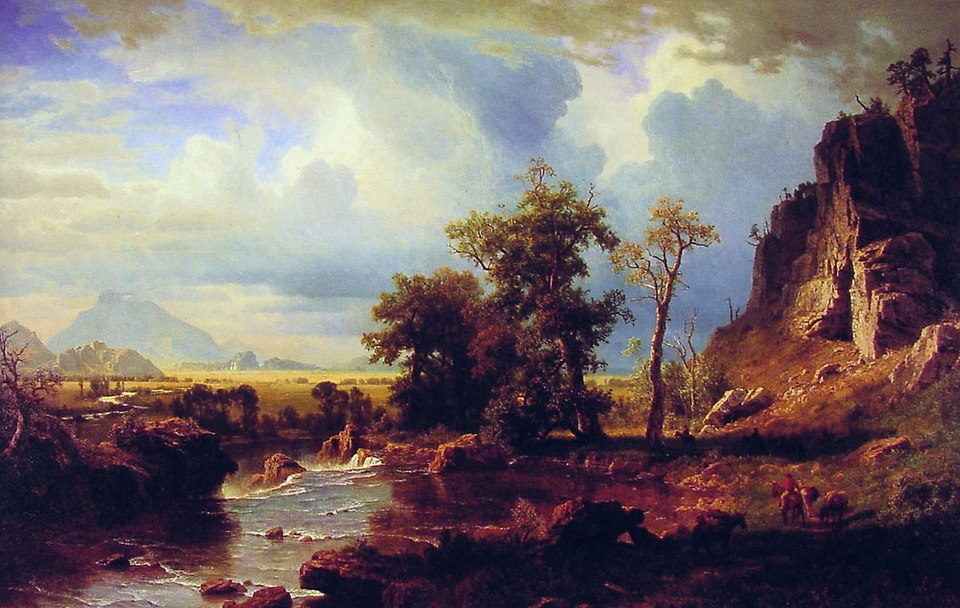
When the American frontier moved westward in the 19th century, Nebraska was not just a destination—it was an image to be shaped, sold, and subdued. Long before it was fully mapped or governed, it was drawn. The first non-Indian images of Nebraska were not made by artists in any formal sense, but by surveyors, soldiers, and scientific illustrators tasked with recording the land for strategic, commercial, or colonial purposes. Yet many of these early renderings carry more than technical utility; they mark the beginning of Nebraska’s visual identity in the eyes of those who intended to claim it. Even in pencil lines and wash sketches, the land begins to be mythologized: wide skies, solitary rivers, distant herds, ominous cloudbanks. This was not merely documentation—it was the aesthetic preparation for conquest.
Topographic Eyes: Mapping as an Act of Vision
The U.S. Army Corps of Engineers, charged with surveying and charting western territories, produced some of the earliest images of Nebraska that survive today. Their purpose was strictly utilitarian: define boundaries, locate rivers, and assess terrain for military roads and telegraph lines. Yet the line between cartography and drawing was often porous. Officers trained at West Point were taught to sketch elevations and draft perspectives, and these technical drawings—though lacking in flourish—still offer the first composed views of Nebraska’s ridges, river bends, and buttes.
The 1819–1820 Stephen H. Long Expedition, one of the earliest scientific explorations of the region, brought with it cartographers and artists who produced panoramic drawings of the Missouri River and adjacent plains. One of the most enduring products of that expedition was the label Long gave the central Great Plains: “The Great American Desert.” Though demonstrably false as a literal description, this phrase stuck, partly because the visual records of the trip conveyed an emptiness unfamiliar to East Coast eyes. In drawing what they thought was a void, these surveyors helped justify the later push to fill it.
There is an ironic power in these early views. Drawn to aid settlement, they now stand as ghostly previews of a land not yet overrun. A sparse ridge sketched in 1820, with no fences or fields, becomes a kind of visual Eden—mute, unclaimed, and wide open.
Europe Looks West: Bodmer, Catlin, and the Art of the Encounter
While Army engineers sketched the land in measured contours, others came to capture the people. Two names stand out: Karl Bodmer and George Catlin. Though neither was born in Nebraska, both traveled through it, and both left some of the most detailed and vivid early depictions of Plains Indian life and the surrounding landscape. Their work straddles the line between documentation and romantic fantasy, blending ethnographic detail with staged composition to produce an indelible visual archive of the region before mass settlement.
Karl Bodmer, a Swiss artist hired by the German naturalist Prince Maximilian of Wied, traveled up the Missouri River in 1833–1834. His watercolors, later turned into engravings, include scenes from Fort Lisa and other sites in present-day Nebraska. Bodmer’s portraits of Mandan and Omaha chiefs are striking not just for their detail but for their dignity. Unlike many later illustrators, he did not reduce his subjects to costume or caricature. His landscapes, too, capture the unsettling strangeness of the Plains—the way the sky seems to touch the earth, or how a single cottonwood tree becomes a landmark.
George Catlin, an American painter and self-appointed chronicler of the “vanishing race,” traveled through the same region a few years earlier. His vision was more theatrical than Bodmer’s. Catlin painted processions, dances, battles, and rituals, often exaggerating features to heighten emotional effect. His paintings of Pawnee and Otoe-Missouria villages were meant to shock and awe Eastern audiences. Catlin famously proposed a “Indian Gallery” to Congress, complete with live performers—a spectacle blending art, anthropology, and entertainment.
Despite their flaws, these images had lasting influence. They shaped public perception in the East and Europe, turning the Plains into a stage for noble savagery, sublime emptiness, and frontier destiny. In a way, Catlin and Bodmer painted not what Nebraska was, but what Americans wanted to believe it would become.
The Empty Sublime: Land as Image, Not Inheritance
As the century advanced, the imagery of Nebraska began to shift from curiosity to commodity. Railroads commissioned panoramic illustrations to advertise settlement opportunities. Land agents distributed lithographs of fertile valleys and well-ordered homesteads—rarely showing drought, grasshoppers, or the harsh wind. But even in the more scientific or commercial work of this era, the Plains continued to be visualized in aesthetic terms. The vast horizontal space invited comparison to the sea. Clouds became metaphors for hope or menace. Distance itself became a kind of character.
The visual culture of westward expansion—what historian Patricia Limerick once called the “conquest by cartography”—relied heavily on images. A drawing of Nebraska without trees or buildings could be sold as opportunity: room to build, to grow, to claim. Artists like Henry Lewis and Alfred Jacob Miller, though more active further west, influenced the general tone: wide, dramatic, and yearning. These images were not lies, exactly, but aspirations—painted futures grafted onto present emptiness.
Three recurring motifs emerge in these early frontier images:
- The single figure on horseback, silhouetted against the horizon—emphasizing isolation, movement, and scale.
- The bend in the river, often viewed from a bluff—symbolizing transition or progress.
- The distant herd, usually of bison or elk—hinting at abundance, but also evanescence.
By the 1870s, such images had begun to fade from artistic prominence. Photographers would soon replace sketch artists as primary documentarians, and painted visions of the Plains gave way to the camera’s sharper detail. But the aesthetic groundwork was laid: Nebraska was now a known image in the American imagination—sparse, luminous, unsettled.
Closing Reflection: Drawing as Destiny
The earliest images of Nebraska weren’t neutral—they were laden with motive. A surveyor’s pencil could redraw a boundary. A painter’s brush could exalt or erase a people. In capturing what they saw, these early image-makers also created what others would expect to find. What began as field sketching became a form of myth-making, laying the groundwork for the stories—and settlers—that would follow. In this sense, the art that came before the farms was already reshaping the land, one line at a time.
Homestead Aesthetics: Folk Art, Fraktur, and Domestic Ornament
As the frontier moved from myth to material reality, Nebraska filled with settlers—German and Czech immigrants, Scandinavian farmers, Irish laborers, and others drawn by promises of land, work, and new beginnings. Their arrival transformed the prairie not only in economic or political terms but in the quiet revolution of visual culture. The art they brought was not for galleries or academies. It hung in kitchens, adorned barns, covered beds, and lined church walls. It was craft, devotion, ornament, and identity—all at once. In this domestic, agricultural world, the concept of art dissolved into the surfaces of daily life: painted trunks, embroidered towels, carved gravestones. The homestead did not aspire to be an art museum. It was one.
Patterns on the Prairie: German Fraktur and Czech Needlework
Among the earliest and most enduring traditions brought to Nebraska were those of Central European settlers, particularly Germans and Czechs who arrived in large numbers between the 1860s and 1890s. Their art traditions, though regionally distinct, shared a sensibility rooted in pattern, repetition, and ornamentation—qualities that suited the prairie’s open monotony and offered comfort amid hardship.
The German-speaking Mennonites, Lutherans, and Catholics brought with them the tradition of fraktur—a form of illuminated folk calligraphy. Originally used to document births, baptisms, and marriages, fraktur pieces combined blackletter script with delicate watercolor floral motifs, birds, and hearts. Though the tradition peaked earlier in Pennsylvania, it saw a quiet revival in the Midwest, especially in Nebraska’s rural church communities. Hanging on parlor walls or tucked in family Bibles, these documents were both spiritual affirmations and artistic heirlooms.
Czech women, especially in eastern Nebraska communities like Wilber and Prague, maintained traditions of elaborate embroidery and lacework. Table linens, altar cloths, and wedding garments were covered in floral patterns passed from mother to daughter. The designs were more than decoration—they indexed belonging, origin, and regional pride. A Bohemian rose stitched in red and black spoke a private language of memory, visible only to those who knew what to look for.
These forms rarely survive in museums. They remain hidden in hope chests, small-town churches, and family photo albums. Yet they are among the most authentic visual expressions of Nebraska’s early settler life: art not made to be admired, but to be used.
The Practical Beautiful: Barns, Quilts, and Fences
The prairie demanded functionality, but it did not forbid beauty. The objects settlers made—tools, furniture, buildings—often carried flourishes that had no purpose but aesthetic pleasure. This was not frivolity. In a world governed by toil and unpredictability, decoration offered control. It allowed a farmer or homemaker to impose order, to assert identity, to make something their own.
Quilting is perhaps the best-known form of settler folk art, and Nebraska was a major center of its evolution. Women gathered for quilting bees not just to produce warm coverings, but to exchange patterns, news, and techniques. Each quilt tells a story, not only in its visual layout but in its materials—scraps of old dresses, flour sacks, military uniforms. Pattern names reveal the imaginative range of this craft: Log Cabin, Flying Geese, Broken Dishes, Corn and Beans.
Though mass-manufactured cloth gradually replaced hand-dyed fabrics, the artistry endured. Quilts became political as well as personal. Some incorporated patriotic motifs during wartime, while others recorded westward journeys or celebrated harvests. Unlike paintings, quilts were touched, slept under, and passed down—art that lived in bodies, not just on walls.
Elsewhere, barns and fences became large-scale canvases. Norwegian and German settlers painted their barns in geometric patterns, sometimes echoing European traditions of hex signs or stylized floral medallions. Fences—usually made of cedar or barbed wire—were sometimes topped with carved posts, each a little different from the next, turning enclosure into ornament.
Three expressive forms that flourished in this period:
- Painted dowry chests: Often brought from Europe or built on arrival, these wooden trunks featured floral scrollwork, initials, and family crests.
- Cutwork curtains (vyšívané záclony) in Czech homes: Linen drapes embroidered with proverbs, birds, or religious figures.
- Hand-carved grave markers: Cedar or limestone headstones shaped with tools at home, bearing not just names but symbols of trade, faith, or mourning.
These were not provincial echoes of high art, nor were they naïve. They were fully realized systems of aesthetic thought, rooted in craftsmanship and repetition, embedded in daily life.
Devotion on the Walls: Sacred Art in the Plains Churches
Nowhere was folk art more concentrated—or more lovingly maintained—than in the churches of rural Nebraska. Settlers, even when living in dugouts or half-finished cabins, often built churches as their first permanent structures. Inside, they poured their time and artistry into altars, frescoes, and statuary that reconnected them to Europe even as they forged a new identity on the Plains.
Catholic communities—particularly Czech, Polish, and German—commissioned altar paintings and architectural decorations from both local and itinerant artists. Often these painters worked in anonymity, moving from town to town, painting scenes of the Virgin Mary, Christ, or saints with a mix of folk imagination and ecclesiastical formality. The churches in towns like St. Helena, Steinauer, and Schuyler preserve examples of this art: murals filled with gold-leaf halos, painted domes, and faux-marble columns made from careful brushwork on plaster.
Wood carving was another sacred art. Altarpieces, crucifixes, and confessional booths were often built by congregants who worked as carpenters or blacksmiths. Their artistry blended baroque European motifs with the simple materials available on the prairie—pine, cottonwood, and walnut. In some churches, this folk baroque reached surprising heights: entire sanctuaries coated in carved angels, vine patterns, and gilded capitals, all done without formal training.
What might look excessive to modern eyes was, for its makers, an act of honor. These spaces reminded immigrants that their faith had followed them, that it could survive frost, flood, and distance.
Closing Reflection: Beauty Woven into Necessity
The art of Nebraska’s early settlers is often overlooked because it does not fit modern categories. It wasn’t hung in salons or sold at auction. It was stitched, carved, painted, and sung—not to impress strangers, but to root life in meaning. These makers didn’t think of themselves as artists, but they made art anyway. Not in spite of their hardships, but because of them. In a world so often defined by labor and scarcity, the act of making something beautiful—something unnecessary—became one of the most necessary acts of all.
Ghost Towns and Boomtowns: Photography and the Transformation of Place
By the late 19th century, Nebraska had passed from promise into permanence—at least on paper. Counties were drawn, towns plotted, railroads laid. But permanence on the prairie was never guaranteed. What looked like prosperity in a land agent’s pamphlet often dissolved into dust, debt, and departure. Boomtowns sprang up overnight and faded by the next census. Whole communities disappeared, their buildings left to rot in place. Into this volatile landscape stepped a new kind of artist: the photographer. Unlike the painters and sketchers of the earlier frontier, these image-makers were not dreaming or promoting—they were documenting. And in doing so, they gave Nebraska its most enduring record of transformation, fragility, and the silent march of time.
Solitude and Scale: Solomon Butcher and the Architecture of Bare Life
No single figure shaped the photographic imagination of early Nebraska more than Solomon D. Butcher. Born in 1856 and trained as a schoolteacher, Butcher arrived in Custer County in the 1880s with the dream of homesteading—but found himself drawn instead to documenting those who had succeeded, or tried to. He traveled across central Nebraska for decades, photographing families in front of their homes, most famously their sod houses: rectangles of earth with wagon-wheel windows, grass roofs, and nothing but sky for miles.
At first glance, Butcher’s photographs appear plain, even naïve. But their cumulative power is staggering. Each image contains not only people but possessions: a rifle leaned against the doorframe, a sewing machine hauled outside for the shot, horses hitched stiffly to plows, children arranged like figurines. These compositions—accidental masterpieces of balance and tension—say more about prairie life than any written account. They are still. They are bare. They are completely without illusion.
Butcher rarely altered or romanticized his subjects. He photographed as he found them, yet each picture carries an eerie, theatrical quality. The sod house became more than shelter—it became a stage set, a monument to survival. The people in his images are not posing in the modern sense; they are declaring that they were here, that they mattered, that they endured.
Though he died in obscurity, Butcher’s archive—over 3,000 glass plates—has become an essential record of the Nebraska frontier. In their quiet way, his photographs speak more profoundly than any speech or memoir. They make no argument. They simply remain.
The Visual Archive of Loss: Abandonment as Subject
As the decades progressed, photography in Nebraska began to shift from documentation of life to a haunting record of its absence. The Dust Bowl of the 1930s, followed by rural depopulation and the mechanization of agriculture, left hundreds of small towns in decline. Some vanished altogether. Others shrank to a post office and a cemetery. The state became a landscape dotted with remnants: collapsing barns, rusted windmills, peeling schoolhouses.
Photographers turned increasingly toward these remnants not just as records of decay but as subjects with their own austere beauty. The ghost town—once a failure—became a poetic object.
Several Nebraska photographers built careers around this sensibility. Wright Morris, a novelist and photographer born in Central City, produced one of the most affecting bodies of work in this genre. His “photo-text” books combined spare prose with stark black-and-white images of empty rooms, stripped furniture, and the geometry of abandonment. Morris saw in the detritus of the Plains not nostalgia, but evidence of passage. A chair with one leg broken. A door swinging on its hinges. Light pooling on floorboards no one walks anymore.
Others followed in this tradition. Collections of rural photography from the 1970s onward—such as those by Don Doll or Bill Ganzel—extended this vision, often pairing their images with oral histories or archival research. The emphasis was not on loss alone, but on testimony. A barn half-collapsed in the weeds was not just a structure—it was a sign, a relic, a page from a vanished ledger.
Three recurring visual motifs emerged in this era:
- Window frames without glass, looking out onto the prairie, suggesting both containment and openness.
- Painted signage on abandoned buildings, often faded into illegibility, where commerce once declared itself.
- Single gravestones in overgrown grass, names nearly erased, dates still just visible.
These images do not moralize. They observe. And in that observation, they preserve the rhythm of decline with a strange kind of reverence.
From Homesteaders to Icons: The Reframing of the Rural Image
By the mid-20th century, Nebraska had become not only a subject for documentary photographers but a symbol within national visual culture. The homesteader—once a real person—became a cultural type, used in textbooks, advertising, and exhibitions. Photography played a central role in this transformation, reframing hardship as heroism, and decay as dignity.
The Farm Security Administration (FSA), formed under the New Deal, sent photographers across rural America in the 1930s to document poverty and promote federal aid. While most famous images came from Oklahoma and Mississippi, several Nebraska photographers contributed to the archive, capturing the slow disaster of drought and economic collapse. These were not aesthetic exercises—they were arguments, made with light and shadow, that something needed to be done.
Yet the artistry of these images remains undeniable. A woman shielding her face from dust. A boy barefoot in the cornstalks. A line of clouds massing behind a grain elevator. These were not symbols—they were specifics, made immortal through precision.
Over time, the style of these photographs began to influence artists beyond the documentary field. Painters, filmmakers, and installation artists drew on the starkness of the abandoned prairie to create mood and metaphor. Nebraska itself became shorthand for emptiness, endurance, and quiet intensity. What had once been seen as nothing—just space, just dirt—became something charged, even sacred.
Closing Reflection: What the Camera Remembers
In Nebraska, photography became more than art. It became memory’s last line of defense. Towns disappear, people die, buildings collapse—but a photograph holds the moment in place, indefinitely. The photographers who worked here did not seek spectacle. They recorded what they saw: the light on a porch, the curve of a dirt road, the silence after departure. Their work forms a second map of the state, layered atop the official one—an atlas of presence and absence, marked not by towns and rivers, but by faces, walls, and weather. Nebraska, in these images, is not only a place. It is an expression of time.
Murals on the Plains: New Deal Art and Nebraska’s Public Imagination
During the leanest years of the Great Depression, Nebraska—like the rest of the country—faced more than economic collapse. It faced a crisis of belief: in government, in stability, in the very idea of progress. The land itself, scarred by drought and overworked soil, seemed to mirror the exhaustion of its people. Into this bleak landscape came an unexpected kind of intervention—not a relief truck or a bank loan, but a paintbrush. Funded by federal programs and driven by a belief in the civic power of art, murals began appearing on the walls of post offices, courthouses, schools, and libraries across Nebraska. These were not grand illusions or abstract gestures. They were stories in pigment—public narratives, painted for everyone, rooted in place. And they helped define a visual identity for Nebraska at a time when its future felt uncertain.
Funding the Walls: WPA Commissions and Government Ideals
The origin of Nebraska’s New Deal murals lies in two major federal initiatives: the Works Progress Administration (WPA) and the Treasury Section of Painting and Sculpture (later renamed the Section of Fine Arts). These programs aimed not only to provide employment for artists during the Depression, but to bring art into the daily life of ordinary Americans. The idea was both radical and practical: art should not hang only in museums or mansions—it should appear in the very places where people gathered to collect mail, argue court cases, or read books.
From the late 1930s through the early 1940s, dozens of murals were commissioned for Nebraska towns—many of them small, remote, or otherwise unlikely candidates for cultural patronage. Artists were selected through national competitions, judged anonymously, and given themes that reflected local industry, history, or agriculture. Painters arrived in towns they had never seen before, met with local officials, toured the area, and created proposals that aimed to reflect both the facts and the spirit of the place.
In Hebron, Grand Island, Auburn, Red Cloud, and other towns, blank post office walls were transformed into painted stage sets: farmers harvesting wheat, pioneers erecting cabins, blacksmiths forging tools, cattlemen driving herds. The murals were idealized but grounded. They did not romanticize suffering, nor did they indulge in avant-garde abstraction. They were clear, narrative, and accessible—art made not to challenge, but to affirm.
Though often grouped together, these murals were not uniform. Some were stiff and schematic, others fluid and dynamic. Their power lay not in stylistic innovation but in their location and intention. They were meant to be seen by everyone—farmers, children, veterans, clerks—not just connoisseurs.
Heroic Labor and Agricultural Myth: The Muralists at Work
Many of Nebraska’s New Deal murals came from artists trained in the Regionalist tradition, inspired by painters like Thomas Hart Benton and Grant Wood, who believed that American art should reflect American life. These artists, working on public commission, emphasized scenes of industry, cooperation, and local pride—often drawing directly from the land and labor they observed.
In Auburn, for example, artist Ethel Magafan painted Threshing (1939), a striking composition showing farmhands engaged in harvesting wheat. Magafan, though only in her twenties at the time, brought a muscular rhythm to the piece: arms arcing with pitchforks, machinery pulsing in the background, golden fields stretching to the horizon. Her sister, Jenne Magafan, painted a mural in Albion titled Farm Scene with Harvest that similarly celebrates rural labor without sentimentality. These were not picturesque farms—they were living, sweating operations, full of coordinated motion and human exertion.
In Red Cloud, a town forever linked to Willa Cather, artist Harold Goodwin created a mural evoking the settlement of the region, with pioneers in bonnets and oxen trudging forward under a wide sky. The message was clear: this place, though battered by economic despair, had a noble past and a recoverable strength.
Even murals with more abstract compositions still carried clear themes. They reinforced a sense of belonging—not just to the nation, but to a shared local identity. A town was not just coordinates on a map; it was a place worth painting.
Some surprising details stand out in these works:
- Color palettes often mirrored the Nebraska seasons: ochres and golds for fall harvest, icy grays for winter hardship.
- Figures were usually generic in face but specific in action, emphasizing community over individuality.
- Machinery and animals often appeared side by side, suggesting a harmony between nature and technology.
These images weren’t just decoration. They were a kind of secular liturgy, painted prayers for endurance and dignity.
Civic Space as Canvas: Memory in the Public Sphere
Perhaps the most radical element of Nebraska’s New Deal murals was their placement: not hidden in cultural institutions, but embedded in the functional heart of towns. The post office, once a space of bureaucracy, became a gallery. The courthouse foyer told stories. The school hallway showed the world beyond its walls.
In making civic buildings into places of beauty, the New Deal murals redefined the relationship between art and daily life. They did not ask viewers to interpret; they asked them to recognize. Children saw their parents’ work immortalized in pigment. Farmers saw their tools and crops dignified on public walls. Veterans saw their town’s history acknowledged without pomp or politics.
But not all reactions were positive. In some towns, murals were criticized for inaccuracies or for failing to represent all groups. One mural in Beatrice sparked debate over its depiction of Native American subjects. Another in Pawnee City was challenged for historical simplifications. These controversies, minor though they were, reflected the deeper tension inherent in public art: the attempt to represent a shared story in a community where not all stories were the same.
Still, most murals were accepted—even embraced. They became landmarks, points of pride, and sometimes, over time, objects of nostalgia. Their survival today—many have been restored or relocated—speaks to their deep embedding in Nebraska’s cultural memory.
Closing Reflection: Paint as a Kind of Hope
The New Deal murals of Nebraska did more than fill empty walls. They filled a cultural vacuum—offering color, story, and identity in a time of scarcity. Painted by strangers, paid for by the government, and viewed by entire towns, these works bridged distances: between artist and subject, viewer and history, despair and resilience. In a land so often marked by departure, the murals remain. They hang in old post offices and courthouses, quiet but unmistakable, reminders that even in hard times, the act of making art together can be a form of belief.
Regionalist Reverberations: Thomas Hart Benton, Grant Reynard, and Beyond
By the mid-20th century, the artistic language of Nebraska had begun to evolve beyond folk forms and federal commissions. But the spirit of regionalism—its commitment to depicting ordinary life in recognizable places—continued to shape the state’s visual culture long after its political moment had passed. For Nebraska, regionalism was not just a style; it was a sensibility rooted in familiarity, labor, weather, and terrain. Even as abstract expressionism and other modernist movements swept through coastal art centers, many Nebraska artists kept painting fields, towns, bodies at work. They weren’t resisting the modern so much as ignoring its urgency. In the process, they carved out a quieter, slower tradition of image-making that still pulses beneath the state’s cultural surface.
Benton’s Shadow: Influence Without Proximity
Though Thomas Hart Benton was a Missourian, his influence was felt across Nebraska—especially among muralists, illustrators, and realist painters coming of age in the 1930s and 1940s. Benton’s muscular compositions, coiling human forms, and grand narrative cycles set a model for how rural life could be rendered with mythic force. His work offered a visual grammar: motion, density, and sweeping horizontals grounded in specific geography.
Nebraska artists rarely copied Benton’s style outright, but his presence loomed in technique and ethos. His murals, particularly those at the Missouri State Capitol and the Jefferson City Courthouse, demonstrated how the stories of the common man could be scaled up into public art with power and authority. Painters working on New Deal commissions across Nebraska often absorbed this lesson—whether consciously or by osmosis—bringing a similar boldness to their depictions of agriculture, settlement, and manual labor.
Perhaps more importantly, Benton legitimized the idea that life in the Midwest was worthy of aesthetic attention. For artists raised amid hayfields and grain elevators, this was not a small thing. They didn’t have to paint Paris or invent allegory. They could paint home.
Benton’s pedagogy also extended indirectly to Nebraska. His most famous pupil, Jackson Pollock—born in Cody, Wyoming—abandoned figuration, but the energy of Benton’s compositions lived on in his canvases. That tension—between regional subject and experimental form—would later echo through Nebraska’s art scene in subtle ways.
Grant Reynard: Kearney’s Realist and the Art of Quiet Persistence
If Benton was the mythmaker, Grant Reynard was the observer. Born in Grand Island in 1887 and raised in Kearney, Reynard became one of Nebraska’s most respected representational painters. His work, though rarely flamboyant, is marked by quiet depth and technical assurance. Reynard painted domestic interiors, solitary figures, and small-town street scenes with an intimacy that rewards close attention.
After studying at the Art Students League in New York, Reynard worked as an illustrator for major national magazines, including The Saturday Evening Post and Harper’s Bazaar. But he never severed his ties to Nebraska. He returned frequently, sketching people and places with a sensitivity shaped by personal memory rather than regional pride. His portraits in particular—often of aging women, quiet workers, or children lost in thought—offer an emotional subtlety rare in the more heroic strains of American realism.
Reynard’s artistic strength lay not in grandeur but in nuance. A hallway illuminated by late afternoon light. A church pew viewed from behind. A pair of hands resting on an apron. These are not symbolic gestures. They are records of attention—art as a form of noticing.
His teaching and mentoring also left a mark. In the postwar years, Reynard helped build institutional support for art education in Nebraska, particularly through the University of Nebraska at Kearney. Unlike many of his contemporaries, he did not abandon representational painting when abstraction became dominant. He stayed with the figure, the chair, the streetlight. Not out of stubbornness, but conviction.
Three elements define Reynard’s legacy:
- A refusal to dramatize: His subjects are ordinary people in ordinary rooms, rendered with honesty and care.
- A strong draftsmanship rooted in illustration, giving his figures solidity without sentimentality.
- A commitment to Nebraska as subject, not through landscapes, but through lived interior space.
His paintings are still held in regional museums and private collections, though they deserve wider attention. They remind us that art need not shout to matter.
Between Ideal and Irony: Postwar Realists and the Modern Condition
As the 1950s and ’60s unfolded, the regionalist impulse in Nebraska began to shift. The generation that had grown up under the New Deal matured in a different world: television, Cold War anxiety, and suburbanization redefined the visual landscape. Some artists responded by doubling down on realism, capturing a changing rural environment with new detail and skepticism. Others flirted with irony, abstraction, or surrealism—still tethered to place, but no longer reverent.
Artists such as Leonard Thiessen (1918–1994), a painter and arts educator in Omaha, offered a bridge between traditions. Thiessen’s work moved between figuration and abstraction, always anchored in a sense of local scale and sensibility. His teaching at the University of Nebraska Omaha helped shape younger artists who would carry regionalist concerns into more experimental forms.
Others took more caustic or humorous approaches. Robert Nelson, a Lincoln-based painter and professor at the University of Nebraska-Lincoln, became known for his highly personal, semi-surreal images filled with prairie iconography, religious satire, and layered symbolism. Nelson’s work couldn’t be mistaken for Benton’s or Reynard’s, but it emerged from the same soil—filtered through postmodern consciousness.
This transitional era brought new questions to the surface:
- Can realism coexist with irony?
- Is Nebraska still a subject, or just a setting?
- Does regional identity persist when the nation becomes homogenized by media?
Some answered these questions with formal innovation. Others returned to the land—not as an ideal, but as a problem to be studied, contested, or mourned. The result was a more diverse, more internally conflicted visual culture. Nebraska’s artists were no longer only celebrating place. They were interrogating it.
Closing Reflection: A Language That Never Fully Left
Regionalism, in Nebraska, never truly ended. It receded, reshaped, and resurfaced, but it remained a kind of foundational grammar—always present, even when not spoken aloud. Its influence persists in the compositions, themes, and even the materials used by artists across the state. Whether through the quiet portraits of Grant Reynard or the evolving gestures of postwar realists, the core impulse remains: to look hard at what is near, to name what is ordinary, and to make it visible in lasting form. Art, here, is not spectacle. It is attention.
Lincoln and Omaha Ascendant: Institutional Growth in the Postwar Era
In the decades following World War II, Nebraska’s two largest cities—Lincoln and Omaha—emerged as cultural anchors in a state still defined by its rural past. While the countryside continued to supply visual themes of endurance, space, and labor, the urban centers began to cultivate something more: institutions. Museums, university art departments, private collections, and public programs matured rapidly in the postwar era, transforming what had been a scattered network of small-town galleries and folk traditions into a more organized and ambitious artistic infrastructure. Lincoln and Omaha did not abandon the state’s history of realism and regionalism; they built upon it—layering new forms, academic influence, and global conversations onto the old bones of prairie art.
The Sheldon Museum of Art: Modernism in Marble and Concrete
In Lincoln, the most visible sign of Nebraska’s cultural evolution was the construction of the Sheldon Museum of Art. Completed in 1963 and designed by famed architect Philip Johnson, the building is a monument to midcentury modernism: a pink Roman travertine temple with classical proportions, minimalist geometry, and a clean, quiet gravity that stands in striking contrast to the flatness of the surrounding landscape. Commissioned as part of the University of Nebraska’s growing arts initiative, the Sheldon was intended from the start to be more than a regional repository. It was a national statement.
The museum’s early leadership, especially under director Norman Geske, established a bold collecting strategy. Rather than limit acquisitions to regional or realist works, Geske sought significant pieces by American modernists—Rothko, Motherwell, Pollock, Nevelson—making the Sheldon one of the first Midwestern institutions to seriously pursue 20th-century abstraction. At the same time, the museum maintained a strong interest in American realist traditions, creating a dialogue between the national and the local, the avant-garde and the familiar.
Sculpture became a major focus. The Sheldon’s outdoor collection, which now includes works by Richard Serra, Donald Judd, and Tony Smith, turned the University of Nebraska campus into an open-air gallery. Students walking between classes encountered steel monoliths, geometric forms, and abstract figures—sometimes embraced, sometimes mocked, but always part of the daily environment.
Three defining features of the Sheldon’s legacy:
- Its commitment to American art, especially postwar abstraction, at a time when many regional museums focused on European masters.
- Its architectural significance, with Johnson’s design considered one of the finest museum buildings in the U.S.
- Its integration with the university, creating opportunities for cross-disciplinary engagement and education.
In a state where cultural capital had long been unevenly distributed, the Sheldon brought international seriousness to Nebraska’s art scene—and helped legitimize a modernist voice within the Great Plains.
UNL’s Art Department and the Rise of Academic Influence
Parallel to the museum’s growth was the expansion of academic art programs, most notably at the University of Nebraska–Lincoln (UNL). By the 1950s, the university had become a hub for serious studio practice, art history, and criticism. Faculty artists trained in New York or Europe brought new ideas into the classroom, exposing students to global trends in abstraction, conceptualism, and experimental media.
One of the most influential figures was Reinhold Marxhausen, a teacher at Concordia College in nearby Seward, whose assemblage works, sound sculptures, and performative lectures introduced generations of Nebraskans to the idea that art could be anything—a recorded breath, a flickering light, a discarded bottlecap. Marxhausen’s practice blurred the boundaries between academic rigor and childlike play. His influence extended beyond the classroom: his 1960s “sound sculptures” were featured on national television, and his quirky public persona helped soften the intimidating image of modern art for many Midwestern audiences.
UNL also produced a steady stream of artists who stayed in the state—teaching, exhibiting, and mentoring others. The academic system became a kind of greenhouse: not glamorous, but stable, sustained by state funding and long winters. While many graduates left for the coasts, others chose to stay, building a quiet but rich community of painters, sculptors, and thinkers.
This rise of academic art brought both benefits and tensions:
- Increased access to global ideas, expanding the visual vocabulary of Nebraska artists.
- Greater technical training, elevating the quality of local production and criticism.
- A growing divide between academic and popular taste, as some residents saw modernist work as elitist or obscure.
Still, the university’s role was central. It offered not just training but continuity—a way for Nebraska’s art scene to regenerate across generations.
Joslyn Art Museum: From Monument to Movement
In Omaha, the Joslyn Art Museum served as a counterbalance to Lincoln’s academic dominance. Founded in 1931 and built from pink Etowah marble in an elegant art deco style, the Joslyn began as a memorial to George A. Joslyn, a publishing magnate whose widow Sarah funded the museum’s construction. From the start, it was a civic jewel: not only the state’s largest art museum, but a rare example of cultural ambition in the interwar Midwest.
Throughout the postwar years, the Joslyn expanded its collection significantly—acquiring European paintings, American landscapes, and notable Native American artifacts. But its most striking development came later, as the museum began embracing contemporary art, community engagement, and educational programming.
By the 1980s and ’90s, under directors like Jack Becker and J. Brooks Joyner, the Joslyn rebranded itself as a dynamic institution rather than a static monument. New wings were added, sculpture gardens landscaped, and programs launched to connect with Omaha’s growing and diverse population. The museum began hosting traveling exhibitions from major institutions, bringing works by Degas, Monet, and Warhol to Nebraska audiences.
Meanwhile, its collection of western American art—long a strength—was reinterpreted through new curatorial approaches that emphasized complexity over nostalgia. No longer was the West merely a backdrop for heroic expansion; it became a site of contact, contradiction, and layered history.
Three strengths of the Joslyn’s institutional evolution:
- Balance between historical and contemporary art, maintaining tradition while embracing innovation.
- Strong educational outreach, with school programs, lectures, and community partnerships.
- Architectural expansion, including the recent Pavilion addition that opened new space for modern and temporary exhibitions.
Together, the Joslyn and the Sheldon represent two poles of Nebraska’s institutional art life: one rooted in civic patronage and historical collection, the other in academic exploration and modernist architecture. Their coexistence enriched the state’s cultural fabric, offering artists and audiences alike more than one path to meaning.
Closing Reflection: Building a Cultural Infrastructure
Postwar Nebraska did not become an art capital. It remained peripheral in the eyes of coastal critics and global tastemakers. But it became something else: a place where art could grow with integrity, supported by institutions that valued seriousness over spectacle. The rise of museums and university programs in Lincoln and Omaha gave artists room to work, teach, and evolve—without abandoning the land and history that shaped them. This was not a break with the past. It was an extension of it—more organized, more ambitious, and quietly enduring.
Earth and Iron: Nebraska Sculpture in the Landscape
In Nebraska, sculpture has long carried a different weight—both literal and symbolic. Where painting and photography captured fleeting light and private moments, sculpture confronted the environment directly. It demanded space, permanence, and physical engagement. From rusting metal towers on university campuses to stone monuments tucked along rural roadsides, sculpture in Nebraska has shaped not only artistic expression but the way people move through and perceive the land itself. This relationship between form and geography—between mass and space—has produced a sculptural tradition marked by monumentality, subtlety, and a profound awareness of terrain.
Prairie Modernism in Three Dimensions
Nebraska’s landscape is not dramatic in the usual sense. It does not have the jagged mountains of the West or the dense urban skylines of the East. But it does possess something more elusive: horizon. This vastness—an unbroken sweep of sky and soil—presents both a challenge and an opportunity to sculptors. It requires works that can hold their own against scale, yet harmonize with the openness rather than clutter it.
Midcentury modernist sculpture in Nebraska responded to this tension with forms that emphasized geometry, materiality, and restraint. Abstract yet grounded, these works often borrowed from the vocabulary of Minimalism, but softened it with regional instinct.
One of the earliest and most important sites for this approach was the Sheldon Museum of Art’s sculpture garden in Lincoln. Under the guidance of director Norman Geske and curator George Neubert, the museum began acquiring major outdoor works by artists such as Mark di Suvero, Tony Smith, and David Smith. Their large-scale steel constructions, set against the manicured lawns and concrete paths of the university campus, created an open dialogue between modernist abstraction and prairie scale.
These works were not always warmly received. Students occasionally climbed them, spray-painted initials, or ignored them altogether. But over time, they became landmarks—used for rendezvous, photographed in wedding albums, sketched by art students on lunch breaks. They entered the texture of daily life.
Three features that defined Nebraska’s take on prairie modernist sculpture:
- A preference for industrial materials like steel, concrete, and bronze—often weathered by sun and snow into patina.
- A rejection of monumentality for its own sake, favoring proportion and relationship over sheer size.
- Site-specific placement, with works designed to be walked around, leaned against, or encountered unexpectedly.
This period laid the foundation for a more experimental approach to sculpture, rooted in place but open to global ideas.
Ironworkers and Visionaries: Sculptors of Public Space
While many modernist works in Nebraska were created by nationally known artists, the state also produced its own sculptors—artists who lived and worked here, shaping metal, stone, and wood into forms that spoke not only to artistic concerns but to the social and spatial needs of the region.
Mel Ritsau, based in Lincoln, became known for his large-scale public sculptures that blended engineering with expressive abstraction. Using welded steel, aluminum, and sometimes cast concrete, Ritsau created works that felt both heavy and nimble—geometries balanced against air, movement suggested in stillness. His pieces appeared in civic plazas, corporate courtyards, and university campuses, often subtly shifting the way people navigated those spaces.
Richard Hunt, though based in Chicago, had a strong influence in Nebraska through commissioned works and exhibitions. His sinuous, biomorphic metal sculptures offered a counterpoint to the rigid geometries of Minimalism. In installations across Omaha and Lincoln, Hunt’s work seemed to grow rather than be placed—organic, twisting, and alert.
Other regional sculptors brought different textures into the landscape. George Lundeen, born in Holdrege, produced highly realistic bronzes of historical figures and scenes, including commemorative works for schools and public buildings. While aesthetically distinct from the abstract tradition, Lundeen’s sculptures carried a similar intent: to root memory in mass, to make history visible in public space.
Together, these sculptors helped redefine what public art could be in Nebraska—not just decoration or tribute, but a participant in the environment.
Some enduring public sculpture sites include:
- Pioneer Park in Lincoln, where large animal bronzes mingle with trails and prairie grass.
- The University of Nebraska Medical Center in Omaha, which integrates abstract sculpture into gardens and walkways.
- South Omaha’s parks and libraries, which feature more representational community-oriented sculptures tied to local heritage.
These works are not backdrops. They are part of how space is used, remembered, and understood.
Monumentality and Memory: Sculpture as Historical Record
Sculpture in Nebraska has also played a crucial role in memorialization. Unlike the murals and paintings of earlier decades, which often idealized or mythologized, sculpture in the postwar period leaned into presence: a kind of silent testimony to events, people, and changes too vast for words alone.
This can be seen in war memorials throughout the state—many of which, beginning in the 1950s, moved away from heroic figurative styles toward abstraction or architectural form. At the Nebraska State Capitol, sculptor Lee Lawrie’s stone reliefs, designed in the 1930s but echoing through the decades, established a template for how symbolic imagery could be integrated into the built environment without kitsch or sentimentality.
Later works, such as the Memorial to Homesteaders in Beatrice or the Vietnam Veterans Memorial in Papillion, used materials like black granite, rusted steel, and native stone to evoke solemnity and scale. These pieces did not narrate. They marked.
Contemporary artists have continued this tradition, exploring how sculpture can embody absence as well as presence. Some works take the form of installation—temporary or permanent pieces integrated into fields, groves, or riversides. Others use found agricultural materials—plow blades, fence posts, irrigation pipe—to create sculptures that blur the line between artifact and artwork.
In each case, the goal is not simply to fill space but to inscribe it—to make a place speak, or remember.
Three distinct approaches to monumental sculpture in Nebraska:
- Figurative commemoration, often in bronze, celebrating individuals or shared sacrifice.
- Abstract memorials, using shape and material to evoke reflection without narrative.
- Environmental sculpture, where form emerges from or disappears into the land itself.
The result is a landscape marked not only by its natural contours, but by works that ask viewers to pause, consider, and carry forward.
Closing Reflection: Stillness as Language
Sculpture in Nebraska does not clamor for attention. It waits. It stands. It weathers. And in doing so, it mirrors the character of the place itself—resilient, understated, attentive to form and function. Whether cast in bronze, welded from scrap, or carved from stone, these works speak a language of weight and balance, of tension and release. They are not ornaments. They are anchors. In a state where the horizon pulls the eye outward, sculpture pulls it back—grounding thought in matter, and memory in shape.
Out of the Ground: The Visual Culture of Agriculture
In Nebraska, agriculture is more than an industry. It is a way of thinking, a physical rhythm, a visual field. For over a century, it has shaped not only the economy and politics of the state, but also its art. From the rows of corn stretching into the horizon to the towering grain elevators on the edge of every small town, the agricultural environment has offered artists both subject and medium. Its forms are stark and geometric; its cycles ancient and relentless. This section explores how Nebraska’s visual culture has grown directly out of the land—sometimes literally—producing a body of art that is rooted in function, altered by machinery, and haunted by the knowledge that all harvests eventually end.
Corn, Soil, and Symbolism: Agriculture as Material and Metaphor
The American Midwest has long been romanticized as the nation’s breadbasket, and in Nebraska that idea is literal. Cornfields dominate the landscape, not as picturesque scenery, but as daily fact. For many Nebraska artists, this abundance of land and labor has proved irresistible—not because it is beautiful in a traditional sense, but because it is inexhaustible in meaning.
Beginning in the late 20th century, a number of Nebraska artists turned directly to agricultural materials in their work. Corn husks, seed sacks, soil, and rusted tools became components in mixed-media installations and sculptures. These materials were not chosen for novelty; they carried weight. They evoked memory, toil, seasons, and ruin.
Artist Keith Jacobshagen, a longtime professor at the University of Nebraska–Lincoln, painted vast, near-monochromatic skies hovering over the most subdued of landscapes—field edges, irrigation ditches, fence lines. His work often omitted human figures entirely, letting the land speak through the rhythm of planting and growth. The simplicity of his compositions belied their precision. These were not romantic visions—they were maps of time.
Other artists approached agriculture more symbolically. Soil became both literal substance and metaphor for ancestry, survival, and death. In the hands of sculptors and installation artists, furrows and furrowed brows converged—labor in the field mirrored by labor in the studio.
Three recurring visual elements that tie Nebraska’s agricultural art to its deeper meanings:
- The grid, drawn from rows of planted crops, echoed in paintings and textile works alike.
- The silo or grain elevator, standing as both beacon and warning—monumental, utilitarian, vaguely ominous.
- The barn interior, rendered with reverence and grief—once bustling, now hushed.
These elements speak of plenty and emptiness, of work done and undone. Nebraska’s agricultural art often walks that line with quiet confidence.
The Aesthetics of Grain Elevators: Industrial Form in the Landscape
To understand the visual culture of Nebraska agriculture, one must confront the grain elevator. These massive, cylindrical structures—rising alone or in groups at the edge of every town—are among the most distinctive and underappreciated architectural forms in the American landscape. Built for function, they became, almost by accident, icons.
Grain elevators began appearing across Nebraska in the early 20th century, built from poured concrete or corrugated metal. Their height served a purpose: to store and transfer grain using gravity-fed systems. But in doing so, they transformed the horizontal sprawl of the prairie into vertical punctuation marks. Seen from a distance, they resemble modernist sculpture: austere, abstract, and monumental.
Charles Sheeler, though never a Nebraska resident, famously photographed grain elevators in the Midwest as part of his Precisionist project, framing them as symbols of modern industrial beauty. That sensibility found echoes in Nebraska’s own visual culture. Photographers, painters, and architects began to see the elevator not just as a structure, but as a form—a presence that reshaped skylines and suggested new ways of seeing space.
Painters like Robert Henri, though associated more with urban realism, inspired regional successors who saw similar sculptural potential in rural infrastructure. The elevator stood in for the cathedral: a locus of local power, history, and spiritual gravity. Artists began rendering these structures in careful detail, stripping away sentiment to reveal line, shadow, and texture.
Some took a more conceptual approach. Contemporary artists began building scale models, dismantled installations, or photographs taken over seasons to show decay and transformation. The elevator, like the harvest, became a symbol of cycles: build, fill, empty, collapse.
Three ways Nebraska artists have reimagined the grain elevator:
- As minimalist form, emphasizing pure geometry against vast skies.
- As social relic, showing graffiti, weathering, and disuse as a kind of documentary.
- As metaphor for isolation, standing alone in otherwise empty frames, representing both achievement and loneliness.
In these treatments, agriculture becomes more than economy. It becomes language.
Agri-Art Crossovers: When Farming Becomes Conceptual
In the past fifty years, Nebraska has also seen the emergence of “agri-art”—a form of environmental or land-based art that uses farming not just as subject, but as method. Artists began to till, plant, and sculpt the earth itself—not as agriculture, but as artistic gesture.
One of the most striking examples is the Art Farm residency near Marquette, Nebraska. Founded in 1993 by artist Ed Dadey, Art Farm invites artists to live and work on a functioning farm, creating works that often integrate with the land. Old barns become studios. Hay bales become sculpture. Fields become canvas. The program, still running today, attracts national and international artists drawn to the fusion of rural labor and creative freedom.
Other artists have created land works that directly engage agricultural themes. These pieces may use crop patterns to draw designs visible only from the air, or incorporate irrigation systems as sculptural elements. The point is not to disguise farming, but to elevate its visual logic—to treat the act of cultivation as an aesthetic, not just an economic, decision.
In these works, boundaries blur:
- A rusted plow is both tool and artifact.
- A haystack becomes a statement on abundance and entropy.
- A wheel line irrigation system becomes a mobile kinetic sculpture.
This fusion of land and art reflects a broader cultural turn: the recognition that farming is not separate from visual culture—it is one of its most persistent and profound sources.
Closing Reflection: When the Land Looks Back
Agricultural art in Nebraska does not offer easy answers or romantic illusions. It asks difficult questions: What does it mean to depend on land that can fail you? How do you honor labor that disappears each season? Where does art fit in a world shaped by frost dates and commodity prices?
The answers, when they come, are in the soil, the rust, the patterns of planting and loss. Nebraska’s visual culture of agriculture is not just about fields—it is about what those fields represent: effort, repetition, hope, and grief. The art that grows out of them carries those meanings in every brushstroke, every sculpture, every photograph of a silo against the sky.
Indian Artists Today: Continuity, Change, and Contemporary Expression
In Nebraska, Indian art is not a relic of the past—it is a living, evolving practice rooted in tradition but fully engaged with the present. The state remains home to multiple tribal nations, including the Omaha, Ponca, Winnebago, and Santee Sioux, whose cultures have survived war, removal, reservation policy, and institutional neglect. Their artists today work across a wide range of media—beadwork, printmaking, painting, film, performance—not to preserve a static heritage, but to expand and complicate it. These creators are not operating in isolation; they are part of a broader national resurgence in Native arts. But Nebraska’s particular geography, history, and tribal composition give its Indian artists a unique voice—one shaped by land, language, loss, and resilience.
Uŋčí Makȟóčhe and the New Landscape
One of the most powerful themes in contemporary Indian art from Nebraska is the land—not as a backdrop or resource, but as a relative, a memory, a wound. For artists from the Santee Sioux and Omaha tribes in particular, the land of Nebraska is not simply “where they live.” It is where their ancestors walked, where treaties were broken, where burial sites were desecrated and, in some cases, quietly restored. That depth of connection imbues their work with more than aesthetic ambition—it gives it weight.
Among the most prominent voices working in this mode is Sarah Rowe, an Omaha artist of Ponca and Lakota heritage whose multimedia practice blends traditional materials with contemporary forms. Her paintings, sculptures, and performance works explore identity, history, and ecology. Rowe frequently uses found objects—bones, feathers, metal scraps—combined with vivid color fields and symbolic figures to evoke stories that are both personal and communal. Her work often references Uŋčí Makȟóčhe, or Grandmother Earth, a concept central to Lakota thought, treating the land not as property but as a presence with agency and memory.
In other works by Nebraska Indian artists, this relationship to the land appears more subtly. It might be the use of soil as pigment, or the decision to install a piece outdoors, where it can be touched by wind and rain. It might be the absence of people in a photograph of a sacred site—a refusal to make trauma visible, allowing silence to speak.
Key motifs in recent Indian artwork tied to Nebraska’s land:
- The Missouri River, not as border or utility, but as ancestral pathway and site of spiritual connection.
- Grasses and prairie plants, used as materials or visual symbols of rootedness and renewal.
- Burial mounds and memory sites, referenced indirectly to avoid spectacle, yet charged with presence.
This art is not pastoral. It does not sentimentalize. But it does insist: the land remembers.
Beadwork, Film, and New Hybrids: Expanding the Medium
If traditional crafts once defined Indian art in the public imagination—beadwork, quillwork, hide painting—contemporary Indian artists from Nebraska have turned those media into sites of experimentation. Beadwork, for example, has moved off clothing and onto canvas, sculpture, and digital images. Patterns that once adorned moccasins now comment on pop culture, politics, and surveillance.
Artists like Janine Antone and Susan Rowe (Sarah’s mother) continue beadwork traditions while stretching their formats. Their pieces are often exhibited not as ethnographic examples but as conceptual, political, and emotional works in their own right. What was once viewed as “craft” is now seen—correctly—as complex visual language.
Film has become another potent medium for Indian artists in Nebraska, particularly those involved with the Santee Sioux and Winnebago youth programs. Short documentaries, music videos, and experimental video art have emerged from community workshops and educational programs aimed at preserving language and cultural practice while giving young people tools for expression.
These films often avoid heavy exposition. They may use fragmented narrative, dream logic, or ambient sound to evoke loss, pride, or protest. They speak to a generation raised on screens but rooted in ceremony. Artists mix Lakota or Omaha phrases with English, overlay archival images with modern beats, or splice family footage with historical reenactments.
Contemporary Indian art from Nebraska also includes:
- Digital illustration, combining old iconography with new storytelling platforms.
- Installation pieces using traditional materials in modern settings—like antlers hung in fluorescent-lit galleries.
- Spoken word and poetry, often tied to performance or protest, addressing both historical trauma and present survival.
These works are not confined to tribal audiences. They travel—to biennials, to university galleries, to YouTube. But they carry their place with them.
Beyond Representation: Institutions, Recognition, and Autonomy
One of the most significant shifts in recent decades has been the growing autonomy of Indian artists in shaping how their work is presented, curated, and understood. For much of the 20th century, Native art in Nebraska—when shown at all—was filtered through non-Native institutions, often presented in anthropological or decorative terms. Museums displayed beadwork alongside arrowheads, paintings alongside dioramas. This framing reduced art to artifact.
Today, Indian artists and curators are reclaiming control of that narrative. Exhibitions now emerge from within tribal communities or in direct collaboration with artists themselves. The Nebraska Indian Community College and other tribal institutions have played key roles in this shift, providing both training and a space for intra-community dialogue.
This movement toward autonomy does not always reject the involvement of larger museums, but it does demand equal footing. When the Joslyn Art Museum or Sheldon Museum hosts Native art exhibitions today, those shows are increasingly curated by Native scholars and artists, with attention to language, context, and historical depth.
Challenges remain. Funding is inconsistent. Audience expectations can still skew toward the “authentic” or the “traditional,” forcing artists to navigate stereotypes even as they try to escape them. But the momentum is strong.
Recent institutional developments worth noting:
- Tribal-run artist residencies and fellowships, offering time and space for both young and established artists to focus on their work.
- Community arts festivals, where performance, dance, and visual art share space without hierarchy.
- Efforts to digitize and repatriate museum-held works, returning creative control and ownership to Native communities.
These shifts represent more than administrative change. They mark a new era in which Indian artists from Nebraska no longer wait for recognition. They define it for themselves.
Closing Reflection: Tradition as Motion, Not Anchor
To call Indian art in Nebraska “contemporary” is not to suggest that it has broken from the past. It means the opposite: that the past continues, alive and unfinished, in new forms. The patterns may change. The media may evolve. But the core remains—a way of seeing, making, and remembering that binds history to breath. These artists do not ask permission to be modern. They already are. Their work moves with the land, speaks in several tongues, and refuses to be categorized. It is not revival. It is presence.
Peripheral No More: Nebraska’s Role in Contemporary Art Networks
For most of its history, Nebraska stood apart from the recognized centers of American art. New York, Los Angeles, Chicago—these were the cities where reputations were made, where galleries flourished, where trends were set. Nebraska, with its agricultural backbone and sparse population, was treated as peripheral: a place for landscape painting and public murals, not conceptual installations or international exchange. But that perception no longer holds. Over the past four decades, Nebraska has built a distinctive presence in contemporary art—not by mimicking the coasts, but by creating its own networks, residencies, and collaborative models rooted in geography, community, and experimentation. The center has not moved here. But the edge has sharpened.
Residencies and Crossroads: Incubators of Innovation
At the heart of Nebraska’s contemporary art network is a growing number of artist residencies—spaces that offer time, solitude, and resources for creators from around the world. These programs have positioned the state not as a backwater, but as a retreat: a place to think, to build, and to forge unusual connections.
Chief among them is the Bemis Center for Contemporary Arts in Omaha, one of the most respected residencies in the country. Founded in 1981 in a warehouse district, Bemis was initially a collective effort to provide live-work space for artists in a city with few institutional supports. Over time, it evolved into a full-fledged residency program, offering housing, studios, stipends, and exhibition opportunities to artists working in sculpture, sound, performance, digital media, and more.
Bemis’s success lies not only in its facilities, but in its philosophy: it invites artists from all over the world and places them in a Midwestern city with a strong working-class identity and deep local history. The result is friction—in the best sense. Artists accustomed to coastal pace encounter a different rhythm. Locals meet outsiders. And in that exchange, new kinds of art emerge.
Meanwhile, in central Nebraska, Art Farm near Marquette provides a more rural, agrarian model. There, artists live in refurbished barns, sleep in converted silos, and work among fields, animals, and collapsing outbuildings. Art Farm doesn’t impose themes or outcomes. It offers space. And for many, that space—literal and mental—is the most valuable resource of all.
Other residency programs, though smaller, have helped weave a web across the state:
- UNL’s artist-in-residence programs, which bring national and international figures into classrooms and studios.
- Harvester Arts (based in nearby Wichita but overlapping Nebraska’s regional network), fostering cross-state collaboration.
- Individual-run studio residencies in Lincoln, Hastings, and North Platte, many of which fly under the radar but offer quiet support to experimental practice.
These spaces have not only served visiting artists; they’ve helped Nebraska-based creators expand their reach, make connections, and stay rooted without being isolated.
Rural-to-Urban Feedback Loops: Artists Who Stay and Stretch
Contemporary Nebraska artists increasingly resist the old binary between “provincial” and “cosmopolitan.” Many live part-time in cities like Omaha or Lincoln, while maintaining studios in smaller towns or family farms. Others make work about rural life that circulates widely—showing in major cities while drawing their materials and metaphors from the Nebraska earth.
One of the most striking examples is Jamie Burmeister, a sculptor and installation artist whose work ranges from tiny figurines placed in public spaces (vermin.me) to large-scale kinetic pieces incorporating light, sound, and interaction. Based in Omaha, Burmeister frequently shows outside the state, but draws heavily on Midwestern humor, resourcefulness, and social observation.
Another key figure is Jun Kaneko, the internationally acclaimed Japanese-American ceramicist who made Omaha his base in the 1980s. Kaneko’s large-scale dangos—rounded ceramic forms decorated with vibrant glazes and patterns—have appeared in public plazas, sculpture gardens, and opera stages across the world. Yet his Omaha studio remains central: a converted industrial space where apprentices and visiting artists collaborate on monumental works. Kaneko’s success helped elevate Omaha’s artistic profile, demonstrating that world-class work could emerge from a place once dismissed as a stopover.
This dynamic—artists who anchor themselves in Nebraska while extending their reach—has become a defining feature of the contemporary scene. It generates a productive feedback loop:
- Local inspiration feeds global relevance.
- Global conversations return in the form of visiting artists and traveling exhibitions.
- Institutions grow more adaptable, recognizing that artistic excellence doesn’t require coastal validation.
What was once “provincial pride” has become something sharper: strategic rootedness.
Biennials, Zines, and Experimental Media: The New Nebraska Platforms
In addition to formal residencies and institutions, Nebraska’s contemporary art scene has developed a set of informal platforms—grassroots events, DIY publications, pop-up exhibitions, and digital experiments that circulate beyond traditional museum walls. These structures may be temporary or ad hoc, but they are crucial to the ecosystem.
Omaha’s Under the Radar Biennial, launched in the 2010s, offered one such space: a citywide series of exhibitions, performances, and screenings that brought together emerging artists, collectives, and curators from across the Midwest and beyond. Held in vacant buildings, storefronts, and outdoor sites, the biennial emphasized risk-taking and local-global exchange.
Lincoln’s Paragon Zine, though small in circulation, has served as a vital venue for visual artists, poets, and theorists who don’t fit within conventional gallery scenes. Self-published, photocopied, and often hand-delivered, these zines revive the punk ethos of the 1980s and ‘90s while documenting an alternative vision of what Nebraska art can look like—less polished, more direct.
Experimental media is also on the rise. Video artists and digital collectives use Nebraska’s isolation not as limitation, but as framing device. Some build installations that explore internet fatigue through the lens of rural slowness. Others livestream performances from abandoned farmhouses or repurpose drone footage of irrigation pivots into abstract film.
Three examples of Nebraska’s current experimental platforms:
- Pop-up shows in grain elevators, barns, and garages—turning the state’s rural architecture into temporary white cubes.
- Online art archives run by students and independents, cataloging otherwise ephemeral works.
- Collaborative projects with environmental scientists, blending ecological data with artistic form to explore water rights, soil erosion, and climate shifts.
These efforts don’t mimic the formal art world. They rewrite its rules.
Closing Reflection: From Margin to Mesh
Nebraska has not “caught up” with the art centers. It has done something more interesting. It has developed its own networks—dense, flexible, rooted in place yet open to movement. Contemporary artists in the state no longer wait for approval from elsewhere. They create, connect, and carry their work outward, pulling global conversations back into the prairie without losing what makes it distinctive. The result is a mesh, not a hierarchy: a set of crisscrossing threads where Nebraska no longer sits at the margin, but moves through the center of its own making.
Memory in the Museum: Preservation, Erasure, and the Politics of Display
Art museums do more than collect and exhibit objects—they shape cultural memory. What they choose to display, how they frame it, and what remains unseen all contribute to a quiet but powerful narrative about identity, history, and value. In Nebraska, where the visual history is bound so deeply to land, migration, labor, and survival, the museum becomes a kind of contested archive. Over the past century, institutions such as the Joslyn Art Museum, the Sheldon Museum of Art, and dozens of smaller historical societies have accumulated vast collections. But the story they tell is not neutral. It is constructed—and, in some cases, overdue for revision.
Whose Nebraska? Competing Narratives in Permanent Collections
Every permanent collection, no matter how eclectic, reflects choices made by people in power: collectors, directors, donors, and curators. In Nebraska, these choices have historically emphasized certain themes—regionalist painting, western landscapes, European prints—while neglecting others, particularly Indian art, women artists, and Black creators whose work did not fit prevailing ideas of “important” or “canonical” art.
At the Joslyn Art Museum in Omaha, the historic core of the collection has long been the Kiewit Gallery of Western American Art, featuring expansive landscapes, heroic frontier scenes, and finely detailed portraits of Plains tribes. While many of these works are skillful and historically significant, they also present a romanticized version of westward expansion—more Frederick Remington than hard reality. In recent years, curators have begun recontextualizing these pieces, adding interpretive materials that challenge simplistic readings and address what’s missing from the frame.
The Sheldon Museum of Art in Lincoln, more modernist in its emphasis, offers a broader scope. Its holdings include major works by Jackson Pollock, Georgia O’Keeffe, and Edward Hopper, alongside sculptures by David Smith and Donald Judd. Yet even here, Nebraska’s own artists have often taken second place to national figures. Only in the last two decades has there been a concerted effort to incorporate the state’s living artists into the permanent collection—not as a regional footnote, but as part of the broader American story.
In small-town museums and historical societies, the imbalance is often starker. Local artists may be represented, but their work is usually displayed in nostalgic or folkloric terms, rather than as part of an ongoing artistic conversation. The effect is subtle but clear: some forms of art are treated as “fine,” others as decorative or ethnographic.
Three common forms of marginalization in Nebraska museum displays:
- Indigenous objects displayed without creator attribution, reinforcing the myth of the “anonymous Indian artisan.”
- Women artists categorized by medium rather than concept, with textiles and ceramics often isolated from “serious” painting and sculpture.
- Black and immigrant artists from Nebraska omitted entirely, despite known contributions in photography, music, and mixed media.
This is not only a matter of fairness—it is a question of accuracy. The story is incomplete.
Missing Pieces: Provenance, Gaps, and the Role of Reassessment
Museums in Nebraska, like elsewhere, are reckoning with their past collecting practices. Provenance—the history of how an artwork was acquired—has come under new scrutiny, especially for objects obtained in the early 20th century from tribal lands, abandoned settlements, or estate sales with little documentation. Some of these items were donated in good faith. Others were taken, whether legally or not, under conditions of duress or ignorance.
This is particularly true for Indian art. Beaded garments, ceremonial pipes, painted hides, and religious items often made their way into museum collections without the consent—or even awareness—of their makers’ descendants. Today, federal law under the Native American Graves Protection and Repatriation Act (NAGPRA) requires that museums identify and return certain cultural items. But the process is slow, underfunded, and fraught with interpretive difficulty.
Nebraska museums have made progress. Institutions like the University of Nebraska State Museum and the Joslyn have created positions dedicated to repatriation and tribal consultation. Some items have been returned. Others are under review. Still, much remains in storage, cataloged but not contextualized, awaiting a future in which its full meaning can be restored.
Beyond legal compliance, there’s also a curatorial shift underway: an effort to reexamine what is already on the walls. Old displays are being updated. Language is being revised. Unattributed works are being researched with renewed vigor. Artists long dismissed as “local color” are being reconsidered as significant contributors to the American visual tradition.
Recent efforts include:
- Research into early 20th-century Black photographers in Omaha, whose studios documented a vibrant and underrecognized cultural history.
- Archival projects recovering the work of women printmakers and painters associated with Nebraska colleges, often left out of official histories.
- Collaborative reinterpretations of folk and church art, bringing in descendant communities to reframe devotional objects as living culture.
In each case, the goal is not to erase past curatorial choices, but to deepen and complicate the picture. Museums are not static repositories. They are instruments of memory—and memory must evolve.
Art as Record and Reckoning
Nebraska’s museums are not merely cultural venues. They are, increasingly, sites of ethical inquiry—places where the tension between preservation and erasure plays out in the visible and the invisible. Every exhibit is a claim: this matters. This belongs here. This is part of our story. But every omission is also a claim, whether intended or not.
Art in the museum context becomes a form of record-keeping. A quilt sewn by an unknown Czech immigrant woman in 1885, if framed and interpreted well, becomes more than decoration—it becomes evidence. A painting of a reservation scene by a 1930s muralist can be used to interrogate public policy, representation, and myth. Even minimalist sculpture, removed from overt subject matter, tells us something about taste, influence, and institutional power.
Museums also act as sites of reckoning. When a community sees its history reflected—accurately, fully, with complexity—it feels known. When that reflection is absent or distorted, it reinforces alienation. Nebraska’s museum professionals increasingly understand this. They are not simply caretakers of objects. They are stewards of meaning.
Some institutions have risen to this challenge. Others lag behind. But the trajectory is clear: the museum in Nebraska is becoming less a vault and more a forum—an active space for conversation about what the state has been, what it has ignored, and what it might still become.
Closing Reflection: The Gallery as Frontier
In Nebraska, the most radical artistic space may be the museum—not for what it shows, but for what it must now face. Memory is not stable. It shifts, expands, demands correction. The walls of a gallery do not keep history safe—they hold it up for judgment. To curate is to choose, and to choose is to stake a claim on the past. As Nebraska’s museums open their archives, repatriate their holdings, and revise their narratives, they participate in something deeper than exhibition. They take part in the unfinished act of remembering—with honesty, with humility, and with the hope that nothing truly worth keeping will be lost again.