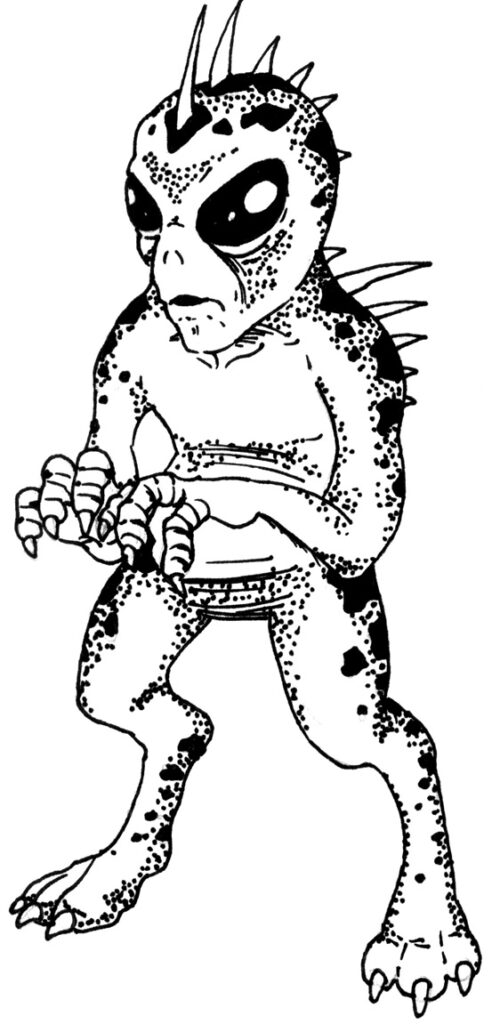
The chupacabra legend emerged explosively in Puerto Rico in March 1995, when local woman Madelyne Tolentino claimed to witness a creature that looked “like a gray alien with spikes.” Her detailed description quickly spread through media outlets and talk shows, giving rise to a modern myth. Sightings of dead livestock with puncture wounds and drained blood were reported across Latin America, the southern United States, and as far as Chile. Despite a lack of physical evidence, the creature took on a powerful life of its own, largely through visual storytelling—from sketches on news programs to homemade “wanted” posters.
The name chupacabra translates literally to “goat sucker,” referring to the alleged method of livestock killings. However, many folklorists believe that the creature is a synthesis of older myths, such as the Vampiro de Moca (Puerto Rico, 1975) and stories of blood-sucking demons dating back centuries in Mesoamerican culture. The sudden popularity of the chupacabra also coincided with the growing influence of paranormal pop culture, particularly in Latin American television and tabloids. This convergence of old-world superstition and modern media laid the groundwork for the creature’s integration into the visual arts.
The Visual Roots of a Modern Monster
From its earliest depictions, the chupacabra was more than a story—it was an image. Sketches based on Tolentino’s description spread widely, many influenced by alien designs from the 1995 movie Species, released just weeks earlier. This connection between fear and familiarity helped establish the creature’s visual identity: alien eyes, spines along the back, a lizard-like body. Over time, artists and media would reshape that image again and again, using it as a flexible symbol of horror, parody, and cultural anxiety.
Monster as Muse: The Chupacabra in Contemporary Art
The chupacabra quickly found its way into galleries and studios, especially in Puerto Rico, where local artists began incorporating the creature into their work. One of the most prominent figures to explore cryptid themes is José Luis Vargas, a Puerto Rican painter born in 1965. Vargas studied at the Royal College of Art in London and frequently addresses themes of myth, identity, and the grotesque. In his paintings, the chupacabra becomes a symbol of postcolonial trauma and cultural distortion, reflecting fears of invasion, mutation, and unseen control.
Other Puerto Rican artists, such as printmaker Lorenzo Homar (1913–2004), though not directly focused on the chupacabra, laid the groundwork for connecting national identity with visual storytelling. Homar, a trained calligrapher and illustrator, designed bold prints and posters that preserved the island’s political and cultural heritage. While his era predated the chupacabra, his influence is evident in how later artists would approach folklore as a form of resistance. Today, some works using the chupacabra evoke his approach to combining graphic intensity with symbolism.
From Canvas to Installation
The chupacabra has also appeared in installation art and performance, including multidisciplinary exhibits exploring Caribbean identity. The creature’s hybrid form makes it perfect for artistic interpretations involving body horror or symbolic mutation. Artists have crafted sculptures, masks, and even costumes based on the myth, often blending traditional Taino symbols with modern science-fiction elements. These works highlight the chupacabra not as a literal monster but as an emblem of cultural dislocation and fear.
The Chupacabra in Pop Culture Imagery
No cryptid has so swiftly become a pop icon as the chupacabra. Its image has appeared in television shows, cartoons, comics, and even video games. Episodes of The X-Files (1997), South Park (1997), and Scooby-Doo! (2005) have all featured their own takes on the creature—sometimes terrifying, other times humorous. In each case, artists and animators have adapted the chupacabra’s features to fit their genre, blending horror, fantasy, and absurdism. The creature’s popularity in mass media has ensured that its image remains fluid and constantly evolving.
Illustrators and character designers have played a major role in shaping how the chupacabra is perceived across audiences. Graphic novelist Javier Hernandez, creator of El Muerto: The Aztec Zombie, has incorporated folklore creatures like the chupacabra into his indie comic narratives. These representations mix tradition with stylized, cartoonish visuals, reflecting how urban legends function in multicultural societies. Collaborations between writers, illustrators, and cultural institutions have brought the chupacabra into educational and entertainment spaces alike.
Branding the Beast
The chupacabra has also been commercialized through art. T-shirt designers, sticker artists, and indie toy makers often use exaggerated or humorous versions of the creature in their merchandise. These designs lean into lowbrow art styles—like those popularized by Ed Roth or Hot Rod culture—emphasizing grotesque features with wild colors and manic energy. While the fear factor is toned down, the visual impact remains strong, turning the monster into a recognizable and marketable image.
Street Art, Folk Art, and DIY Representations
Beyond galleries and pop culture, the chupacabra lives on city walls, in roadside murals, and on hand-painted signage. In places like San Juan, Mexico City, and El Paso, artists have incorporated the creature into street art narratives. These works often depict the chupacabra not as a mythical beast, but as a symbol of societal issues—government neglect, crime, and corruption. The act of placing this figure in public view is both artistic and political, reclaiming fear as communal expression.
In rural areas of Puerto Rico and northern Mexico, the chupacabra has become a staple of folk art. Woodcarvers, mask-makers, and roadside painters include it alongside saints, animals, and devils in their work. These pieces tend to be humorous or ironic, portraying the chupacabra with exaggerated eyes or oddly human traits. This playfulness doesn’t dilute the creature’s power—instead, it makes it part of everyday cultural life.
The Beast in the Barrio
Chupacabra imagery often surfaces during festivals or carnivals, appearing on parade floats or as part of satirical effigies. In some cases, the creature becomes a stand-in for politicians or corrupt institutions, mocked or burned in effigy. Local artists paint the creature on abandoned buildings, using its presence to comment on urban decay or insecurity. This form of grassroots art gives voice to fears that are rarely addressed openly, turning the monster into a mirror for the community’s anxieties.
Tattoo Art, Zines, and Countercultural Aesthetics
In underground art scenes, the chupacabra is a powerful visual symbol—both grotesque and enigmatic. Tattoo artists across the U.S. Southwest and Latin America have created custom flash designs featuring the creature. Styles range from traditional Americana to neo-traditional and illustrative blackwork. The sharp teeth, glowing eyes, and spiny backs lend themselves well to bold, high-contrast ink. These tattoos often reflect personal heritage, rebellion, or fascination with the unknown.
The creature has also made its mark in zine culture and indie illustration. Artists print hand-drawn booklets, stickers, and posters depicting the chupacabra as punk, cyborg, demon, or revolutionary. These interpretations combine humor, fear, and critique, often reflecting marginalized voices. Zines are shared at art fairs, tattoo conventions, and underground markets, spreading the chupacabra’s image through tactile, personal mediums.
Skin and Ink: Cryptids as Identity
Art collectives like Los Días de los Monstruos (founded in 2012) use the chupacabra as part of a broader exploration of Latino identity through myth. Their collaborative works include murals, silkscreens, and wearable art that reference folklore monsters as stand-ins for cultural trauma and resistance. The chupacabra in this context becomes a symbol of survival, hybridity, and power. It’s not just a monster—it’s a cultural avatar worn proudly by those who’ve been othered.
The Chupacabra in Children’s Art and Education
Not all depictions of the chupacabra are sinister. In fact, the creature has become a popular subject in children’s literature and classroom art projects, especially in Latin American communities. Books like Chupacabra! (2018) by Adam Rubin and illustrator Daniel Salmieri introduce the creature with a light, whimsical tone. Rubin, born in 1983 in California, is known for blending folklore with humor in his books. Salmieri’s illustrations soften the monster’s features, making it both endearing and mysterious.
In schools, students often engage with the chupacabra during folklore units or Hispanic Heritage Month. Teachers encourage children to draw their own version of the creature, prompting imaginative and diverse results. These drawings often include bright colors, wings, horns, or costumes, showing how kids reinterpret fear through play. Educators use these exercises to teach about cultural storytelling and myth-making.
Drawing the Unknown
Children’s museums and libraries sometimes host folklore-themed exhibits that include puppet shows or craft tables featuring the chupacabra. These activities blend education with art, encouraging young people to explore legends through a creative and visual lens. Illustrators specializing in children’s books often create age-appropriate versions of the creature—less threatening, more fantastical. This helps demystify folklore, showing that even monsters can be understood, imagined, and reinvented.
Myth, Memory, and the Chupacabra as Cultural Symbol
While it began as a cryptid mystery, the chupacabra has matured into a multifaceted cultural symbol, especially in diasporic and postcolonial art. It stands in for fears of invasion, dislocation, and loss—frequent themes in works by Latino artists grappling with identity. Its strange appearance and disputed origin make it a perfect metaphor for cultural hybridity, where traditions mix with external pressures. Artists use it to examine how myth helps communities process trauma and memory.
Contemporary curators have included chupacabra-themed works in group exhibits on folklore, identity, and resistance. Shows like Monsters and Memory (2020, Los Angeles) featured paintings, sculptures, and installations centered on legendary creatures, with the chupacabra often taking center stage. These pieces evoke personal and collective histories, suggesting that myth can help tell truths history tries to erase. In this context, the creature becomes less about horror and more about healing.
Monster or Mirror?
Ultimately, the chupacabra serves as a mirror of the culture that created it. In art, it becomes a flexible visual symbol—one that reflects danger, change, survival, and imagination. Whether drawn in blood-red ink or neon pink paint, it continues to spark conversations about who we are and what we fear. Through the eyes of artists, the chupacabra is not just a monster—it’s a message.
Key Takeaways
- The chupacabra legend began in Puerto Rico in 1995 and rapidly became a global cryptid myth.
- Artists use the chupacabra as a symbol of fear, folklore, rebellion, and cultural identity.
- It appears in street art, tattoo design, children’s books, gallery exhibits, and performance art.
- Its visual design varies widely, from terrifying and grotesque to humorous and endearing.
- Contemporary art uses the creature to explore themes like migration, memory, and hybridity.
Frequently Asked Questions
- Who first reported the chupacabra?
Madelyne Tolentino reported the first sighting in Puerto Rico in 1995. - Are there artists who use the chupacabra in their work?
Yes—José Luis Vargas, Javier Hernandez, and others use it in paintings, comics, and prints. - What does the chupacabra symbolize in art?
It often represents fear, cultural loss, rebellion, or social commentary. - Is the chupacabra used in children’s books?
Yes—books like Chupacabra! by Adam Rubin introduce it in kid-friendly ways. - Has the creature appeared in tattoo or street art?
Frequently. It’s a popular image in zines, tattoo flash, and Latin American murals.