During the 17th century, the Dutch Republic flourished economically, culturally, and scientifically. Amid this prosperity, a distinct style of painting emerged — Dutch still life — which focused on objects carefully arranged with precise detail. While they may appear decorative at first glance, these paintings often carried complex symbolic meanings. The genre was widely collected and admired in its time, reflecting the values, anxieties, and ideals of Dutch society during its Golden Age.
The Dutch Golden Age, lasting roughly from 1588 to 1672, was marked by the rise of a wealthy merchant class, Protestant religious influence, and independence from Spanish Catholic rule. In this cultural climate, art shifted away from overt religious themes toward more secular subjects. Still life paintings — featuring items like food, flowers, books, and instruments — suited these changing tastes. These works offered both beauty and moral reflection, making them ideal for private homes rather than churches.
Artists like Pieter Claesz (1597–1660), Willem Claesz Heda (1594–1680), and Clara Peeters (active 1607–1621) were central figures in shaping the still life tradition. Claesz, known for his muted palettes and symbolic table scenes, helped define the vanitas subgenre. Heda specialized in breakfast pieces, emphasizing realism and elegance. Peeters, one of the earliest women to gain recognition in this field, produced highly detailed compositions that often included her own reflection in glassware — a subtle assertion of her identity.
These artists elevated humble objects into layered visual narratives. They painted silver goblets, peeled lemons, and crumbling bread with such finesse that the viewer was drawn in — only to find that beauty often came with a warning. Dutch still life paintings became windows into a worldview where every detail held deeper meaning, reflecting the moral and spiritual concerns of a prosperous yet reflective society.
The Language of Objects — Why Symbolism Mattered
In Dutch still life paintings, every item carries weight. A half-eaten meal might suggest wastefulness, while a fallen flower could hint at lost innocence. The symbolism was subtle but deliberate, crafted to speak directly to the viewer’s conscience. These paintings weren’t just displays of skill or wealth — they were moral lessons, cloaked in beautiful arrangements.
The religious backdrop of the Dutch Republic was primarily Calvinist, a denomination that discouraged excessive religious imagery. As a result, artists began to embed spiritual messages in everyday objects. The Dutch took pride in their sobriety and restraint, values that found expression through carefully curated still life scenes. Instead of depicting saints or biblical events, painters used books, instruments, and extinguished candles to express themes of transience and humility.
Calvinist Morality and Visual Codes
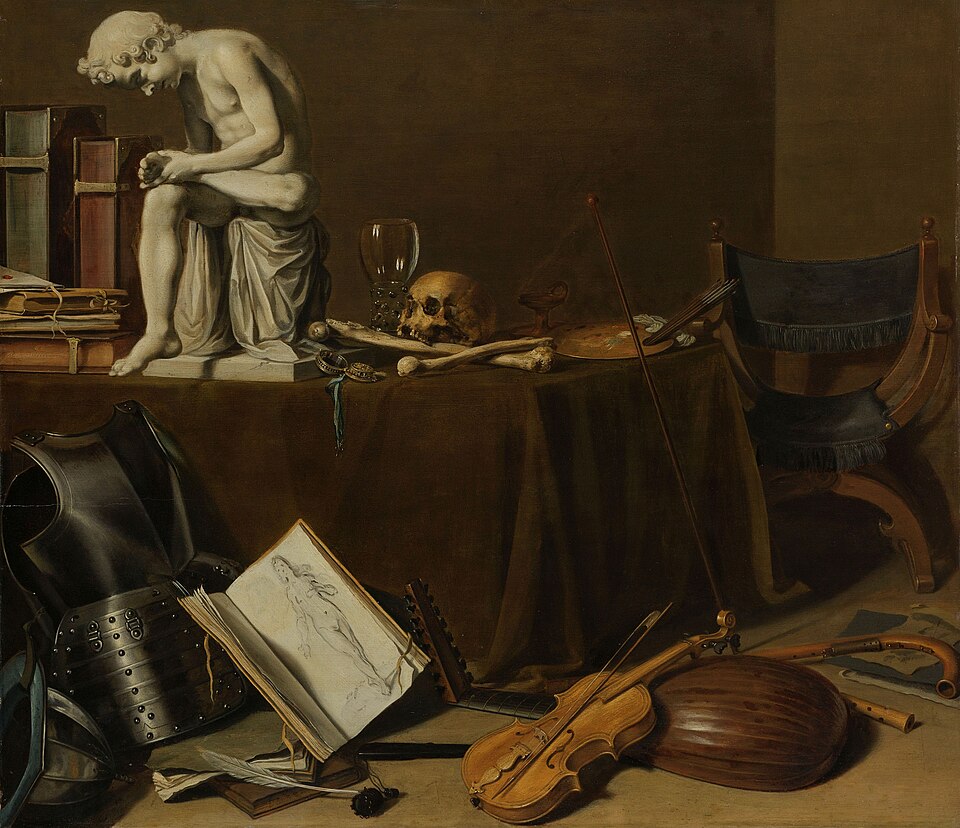
One prominent theme was vanitas, a reflection on the fleeting nature of life. Common vanitas symbols included skulls, which served as memento mori — reminders that death comes for all, regardless of wealth or status. Timepieces like hourglasses and pocket watches emphasized the shortness of life. The inclusion of rotting fruit or wilting flowers conveyed decay and impermanence, encouraging viewers to focus on spiritual rather than earthly pursuits.
A famous example is Pieter Claesz’s “Vanitas Still Life with Violin and Glass Ball” (1628), where a violin, a cracked glass orb, and a tipped-over wine glass create a mood of silent warning. The violin suggests the fleeting pleasures of music and art, while the orb may allude to the fragility of worldly knowledge. Each object in the scene contributes to an overall message: everything we cherish in life is temporary, and only moral integrity endures.
Vanitas: Beauty with a Warning
The vanitas genre is perhaps the most symbolically charged subcategory of Dutch still life painting. Derived from the Latin word for “emptiness” or “futility,” vanitas works invite the viewer to reflect on the brevity of life and the futility of materialism. Far from being just decorative, these paintings were meant to provoke spiritual introspection. They were especially popular among middle-class patrons who saw them as meditative tools.
Artists used a visual language that their audience would understand intuitively. Skulls and bones directly referenced death, while smoking pipes or snuffed candles hinted at the end of life’s pleasures. Mirrors, soap bubbles, and cracked glass were other favorite motifs, each pointing to the idea that nothing in this world lasts. Beauty and wealth may shine for a moment, but all is eventually reduced to dust and silence.
Skulls, Soap Bubbles, and Fading Flowers
Harmen Steenwijck (1612–after 1656), a student of Gerrit Dou and follower of the Leiden fijnschilders (fine painters), was among the leading vanitas painters of his era. His “Vanitas Still Life” (circa 1640) is a stunning example of the genre. In this painting, a skull sits beside a tilted chalice, a sword, and a book — objects symbolizing death, power, and knowledge. A small lamp glows dimly, reinforcing the transience of light — both literal and spiritual.
These works were not only meant to caution against pride and vanity but also to reinforce moral humility. Viewers were encouraged to turn their thoughts away from wealth and success and toward God and salvation. The paintings served as visual sermons — quiet, reflective, and piercingly honest. Despite their somber themes, the technical beauty of vanitas paintings remains profoundly captivating even today.
Food, Wealth, and the Delicate Balance of Pride
At first glance, Dutch still lifes overflowing with fine foods, exotic fruits, and precious tableware might seem indulgent. However, these paintings often carry dual meanings. Yes, they celebrated the prosperity of the Dutch Republic, but they also served as cautionary tales. The luxurious items are portrayed with such perfection that they invite admiration — but also pause, as the viewer considers their symbolic implications.
Oysters, lemons, figs, and rare spices were symbols of the thriving Dutch global trade network. But these same foods also carried moral connotations. Oysters, for example, were commonly associated with sensual pleasure and temptation. A half-peeled lemon represented something attractive on the outside but bitter beneath — a metaphor for hidden vice or the danger of overindulgence.
Oysters, Lemons, and the Silent Sermon
Willem Kalf (1619–1693), born in Rotterdam, mastered the art of depicting opulence with restraint. His still life paintings often featured items like Chinese porcelain, Venetian glass, and Turkish carpets — visual references to the Dutch Republic’s international commerce. Yet in works such as “Still Life with a Silver Jug and a Porcelain Bowl” (c. 1660), the background is dark and somber, adding an air of moral seriousness. Kalf’s compositions balance admiration with quiet critique.
Kalf didn’t just paint objects — he rendered them with such realism that viewers could almost touch the silver or smell the ripe fruit. Yet, a single cracked nut or a drooping flower could shift the entire emotional tone of the painting. These subtle details remind us that abundance can quickly turn to excess, and beauty is fragile. Kalf’s still lifes are not mere celebrations of wealth but meditative warnings against its corrupting power.
Hidden Narratives in Flower Paintings
Flower paintings were especially popular in the Dutch Golden Age and remain beloved today for their lush detail and vibrant color. But beyond the surface beauty lies a more complex message. Each flower had a symbolic meaning, drawn from both Christian iconography and folklore. The compositions, though seemingly spontaneous, were carefully arranged to convey moral or philosophical themes.
Tulips, particularly during the infamous Tulip Mania of the 1630s, symbolized wealth, vanity, and the dangers of economic speculation. Roses could represent love or the Virgin Mary, depending on context. Insects were common additions: flies might symbolize decay, while butterflies hinted at the soul or resurrection. These additions provided layers of meaning, encouraging the viewer to reflect on more than just botanical beauty.
The Silent Story of Decay in Bloom
One of the most skilled and celebrated flower painters was Rachel Ruysch (1664–1750), born in The Hague. Trained by the flower painter Willem van Aelst, she began painting professionally by age 15. Ruysch came from a scientific family — her father was a professor of anatomy and botany — which gave her compositions remarkable botanical accuracy. She also worked as court painter to the Elector Palatine in Düsseldorf from 1708 to 1716, an unusual honor for a woman at the time.
Ruysch’s paintings often show bouquets in full bloom, but with petals drooping, leaves curling, and insects beginning their quiet work of decomposition. In her “Flowers in a Glass Vase” (c. 1704), every bloom is rich with texture, but a fly on the stem and a curling petal hint at the decay already underway. These paintings are visual poems about life’s beauty — and its brevity. Ruysch reminds us that even in the height of glory, decline is never far behind.
The Artists Behind the Symbolism
While the objects in Dutch still lifes speak volumes, so do the lives of the artists who painted them. Many of these painters came from modest backgrounds and worked their way up through the rigorous training systems of city guilds. They honed their craft in studios, sometimes working in partnership with other artists, and often navigating the practical demands of patronage, marriage, and local politics. Each artist brought personal insight into the symbolic choices in their work.
Clara Peeters (b. 1594, Antwerp – active after 1621) is one of the earliest documented female still life painters. She often included fish, cheese, bread, and pewter in her arrangements, and cleverly signed her name on knife blades or glass rims. Her ability to place her own reflection in shiny surfaces was not just a display of skill but a subtle claim to authorship and professional identity in a male-dominated field. She likely trained in Antwerp, though records of her apprenticeship remain scarce.
Masters of Meaning — Who Were They Really?
Pieter Claesz (1597–1660), born in Berchem near Antwerp, moved to Haarlem in 1620 where he became a leading figure in still life painting. He joined the Haarlem Guild of St. Luke in 1620, establishing his workshop shortly after. His son, Nicolaes Berchem, became a successful painter in his own right, though he focused on Italianate landscapes. Claesz’s work is known for its muted tones and minimalistic compositions, emphasizing a meditative mood.
Another giant of the genre, Jan Davidsz. de Heem (1606–1684), was born in Utrecht and trained under his father before moving to Antwerp. He painted some of the most lavish and colorful still lifes of the 17th century, incorporating insects, fruit, and precious metals into his scenes. He also joined the Guild of St. Luke in both Utrecht and Antwerp, building a network of clients across the Netherlands and Flanders. De Heem’s art balances visual delight with spiritual messaging, warning against gluttony and pride.
How to Read a Still Life Today
For today’s viewer, Dutch still life paintings might seem charming or decorative — a far cry from their original intent. But with a bit of insight, anyone can begin to read these works as visual texts filled with meaning. The arrangement of objects, the lighting, and the state of the food or flowers all play a role in the message. These were not random assortments but carefully designed visual sermons meant to provoke thought.
Begin by looking closely. Notice the objects that seem out of place: a tilted goblet, a rotting fruit, a cracked shell. Ask what these might have meant in a society steeped in Calvinist values and commercial success. Still life paintings often walk a fine line between pride and humility, between admiration of craftsmanship and moral instruction. They are quietly moralizing — not through fear, but through thoughtful reflection.
Tips for Spotting Symbolism in the Museum or Online
Major museums like the Rijksmuseum, the Mauritshuis, and the National Gallery London have world-class collections of Dutch still lifes. Whether viewing in person or online, take your time with each painting. Look for common symbols — skulls, hourglasses, butterflies, insects — and consider how they relate to the overall composition. Use museum labels as guides, but don’t be afraid to draw your own interpretations.
In our modern world of disposable images and instant gratification, these paintings offer something different: slowness, depth, and quiet wisdom. They ask us to reflect not just on beauty, but on time, mortality, and what truly matters. While created in a different era, Dutch still life paintings still speak to modern concerns about materialism, identity, and legacy. They remind us that, in the end, everything passes — and that awareness is a kind of grace.
Key Takeaways
- Dutch still life paintings were rich with symbolic meaning, not merely decorative.
- Common themes include mortality, morality, and the fleeting nature of beauty.
- Artists like Claesz, Kalf, Ruysch, and Peeters used objects as visual metaphors.
- Calvinist values shaped the genre’s subtle, moralistic tone.
- Still lifes encourage viewers to reflect on time, wealth, and spiritual priorities.
Frequently Asked Questions
- What is the meaning behind vanitas paintings?
Vanitas paintings remind viewers of life’s brevity and the futility of earthly pleasures. - Who were some key Dutch still life painters?
Pieter Claesz, Willem Kalf, Rachel Ruysch, Clara Peeters, and Jan Davidsz. de Heem are leading figures. - Why are skulls and rotting fruit common in Dutch still lifes?
They symbolize death, decay, and the impermanence of material wealth. - What role did religion play in Dutch still life art?
Calvinism influenced artists to embed moral and spiritual messages in everyday objects. - Where can I see Dutch still life paintings today?
Major collections are held at the Rijksmuseum, Mauritshuis, and National Gallery London.