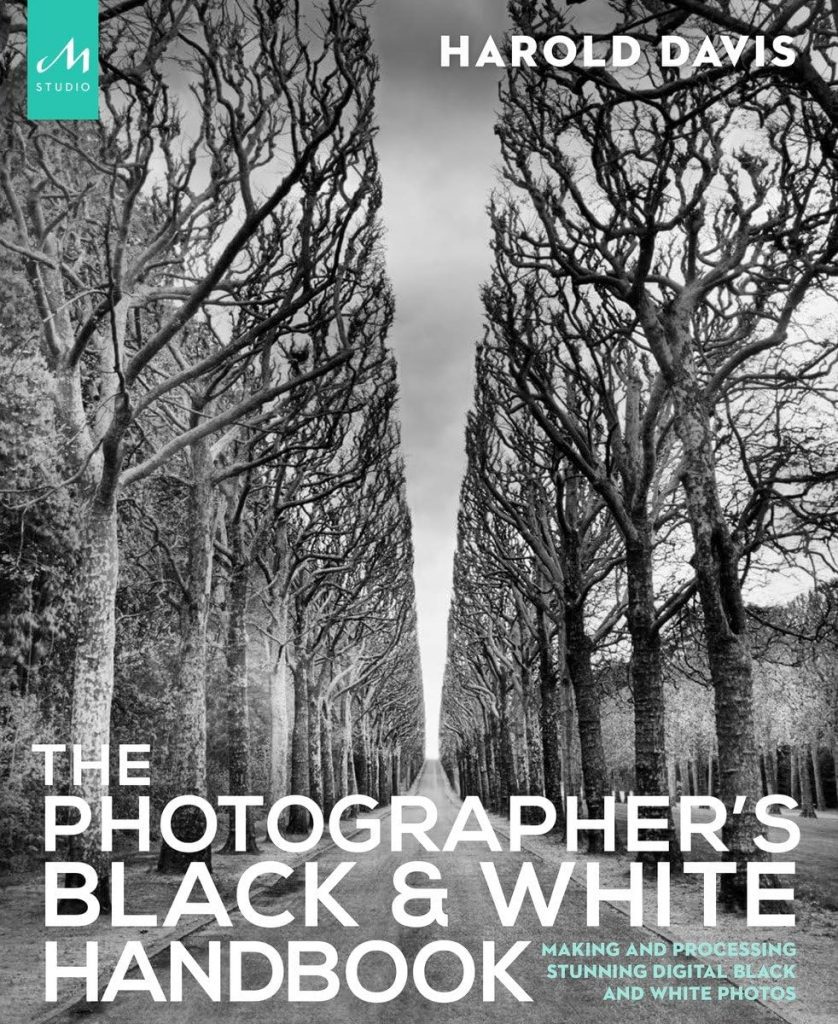
The Photographer’s Black and White Handbook: Making and Processing Stunning Digital Black and White Photos by Harold Davis, published in 2017 by Monacelli Press, is a comprehensive guide that unites technical instruction, visual inspiration, and artistic philosophy. Tailored specifically for the digital age, Davis offers a deep dive into how to create compelling black and white images—from in-camera decisions to advanced post-processing techniques.
Harold Davis is known not only as a fine art photographer, but also as a writer with a strong voice and an intuitive understanding of how photography functions as both craft and personal expression. In this book, he delivers an essential resource for photographers interested in unlocking the emotional and compositional power of monochrome.
With its combination of gear advice, software tutorials, project ideas, and stunning examples, the book is well suited for photographers who want to push beyond presets and truly understand the aesthetic language of black and white.
Main Themes
A central theme of the book is black and white as artistic choice, not default. Davis makes the case that removing color is not just a stylistic decision—it’s a compositional and emotional recalibration that changes how viewers engage with form, light, and texture.
Another key theme is the relationship between vision and technique. Davis emphasizes that black and white photography requires a specific way of seeing: one that prioritizes tonal relationships, dynamic range, shadow detail, and abstract structure. The book teaches readers how to think in black and white before they ever click the shutter or open an editing app.
A third theme is creative control through digital processing. While traditional film black and white has its own romance, Davis shows how digital tools open up new possibilities—particularly for fine-tuning contrast, applying selective adjustments, and experimenting with layered tonal effects.
Artistic Context
Black and white photography carries a legacy that stretches from the early days of the medium to the present. Davis situates his approach within this continuum, referencing historic figures like Ansel Adams and Edward Weston while also showing how today’s digital photographers can build on those traditions with new tools.
This book is particularly relevant in the post-film context, where black and white is no longer an inherent limitation, but a deliberate aesthetic. Davis blends this historical reverence with modern sensibilities, encouraging experimentation and hybrid workflows that combine analog ideas with digital precision.
He also addresses the psychological and symbolic weight of monochrome, noting how it can evoke timelessness, mood, and abstraction in ways color often cannot.
Style and Structure
The book is divided into clear, practical chapters, including:
- The visual language of black and white
- Gear and shooting considerations
- Composition techniques
- Tonal range and exposure
- Post-processing in Adobe Lightroom, Photoshop, and plug-ins
- Printing for black and white
- Creative exercises and project suggestions
Each section is supported with richly detailed example images and step-by-step tutorials. Davis writes with clarity and depth, assuming that the reader has basic photography knowledge but is eager to go further.
The visual layout of the book is strong—images are well-reproduced and thoughtfully sequenced, with captions that illuminate the technical and creative choices behind each shot.
Key Insights and Analysis
One standout insight is that great black and white photography starts with good color data. Davis explains how capturing a rich raw file—even in color—provides the flexibility needed to sculpt powerful monochrome images in post-processing. This flips the common assumption that black and white begins with desaturation.
Another important takeaway is the emphasis on tonal visualization. Davis teaches how to pre-visualize how colors will translate into grays, whites, and blacks, which informs choices around lighting, subject selection, and exposure.
A third valuable insight is his approach to layered processing and masking. Davis walks readers through advanced workflows that treat the image almost like a painter treats a canvas—refining different zones of light and shade to maximize emotional and graphic impact.
Notable Quotes and Ideas
- Davis (paraphrased): Black and white isn’t about nostalgia—it’s about clarity, abstraction, and timeless expression.
- A guiding principle: Seeing in black and white means learning to recognize tone, texture, and gesture as the key compositional elements.
- On printing: A black and white print isn’t just an output—it’s a final creative act, where paper, ink, and presentation all matter.
These ideas elevate the book beyond instruction, turning it into a meditative toolkit for personal vision.
Who Should Read It?
This book is ideal for intermediate to advanced photographers who want to master black and white in a digital workflow. It’s particularly valuable for fine art photographers, photojournalists, landscape photographers, and those with a passion for expressive composition.
Educators and workshop leaders will find it useful as a supplemental or primary text, thanks to its blend of philosophy and technique. Designers and mixed media artists might also find inspiration in Davis’s layered, painterly approach.
While beginners can learn a lot from it, some chapters may be advanced for those unfamiliar with raw processing or layer masks. That said, the visuals and tone make it accessible with a bit of dedication.
Final Thoughts & Rating
The Photographer’s Black and White Handbook is both a practical manual and an artistic meditation. Harold Davis offers more than just tutorials—he provides a vision for what black and white photography can be in the digital era. Whether you’re refining your technique or reigniting your creative spark, this book delivers both the tools and the insight to help you grow.
In a visual world dominated by color, Davis reminds us that monochrome remains as powerful and expressive as ever.
Rating: 4.8 out of 5
(A thoughtful, technically rich, and artistically inspiring guide—essential for anyone serious about mastering digital black and white photography.)