Isaac Ilyich Levitan was born on August 30, 1860, in the small town of Kybartai, then within the Russian Empire’s western borders. His family was Jewish, and he came into the world during a time of tightening restrictions on Jewish life under Tsarist rule. Levitan’s father, Ilya Abramovich Levitan, worked for a railroad company and was known as a self-taught intellectual with a love of German literature and languages. Though the family lived modestly, education and cultural refinement were core values in the household.
In the early 1870s, the Levitans moved to Moscow in pursuit of better economic opportunities and academic prospects. But life in the city proved difficult for a Jewish family, and their situation became dire after the death of Isaac’s mother in 1875, followed by his father shortly thereafter. At just 15 years old, Levitan was orphaned and thrust into extreme poverty. Despite these tragic setbacks, he continued his art studies, supported in part by scholarships and the kindness of teachers who recognized his early promise.
The Jewish Son of a Railroad Worker in the Russian Empire
Young Levitan’s deep sensitivity to nature was evident from childhood. Frequent family relocations and countryside travels introduced him to the diverse beauty of the Russian landscape. These early visual memories—sun-dappled roads, quiet rivers, brooding forests—would later emerge with poetic force on his canvases. For Levitan, nature became not just a subject, but an emotional language through which he processed sorrow, joy, and spiritual longing.
In 1873, at the age of 13, Levitan was accepted into the Moscow School of Painting, Sculpture and Architecture. There, he found mentors who would shape his artistic vision, including the famed landscape painter Alexei Savrasov. But Levitan’s path was not without difficulty. In 1879, due to discriminatory anti-Jewish laws, he was briefly expelled from the school. His reinstatement later that year—thanks to strong advocacy by his teachers—was a rare institutional concession, allowing him to continue refining his unique artistic voice.
Artistic Formation and the Moscow School
Levitan’s formative years at the Moscow School were instrumental in shaping his style and career. His most influential teacher, Alexei Savrasov, encouraged him to explore “mood landscapes,” scenes that conveyed emotion rather than mere topographical detail. Under Savrasov’s guidance, Levitan developed an ability to express spiritual and psychological states through light, color, and atmosphere. Other instructors, like Vasily Polenov and Vasily Perov, trained him in the traditions of Russian Realism and the technical precision necessary to support expressive work.
This period also marked the beginning of his lifelong friendship with writer Anton Chekhov, whom he met during the 1870s. The two would remain close until Levitan’s death, often inspiring each other’s creative output. Their shared love of nature, quiet introspection, and simple scenes of Russian life created a deep bond between their respective crafts. Levitan’s 1877 painting “Autumn Day. Sokolniki,” exhibited while he was still a student, gained public attention for its quiet melancholy and lyrical tone.
Studying Under Savrasov and the Peredvizhniki Influence
During the 1880s, Levitan fell under the influence of the Peredvizhniki movement—the “Wanderers”—a group of Russian painters who rejected academic elitism in favor of realism and national themes. Their goal was to bring art to the people by organizing traveling exhibitions and highlighting the everyday lives of Russians. Though not a formal member initially, Levitan adopted many of their principles, blending them with his more introspective approach to landscape.
Levitan’s financial struggles persisted during these years, forcing him to share cramped living quarters with other students and survive on meager meals. Yet even in hardship, his artistic output was steady and emotionally charged. Teachers, friends, and benefactors occasionally provided him with funds, canvases, and brushes. Through perseverance and talent, Levitan emerged from the Moscow School not just as a student of Russian landscape painting, but as a rising voice of its emotional potential.
Rise to National Recognition
By the end of the 1880s, Levitan’s reputation had grown significantly, and he was gaining national recognition. His works from this era reflect a mastery of mood, often presenting understated yet deeply moving scenes of the Russian countryside. Pieces like “Evening Bells” (1892) and “Quiet Abode” (1890) illustrate a painter who saw nature as a mirror of the soul. These works were featured in several Peredvizhniki exhibitions, earning him critical acclaim and a growing following.
A major milestone came with the completion of “Vladimirka Road” in 1892. This solemn painting depicted the long, lonely road once used to transport prisoners to Siberia. The scene was simple: a dirt road stretching into a pale sky, yet it was heavy with historical weight and moral significance. It was a painting about memory, punishment, and silent endurance—qualities that resonated deeply with Russian viewers. “Vladimirka Road” was a turning point that revealed the full depth of Levitan’s moral and psychological insight.
Painting Russia’s Soul: Breakthrough Works and Exhibitions
Levitan soon became a regular exhibitor with the Peredvizhniki, and his works found a permanent home in elite collections, most notably the Tretyakov Gallery. Pavel Tretyakov, the gallery’s founder and a key supporter of Russian realism, acquired many of Levitan’s paintings and offered him both financial stability and national prestige. Through this support, Levitan could focus more fully on his art without the same economic pressures of earlier years.
Perhaps his most haunting and revered work, “Above Eternal Peace” (1894), brought together all his thematic strengths: solitude, spirituality, and vast, melancholy beauty. The painting shows a vast lake under stormy clouds, with a church and graveyard at the edge of the horizon. It’s a depiction not of religion per se, but of the quiet dignity and mystery of life’s transience. Critics hailed it as a masterpiece, and many considered Levitan the finest landscape painter in Russia by that time.
Travels, Relationships, and Solitude
Even at the height of his fame, Levitan remained a solitary figure. He often traveled throughout Russia in search of new inspiration and preferred rural towns to the bustle of the capital. Places like Ples on the Volga River became central to his creative vision. There, he produced some of his most lyrical works, including “Evening. Golden Ples,” a sunset-drenched scene full of peace and gentle motion.
Though he never married, Levitan had close personal relationships, particularly with the Chekhov family. His friendship with Anton Chekhov was central to his personal life, and there is some scholarly speculation that he harbored romantic feelings for Chekhov’s sister, Maria Pavlovna Chekhova. However, no formal relationship developed between them, and Levitan remained a bachelor until his death. He was a private man, and his emotional life was often poured into his canvases rather than revealed publicly.
A Restless Soul and a Life in Transit
Levitan painted many of his landscapes outdoors, directly in front of the scenes he was capturing. This plein air approach gave his work an immediacy and vibrancy that studio work sometimes lacked. He believed in the importance of witnessing a place firsthand—the smell of wet soil, the angle of late afternoon light, the rustle of birch leaves. These impressions allowed him to infuse his landscapes with a visceral presence that viewers could feel, not just see.
At the same time, his emotional sensitivity made him vulnerable to depression, which sometimes left him isolated even among friends. He often retreated to small cottages or remote villages to work alone, avoiding social events and artistic circles. Levitan also drew influence from literature and music, frequently referencing Russian poetry and classical compositions in his letters and titles. His quiet, thoughtful temperament made him both a revered artist and a somewhat enigmatic figure in Russian cultural life.
Late Style and Final Years
In the final years of his life, Isaac Levitan worked with a growing sense of urgency. In 1895, he was diagnosed with a serious heart condition that would gradually deteriorate over the next five years. Knowing that his time was limited, he intensified his creative output. The melancholy that had always underpinned his work deepened, but his colors often grew brighter, and his brushstrokes more expressive, suggesting a desire to leave behind a lasting impression of beauty and peace.
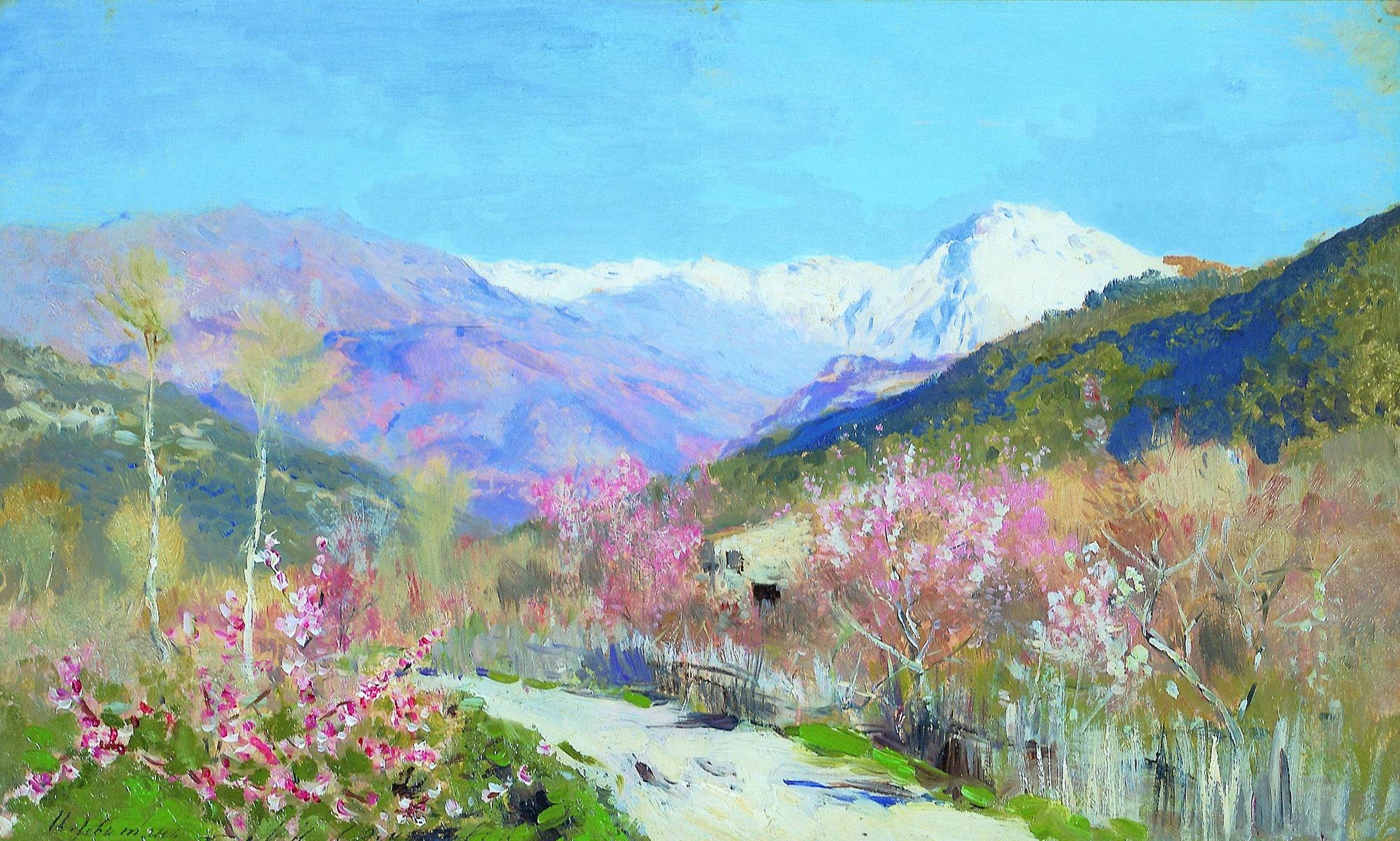
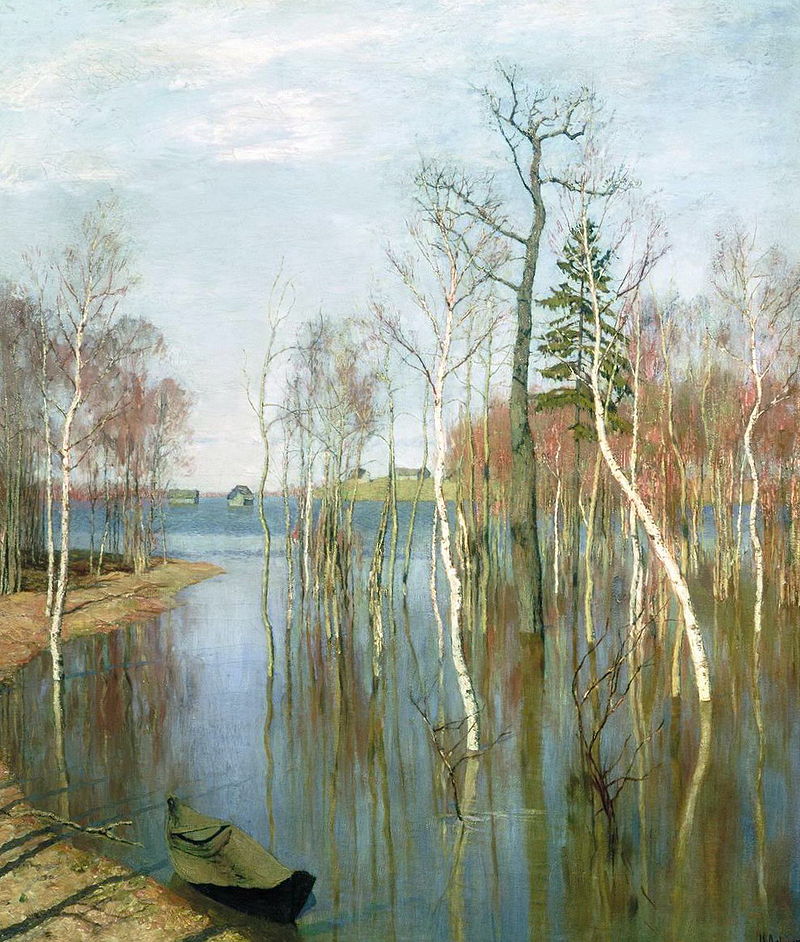
This period saw the creation of some of his most admired works, including “Golden Autumn” (1895) and “March” (1895). These paintings showed a shift toward a more luminous palette—fields of gold, deep blue skies, the lingering warmth of sunlight. Rather than brooding introspection, these works radiated a sense of spiritual calm and seasonal renewal. They were no less emotional than his earlier works, but they expressed a different phase of his soul, more accepting, less burdened.
Fading Health and Artistic Intensity
In 1898, Levitan returned to the Moscow School of Painting, Sculpture and Architecture—not as a student, but as a professor. His appointment to the faculty was a significant recognition of his artistic achievements, particularly since Jewish artists rarely held such posts in Russian institutions. He taught only for a short time, but his influence on a new generation of landscape painters was already taking root. His students admired his honesty, his deep connection with nature, and his quiet humility.
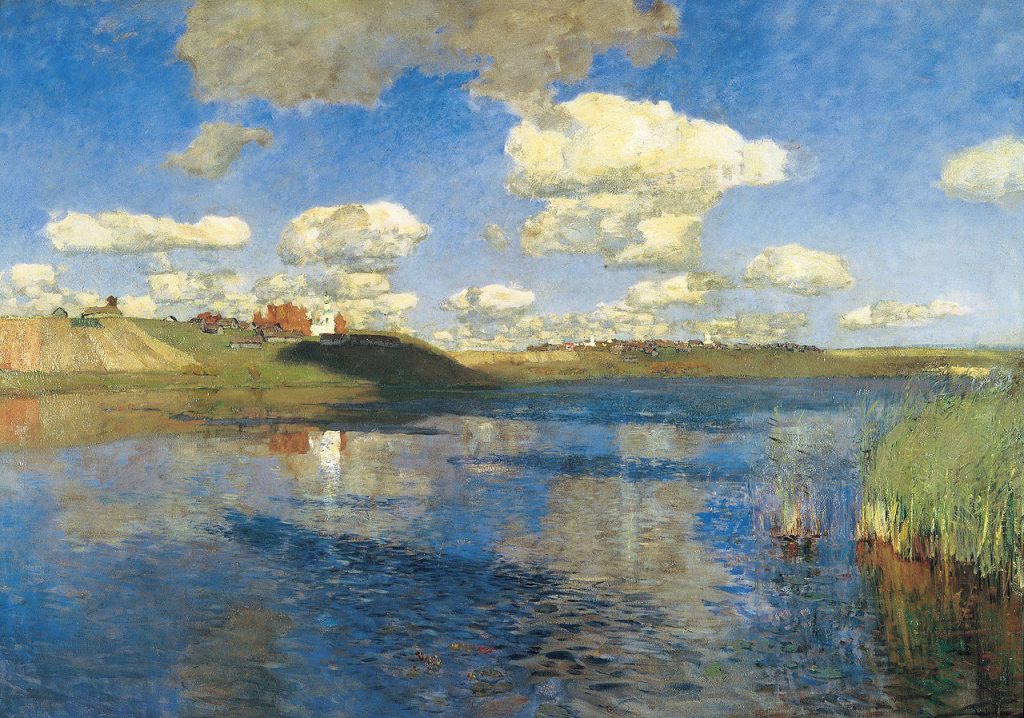
Despite his declining health, Levitan continued to travel and paint, often ignoring doctors’ warnings. He completed “Lake. Russia” in 1900, widely considered the summation of his career. The work depicts a vast, tranquil lake beneath a luminous sky, the land stretching into the infinite. It’s a serene and majestic tribute to the Russian landscape—a land Levitan deeply loved, even though he was often treated as an outsider within it. Just months after completing the painting, on July 22, 1900, he passed away in Moscow at the age of 39.
Artistic Legacy and Influence
Isaac Levitan left behind over 1,000 works, including oil paintings, sketches, and drawings. His influence on Russian landscape painting was both immediate and enduring. While he began in the tradition of realism, Levitan’s unique contribution was his ability to infuse landscapes with deep emotional resonance—what came to be known as “mood landscapes.” This approach shifted Russian landscape painting away from literal depiction and toward psychological interpretation. His work opened the door for future artists to explore emotion through landscape without abandoning realism.
Levitan’s art did not idealize the Russian countryside; instead, it captured its soul—its silence, endurance, and hidden beauty. Scholars and critics often remark on the moral and spiritual undertones of his work. He was compared to Chekhov in the realm of painting: both artists found greatness in small things, and both saw the beauty in sadness. Their art shared a quiet, unassuming depth that has only grown in appreciation over the years.
The Master of Mood Landscapes in Russian Art History
Levitan’s paintings remain cornerstones of Russian national art, housed in major museums like the Tretyakov Gallery in Moscow and the State Russian Museum in St. Petersburg. Many of his works are featured in textbooks and taught in Russian art history courses from secondary school through university. Even during the Soviet period, when art was expected to serve ideological purposes, Levitan was revered for his pure artistic vision and his deep connection to the Russian land.
His influence extended beyond his life and era. Generations of Soviet and post-Soviet artists cited Levitan as a guiding light in capturing the landscape not just as it looked, but as it felt. Streets, schools, and even parks have been named in his honor across Russia. In 2005, his face appeared on a commemorative coin issued by the Bank of Russia, further cementing his legacy as one of the nation’s most beloved artists. More than a century after his death, Isaac Levitan continues to define how Russians see and feel their homeland.
Rediscovering Levitan Today
In recent decades, Isaac Levitan’s art has undergone a renaissance, with scholars and curators reevaluating his work in the context of modern Russian identity. Retrospective exhibitions in the 2000s and 2010s—particularly at the Tretyakov Gallery—introduced his genius to new audiences. These exhibitions highlighted not just his technical skill but his profound emotional insight, attracting both domestic and international visitors. Many came away seeing Levitan not only as a painter of nature but as a philosopher in paint.
The digital era has expanded access to his work even further. Online museum portals now showcase high-resolution scans of his paintings, allowing global audiences to study his technique up close. Art historians and critics have created video lectures and virtual exhibitions, making Levitan accessible far beyond Russia. His works have appeared in traveling exhibitions across Europe, sparking renewed interest in his life and artistic philosophy.
Global Exhibitions, Scholarship, and Digital Archives
Levitan’s name is now frequently cited in discussions about national character and artistic heritage. Scholars have noted how his art conveys timeless human concerns—solitude, memory, longing for peace—in a way that transcends cultural boundaries. His landscapes, though deeply rooted in the Russian soil, speak to a broader human experience. They invite viewers to contemplate the eternal through the earthly, to find the infinite in the quiet curve of a riverbank.
Today, Levitan’s role in Russian art is not just historical—it’s symbolic. He represents a bridge between tradition and innovation, emotion and form, national identity and individual vision. His paintings continue to inspire artists, writers, and thinkers who seek to express complexity through simplicity. More than a century after his passing, Levitan’s quiet voice still echoes across time, inviting us to pause, observe, and feel.
Key Takeaways
- Isaac Levitan was born in 1860 to a Jewish family in Kybartai and rose to become Russia’s greatest landscape painter.
- He studied under Alexei Savrasov and was influenced by the Peredvizhniki realist movement.
- Levitan’s major works include “Vladimirka Road,” “Above Eternal Peace,” and “Golden Autumn.”
- Though he never married, he had close personal ties with Anton Chekhov and was a private, introspective figure.
- His legacy continues today through global exhibitions and digital archives that preserve his profound vision.
Frequently Asked Questions
- Where was Isaac Levitan born?
Levitan was born on August 30, 1860, in Kybartai, in what is now Lithuania. - Was Levitan a part of any major art movement?
Yes, he was closely associated with the Peredvizhniki (The Wanderers), a group of realist Russian artists. - Did Isaac Levitan ever marry?
No, Levitan never married, although he maintained close relationships, particularly with the Chekhov family. - What is Levitan known for?
He is best known for his “mood landscapes,” which use natural scenery to convey deep emotional and spiritual themes. - Where can I see Levitan’s paintings today?
His most famous works are housed at the Tretyakov Gallery in Moscow and the Russian Museum in St. Petersburg.