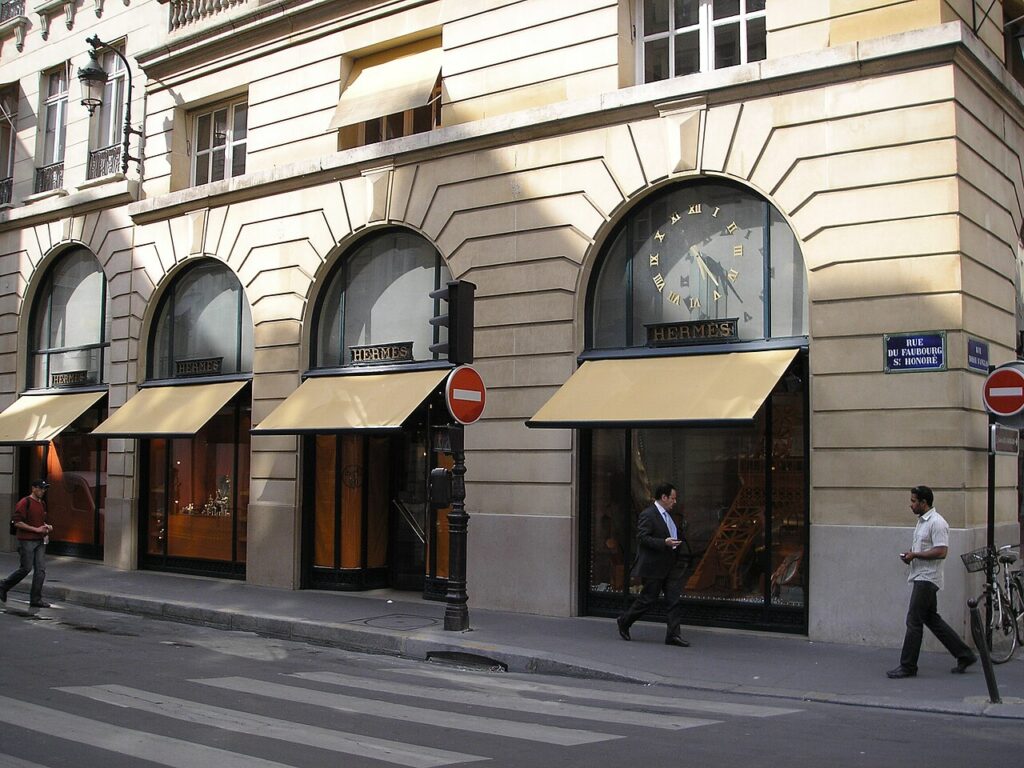
Few companies have spent nearly two centuries convincing people that less can be more. Hermès is famous for luxury handbags, silk scarves, and long waiting lists, but those are only the visible results. Underneath is a company built on patience, craftsmanship, restraint, and an unusual willingness to ignore many of the rules modern businesses follow.
Here are nine secrets hidden inside the Hermès approach that creative people can learn from.
1. It Started With Horses, Not Fashion
Hermès began in 1837 as a workshop making harnesses and saddles for horse-drawn transportation. Long before it became a fashion house, it was solving practical problems for demanding customers who depended on reliable equipment.
That origin still matters. Many luxury brands are built around image. Hermès was built around utility first and image second.
Before trying to make your work look impressive, make sure it actually performs its job exceptionally well.
2. Scarcity Is a Design Decision
Many companies try to satisfy every possible customer. Hermès often does the opposite. It deliberately limits production of certain products, especially its most famous bags.
This isn’t simply a marketing trick. Limited production allows the company to maintain standards that would be difficult to preserve at a much larger scale.
When a project starts growing, protect the quality standards that made people care about it in the first place instead of expanding faster than your process can support.
3. Craftsmanship Happens One Pair of Hands at a Time
Many Hermès leather products are made largely by a single artisan rather than moving through a long assembly line of specialists.
The result is not just quality control. It creates a stronger connection between the maker and the finished object. Responsibility becomes clear because one person owns the outcome.
Whenever possible, follow a project all the way through from beginning to end so you can see how each decision affects the final result.
4. The Brand Rarely Chases Trends
Fashion is often obsessed with novelty. Hermès has spent decades producing designs that evolve slowly rather than dramatically.
Its products can feel surprisingly conservative compared with competitors that reinvent themselves every season. Yet this consistency has helped many Hermès products remain desirable for decades.
Before redesigning something, ask whether it truly needs reinvention or simply needs refinement.
5. The Orange Box Is Doing More Work Than You Think
Hermès packaging is instantly recognizable. The orange box has become one of the most powerful visual signatures in luxury retail.
The lesson is not about color specifically. It is about creating a small set of recognizable signals that appear consistently over time. Familiarity compounds.
Instead of constantly changing your visual identity, choose a few distinctive elements and use them long enough for people to remember them.
6. It Treats Everyday Objects Seriously
Hermès makes bags and scarves, but it also designs notebooks, tableware, blankets, ties, and countless other objects that many companies would consider secondary products.
This reflects a larger philosophy: no object is too ordinary to deserve thoughtful design.
The quality of your thinking often shows up most clearly in the small details that other people overlook.
7. It Doesn’t Tell You Everything
Many brands explain themselves endlessly. Hermès often communicates through suggestion rather than explanation.
Its stores, products, and visual presentation leave room for interpretation. Customers are invited to discover things rather than having every message spelled out.
Leave some space for your audience to participate mentally instead of explaining every idea to its absolute limit.
8. Growth Has Never Been the Only Goal
Modern business culture often treats rapid growth as proof of success. Hermès has frequently favored control, quality, and continuity over maximum expansion.
This approach can seem inefficient in the short term. Over decades, however, it has helped the company maintain a reputation that many larger brands struggle to protect.
Not every opportunity deserves to be accepted if taking it weakens the thing people value most about your work.
9. Heritage Is Useful Only When It Stays Alive
Hermès constantly references its history, but it does not simply reproduce old products exactly as they were.
The company keeps returning to themes from its past—craftsmanship, equestrian culture, leatherwork, travel—while adapting them to new audiences and technologies.
Study your own history for recurring strengths, then reinterpret them for current conditions instead of copying your earlier work unchanged.
Conclusion
The real secret of Hermès is not luxury. It is discipline.
For nearly two centuries, the company has repeatedly chosen patience over speed, refinement over novelty, and craftsmanship over scale. Those choices are difficult because they often produce slower results. They are also the reason people continue paying attention.
Whether you’re making art, designing products, writing, building a business, or developing a creative practice, Hermès offers a useful reminder: lasting value is often created by the things you refuse to rush.