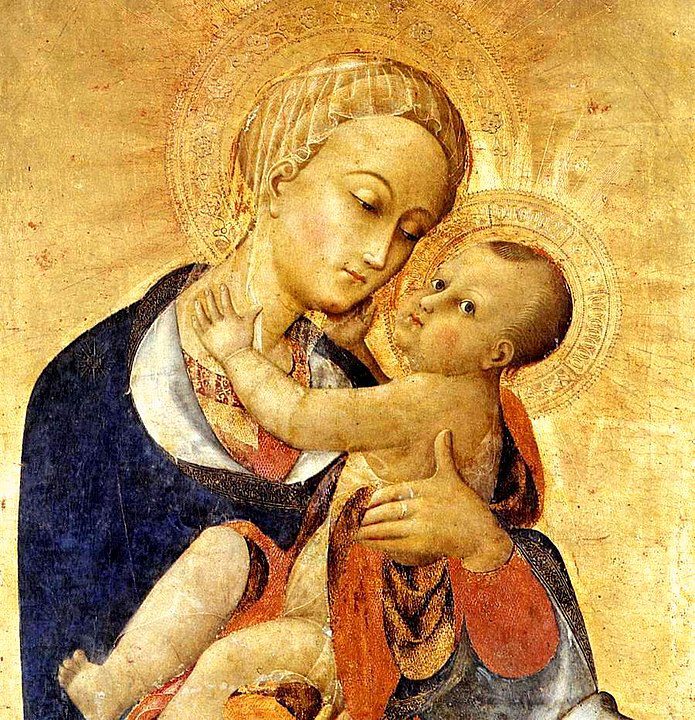
Egg tempera is one of the oldest known painting mediums, stretching back thousands of years to ancient Egypt. Artists would grind mineral pigments and mix them with egg yolk to create a quick-drying paint with extraordinary staying power. By the time of early Christian art around the 3rd and 4th centuries AD, egg tempera had become the gold standard for religious icons and panel paintings. Its combination of durability and radiant color ensured it remained the primary method for major artworks across Europe.
During the early Middle Ages, egg tempera’s dominance was reinforced by the influence of the Byzantine Empire. Byzantine icon painters used egg tempera extensively, inspiring Italian artists such as Cimabue (c. 1240–1302) and Giotto di Bondone (1267–1337). These early Renaissance painters adapted Byzantine methods into their own growing traditions, combining spiritual devotion with increasing realism. Giotto’s frescoes in the Scrovegni Chapel, painted around 1305, show a strong influence of tempera painting techniques, even when executed on wet plaster.
The early Italian Renaissance would not have been possible without egg tempera’s contributions. Painters like Duccio di Buoninsegna (c. 1255–1319) elevated the medium to extraordinary heights, creating works such as the Maestà altarpiece for the Siena Cathedral between 1308 and 1311. His careful attention to layering thin strokes of color reflected tempera’s precision demands, setting the tone for generations of artists. Through Duccio’s influence, the Sienese School would continue to use tempera for devotional art long after other regions began experimenting with oils.
Egg tempera survived so long partly because it aligned with the needs and values of the time. In a Christian culture emphasizing transcendence and spiritual clarity, the glowing, clean finish of tempera seemed ideal. Its demanding technique symbolized the patience, humility, and craft expected of religious artists. It was only as aesthetic priorities shifted toward realism and emotional depth that other methods began to take precedence, paving the way for oil paints to eventually take over.
How Egg Tempera Shaped the Look of Early Renaissance Art
The appearance of early Renaissance paintings was shaped fundamentally by the properties of egg tempera. Its quick-drying nature prevented artists from blending colors freely, leading to a style defined by clear outlines, luminous surfaces, and meticulous detail. This style is particularly evident in the works of Sandro Botticelli (1445–1510), whose famous painting The Birth of Venus (c. 1484–1486) captures the dreamy, delicate quality that only tempera can achieve. The medium’s limitations paradoxically encouraged a distinct artistic beauty characterized by grace, refinement, and serenity.
Artists working with tempera relied heavily on cross-hatching and layering to create shading and volume. Every stroke had to be applied carefully because mistakes were difficult to correct once the paint dried. Fra Angelico (c. 1395–1455), a Dominican friar deeply committed to religious life, mastered these techniques in his serene frescoes and panel paintings. His famous Annunciation (c. 1438–1447) showcases the light, jewel-toned clarity of egg tempera, capturing sacred themes with a precision and gentleness that oils later struggled to replicate.
In Florence, Botticelli’s training under Fra Filippo Lippi (c. 1406–1469) instilled a deep respect for tempera’s unique capabilities. Lippi’s influence taught Botticelli to use the medium to express both narrative clarity and emotional subtlety. This training shaped Botticelli’s later masterpieces, where even mythological subjects such as Venus are imbued with a spiritual atmosphere typically reserved for religious art. The softness and radiance of these works cannot be understood apart from the qualities imparted by egg tempera.
While we often associate the Renaissance with dynamic, realistic oil paintings, the early Renaissance had a very different visual language. The brilliant surfaces, intricate linearity, and controlled compositions of tempera works reflected a worldview centered on harmony, order, and the eternal rather than fleeting naturalism. Egg tempera was not just a technical necessity; it was an aesthetic and spiritual choice, tightly bound to the values of the time.
Painters at Work: The Demanding Technique Behind Egg Tempera
Painting with egg tempera required extraordinary discipline, craftsmanship, and patience. Artists first had to create their own paints by grinding pure pigments into a fine powder, then mixing them with fresh egg yolk and a small amount of water. This labor-intensive process had to be repeated frequently because the mixture spoiled quickly. Unlike oil paints, which could be stored for longer periods, tempera demanded constant preparation and immediate use.
The application of egg tempera paint was no less demanding. Because the medium dried rapidly, painters had to work in small, deliberate strokes, often using fine brushes to build up subtle gradations of color. Artists developed sophisticated cross-hatching techniques, layering tiny, controlled lines to suggest volume and light. The inability to blend on the surface meant that creating realistic textures and modeling took immense skill and careful planning.
Artworks were typically executed on wooden panels prepared with layers of gesso (a chalk-based primer) rather than on canvas. This preference was due to the rigidity needed for tempera, as the brittle paint could crack if applied to flexible surfaces. Workshops during the Renaissance, like that of Andrea del Castagno (c. 1419–1457), were organized around teaching these exacting methods to young apprentices. Boys as young as twelve would begin their training, learning first to prepare panels and pigments before ever touching a brush to paint.
Apprenticeship under a master was a long and often grueling process, but it ensured that the traditional knowledge of tempera painting was preserved and perfected across generations. Masters such as Castagno emphasized discipline, patience, and reverence for the materials. Artistic skill was understood not merely as a gift but as the result of years of faithful labor and study. This emphasis on craftsmanship helped to elevate painting from mere decoration to a disciplined art form that required both technical mastery and moral virtue.
Why Oil Paints Eventually Replaced Egg Tempera
Despite its beauty and discipline, egg tempera began to give way to oil painting by the mid-15th century. The initial innovations came from Northern Europe, particularly in the workshops of the Flemish masters. Jan van Eyck (c. 1390–1441) is often credited with perfecting oil painting techniques around the 1430s, though he did not invent the medium outright. His methods involved mixing pigments with linseed oil, allowing for slower drying times, richer colors, and subtle blending not possible with tempera.
Oil paints offered a flexibility that egg tempera could not match. Artists could rework areas of a painting over several days, allowing for more naturalistic effects, atmospheric perspective, and deeper emotional resonance. The glowing, translucent layers possible with oils created a sense of depth and realism that fit the Renaissance’s growing fascination with nature and the human form. Italian artists such as Antonello da Messina (c. 1430–1479) helped introduce oil techniques to southern Europe after studying Northern methods, bridging the gap between the Italian and Flemish traditions.
By the late 15th century, many Italian painters recognized the possibilities oil paints offered. Giovanni Bellini (c. 1430–1516) embraced oils fully, producing luminous altarpieces and portraits that captivated patrons. Oil’s capacity for vivid expression and monumental scale aligned perfectly with the needs of expanding city-states like Venice, Florence, and Rome. The shifting priorities of Renaissance culture — from the spiritual to the empirical — found a natural partner in the versatility of oil paints.
While egg tempera did not disappear overnight, its dominance ended rapidly once the advantages of oils became apparent. Artists who once meticulously layered thin tempera strokes now reveled in the sensuality and richness of oils. What had begun as a technical revolution ultimately transformed the meaning and purpose of painting itself, moving it toward a more worldly and human-centered vision.
Famous Renaissance Artists Who Mastered Egg Tempera
Fra Angelico, born Guido di Pietro around 1395 in Vicchio, Tuscany, was one of the greatest masters of egg tempera. As a devout Dominican friar, he saw painting as a form of worship, not just craft. His works, including the Annunciation at the Convent of San Marco (completed c. 1445), demonstrate the extraordinary clarity and delicate spirituality that tempera could achieve. Angelico died in 1455 in Rome, leaving behind a legacy of luminous, prayerful images that epitomize the height of tempera artistry.
Another major figure was Duccio di Buoninsegna, born around 1255 in Siena. Duccio was a pioneer in the development of more expressive, naturalistic figures within the constraints of the tempera medium. His Maestà altarpiece, completed between 1308 and 1311, remains a landmark of Sienese art. Duccio’s death in 1319 marked the end of an era but his influence persisted throughout the early Renaissance.
Piero della Francesca (c. 1415–1492) combined scientific precision with the luminous clarity of egg tempera. Educated in geometry and mathematics, Piero’s work, such as The Baptism of Christ (c. 1448–1450), shows a mastery of proportion and light rarely equaled. His birth in Borgo San Sepolcro and career across Florence and Urbino placed him at the center of Renaissance innovations, though he continued to prefer tempera for its brilliant effects even as oils gained popularity.
These artists, with their distinctive styles and tempera techniques, reflect the diversity and excellence possible within the medium. Their devotion to the craft and their mastery of its challenges contributed not only to the beauty of Renaissance art but also to the development of Western painting as a whole. Even as new materials became available, the discipline and brilliance of these early masters continued to inspire.
The Last Great Tempera Works Before Oil Took Over
As the 15th century drew to a close, a few monumental tempera works stood as the final glorious achievements of the medium. Sandro Botticelli’s Primavera (c. 1482) and The Birth of Venus (c. 1484–1486) are among the most celebrated of these. These paintings, commissioned by the influential Medici family in Florence, combine mythological themes with the ethereal grace that tempera was uniquely suited to express. Their shimmering surfaces and lyrical beauty would soon be unmatched in a world increasingly turning toward the richer, oil-based style.
The Medici patronage during the 1470s and 1480s played a crucial role in sustaining tempera painting for a while longer. Lorenzo de’ Medici (1449–1492), known as Lorenzo the Magnificent, was deeply committed to fostering the arts in Florence. His patronage allowed artists like Botticelli to continue working in tempera even as oils became more widely available. However, younger artists coming of age in the 1490s, like Leonardo da Vinci (1452–1519), were already shifting toward oil techniques for their flexibility and realism.
Even within the workshops of Florence, there was a growing awareness that tempera’s time was passing. Painters began to experiment with combining oil and tempera on the same panel, attempting to gain the benefits of both media. These transitional experiments often led to technical difficulties, such as cracking or yellowing, but they paved the way for the full embrace of oil painting. The fusion of tempera’s precision with oil’s depth represented a significant turning point in Western art history.
By the early 16th century, tempera was no longer the dominant medium in Italy’s great cities. Masters like Raphael (1483–1520) and Michelangelo (1475–1564) fully embraced oil techniques in their monumental works. The spiritual, luminous quality of tempera gave way to a more dynamic, humanistic vision of art that reflected the changing ideals of the Renaissance itself. Still, the achievements of tempera painters continued to be admired and studied, even as a new era dawned.
Egg Tempera Today: A Timeless but Specialized Craft
Despite its fall from widespread use, egg tempera never disappeared entirely. In the modern era, there has been a resurgence of interest among artists seeking the purity, control, and historic connection offered by tempera. Painters like Andrew Wyeth (1917–2009) famously employed egg tempera for works such as Christina’s World (1948), demonstrating the medium’s power to create haunting, intimate images even in a contemporary context. Today, traditional ateliers and art schools still teach egg tempera techniques to those who wish to master this demanding but rewarding art form.
Museums around the world are actively involved in the preservation and study of tempera paintings. Institutions like the Uffizi Gallery in Florence, the National Gallery in London, and the Metropolitan Museum of Art in New York host major collections of Renaissance tempera masterpieces. Conservation efforts have revealed the astonishing longevity and stability of tempera works, some of which retain their original vibrancy over 600 years after their creation. This durability is one reason scholars and collectors continue to treasure tempera paintings.
A handful of contemporary artists also use tempera in experimental ways, blending ancient methods with modern subject matter. By revisiting this time-honored medium, these artists reaffirm the timeless appeal of craftsmanship, patience, and attention to detail. The process of working in tempera naturally slows the artist down, forcing an intentional, meditative approach in contrast to the hurried pace of modern life. It serves as a reminder that the best art often comes from tradition, discipline, and respect for materials.
For anyone who loves the art of the Renaissance, understanding egg tempera is essential. It is not merely an old-fashioned technique but a living tradition that speaks to the eternal human desire to create beauty with care and devotion. In our rapidly changing world, the timeless, meticulous process of tempera painting stands as a testament to enduring artistic values. Its luminous surfaces continue to captivate and inspire, just as they did centuries ago.
Key Takeaways
- Egg tempera dominated Renaissance painting before oils due to its durability and vibrant finish.
- Artists like Botticelli, Fra Angelico, and Duccio achieved mastery with tempera techniques.
- The arrival of oil paints, perfected by Jan van Eyck, shifted Renaissance art toward realism.
- Egg tempera’s quick-drying nature demanded careful layering and meticulous technique.
- Even today, tempera is practiced by artists seeking control, brilliance, and a link to tradition.
Frequently Asked Questions
- What is egg tempera made from?
Egg tempera is made by mixing powdered pigments with fresh egg yolk and a small amount of water. - Why did Renaissance painters prefer egg tempera?
They valued its luminous color, precision, and durability for religious and devotional artworks. - When did oil paints start replacing tempera?
Oil paints began replacing tempera in Italy during the late 15th century, influenced by Flemish techniques. - Which Renaissance artists are famous for using egg tempera?
Fra Angelico, Duccio di Buoninsegna, and Sandro Botticelli were masters of the tempera technique. - Is egg tempera still used by artists today?
Yes, some contemporary painters continue to use egg tempera for its unique qualities and historic legacy.