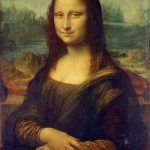
In the summer of 1911, Paris thrived as a cultural powerhouse, its cafés, art salons, and literary circles buzzing with creative energy. The Mona Lisa, painted by Leonardo da Vinci between 1503 and 1506, was displayed in the Louvre Museum’s Salon Carré, behind a simple glass case and held in place with four iron pegs. Although admired by connoisseurs, it had not yet reached the level of mythic fame it enjoys today. It was seen more as a Renaissance masterpiece among many, rather than the singular icon of art it would become.
The Louvre at that time was a far less secure institution than we might expect today. There were no alarms or modern surveillance systems, and entry to the museum was practically unrestricted. Guards were minimal, and many employees, including contractors, came and went freely. The lack of formal structure in museum operations left the museum vulnerable to both innocent accidents and deliberate theft.
The cultural backdrop in Europe was equally significant, as rising nationalist sentiments often influenced how people thought about art and ownership. Italy, newly unified as a nation in the 19th century, had a growing sense of national pride, and some Italians viewed France’s possession of Renaissance treasures as unjust. Though France claimed ownership of da Vinci’s works through legal and historical precedent—King Francis I had acquired the Mona Lisa directly from Leonardo—the popular opinion among some Italians was that the painting had been wrongfully taken. This environment made it easier for misguided “patriots” to justify acts of theft in the name of national pride.
In this complex setting, where art, national identity, and opportunity collided, a little-known Italian laborer named Vincenzo Peruggia stepped onto history’s stage. His role in the most infamous art heist of the 20th century would eventually transform a relatively well-known painting into the most famous image in the world. Without meaning to, he would make the Mona Lisa a household name. But in 1911, no one could yet foresee the storm that was about to break over the art world.
The Thief – Vincenzo Peruggia’s Life and Motives
Vincenzo Peruggia was born on October 8, 1881, in the small Italian village of Dumenza, near the Swiss border. Coming from humble origins, he trained as a house painter and glazier—crafts that would prove critical to his eventual scheme. Seeking better job opportunities, he moved to Paris in 1908, where a wave of Italian laborers had already settled. By 1911, he was working for a company contracted to install protective glass on artworks in the Louvre, including the Mona Lisa.
Peruggia’s personal life was relatively quiet. He lived alone in a small, modest apartment in the Rue de l’Hôpital Saint-Louis. His interactions were limited to work and the occasional social outing with fellow Italian expatriates. He never married and seemed to live a solitary life, though some accounts suggest he may have corresponded with family back in Italy. Despite the appearance of normalcy, he quietly nurtured a strong resentment toward France’s possession of Italian art.
His motives were driven in part by a misunderstood view of history. Peruggia believed Napoleon had looted Italian treasures during his campaigns in the 19th century, and that the Mona Lisa was one of those stolen items. In truth, Leonardo had taken the painting with him to France in 1516, where it remained under royal ownership until it entered the Louvre following the French Revolution. But Peruggia’s convictions were firm—he believed he was a patriot, not a criminal.
This blend of misinformation and nationalism gave him a kind of moral justification in his own mind. To Peruggia, stealing the Mona Lisa wasn’t theft—it was restitution. It was this belief that gave him the nerve to go through with the act. While others speculated about money or fame as the motive, his later statements to authorities showed that his primary drive was national pride.
The Heist – How the Mona Lisa Disappeared
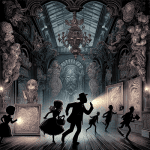
On Sunday, August 20, 1911, Peruggia entered the Louvre with a simple plan in mind. Disguised in the white smock worn by museum workers, he hid inside a broom closet overnight. Early Monday morning, August 21—when the museum was closed to the public—he emerged from hiding and made his way to the Salon Carré. There, he removed the painting from the wall with practiced ease, having worked in the room just weeks earlier.
The theft itself was shockingly simple. After removing the frame and glass, Peruggia concealed the painting under his smock and walked out of the museum through a side entrance. Some accounts suggest he was briefly locked in a stairwell by a locked door and had to remove the doorknob to escape. Incredibly, no one stopped him. The museum’s minimal security and lax oversight allowed the theft to go unnoticed until the next day.
When the painting’s absence was first discovered, museum staff initially believed it had been taken by museum photographers for promotional reproductions. It wasn’t until Tuesday, August 22, that the alarm was truly raised. Police were called in, and the museum was closed for a full week—an unprecedented move. The shock was felt not just in France but across the globe, as news of the missing masterpiece spread rapidly.
The Louvre, embarrassed by the breach, conducted a frantic investigation. Hundreds of museum employees, visitors, and known criminals were interviewed. Clues were scarce, though fingerprints were found on the glass case. Ironically, they belonged to Peruggia, but at the time there was no central fingerprint database to identify him. The investigation would stretch on for over two years, with no sign of the painting or the thief.
The Global Frenzy – Media, Suspects, and Strange Theories
As word of the theft broke, the world responded with a mixture of shock, fascination, and speculation. Headlines screamed across Europe and America: “La Joconde Stolen!” The loss was seen not just as a blow to France, but as a cultural tragedy for the West. The incident transformed the Mona Lisa into a celebrity overnight—suddenly, people who had never cared about art were demanding to know more about this mysterious painting with the subtle smile.
In the chaotic days that followed, the police cast a wide net. One of the first suspects was Guillaume Apollinaire, a bohemian French poet known for radical ideas and provocative art critiques. He was arrested on September 7, 1911, due to past remarks about “purging” museums and his association with stolen statues. While detained, Apollinaire implicated none other than Pablo Picasso, the rising Spanish artist who had previously purchased stolen sculptures from the same source.
Picasso was hauled in for questioning, though he was ultimately released without charges. The scandal damaged his reputation briefly but also added to the mystique surrounding the modernist art world. For traditional-minded Europeans, the idea of avant-garde artists stealing Renaissance masterpieces was all too believable. In conservative circles, the theft seemed to symbolize the broader cultural upheavals of the time—an attack on order, beauty, and tradition.
The lack of solid leads gave rise to wild theories. Some suggested it was an elaborate insurance scam staged by the museum. Others speculated about a German sabotage plot meant to humiliate the French ahead of rising military tensions in Europe. Still others thought it was the work of a shadowy international art forgery ring. None of these theories were true, but they reflected the era’s growing mistrust, political volatility, and obsession with scandal.
Hiding the Masterpiece – Peruggia’s Life on the Run
After escaping the Louvre, Peruggia kept the Mona Lisa hidden for over two years. He returned to his modest apartment at 5 Rue de l’Hôpital Saint-Louis and stored the painting in a wooden trunk with a false bottom. From there, he lived quietly, continuing to work and drawing little attention to himself. Despite the international uproar, no one suspected the quiet Italian handyman.
In late 1911, Peruggia left Paris and returned to Italy, bringing the painting with him. He spent time in Florence, Milan, and other cities, trying to figure out what to do next. Still convinced that he was a national hero, he fantasized about handing the painting over to the Italian government as a gesture of patriotic defiance. However, finding someone who would accept such a volatile gift proved far more difficult than he anticipated.
As months turned into years, Peruggia grew restless. He was unable to sell the painting without exposing himself, and the romantic vision of glory began to fade. Eventually, desperation led him to attempt a direct sale. He contacted Alfredo Geri, a Florentine art dealer, in late 1913, claiming he had the Mona Lisa and wanted to return it to Italy.
He used the alias “Leonardo” and asked for a meeting at Geri’s gallery. Geri, skeptical but intrigued, arranged a viewing with Giovanni Poggi, director of the Uffizi Gallery. When they saw the painting, they quickly realized it was the real thing. Instead of praising Peruggia, they informed the police. He was arrested on December 11, 1913, ending his strange journey.
Recovery in Florence – The Moment of Truth
Peruggia’s arrest was handled quietly at first, as Italian authorities wanted to confirm the painting’s authenticity. The Mona Lisa was taken to the Uffizi Gallery for verification. Art historians examined its brushwork, composition, and pigment, comparing it with detailed records from the Louvre. After confirming its legitimacy, the news broke: the Mona Lisa had been found, alive and well, in Florence.
The public reaction in Italy was mixed. Many hailed Peruggia as a hero who had reclaimed a stolen treasure. Though his understanding of art history was flawed, his patriotic intentions resonated with nationalistic pride. Italians packed the Uffizi to see the Mona Lisa before it was returned to France. It stayed on display in Florence, Rome, and Milan for several weeks, drawing huge crowds and emotional reactions.
The French, meanwhile, were relieved and jubilant. The Louvre announced the return of the painting in early January 1914, and it was rehung in the Salon Carré with renewed security precautions. The incident led to widespread reforms in museum safety across Europe. Art was no longer seen as just fragile or valuable—it was a target that needed serious protection.
Peruggia’s punishment was surprisingly mild. Tried in Florence in 1914, he was sentenced to just one year and fifteen days in prison. Due to time already served and the perceived nobility of his intentions, he served only seven months. He returned to a quiet life and died in 1947, largely forgotten—though his act had immortalized the painting he once hid in a wooden box.
Legacy of the Theft – How a Heist Made the Mona Lisa a Star
Before the theft, the Mona Lisa was famous among art scholars and serious collectors, but not widely known by the general public. After the heist, it became the most recognized painting in the world. Its image appeared in newspapers, postcards, advertisements, and books. The mysterious smile, once just a subtle artistic touch, became a global icon of intrigue and beauty.
Museums around the world took note. Security systems were upgraded, entry logs improved, and staff screening became the norm. The Louvre itself installed alarms, reinforced display cases, and changed policies about public access to high-value works. The Mona Lisa, now guarded with intense scrutiny, would never again be left to hang casually on a gallery wall.
The painting’s newfound celebrity status only grew with time. Authors, filmmakers, and journalists revisited the story of the theft for decades. From children’s books to Hollywood thrillers, the image of a stolen Mona Lisa inspired generations. The 1911 heist created a mythology that no marketing campaign could ever replicate.
Today, the painting remains a symbol of Western art’s enduring power—and of how a single act, misguided though it may have been, can rewrite history. Peruggia didn’t plan to make the Mona Lisa world-famous. But through his theft, he ensured that Leonardo’s quiet portrait of a Florentine woman would become the most recognized face on earth.
Key Takeaways
- Vincenzo Peruggia, an Italian laborer, stole the Mona Lisa from the Louvre on August 21, 1911.
- Peruggia believed the painting rightfully belonged to Italy and acted out of nationalist pride.
- The theft sparked global media frenzy, implicating figures like Picasso and Apollinaire.
- The Mona Lisa was recovered in Florence in December 1913 and returned to France in January 1914.
- The heist elevated the painting’s fame and led to major reforms in museum security worldwide.
Frequently Asked Questions
- Why did Vincenzo Peruggia steal the Mona Lisa?
He believed it had been stolen by Napoleon and wanted to return it to Italy as a patriotic act. - How did he manage to steal it so easily?
He hid in the Louvre overnight and walked out dressed as a worker, exploiting the museum’s poor security. - Was the Mona Lisa damaged during the theft?
No, it remained in excellent condition and was carefully stored by Peruggia for over two years. - Did Peruggia profit from the theft?
No, he was unable to sell it and was eventually arrested when he tried to return it to Italy. - What happened to Peruggia after the arrest?
He served a short prison sentence and lived out the rest of his life in relative obscurity, dying in 1947.