The Proto-Renaissance refers to a pivotal moment in European art history, spanning approximately from AD 1280 to 1400. It served as a crucial bridge between the rigid, symbolic style of the Middle Ages and the human-centered naturalism of the Renaissance. Though often overshadowed by the grandeur of the High Renaissance, this earlier phase was essential in laying the philosophical and artistic groundwork for what was to come. In cities like Florence, Siena, and Padua, artists began pushing past Byzantine conventions to explore realism, depth, and the dignity of the human form.
The term “Proto-Renaissance” literally means “before the Renaissance,” but this period was more than a simple precursor—it was a time of bold experimentation. Painters and sculptors started to show people with real emotions, real bodies, and real space around them. Religious art was still dominant, but the figures became less iconic and more relatable. These early innovators sought to depict the divine in a way that felt tangible and personal, reflecting both classical influence and Christian devotion.
Bridging Eras: From Icon to Identity
The hallmark of the Proto-Renaissance was this shift from the flat, golden icons of the Byzantine world to lifelike, expressive subjects grounded in three-dimensional space. No longer were figures merely symbolic placeholders for spiritual truths—they became emotional and psychological presences. Drapery began to fall naturally, faces showed grief, joy, or awe, and scenes told coherent, human-centered stories. This newfound emphasis on identity and realism would become the heartbeat of the Renaissance.
The Proto-Renaissance wasn’t just about style—it was a cultural statement. It marked the first significant move toward art that engaged with the viewer’s mind and soul, not just their religious duty. Artists began reclaiming the classical ideals of balance, proportion, and harmony while still honoring their Christian faith. By giving the spiritual a physical form, they offered a new way to see both man and God.
The World Behind the Canvas: Political, Religious, and Cultural Context
To understand the Proto-Renaissance, one must examine the social and political forces that shaped 13th and 14th-century Italy. The Catholic Church remained a dominant force, controlling much of the culture, art, and education. At the same time, a growing merchant class in cities like Florence, Siena, and Venice began to fund artistic projects, giving rise to a new form of civic patronage. These commissions often celebrated religious themes but also highlighted local pride and human achievement.
Intellectual life was beginning to shift as well. Scholars like Dante Alighieri (born AD 1265, died AD 1321) and Petrarch (born AD 1304, died AD 1374) began exploring classical texts and championing a form of Christian humanism. This focus on the human experience resonated in the visual arts. Artists felt freer to explore emotion, narrative, and the human body as subjects of divine beauty rather than vessels of sin. The result was a subtle but profound transformation in artistic expression.
Florence as a Cradle of Change
Florence emerged as the heart of this transformation due to its economic vitality and civic structure. Wealthy families such as the Bardi and Peruzzi, and later the Medici, supported artists and thinkers alike. The city’s powerful guilds, especially the Arte di Calimala (cloth guild), invested heavily in public and religious buildings. This patronage was not just a matter of faith, but of civic pride—a desire to glorify both God and Florence through beauty and order.
Adding to this complex backdrop was the trauma of the Black Death, which swept across Europe between AD 1347 and 1351. The plague decimated populations and forced a deeper engagement with mortality, judgment, and salvation. Art became more emotional, urgent, and deeply human. The figures in paintings and sculptures no longer appeared as distant saints, but as fellow sufferers—grieving, pleading, and hoping for redemption.
Giotto di Bondone: The Father of Western Painting
Born around AD 1267 near Florence, Giotto di Bondone is often credited as the first great master of the Italian Renaissance. A student of Cimabue, Giotto quickly departed from his teacher’s Byzantine style, pioneering a more naturalistic approach to form and emotion. By the early 1300s, Giotto had developed a style that emphasized three-dimensional space, lifelike human gestures, and emotionally resonant storytelling. His death in AD 1337 marked the end of an era, but his influence endured for centuries.
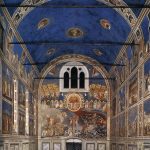
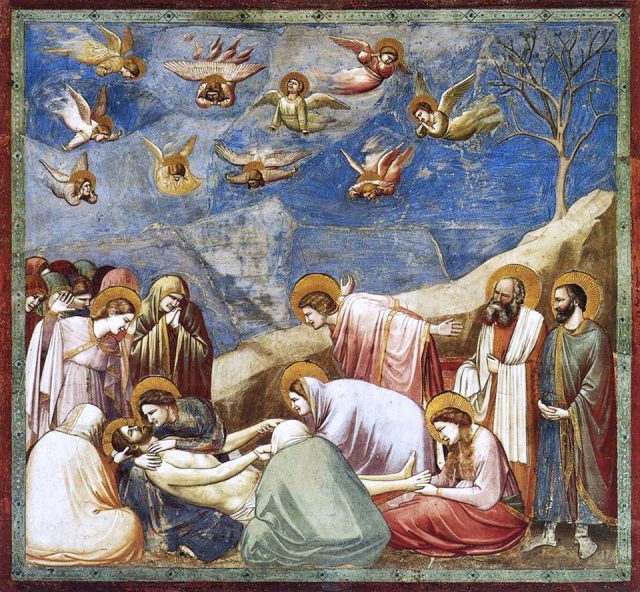
Giotto’s most celebrated work is the cycle of frescoes in the Arena Chapel (Cappella Scrovegni) in Padua, completed around AD 1305. These paintings tell the story of the Virgin Mary and Christ with vivid expressions and dynamic composition. In the Lamentation, mourners surround the body of Christ with visible grief—heads bowed, arms outstretched, eyes weeping. This scene represents one of the earliest successful attempts to portray raw human emotion in Western art.
Legacy of Giotto’s Vision
Giotto’s impact went far beyond his lifetime. Giorgio Vasari, writing in the 16th century, called him the artist who “restored light to painting” in his famous Lives of the Artists. Later figures such as Masaccio, Michelangelo, and Raphael all studied Giotto’s methods and admired his boldness in breaking with tradition. His innovative use of space and emotional realism became central tenets of Renaissance painting.
Giotto was also a skilled architect. In AD 1334, he was appointed chief architect of the Florence Cathedral, where he began work on the bell tower (campanile) that still bears his name. This contribution to architecture, along with his painting, marks him as a well-rounded genius of the Proto-Renaissance. Through Giotto’s vision, Western art found its voice—not just as decoration, but as a medium of truth and human dignity.
Other Major Artists of the Proto-Renaissance
While Giotto was the towering figure of the Proto-Renaissance, several other artists contributed significantly to the period’s development. Duccio di Buoninsegna, born around AD 1255 in Siena, brought elegance and grace to religious painting. His masterpiece, the Maestà, completed in AD 1311 for the Siena Cathedral, combined delicate detail with narrative depth. Duccio retained some Gothic elements but moved toward a more natural and emotionally engaging style.
Simone Martini, born around AD 1284 and active until his death in AD 1344, extended Duccio’s innovations and added a courtly refinement. His Annunciation (AD 1333), created with Lippo Memmi, is a masterclass in linear grace and spiritual presence. The Virgin Mary, startled by the angel Gabriel, becomes a real young woman—surprised, vulnerable, and profoundly human. Simone’s works influenced the development of the International Gothic style across Europe.
Collaboration, Influence, and Competition
Ambrogio Lorenzetti, born around AD 1290 and active until his death in AD 1348, brought a civic dimension to art with his Allegory of Good and Bad Government in the Palazzo Pubblico of Siena. These frescoes, painted between AD 1338 and 1339, vividly depicted the consequences of virtue and vice in city life. They stand as rare examples of secular art in a time when religious themes dominated. His brother, Pietro Lorenzetti, also contributed to the period, focusing on spatial coherence and emotional realism.
These artists knew of each other, competed for commissions, and sometimes collaborated. While Florence leaned more toward classical naturalism, Siena preserved a more decorative, lyrical quality in its art. This regional diversity enriched the Proto-Renaissance, offering a variety of stylistic innovations. Together, they expanded the boundaries of what sacred and civic art could achieve.
Architecture and Sculpture: Proto-Renaissance in Three Dimensions
The innovations of the Proto-Renaissance were not limited to painting. Architecture and sculpture played a significant role in this artistic reawakening. Nicola Pisano, born around AD 1220 and active until his death around AD 1284, led a revival of classical sculpture by incorporating Roman motifs into his religious reliefs. His marble pulpit for the Pisa Baptistery (completed AD 1260) featured strong, muscular figures inspired by ancient sarcophagi. His work marked a departure from Gothic abstraction and a return to natural form.
Nicola’s son, Giovanni Pisano (born c. AD 1250, died AD 1315), continued the family tradition but introduced more drama and movement. His sculptures, such as those on the façade of Siena Cathedral, demonstrate a sensitivity to emotion and narrative. Giovanni’s figures twist and reach in ways that suggest inner life and spiritual struggle. These were not just decorations; they were visual sermons carved in stone.
Foundations for Brunelleschi and Donatello
Andrea Pisano, no relation to Nicola and Giovanni, created the bronze doors of the Florence Baptistery in the 1330s. These panels, depicting scenes from the life of John the Baptist, showed a mastery of relief and storytelling. His work later inspired Lorenzo Ghiberti’s famous “Gates of Paradise.” Andrea’s emphasis on clarity, order, and proportion prefigured the mathematical precision of Renaissance design.
These architectural and sculptural pioneers laid the literal and figurative foundation for giants like Brunelleschi and Donatello in the 15th century. By combining spiritual themes with classical balance and anatomical truth, they reshaped how space, structure, and story could be conveyed in three dimensions. Sculpture in particular became a medium not just of reverence, but of inquiry and truth.
Themes and Techniques: A New Way of Seeing
One of the central features of the Proto-Renaissance was its departure from symbolic abstraction toward visual realism. Artists began to experiment with the human figure, depicting it with anatomical accuracy and emotional expression. These works emphasized the spiritual dignity of the human person, made in God’s image, rather than presenting man as a shadow of sin. The use of light, shadow, and proportion advanced quickly during this time.
Perspective was also beginning to emerge, though not yet fully systematized. Figures were placed in convincing spatial settings, and their bodies interacted naturally with those environments. Artists like Pietro Lorenzetti and Giotto placed figures inside architecture, giving viewers a sense of depth and place. Fresco became the dominant medium, with its durability and visual impact ideal for chapel walls and public spaces.
The Rise of the Individual in Art
Emotionally, Proto-Renaissance art aimed to engage the viewer’s soul through storytelling and expression. Biblical scenes were no longer static moments but lived experiences. The Virgin Mary looked startled, Christ looked pained, and saints mourned with visible anguish. These human reactions invited contemplation, empathy, and moral reflection—key goals of the era’s Christian humanism.
Materials were equally important. Artists used tempera on wood panels for portable altarpieces, fresco on plaster for walls, and marble or bronze for sculpture. Every technique served the same goal: to honor God by honoring His creation, especially the human form. It was the beginning of a more holistic and incarnational view of art—one where beauty, truth, and goodness could all dwell in the same image.
The Legacy of the Proto-Renaissance
The Proto-Renaissance laid the intellectual and artistic groundwork for the great explosion of creativity that came in the 15th century. Figures like Masaccio, Donatello, and Brunelleschi built directly on the breakthroughs of Giotto, Duccio, and the Pisani. Masaccio’s Holy Trinity (AD 1427) owed its spatial realism to Giotto’s groundwork. Donatello’s St. George drew on the naturalism championed by Nicola Pisano.
This legacy wasn’t just technical—it was philosophical. The Proto-Renaissance showed that faith and reason, beauty and truth, could coexist in harmony. Artists rediscovered classical ideals of balance, proportion, and civic virtue, not as ends in themselves, but as ways to glorify God. They reclaimed the ancient belief that man, though fallen, is capable of virtue, reason, and greatness.
From Proto to Powerhouse: The Path to the Renaissance Proper
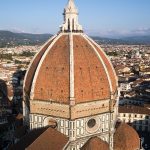
By the time Filippo Brunelleschi engineered the dome of Florence Cathedral in AD 1436, the Renaissance had truly arrived. Yet none of that would have been possible without the early visionaries of the Proto-Renaissance. Their courage to innovate within the bounds of tradition made room for a cultural rebirth that honored the past while embracing the future. They reconnected Christian Europe to the best of classical heritage without abandoning spiritual truth.
Their names may not always be as famous today, but their contributions endure in every church dome, every marble statue, and every painting that seeks to tell the truth with beauty. The Proto-Renaissance was not a half-formed beginning, but a fully realized moment of renewal. It bridged worlds—faith and reason, Heaven and Earth, symbol and reality. And in doing so, it changed the course of Western civilization.
Key Takeaways
- The Proto-Renaissance (AD 1280–1400) marked a vital transition from medieval to Renaissance art in Italy.
- Giotto di Bondone revolutionized painting with emotion, depth, and realism.
- Florence and Siena were leading centers of Proto-Renaissance culture and innovation.
- Sculpture and architecture during this period revived classical forms with Christian themes.
- The Proto-Renaissance laid the philosophical and artistic groundwork for the High Renaissance.
Frequently Asked Questions (FAQs)
- What does “Proto-Renaissance” mean?
It means “early Renaissance,” referring to the period before the full Renaissance began around AD 1400. - Who was the most important Proto-Renaissance artist?
Giotto di Bondone, active until his death in AD 1337, is considered the leading figure. - What themes were common in Proto-Renaissance art?
Artists focused on biblical stories, emotion, human dignity, and emerging realism. - Where did the Proto-Renaissance begin?
It emerged primarily in Italian cities like Florence, Siena, and Padua. - How did the Black Death affect Proto-Renaissance art?
The plague intensified emotional expression and focus on human suffering in art.