Art has always been a mirror of civilization. From the cave paintings at Lascaux to Michelangelo’s David and Rembrandt’s stirring portraits, great works have reflected the values, faith, and aspirations of their cultures. But as we move deeper into the 21st century, the art world seems less like a mirror and more like a shattered window. Today, the cultural forces at play no longer encourage beauty or truth—they elevate provocation, novelty, and ideological messaging. If these trends continue unchallenged, the next 100 years may bring not a renaissance, but a slow cultural collapse.
The current trajectory shows a detachment from the artistic principles that built the Western canon. Beauty, technical discipline, and narrative have been swapped out for social commentary, ephemeral installations, and digital abstraction. Institutions that once protected heritage—academies, museums, and religious patrons—now serve as ideological filters, censoring or ignoring classical themes in favor of modern agendas. This break from tradition isn’t neutral; it’s erasure. And the cost is generational.
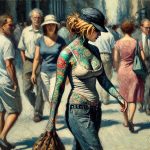
Technology, once seen as a tool to expand the artist’s reach, has instead become a crutch or even a replacement. Artificial intelligence can now generate lifelike paintings in seconds, stripping the process of soul and intent. With algorithms generating compositions, colors, and brush strokes, human creativity becomes optional—an accessory to an increasingly automated world. The concern isn’t innovation; it’s the loss of meaning.
If art truly reflects a society’s soul, then we must ask what today’s art says about us. A world of glitch graphics, ideology-heavy murals, and multi-million-dollar banana peels taped to walls speaks not of vitality but of decay. And unless something shifts, that decay will define the next century.
Why the Alarm Bells Are Ringing Now
Many signals show we’ve veered off course. In art schools across the West, traditional drawing and painting are no longer core subjects. The Florence Academy of Art and the Grand Central Atelier in New York are rare exceptions, preserving methods long abandoned by major institutions. Meanwhile, major universities prioritize conceptual output and political themes over technique. Yale University’s MFA program, for instance, has been heavily criticized for turning away from foundational skills in favor of “critical theory”-informed output.
Beyond the academies, the influence of postmodern theory has pushed many curators and critics to devalue the very idea of artistic excellence. Awards, residencies, and exhibitions are often granted based on an artist’s identity or activist posture, not the quality of their work. In this environment, craftsmanship can be seen as a vestige of the past—or worse, a tool of “privilege.”
This shift affects public spaces as well. Murals and installations often prioritize political messages over aesthetic impact. In many Western cities, government-funded projects now use art as a communication tool for social campaigns, rather than as a celebration of beauty or human achievement. Art has moved from altar to billboard.
Technology Isn’t the Savior—It’s the Substitute
Artificial intelligence is now capable of producing works that closely mimic human technique. Programs like Midjourney and DALL·E 3 can create images in the style of Leonardo da Vinci or Caravaggio with frightening speed. But style is not substance. These machines don’t understand the theological symbolism of The Last Supper or the emotional gravity in The Night Watch.
Even when impressive, AI-generated art is always derivative. It draws on databases of human-made art, repackaging fragments into something that only looks original. There’s no memory, no devotion, no sacrifice behind its creation. The great art of the past emerged from decades of training, religious conviction, and profound personal experience. Machines offer none of that.
What’s more alarming is the market response. Companies are replacing freelance artists with AI tools, gutting a once-thriving industry. Video game companies and publishers now employ fewer human illustrators, favoring fast, cheap image generation. This economic trend discourages the development of new talent and will likely lead to a generation of artists without viable careers.
The Death of Skill and the Rise of Conceptual Gimmicks
Once, to be called an “artist” was a title earned through hard work, apprenticeship, and mastery of form. Today, that title is handed out based on media buzz and shock value. Technical skill, once the foundation of all great schools—from the French Académie des Beaux-Arts to the Italian Renaissance workshops—is now optional, if not actively discouraged. Instead, we see installations of blinking lights, unmade beds, or blank canvases winning critical acclaim.
Conceptual art gained ground in the mid-20th century through figures like Marcel Duchamp, who placed a urinal in a gallery in 1917 and called it Fountain. While Duchamp’s piece was meant as a challenge to institutional norms, its success paved the way for countless imitations lacking his philosophical intent. By the 1970s, conceptualism was dominant in the Western art world. Today, its legacy persists in galleries filled with abstract statements devoid of beauty or meaning.
In many art schools, foundational instruction in anatomy, perspective, and chiaroscuro has been pushed aside. The Royal College of Art in London, once an elite center for technical excellence, now emphasizes interdisciplinary projects with vague social messages. Students graduate with degrees having never drawn a figure from life. The decline in skill isn’t an accident—it’s systemic.
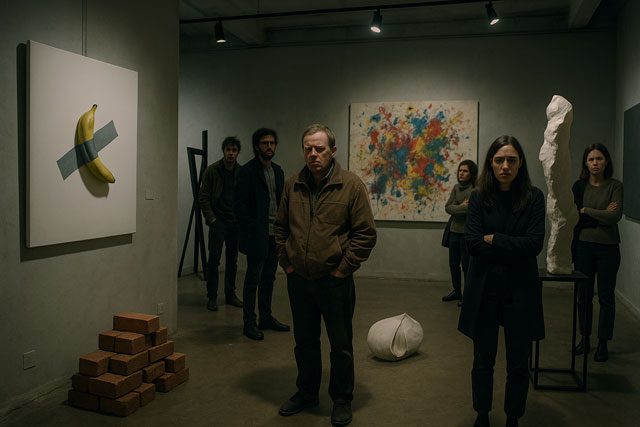
As a result, art has become a marketplace of gimmicks. In 2019, Maurizio Cattelan’s Comedian—a banana duct-taped to a wall—sold for $120,000 at Art Basel. This was not an outlier but a symbol of the times. Works that once required decades of study to create are now displaced by viral moments. And with this shift comes a loss of public trust and interest in the art world.
Why Traditional Skills Matter
The Renaissance didn’t happen by accident. It was built on a rediscovery of Greek and Roman principles, fused with Christian belief and centuries of refined technique. From Brunelleschi’s use of linear perspective in 1425 to Raphael’s delicate portraits, this period shows what civilization can achieve when beauty and skill are held in high regard.
Drawing from life develops more than hand-eye coordination. It teaches discipline, observation, and humility. Great artists like Jean-Léon Gérôme or Ilya Repin didn’t just paint; they captured the moral and spiritual struggles of man. Their works endure because of their foundation in truth and technique.
Unfortunately, the current generation is being robbed of that heritage. Without training in proportion, color theory, or anatomy, artists become dependent on gimmicks or digital tools. The result is a culture rich in noise but poor in substance. We have traded marble and oil for pixels and plastic.
To revive great art, we must revive the atelier method. Institutions like the Florence Academy and Charles Cecil Studios prove this model still works. Their graduates are producing extraordinary figurative art, often rooted in Christian and historical themes. But they remain the exception, not the norm.
Conceptualism’s Hollow Reign
What began as a challenge to the art establishment has now become the establishment. Conceptualism, once daring, now dominates grant programs, biennales, and academic journals. And while some works raise valid questions, the majority do little more than provoke momentary shock or confusion.
By its nature, conceptual art often resists permanence. Installations made of ice, plastic bags, or decaying food can’t inspire awe or survive centuries. Compare that to the durability of Michelangelo’s Pietà or Donatello’s David—works that have stirred the soul for generations. A society that favors the fleeting over the eternal is one that fears meaning.
Critics defend this trend by arguing that “art must evolve,” but evolution implies improvement, not degradation. True innovation builds on the past; it doesn’t burn it to the ground. Yet, many modern works openly reject their cultural lineage. This isn’t progress—it’s amnesia.
As long as museums and galleries continue to reward provocation over excellence, the decline will continue. If we hope to see another age of greatness, conceptualism must be tempered by a renewed respect for tradition and skill.
AI Art and the Collapse of Human Creativity
Artificial intelligence is no longer just assisting artists—it’s starting to replace them. In recent years, tools like Midjourney, DALL·E 3, and Stable Diffusion have entered mainstream use, generating highly realistic and stylized images in seconds. The illusion of creativity has seduced many into believing machines can truly “create,” but the truth is far less romantic. These systems are trained on millions of existing artworks, combining and remixing human labor into a synthetic pastiche. What’s missing is the soul.
At its core, art has always been about intention. A brushstroke by John Singer Sargent conveyed confidence, emotion, and a lifetime of mastery. A composition by Vermeer told a story of light and silence. AI doesn’t understand story, symbol, or suffering—it only mimics form. A painting of the crucifixion done by an algorithm may appear technically perfect, but it will always lack the devotion of a Caravaggio or a Velázquez.
The economic impact of AI-generated art is just as concerning. Illustrators and concept artists across the globe—especially in gaming, publishing, and advertising—are losing jobs to image-generation programs. The entertainment industry has already begun replacing storyboard artists and background designers with algorithmic output. In December 2023, several freelance collectives reported a 60% drop in commissions after studios adopted AI workflows.
This shift discourages future talent from even entering the field. Why spend years learning anatomy and composition if software can produce something “good enough” with a few prompts? The long-term result is a creative ecosystem drained of discipline, personality, and perseverance. The role of the human artist is being redefined—not by artists themselves, but by technologists and cost-cutting executives.
When Machines “Paint”—But Don’t Feel
There is a profound difference between replication and revelation. AI can replicate technique—emulating brushstrokes, mimicking color palettes—but it cannot reveal anything new about the human condition. That’s because it doesn’t feel, believe, or struggle. It doesn’t suffer the failures and revelations that forge an artist’s voice.
Consider the religious art of Fra Angelico or the introspective darkness of Francisco Goya. These were not just decorative works—they were personal, spiritual, and deeply human. AI may generate similar-looking images, but without internal life, they remain hollow. They may impress the eye, but they don’t reach the heart.
We must ask ourselves: Are we content with simulations? Or do we still value the soul behind the canvas? As machines become more proficient, the temptation to accept cheap substitutes will grow. But beauty without intent is ultimately counterfeit.
The Job Apocalypse for Commercial Artists
The freelance art industry has entered a freefall. Companies that once hired thousands of illustrators now turn to AI for quick, low-cost visual content. Book publishers, advertising firms, and mobile app developers are cutting staff, citing “efficiency.” In February 2024, one major publishing house admitted that 85% of its recent covers were produced with AI tools rather than human artists.
This shift is particularly devastating in countries like the Philippines, Brazil, and Ukraine, where many artists found freelance success online. Now, even entry-level jobs are drying up. Creative marketplaces like Fiverr and Upwork have been flooded with AI-generated portfolios, many of which plagiarize existing works without proper attribution.
There are also legal and ethical concerns. AI systems have been trained on datasets that include copyrighted art, often without permission. Several artists have filed lawsuits, arguing that their work has been cannibalized to train programs that now compete against them. As of early 2025, the legal status of AI-generated art remains unsettled in most Western countries.
Unless there is a cultural shift back toward valuing original, human-made works, the next generation of artists may never get a chance to grow. And without artists, there is no art—only simulation.
Postmodernism Has Aged—and Not Well
Postmodernism once presented itself as a daring critique of grand narratives, tradition, and objective meaning. Emerging in the 1960s, it challenged the notion of universal truth in favor of relativism, irony, and deconstruction. But after six decades of dominance, its effects have become depressingly clear. Art that once aimed to expose contradictions now wallows in them. The energy has drained, and what’s left is a culture running in circles.
Postmodernism’s pioneers—figures like Jean Baudrillard, Jacques Derrida, and Michel Foucault—argued that meaning was fluid and context-driven. Their influence permeated the art world, where it became fashionable to challenge Western values, religious imagery, and aesthetic standards. Museums embraced installation pieces that rejected form, while critics praised works for being “transgressive,” even when they were incoherent.
Over time, the subversive became the establishment. By the 1990s, artists like Damien Hirst and Tracey Emin were celebrated not for beauty, but for shock. Emin’s My Bed (1998), which featured her own disheveled sleeping space, was shortlisted for the Turner Prize. Hirst, meanwhile, displayed a bisected cow in formaldehyde. This kind of work was meant to provoke, not uplift.
But provocation has an expiration date. As culture continues to fragment, postmodernism offers no guide—only endless questioning. In a world craving direction and beauty, postmodern art provides neither. Its reign is nearly complete—and its legacy is one of cynicism.
Postmodernism’s Legacy of Deconstruction
At its height, postmodernism encouraged the deconstruction of everything: faith, history, identity, and beauty. In theory, this allowed for broader inclusion. In practice, it left a vacuum. Once the traditional forms were broken apart, nothing coherent took their place. The result? Confusion and cultural exhaustion.
In the classroom, students are taught to critique everything but believe in nothing. In galleries, art is praised for undermining norms but rarely for building something noble. This negativity seeps into public perception, where many now view art as obscure, elitist, or irrelevant. It’s hard to love what only mocks.
Compare that with the legacy of the Renaissance or the Neoclassical period. Those movements offered clarity, dignity, and aspiration. Postmodernism, by contrast, offers ambiguity, irony, and despair. After decades of tearing down, people are beginning to wonder: What now?
The next great art movement will not be built on further deconstruction. It will come from those willing to rebuild—artists who value meaning, structure, and permanence.
The Cultural Rot Left Behind
One of the worst outcomes of postmodern art is the erosion of shared cultural standards. There was a time when beauty was not subjective—it was ideal. Today, many artists are taught to reject the very idea of standards, seeing them as oppressive or outdated. This leads to a bland relativism where nothing can be judged, and everything must be accepted.
This cultural rot is reflected in how art is discussed. Critics avoid terms like “beautiful” or “excellent” in favor of vague praise about “engagement” or “intersectionality.” Instead of asking whether a work elevates the human spirit, they ask if it disrupts, questions, or “challenges power structures.”
The result is a public increasingly alienated from art. Museum attendance among younger generations is declining across the West. Many find modern art galleries cold and unintelligible. Without a renewal of values, this detachment will only deepen.
If we want art that unites rather than divides, inspires rather than confuses, we must reject the failed doctrines of the last half-century and rediscover the principles that made art great in the first place.
The Art Market: Luxury, Speculation, and Decay
In the last century, the art market has drifted away from its cultural mission and transformed into a playground for wealth and speculation. Once a patron’s investment in the eternal, art is now a status symbol, often purchased not for its beauty or message, but for its resale value or shock appeal. Wealthy collectors, corporations, and hedge funds dominate this space, driving prices up for works that often lack traditional merit. In this new economy, quality is often irrelevant—hype is what sells.
Since the 1980s, when art began to be treated as an asset class, the problem has only worsened. The rise of auction houses like Sotheby’s and Christie’s as spectacle-driven stages has led to astronomical prices. In 2017, Leonardo da Vinci’s Salvator Mundi sold for $450 million, only to vanish into a private collection, unseen by the public since. At the same time, far lesser works by contemporary artists like Jeff Koons—known for giant balloon animals—routinely fetch tens of millions, driven by elite collectors more interested in trend-following than tradition.
The explosion of digital art, and more recently NFTs (Non-Fungible Tokens), has pushed this speculative frenzy to absurd levels. In 2021, Beeple’s Everydays: The First 5000 Days sold for $69 million. The artwork wasn’t a painting or sculpture, but a digital collage of daily drawings minted as an NFT. By late 2022, many of these NFT-based artworks lost 90% or more of their value. The bubble had burst—but the damage to public trust and aesthetic standards was already done.
This hyper-commercialization harms real artists. Traditional painters working in oils, bronze sculptors, and sacred iconographers often can’t get gallery representation because their work is deemed “conservative” or “outdated.” Instead, those who pander to fleeting political themes or absurdist gimmicks are rewarded. If this continues, the art world will become an echo chamber of decadence, alien to the moral and spiritual foundations that gave art its original power.
Price Over Principle
The modern art market has elevated monetary value above artistic value. When a sculpture that took 18 months to carve sells for less than a graffiti canvas splattered with slogans, something has gone wrong. Too often, works are judged not by craftsmanship or message, but by the prestige of the artist’s name or the gallery representing them. This leads to a feedback loop where the same few names dominate headlines, while genuine talent is ignored.
This shift also discourages the long-term pursuit of excellence. Young artists, seeing the rewards of shock and hype, are less inclined to dedicate themselves to traditional techniques. Why study the human form for years when digital stunts win acclaim overnight? Art becomes a game of marketing, not mastery.
The market’s obsession with novelty and branding has also reduced art criticism to little more than PR. Critics rarely challenge the elite consensus for fear of being ostracized or defunded. This creates a culture of flattery and conformity rather than honest discourse.
If we want art to mean something again, we must restore principle over price. That means recognizing beauty, truth, and moral clarity as the highest artistic standards—not just how many dollars a piece can fetch on auction night.
The NFT Bubble and Its Cultural Fallout
The NFT craze of 2020–2022 was a warning sign. At its height, digital artworks with no physical presence were selling for millions. Some were animated gifs, others were procedurally generated avatars with little creative depth. The promise was revolutionary: artists could sell directly to collectors, bypassing galleries. But in practice, NFTs became a pump-and-dump scheme. Bots inflated prices, and when confidence collapsed, most NFTs became worthless.
The cultural impact was just as severe. Museums and institutions began showcasing NFT art, sidelining centuries-old masterpieces to chase relevance. The British Museum and the Hermitage experimented with minting NFTs of classical works, blurring the line between preservation and monetization. This confused audiences and degraded public trust.
Many NFT artworks vanished overnight when hosting servers were taken offline. Because most NFTs only link to off-chain images, they weren’t truly stored on the blockchain. When the links broke, so did the art. Unlike oil on canvas or marble, these digital “masterpieces” had no permanence.
The fallout has led to growing skepticism. But the damage remains: a generation has been introduced to art as a tech gimmick, not a sacred or civilizational pursuit. Repairing that will take decades—and a recommitment to meaning over monetization.
3 signs the market is detached from artistic quality:
- Record-breaking sales of emoji-style and celebrity-themed NFTs
- Digital art that becomes inaccessible or lost when servers shut down
- Wealthy collectors choosing political or meme art over classical realism
Museums and Academia: From Guardians to Gatekeepers
Once revered as protectors of human achievement, museums and art schools have become ideological battlegrounds. Their role has shifted from conserving beauty and tradition to reinterpreting—or rewriting—history. Many now promote works based on political relevance rather than artistic merit. This shift isn’t neutral; it reflects a deeper cultural move away from the ideals that shaped the Western world.
Major museums across Europe and the United States have restructured their exhibitions to center on themes of “colonialism,” “equity,” and “decolonization.” The National Gallery of Art in Washington, D.C., for example, has altered exhibit descriptions to emphasize race and power dynamics over composition, technique, or historical influence. Similarly, London’s Tate Modern openly favors installation and performance pieces aligned with progressive ideologies over Old Master works.
Academic institutions have followed suit. Once the breeding ground for technical mastery, today’s art departments often prioritize political theory, intersectional critique, and identity-based narratives. The Royal Academy of Arts and New York’s School of Visual Arts, for example, have reduced the emphasis on rigorous training. Instead, they promote courses on activism, media narratives, and cultural subversion. Beauty is now often dismissed as an outdated or even harmful concept.
This ideological focus affects what students learn and what the public sees. Future curators and critics are being taught to view classical works with suspicion, and to valorize experimental or radical pieces regardless of artistic substance. The result is a profound disconnect between art lovers who cherish tradition and institutions that no longer serve them.
The Weaponization of Curating
Curating was once about selecting works that reflected the best of human thought, spirit, and creativity. Now, it is often about crafting narratives that align with political agendas. Exhibitions are organized not around artistic epochs or schools, but around themes like “gender identity in art” or “climate crisis in visual culture.” These may have academic interest, but they often crowd out religious, moral, or historical works.
In 2022, a major exhibition at the Brooklyn Museum reinterpreted Christian iconography through a “queer lens,” displacing sacred themes in favor of contemporary commentary. At the same time, depictions of biblical events or classical myths are increasingly labeled “problematic,” and are either removed or placed in critical contexts designed to shame, not celebrate.
This reorientation alienates traditional viewers. Families, church groups, and lovers of Western art history find fewer reasons to visit these institutions. Meanwhile, museum attendance continues to drop, especially among older audiences. A cultural institution that disdains its own heritage has little chance of inspiring the next generation.
The Fall of Art Education
Art education has moved from the studio to the seminar. Once grounded in copying plaster casts and mastering oils, today’s programs encourage expression without foundation. Students are told that skill is secondary to message—that political engagement matters more than proportion or composition. This produces graduates who may be articulate in theory, but who can’t draw a hand or paint a sky.
At the university level, courses in gender theory, postcolonialism, and “artivism” now dominate syllabi. The result is that many young artists leave school confused about their purpose. They may be passionate, but they lack the tools to express that passion effectively. Without discipline, passion is just noise.
This shift is particularly devastating for religious and classical art. Students with an interest in sacred imagery or historical realism often feel ostracized or discouraged. Some schools outright refuse to teach religious themes, framing them as exclusionary or outdated. As a result, an entire lineage of sacred art is being lost.
A revival is possible, but it must start outside the system. Private ateliers, online mentorships, and classical academies are already stepping in to fill the gap. But they need support—from patrons, churches, and communities willing to resist the mainstream and uphold what is beautiful, good, and true.
Digital Saturation and the Decline of Attention
The modern world is saturated with images. Social media platforms like Instagram, TikTok, and Pinterest have become the primary ways people engage with visual culture. But in the flood of content—where thousands of images are scrolled past every day—art loses its depth and impact. Attention spans are shrinking, and with them, the patience needed to engage with real art. This isn’t a minor inconvenience—it’s a profound cultural shift.
True art demands contemplation. A painting by Bouguereau or a fresco by Giotto invites the viewer into silence, reflection, and even prayer. But those virtues are incompatible with the pace of digital life. Where once a work of art commanded hours of study, today it gets seconds—if that. Swipe culture reduces visual masterpieces to “content,” stripping them of their dignity and authority.
The very algorithms that drive online platforms are part of the problem. They reward images that provoke quick reactions—shock, humor, or outrage—rather than beauty or craftsmanship. Complex works are passed over for easily digestible trends. The most engaged-with content often isn’t the best, but the loudest. This drives artists toward spectacle rather than substance, reinforcing the downward spiral.
Digital art itself is not inherently harmful. Photography, video, and animation have all added richness to the arts when grounded in purpose and craft. But when digital tools become a replacement for training and vision, the results are shallow. The question isn’t whether technology has a place in art—it’s whether we will let it set the terms of engagement.
Art in the Age of the Algorithm
The algorithm isn’t just changing what we see—it’s changing what we make. Artists now optimize for visibility, crafting works designed to go viral instead of lasting. This leads to uniformity. Online platforms are flooded with look-alike styles, from dreamy pastels to moody glitch effects, tailored for maximum clicks but devoid of originality.
Even museums are altering how they present collections to appeal to the “Instagram generation.” Exhibits are increasingly built around photogenic experiences—neon lights, mirrored rooms, and immersive projections—rather than historical or spiritual content. What should be temples of contemplation are being reshaped into selfie factories.
This transformation affects aspiring artists, who feel pressured to tailor their work for online approval. Instead of striving for excellence, they strive for engagement metrics: likes, shares, followers. This breeds anxiety and creative stagnation. The long-term pursuit of mastery becomes a casualty of the algorithm.
Art has always evolved, but it should never be dictated by machines. We must recover the human-centered values that gave art its enduring power: faith, purpose, and patience. Without those, all we have is noise.
Losing the Viewer’s Soul
To truly connect with art, a viewer must slow down. Great works aren’t meant to be skimmed—they’re meant to be lived with. A sacred icon, a landscape by Friedrich, or a sorrowful Madonna by Sassoferrato demands silence and reverence. These moments are rare today, as viewers trained by screens struggle to engage deeply.
Even in gallery spaces, the behavior of visitors has changed. Surveys conducted by museums like the Louvre and the Uffizi show that average viewing time per artwork has dropped to less than 10 seconds. Many guests spend more time photographing art than actually looking at it. The camera becomes a barrier, not a bridge.
This loss of attention is a spiritual crisis. Beauty was once understood as a path to truth—an echo of the divine order. In Orthodox theology, icons are described as “windows to heaven.” But if we can no longer gaze, only glance, then we close that window. The result is not just aesthetic poverty, but moral and emotional impoverishment.
Reviving attentiveness is possible, but it requires cultural will. Homes, schools, and churches must teach the young to love beauty—not as a distraction, but as a doorway to wisdom. Art must return to its proper place in forming hearts and minds.
Is There Hope? Revival Movements and Classical Resistance
Despite the dominant trends, not all is lost. Across Europe, North America, and parts of Latin America, a quiet movement is growing. Artists, educators, and patrons disillusioned with the modern art world are returning to traditional forms—realism, religious themes, and the eternal values of truth and beauty. These revivalists are not trying to recreate the past; they’re trying to save the future.
Institutions like the Florence Academy of Art, the Angel Academy, and the Grand Central Atelier in New York have become sanctuaries for those who still believe in skill and symbolism. They train students in classical drawing, painting, and sculpture—often using the same methods employed in the 18th and 19th centuries. These students don’t see tradition as a limitation, but as a foundation.
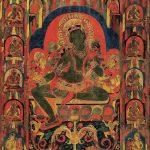
There’s also a renewed interest in sacred art. Churches are commissioning new works in the styles of Fra Angelico or Murillo, rejecting the abstract and formless art that dominated many 20th-century sanctuaries. Artists like Daniel Mitsui, Igor Babailov, and Michael D. O’Brien are leading this spiritual revival, creating works deeply rooted in religious conviction and technical excellence.
Collectors and audiences are responding. More galleries now showcase representational art, and traditionalists are building private collections centered on faith and family. The market for Christian and figurative art is small but growing. It may not dominate Art Basel or the Venice Biennale, but it holds the seeds of renewal.
Meet the New Traditionalists
These modern classicists come from diverse backgrounds, but they share a conviction: art must point upward. Take Jordan Sokol and Graydon Parrish, for example—both trained in realist techniques and now teaching the next generation. Their works are rich in symbolism and historical reference, offering a stark contrast to the minimalism and abstraction found elsewhere.
In Europe, Norwegian painter Odd Nerdrum has built a strong following with his Old Master style and rejection of modern art ideologies. He calls his work “kitsch” as a deliberate rebuke of the academic art world, but his paintings show profound craftsmanship and mythological imagination. Nerdrum is part of a larger counterculture that sees tradition not as nostalgic, but revolutionary.
Women are also leading the charge. Juliette Aristides, founder of the Aristides Atelier, has helped revive classical training in Seattle, producing artists whose work resonates with eternal themes. Her books and workshops are now used globally by students hungry for serious instruction.
These artists prove that the classical spirit is not dead. It lives on in every studio that teaches drawing from plaster casts, every workshop that prays before painting, and every family that chooses a crucifix over a conceptual collage.
Beauty as Rebellion
In a world that elevates ugliness, celebrating beauty becomes a form of rebellion. Today, a painting of the Virgin Mary, rendered with care and grace, defies the cultural current. It says that tradition matters, that the divine is real, and that the human soul is worthy of dignity. That message is more radical than anything hanging in a modern gallery.
Beauty elevates because it participates in the order of creation. This is why classical architecture continues to inspire, why Gregorian chant still stirs the heart, and why the paintings of the Old Masters remain unmatched. When we pursue beauty, we align ourselves with what is eternal.
For too long, beauty has been dismissed as subjective or even oppressive. But beauty isn’t just a matter of taste—it’s a reflection of truth. The Church Fathers, the great philosophers, and the finest artists of the West all understood this. Rediscovering it is essential for our cultural survival.
The road ahead is difficult, but the rebels of beauty are gaining ground. Their work may not be featured in mainstream media, but it endures in homes, churches, and independent schools. And that’s where real cultural transformation begins.
The Future We Deserve or the One We Choose?
The future of art is not predetermined. While current trends are bleak, they are not irreversible. The decline we see is the result of decisions—by institutions, educators, artists, and patrons—to abandon the ideals that once guided culture. But decisions can be changed. If we want a future filled with beauty, order, and meaning, we must choose to pursue and protect those things now.
This isn’t just the responsibility of artists. Families, churches, small galleries, and private schools all have a role to play. Art does not require a museum to flourish—it requires conviction and craftsmanship. When communities support young talent, fund sacred commissions, and restore classical curricula, the culture begins to heal. These are not impossible tasks—they are practical, local actions with eternal consequences.
There is historical precedent for this kind of recovery. After the collapse of the Roman Empire in the 5th century AD, Europe entered what many historians call the “Dark Ages.” But within monasteries and cathedral schools, beauty and learning were preserved. By the 12th century, the seeds of a new civilization were already sprouting. The same can happen again—but only if we make the sacrifices now.
If we do nothing, we will continue drifting. The art of the next 100 years will be soulless, digitized, and political—a hollow echo of greatness. But if we act decisively, protect tradition, and nurture sacred beauty, then our descendants may live to see another golden age of art.
The Role of Families, Churches, and Local Patrons
Cultural renewal begins close to home. Families that expose their children to sacred art, classical music, and the great works of Western civilization lay the groundwork for a moral imagination. A child who grows up with icons, hymns, and statues of saints will not be content with meaningless abstraction.
Churches must also reclaim their role as patrons. Throughout history, they were the primary drivers of artistic excellence—from the cathedrals of Chartres to the frescoes of Fra Angelico. Today, many parishes settle for bland, modern decor. But it doesn’t have to be this way. Commissions for new sacred works are already underway in places like Texas, Poland, and Spain.
Local patrons—wealthy or not—can make a difference. A single donor can fund a sacred mural or a realist portrait competition. A local gallery can choose to showcase traditional oil paintings instead of digital installations. Every choice matters. Culture is not shaped in boardrooms; it is shaped in neighborhoods.
If you want a better artistic future, don’t wait for museums or universities to lead the way. They’ve already abandoned their post. Lead it yourself, with your family, your parish, your wallet, and your time.
Building Parallel Cultural Structures
The best way forward is not to reform broken institutions but to build new ones. This means founding schools, ateliers, publishing houses, and exhibition spaces that reflect eternal values. We cannot count on legacy systems to change—they are too deeply entrenched. But we can build alternatives.
Independent art schools like The Florence Academy and the Da Vinci Initiative are already providing high-level training rooted in classical values. Catholic colleges like Thomas More College and the University of Dallas integrate art into their broader philosophical and theological education. These are models to be expanded and supported.
The same goes for online communities. Platforms like Art Renewal Center have given thousands of traditional artists a voice. But these need to grow—into guilds, publications, and networks that encourage not only individual talent but communal responsibility.
In a fragmented culture, parallel institutions can provide coherence. They remind us that tradition is not dead—it’s simply been exiled. Our job is to welcome it home.
Conclusion: Looking Back From 2125
If someone in the year 2125 were to walk through a gallery of today’s art, what would they see? Would they find hope, faith, and discipline—or chaos, ego, and despair? That answer depends entirely on what we choose to elevate right now. Art has always been shaped by its time—but it also shapes the times to come.
We stand at a crossroads. The last century has been marked by rupture—between artist and audience, beauty and ideology, form and function. We can either continue down that road or return to the path that built the West: one of reverence, craft, and inspiration.
The future of art doesn’t belong to machines or market trends—it belongs to those who love beauty enough to defend it. Whether through painting, sculpture, liturgical design, or patronage, the next great movement will not come from celebrity or spectacle. It will come from faithfulness.
One hundred years from now, let it be said that we chose the harder road. That we remembered what art was for. And that we passed on something worthy—not just of admiration, but of worship.
What Will They Say About Us?
The artists of the past spoke with their hands, their brushes, and their chisels. We remember them because they reached for the eternal. What will the future say of us? That we covered our churches in drywall and projection screens? That we traded oil for pixels and silence for slogans?
Or will they say that a remnant remembered? That a few held fast? That when the world forgot beauty, there were still those who knew what it was worth?
These are the questions every artist, collector, and cultural leader must ask now—not later. Because the legacy we leave will not be written in words alone—it will be carved in marble and painted in light.
Call to Action for Artists and Supporters
- If you’re an artist: return to the figure, to the sacred, to the beautiful. Study the masters, train with discipline, and work with purpose.
- If you’re a collector: support the studios, not the scandals. Buy what lasts, not what shocks.
- If you’re a teacher: instruct your students in tradition. Give them tools, not slogans.
- If you’re a parent: fill your home with icons, paintings, sculpture. Let your children see greatness on the walls.
- And if you’re simply a lover of beauty: don’t apologize. Beauty belongs to all of us—and it’s worth fighting for.
Key Takeaways
- The decline of traditional skills, beauty, and meaning has created a hollow and politicized modern art world.
- AI-generated art threatens human creativity by replacing intent with imitation and originality with automation.
- The art market has become speculative and disconnected from craftsmanship, with inflated prices for shallow or digital works.
- Museums and art schools now promote ideology over excellence, leaving classical values behind.
- Revival is possible through local patronage, classical training, sacred commissions, and the building of parallel institutions.
FAQs
- What is the biggest threat to traditional art today?
The erosion of skill and meaning, combined with the rise of AI and ideological curation, poses the greatest risk to traditional art. - Are there still schools that teach classical techniques?
Yes. Institutions like the Florence Academy of Art, Grand Central Atelier, and others continue to train artists in traditional methods. - Can digital art be meaningful?
It can, if created with skill and purpose. But most digital art today prioritizes speed and trendiness over substance. - What can individuals do to support good art?
Buy work from traditional artists, support classical education, and bring beauty into homes, churches, and communities. - Is there hope for a return to sacred and beautiful art?
Yes. A growing movement of artists and patrons is restoring these values—quietly but powerfully.