The Bloomsbury School was not a formal institution but a vibrant community of artists, writers, and intellectuals who gathered in the early 20th century in the Bloomsbury district of London. Rather than an organized movement with manifestos or leadership, the Bloomsbury circle functioned as a web of friendships and collaborations. They rejected the rigid moral codes of Victorian England and sought to integrate beauty, emotion, and personal expression into their work and daily lives. Their influence spanned literature, fine arts, economics, design, and philosophy, creating a legacy that outlived its founding members.
Although the term “Bloomsbury Group” is often used interchangeably with “Bloomsbury School,” there is a subtle but important difference. The “Bloomsbury Group” more broadly refers to the entire social circle, which included writers, thinkers, and artists. The “Bloomsbury School,” however, specifically relates to the visual artists within that circle, most notably Vanessa Bell and Duncan Grant. Both groups overlapped heavily in both membership and ethos, emphasizing personal freedom, emotional honesty, and modernist innovation. The term “school” is used loosely to signify a shared set of values and aesthetics rather than a formal academic setting.
The group began to coalesce after 1904, following the death of Sir Leslie Stephen, father of Virginia Woolf and Vanessa Bell. The Stephen sisters moved from Kensington to Bloomsbury, where they began hosting “Thursday Evenings” for like-minded thinkers. This informal salon welcomed figures like writer Lytton Strachey, economist John Maynard Keynes, and art critic Clive Bell, who would later marry Vanessa. These gatherings became the foundation of a wider intellectual and artistic movement that would come to define early 20th-century British culture.
Origins of a Modernist Circle
What set Bloomsbury apart was its unified rejection of Victorian norms in favor of modernism, aesthetic experimentation, and a deeply personal form of creative expression. They believed that beauty, truth, and personal integrity should guide both life and art. In contrast to the realism and moralism of the 19th century, Bloomsbury artists embraced abstraction, emotionality, and the decorative. Writers and thinkers in the group similarly pushed literary and philosophical boundaries, adopting stream-of-consciousness narration, psychological depth, and ethical humanism.
The Bloomsbury School was a modernist response to a rapidly changing world. The Edwardian era saw the decline of British imperialism, technological advances, and the trauma of World War I. In this climate, the Bloomsbury Group developed a radical, personal vision of life and art. Their belief in pacifism, liberalism, and equality put them at odds with conservative social forces of the time, yet their work endured and evolved. Through artistic freedom and close personal bonds, they forged a cultural revolution in domestic interiors, novels, paintings, and essays alike.
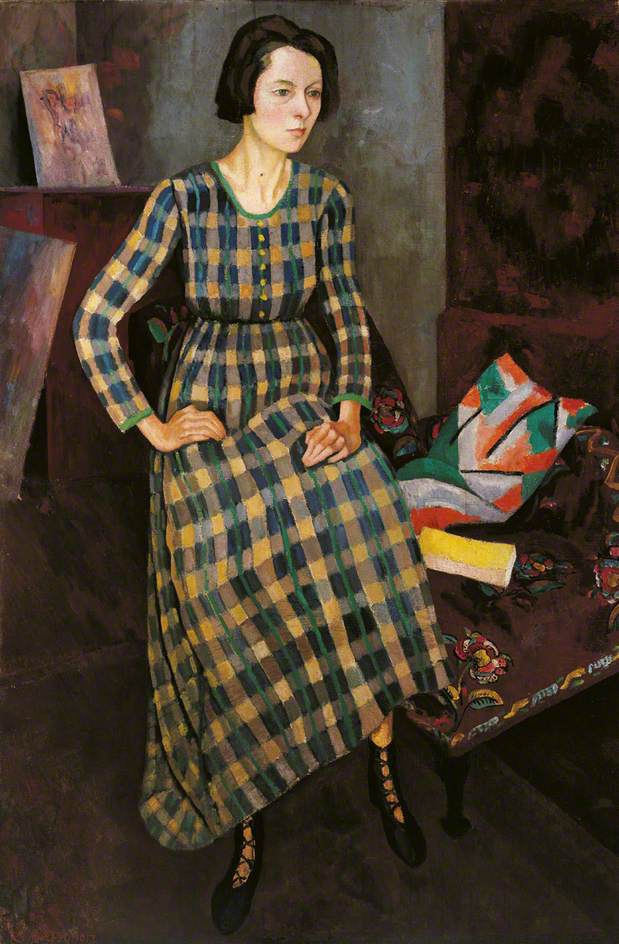
By the 1920s, the Bloomsbury School had become a defining voice in British modernism, although it remained decentralized and driven by individual personalities rather than a shared doctrine. The visual artists within the circle—Vanessa Bell, Duncan Grant, Roger Fry—were responsible for introducing bold colors, abstract forms, and domestic themes into British art. Their paintings, designs, and decorative arts shaped a new kind of artistic life that merged creativity with community. In doing so, they created a legacy that continues to inspire new generations of artists and thinkers.
The Founding Members and Their Relationships
At the heart of the Bloomsbury School were Vanessa Bell and Duncan Grant, two artists whose lives and careers were deeply interwoven. Vanessa Bell was born in London on May 30, 1879, to Sir Leslie Stephen and Julia Duckworth Stephen. Educated at the Royal Academy of Arts, Vanessa grew into a painter of exceptional sensitivity and innovation. Her younger sister, Virginia Woolf, born in 1882, would go on to become one of the most important modernist writers of the 20th century. Together, they formed the emotional and creative core of the Bloomsbury Group.
Duncan Grant, born on January 21, 1885, in Rothiemurchus, Scotland, studied at Westminster School of Art and then the Slade School in London. Openly homosexual at a time when such openness carried legal and social risk, Grant found both personal and artistic freedom within the Bloomsbury circle. He and Vanessa Bell began a romantic and artistic partnership in 1913 that, though unconventional, endured for decades. Though Grant remained romantically involved with men, including economist John Maynard Keynes, his relationship with Bell was a defining feature of both their lives.
Family Ties and Romantic Webs
The web of relationships within Bloomsbury was famously complex and unorthodox. Vanessa Bell married art critic Clive Bell in 1907, and they had two sons, Julian and Quentin. However, the marriage eventually became an open one, and by 1916 Vanessa had begun living permanently with Duncan Grant at Charleston Farmhouse in Sussex. The couple had a daughter, Angelica, born in 1918. Angelica was raised believing Clive Bell was her father, only discovering the truth as a teenager—a decision that later caused emotional strain within the family.
Grant had previously been in a romantic relationship with John Maynard Keynes, born in 1883, who would go on to revolutionize economic theory with his work on government intervention and fiscal policy. Though their romantic connection ended, Keynes remained a close friend and frequent visitor at Charleston. Virginia Woolf, for her part, married Leonard Woolf in 1912. Their marriage, though reportedly celibate, was intellectually rich. Virginia also had a passionate relationship with writer Vita Sackville-West, which inspired her novel Orlando (1928), a fantastical biography that challenged gender norms and literary conventions.
These tangled personal lives were not distractions from creativity—they were its source. The group’s emotional openness and tolerance of difference created a supportive environment in which experimentation could flourish. Their domestic arrangements were often unconventional by the standards of the time but helped foster a culture where boundaries between art and life were fluid. The relationships within Bloomsbury—romantic, platonic, artistic—formed the very basis of their revolutionary approach to aesthetics and human connection.
Charleston: The Heart of Bloomsbury Art
In 1916, Vanessa Bell and Duncan Grant moved to Charleston Farmhouse in the Sussex countryside, seeking refuge from London during World War I. The house became not just a residence but a total work of art—a home designed, painted, and curated by its inhabitants. Charleston was never intended to be a museum or showcase; it was a lived space, filled with painted furniture, handmade textiles, and murals on the walls. It reflected their belief that art should not be confined to galleries but should permeate every aspect of life.
Charleston quickly became the unofficial headquarters of the Bloomsbury School’s visual artists. Although it began as a wartime necessity—Grant was a conscientious objector and worked on a farm nearby—it evolved into a permanent creative hub. Vanessa decorated every room with painted surfaces, from tabletops to fireplaces. Grant added bold abstract patterns and color schemes. Over time, Charleston became the physical embodiment of Bloomsbury values: beauty, intimacy, intellectual freedom, and collaboration.
A Canvas for Everyday Life
The house hosted many of the group’s key members, including Virginia Woolf, Clive Bell, Roger Fry, and the writer Lytton Strachey. They would visit for weekends or entire summers, engaging in conversations that ranged from art to politics to the meaning of friendship. The Charleston garden, designed with the same whimsy and color as the interior, was another site of creative expression. Vanessa and Duncan often painted outdoors, surrounded by their children, friends, and the Sussex landscape.
Today, Charleston is preserved as a museum, offering a rare glimpse into the intimate world of the Bloomsbury School. Visitors can still see the original furniture, wall decorations, and art pieces left largely unchanged. The Charleston Trust, founded in 1980, oversees its preservation and runs exhibitions, talks, and festivals that celebrate Bloomsbury’s enduring influence. Walking through Charleston is like stepping into a painting where life and art are indistinguishable—a lasting testament to the group’s radical approach to domestic creativity.
Visual Language and Style of the Bloomsbury Artists
The visual style of the Bloomsbury School was distinct, vibrant, and deeply personal. Their work was characterized by loose brushwork, rich color palettes, and a preference for emotional truth over technical perfection. Vanessa Bell and Duncan Grant led this stylistic departure from traditional British painting, embracing the avant-garde spirit spreading across Europe. They were uninterested in academic realism; instead, they painted their friends, homes, and everyday scenes with warmth and experimentation.
One of the most significant influences on Bloomsbury visual style was Post-Impressionism. In 1910, art critic Roger Fry curated Manet and the Post-Impressionists, an exhibition at the Grafton Galleries in London that shocked the public and changed British art forever. For many, it was their first exposure to the works of Cézanne, Matisse, Gauguin, and Van Gogh. Fry followed up with a second Post-Impressionist show in 1912, which cemented his—and Bloomsbury’s—commitment to modern art.
Influence of Post-Impressionism
After these exhibitions, Vanessa Bell and Duncan Grant began incorporating the bold colors and flattened forms of French modernists into their own work. Bell’s Interior with Two Women (1932) and Grant’s Bathers by the Pond (1920s) reveal their departure from Victorian precision toward a freer, more intimate representation of life. They focused less on perspective and more on feeling. Their subjects—often friends and family—appear relaxed, sometimes introspective, set in domestic spaces or sunlit gardens.
This stylistic freedom extended beyond painting into decorative arts. At Charleston, the walls were adorned with geometric murals and floral motifs, echoing the same visual language as their easel paintings. The artists designed textiles, lampshades, and pottery with swirling lines and vivid hues. The style was never rigid or doctrinaire—it was fluid, adaptable, and always grounded in personal connection. The Bloomsbury School rejected the cold abstraction of later modernist movements, preferring warmth, intimacy, and individuality in their visual expression.
Key Collaborations and Legacy Projects
The Bloomsbury artists believed in integrating art into daily life, and their collaborations reflected that philosophy. One of the most ambitious collective efforts was the Omega Workshops, established in 1913 by Roger Fry. The Omega Workshops aimed to break down the boundaries between fine art and decorative art by producing furniture, textiles, and homewares designed by modern artists. Vanessa Bell, Duncan Grant, and other members contributed designs. Their goal was not mass production but artisan quality—a reaction against industrialization and the anonymous, soulless design of factory goods.
At Omega, artists remained anonymous, signing their works with the Greek letter Ω. This practice encouraged collaboration over ego. The enterprise lasted until 1919, struggling financially but leaving behind a body of work that captured the Bloomsbury spirit. The Workshop’s bold patterns, use of color, and fusion of function and beauty foreshadowed later design movements like the Bauhaus. Omega was not just about making things—it was about making a statement: that art should be lived with, touched, and enjoyed.
From Omega Workshops to Public Murals
Beyond Omega, the Bloomsbury artists also undertook larger decorative commissions. In 1940–41, Vanessa Bell and Duncan Grant painted a series of murals for St. Michael and All Angels Church in Berwick, Sussex. These murals depicted scenes from the life of Christ and included stylized portraits of Charleston community members as biblical figures. The paintings merged modernist technique with religious subject matter in a way that was both reverent and radical. The church remains a popular destination for admirers of Bloomsbury art.
Another notable collaboration came through Virginia and Leonard Woolf’s Hogarth Press, founded in 1917. The press published important modernist literature, including works by T.S. Eliot, Sigmund Freud, and of course, Virginia Woolf herself. Vanessa Bell designed many of the book covers and frontispieces, blending fine art with publishing. These collaborations showcased Bloomsbury’s belief that no artistic medium was too humble for serious expression—and that beauty should be accessible, even in the form of a paperback novel.
The Literary Side: Woolf, Forster, and Modernist Ideas
While the visual artists of the Bloomsbury School painted on canvas and walls, their literary counterparts were revolutionizing British fiction. Virginia Woolf, born in 1882, brought a new level of psychological depth and narrative innovation to the English novel. Her work used stream-of-consciousness techniques and non-linear timelines to explore the inner lives of her characters. In novels like Mrs Dalloway (1925), To the Lighthouse (1927), and The Waves (1931), she examined time, memory, gender, and the fragility of identity.
E.M. Forster, another key literary figure in Bloomsbury, offered a different but equally modern take on British life. Born in 1879, Forster’s novels often examined class, connection, and the limitations of conventional morality. Howards End (1910) and A Passage to India (1924) explored themes of empathy, imperialism, and cultural misunderstanding. While Forster was less experimental than Woolf, his focus on human relationships and moral complexity echoed the group’s wider philosophical commitments.
Reinventing Fiction and Society
Virginia Woolf was also a prominent essayist and critic. In A Room of One’s Own (1929), she famously argued that women needed financial independence and private space to write fiction. The essay remains one of the foundational texts of modern feminism. While Bloomsbury’s outlook was progressive in many ways, Woolf’s analysis of gender roles challenged even her own circle’s assumptions. Her essays on literature, society, and art placed her at the center of modern intellectual life.
The connections between Bloomsbury’s literary and visual artists were not merely social—they were intellectual and thematic. Both groups questioned the conventions of their time, whether in sentence structure or composition. They favored subjectivity over objectivity, emotion over formula. Their artistic endeavors were deeply interwoven with their ethical values: honesty, empathy, and the belief that art could shape a better, freer society.
Bloomsbury’s Enduring Influence
The Bloomsbury School’s influence did not fade with the passing of its members. Instead, its ideas—about art, love, freedom, and expression—continued to ripple through British culture well into the 21st century. Though many of the group’s central figures passed away during or after World War II, their legacy persisted in the institutions, artworks, and books they left behind. Virginia Woolf died by suicide on March 28, 1941, after years of mental health struggles, while Vanessa Bell lived until April 7, 1961. Duncan Grant survived until May 8, 1978, continuing to paint into his nineties.
As Britain moved into the post-war period, Bloomsbury’s ideas about art and life became increasingly influential in educational and cultural circles. Art schools in the 1950s and ’60s began to celebrate Bloomsbury’s fusion of craft and fine art. Literary scholars in the 1970s rediscovered Virginia Woolf’s experimental narratives and feminist insights, bringing renewed attention to her essays and fiction. Meanwhile, the publication of personal letters and diaries from the group exposed their emotional intensity, adding new layers to how we understand their art. The release of Quentin Bell’s Virginia Woolf: A Biography in 1972 reignited public interest in the group’s emotional and intellectual depth.
Beyond the Bloomsbury Years
In the 1980s and 1990s, Charleston was restored and opened to the public, providing a rare, immersive look into the domestic world that shaped the Bloomsbury School’s most iconic works. The Charleston Trust organized exhibitions and lectures, giving visitors a chance to see firsthand the murals, painted furniture, and decorative details that defined the group’s creative philosophy. The annual Charleston Festival, launched in the 1990s, continues to draw artists, scholars, and admirers from around the world. Its enduring popularity proves that Bloomsbury’s ideals of artistic community and individual expression still resonate today.
Contemporary artists and designers have also drawn inspiration from the Bloomsbury School. The resurgence of interest in textile design, handcrafted interiors, and emotionally expressive art owes much to the groundwork laid by Bell, Grant, and Fry. Writers influenced by Woolf’s techniques—such as Zadie Smith and Ali Smith—have acknowledged her as a pioneer of modern fiction. Meanwhile, public institutions like the Tate Britain and the National Portrait Gallery have mounted major exhibitions celebrating the Bloomsbury Group, positioning them as key figures in British cultural history.
Perhaps Bloomsbury’s most lasting contribution lies in its insistence that art and life are not separate domains. To them, a painted wall was no less important than a canvas, a handwritten letter no less expressive than a published essay. They made beauty, love, and personal freedom central to both their public and private lives. That spirit—of creativity rooted in connection—continues to challenge the sterile boundaries often placed between artist and audience, intellect and emotion, private and public. In this sense, the Bloomsbury School is not a relic of the past but a model for the present.
Key Takeaways
- The Bloomsbury School emerged from an informal group of artists and intellectuals in early 20th-century London.
- Key figures included Vanessa Bell, Duncan Grant, Virginia Woolf, and Roger Fry, whose relationships shaped the group’s creative output.
- Charleston Farmhouse served as the physical and artistic home of the Bloomsbury School, blending domestic life with art.
- The group’s style was deeply influenced by Post-Impressionism, especially through Fry’s exhibitions in 1910 and 1912.
- Bloomsbury’s legacy lives on through museums, exhibitions, and continued interest in their modernist and personal ideals.
Frequently Asked Questions
- Who were the main artists in the Bloomsbury School?
Vanessa Bell and Duncan Grant were the leading painters, often working closely with Roger Fry on collaborative projects. - What made the Bloomsbury Group unique?
Their blending of art, literature, and personal life was radical for their time, challenging Victorian norms and promoting individual freedom. - Where is Charleston Farmhouse located?
Charleston is in East Sussex, England, and is now open to the public as a museum dedicated to Bloomsbury art and life. - What was the Omega Workshops?
Founded by Roger Fry in 1913, Omega Workshops produced decorative art and furnishings, aiming to merge fine art with everyday design. - Is Virginia Woolf considered part of the Bloomsbury School?
She is more accurately part of the Bloomsbury Group, though her literary innovations and collaborations connect her closely to the School’s ethos.