Long before the arrival of Europeans, the land that would become Georgia was home to a succession of thriving cultures whose art expressed both daily life and sacred meaning. From carved stones and decorated pottery to ceremonial earthworks, the visual record of these communities reveals a world that blended function, ritual, and imagination. Far from being “primitive,” the art of prehistoric and early Indigenous Georgia was complex, inventive, and deeply tied to landscape and belief.
Rock carvings and pictographs along Georgia’s rivers and valleys
One of the earliest artistic traces in Georgia comes in the form of petroglyphs—designs carved into exposed rock faces—and pictographs, painted images that survive in sheltered caves and cliff walls. Etowah Valley, Track Rock Gap in the north Georgia mountains, and the Chattahoochee corridor contain examples that span thousands of years.
At Track Rock Gap, more than a hundred carved figures—geometric shapes, animal tracks, and abstract spirals—cover boulders across the site. Scholars suggest these markings were created over many centuries, from the late Woodland to the Mississippian periods (roughly AD 300–1500). The carvings resist easy interpretation. Some resemble solar symbols or maps; others suggest clan emblems or records of events. Their ambiguity may not be accidental: art in sacred settings often functioned not as a simple message but as an encounter with mystery.
Further south, pictographs survive in fragments—red ochre deer, abstract spirals, and handprints, painted onto rock walls where rain and light have faded them over centuries. Even these faint marks remind us of the symbolic imagination of early Georgians: an urge to inscribe human presence onto the enduring surfaces of stone.
Pottery, effigy vessels, and ceremonial objects of Mississippian cultures
If rock carvings tied art to the permanence of landscape, pottery brought imagery into the household and the ceremonial center. From around 1000 BC onward, Georgia’s Indigenous peoples produced highly distinctive ceramics. Early Woodland cultures shaped simple but elegant clay vessels, sometimes decorated with incised lines or stamped with woven paddles to create patterned surfaces. These designs were not just decorative: they created texture that made vessels easier to hold, and they signaled community style and identity.
By the time of the Mississippian culture (c. AD 1000–1600), pottery had grown far more elaborate. Effigy vessels—clay containers formed in the shape of animals, birds, or even human heads—were produced in centers such as Etowah and Ocmulgee. A jar might take the form of an owl, its wide eyes serving both as decoration and as openings for pouring. Another vessel might depict a human face, carefully modeled with eyes, nose, and mouth, perhaps used in ritual contexts where ancestors or spirits were honored.
The skill of Mississippian potters was not limited to figurative work. Some ceramics display finely burnished surfaces, red and black slips that glisten in firelight, or intricate stamped motifs that echo textile patterns. These objects blur the line between utility and ceremony, making even the act of storing grain or pouring water an encounter with beauty and meaning.
Mound centers as settings for artistic and ritual activity
Perhaps the most striking “artworks” of prehistoric Georgia were not portable at all but monumental earthworks. Across the state, especially at Etowah, Ocmulgee, and Kolomoki, Indigenous builders shaped massive earthen mounds as platforms for temples, residences, and ceremonial gatherings. These structures, rising above the surrounding plains, transformed landscape into architecture. They were not mute piles of earth but part of a carefully choreographed visual world.
At Etowah, excavations have uncovered extraordinary artifacts buried in the mounds: carved shell gorgets depicting warriors and dancers, copper plates hammered into stylized human figures, and stone effigies that combine human and animal traits. One famous motif, often called the “Birdman,” shows a human figure with wings or birdlike attributes, perhaps symbolizing the connection between the earthly and the celestial. Such images were not art for private enjoyment but powerful symbols within a shared religious and political system.
These mound centers were also performances of power. To build them required enormous communal labor, organized leadership, and a shared vision. The art associated with them—whether shell carvings, copper effigies, or ceremonial pottery—was part of that same expression of order. Together, earthwork and object formed a complete artistic environment, shaping how people moved, saw, and understood their world.
The Indigenous art of Georgia before European contact thus encompassed both the monumental and the intimate: carvings on boulders, paintings in caves, finely worked vessels, and ceremonial earthworks. Each carried meaning far beyond decoration, embedding belief and identity into material form. To walk among these remains today is to glimpse a world in which art was inseparable from daily life, ritual practice, and the shaping of community.
The coming of Europeans would fracture these traditions, bringing new materials, new conflicts, and devastating disruptions. Yet the memory of these early forms—stone, clay, and earth—remains the bedrock upon which later art in Georgia would rise.
Colonial Beginnings: Early Art in Georgia (1730s–1770s)
When James Oglethorpe and the first colonists founded Savannah in 1733, they brought with them not only tools, weapons, and household goods but also a cultural outlook shaped by Europe. The colony of Georgia was imagined as a place of new beginnings, yet its art and architecture at first relied heavily on Old World precedents. This mixture of transplantation and adaptation gave rise to the earliest artistic traditions of the colony, visible in decorative crafts, portraiture, and civic design.
Decorative crafts and domestic arts in Savannah and Augusta
In the early decades, Georgia’s artistic production centered on the household. Settlers needed furniture, textiles, silverware, and ceramics, and while many of these goods were imported, local artisans soon appeared to meet demand. Cabinetmakers in Savannah produced sturdy but elegant chests, chairs, and tables in the English style, often using native woods such as walnut and cypress. Silversmiths fashioned tankards, spoons, and candlesticks that imitated London models, though with occasional local flourishes.
Textile work—quilting, embroidery, and weaving—was widespread, carried out by women in both urban and rural settings. Some of these pieces were decorative samplers, stitched with alphabets and motifs, while others were functional quilts or garments. Though rarely signed, these works represent an early, vital stream of Georgia’s artistic culture, rooted in domestic spaces and shaped by necessity as much as by ornament.
Portraiture shaped by European influence
Formal painting arrived slowly. In the early colony, there were few resident artists, so portraiture was often commissioned from itinerant painters traveling through the southern colonies. These works followed English conventions: sitters posed stiffly, faces rendered with an emphasis on dignity rather than individuality, backgrounds furnished with drapery or columns to suggest status.
One of the earliest recorded painters active in Georgia was Jeremiah Theus, a Swiss-born artist based in Charleston who occasionally received commissions from Georgia’s leading families. His portraits, while somewhat rigid, offered colonists a tangible connection to European culture and refinement. A painted likeness hung in a parlor was more than decoration; it was a claim to social standing in a fledgling colony still seeking to establish itself among older neighbors like Virginia and South Carolina.
Religious and civic art in a frontier colony
Alongside domestic and personal art, the colony’s civic and religious life also produced visual expression. Savannah’s grid plan, famously laid out by Oglethorpe, was itself a kind of urban design statement: orderly, rational, and meant to embody ideals of fairness and community. The squares and wards became a living canvas of geometry, shaping the experience of everyday life.
Churches provided another setting for art. Early meetinghouses were simple wooden structures, but they contained decorative features such as carved pulpits, communion silver, and hymnals bound in embossed leather. Religious imagery was limited, as many of the early settlers were Protestants wary of ornament, yet the very act of constructing a church with deliberate proportions and fittings was itself an artistic endeavor, embedding values into form.
By the 1760s and 1770s, as the colony matured, wealthier Georgians began commissioning more elaborate furnishings and buildings. Brick replaced wood in some structures; imported plasterwork and decorative painting began to appear in grander homes. This shift reflected both economic growth and cultural aspiration: art was not merely survival but an assertion that Georgia was part of the broader Atlantic world.
The colonial period in Georgia’s art was therefore a time of beginnings rather than masterpieces. Its significance lies not in individual genius but in the shaping of a visual culture from sparse resources and borrowed models. Craftsmen, household makers, and occasional portraitists laid a foundation that would expand as the colony entered the turbulence of revolution.
What began with sturdy wooden chairs, simple portraits, and a rational town plan would, within a generation, give way to patriotic symbols and architecture charged with the rhetoric of independence. Georgia’s art was still in its infancy, but already it carried the marks of adaptation, ambition, and identity.
Revolutionary Georgia and the Early Republic
The outbreak of the American Revolution in 1775 marked a turning point in Georgia’s cultural as well as political life. The colony, the youngest of the thirteen, had grown in confidence, and its art began to shift from mere imitation of European forms toward expressions tied to patriotism, civic identity, and the ideals of the new nation. Though still modest compared to the cultural centers of Boston or Philadelphia, Georgia’s visual life in the late 18th century reflected the larger struggle for independence and the establishment of republican values.
Political imagery and patriotic symbols
During the Revolutionary era, art often took the form of symbols rather than elaborate paintings or sculptures. Flags, printed broadsides, and emblems circulated widely, carrying visual messages of loyalty or defiance. The rattlesnake—coiled with the motto “Don’t Tread on Me”—appeared in Georgia as elsewhere, a striking emblem of resistance. Locally produced engravings and seals incorporated motifs of liberty caps, eagles, and sunbursts, linking Georgia to the shared iconography of rebellion.
Objects of daily life also bore patriotic meaning. Silver tankards engraved with American symbols, textiles patterned with revolutionary slogans, and even simple household items became vehicles for political expression. To display such items was to declare allegiance in a time when neutrality was suspect. The very act of ornamenting a cup or banner with a liberty symbol transformed it into art charged with political weight.
Architecture expressing new ideals
Architecture offered another stage for the young state’s artistic ambitions. In Savannah, Augusta, and other towns, public buildings began to adopt neoclassical features inspired by the architecture of ancient Rome. Columns, pediments, and symmetrical facades communicated ideals of order, stability, and civic virtue. For Georgians emerging from colonial dependence, these forms offered a visible alignment with republican identity and with the intellectual heritage that revolutionaries claimed as their own.
Private homes also reflected this change. Wealthier citizens began to build brick townhouses and plantation houses that echoed the balanced proportions of neoclassical style. While materials and craftsmanship often lagged behind Northern examples, the aspiration was clear: architecture was not merely shelter but a statement of belonging to a broader republican culture.
Handcrafts and household artistry
Amid these civic and symbolic developments, everyday artistry continued to flourish in homes and workshops. Quilts stitched with geometric patterns, hand-carved furniture, and ornamental metalwork reveal a steady stream of creativity rooted in practicality. In rural areas, where professional artists and architects were scarce, these works carried much of the cultural expression of the community.
One can imagine a family quilt pieced together from scraps of worn clothing during the war, its patterns both functional and aesthetic; or a hand-carved chair, simple yet shaped with a craftsman’s pride. Such objects rarely bore names or signatures, yet they embody the lived artistry of Revolutionary Georgia no less than a public monument or portrait.
The Revolutionary and early republican years in Georgia left relatively few grand works of art by modern standards. Yet in their flags, seals, buildings, and household creations, Georgians gave visual form to the transformation from colony to state. Their art was not ornamental luxury but a direct expression of political change and social aspiration.
As the 19th century began, Georgia’s artists and patrons would turn from survival and symbolism to more elaborate displays of wealth and refinement, particularly in the antebellum era. But the Revolution had already left its indelible mark: it had shown that art in Georgia could be not only an echo of Europe but a language of independence.
Antebellum Aesthetics: Wealth, Agriculture, and Design
By the early 19th century, Georgia had transformed from a fledgling frontier state into a central player in the cotton economy of the American South. This economic boom reshaped not only its society but also its artistic and architectural landscape. Wealth generated by agriculture, combined with growing urban centers like Savannah, Augusta, and Macon, fostered a demand for refined art, grand homes, and cultural institutions. At the same time, folk traditions endured in rural communities, creating a layered artistic environment that blended imported styles with local expression.
Plantation homes and neoclassical architecture
The most striking visual legacy of the antebellum era in Georgia lies in its architecture. Inspired by classical antiquity and filtered through pattern books popular in the United States, planters and merchants commissioned grand houses adorned with columns, porticos, and symmetrical facades. Greek Revival became the favored style, its white columns and triangular pediments evoking the democratic ideals of ancient Greece while simultaneously projecting wealth and permanence.
Savannah, with its orderly grid and leafy squares, saw the construction of elegant townhouses whose stuccoed facades and wrought-iron balconies combined Southern climate adaptation with European influence. In rural areas, plantation houses rose as statements of prosperity. These homes were not just residences but performances of status, designed to impress visitors and reflect the economic foundation of cotton and enslaved labor. The artistry of carpenters, masons, and enslaved craftsmen was essential in shaping these structures, though their names are often absent from the record.
Public architecture followed similar trends. Courthouses, banks, and universities across Georgia adopted neoclassical forms, their domes and columns serving as visible symbols of law, learning, and civic order. The landscape of towns and cities increasingly carried the visual vocabulary of grandeur.
Portrait painting and family legacy
Alongside architecture, portraiture flourished in antebellum Georgia. Wealthy families sought likenesses to preserve memory and to display social standing. Artists, some locally trained and others itinerant, traveled the region to paint sitters against backdrops of drapery, columns, or landscapes. The emphasis was on dignity and permanence: faces were idealized, clothing rendered with attention to luxurious detail.
These portraits served multiple purposes. In parlors, they confirmed a family’s place in society; in hallways, they formed genealogical galleries linking generations; in some cases, they were even used to assert claims to property or inheritance. The art was not experimental but conservative, echoing traditions from Europe and the northern United States. Yet within its restraint, portraiture in Georgia captured the self-image of a class that saw itself as both cultured and rooted in the land.
Miniature portraits—delicate images painted on ivory or vellum and carried as keepsakes—were also common. These intimate works, often exchanged between spouses or given to children, show another dimension of antebellum art: the personal and sentimental alongside the grand and public.
Folk traditions in rural communities
Beyond the circles of wealth and urban refinement, rural Georgia nurtured its own artistic currents. Pottery workshops in north Georgia produced utilitarian jugs and bowls, often salt-glazed and marked with simple stamped patterns. Quilting continued to thrive, with geometric designs that balanced beauty with practicality. Woodcarving provided both tools and decorative household items.
Among African American communities, both enslaved and free, artistic traditions persisted in subtle but powerful ways. Basket weaving, patchwork quilting, and musical instruments carried forward African-derived patterns of design and rhythm. Though often anonymous, these works sustained cultural identity under conditions of immense hardship. The artistry of the everyday—whether a quilt assembled from worn fabrics or a carved walking stick—spoke to continuity and adaptation outside the elite spheres of portraits and mansions.
Antebellum Georgia’s art was thus a landscape of contrasts. On one side stood the grand homes, portraits, and civic buildings that projected wealth and neoclassical order. On the other stood the crafts and folk traditions that sustained communities across the countryside. Both streams reflected the state’s dependence on agriculture, its social divisions, and its aspirations to culture.
The outbreak of the Civil War in 1861 would bring this world crashing down, scattering wealth, dismantling institutions, and forcing art in Georgia to take new forms. Yet the antebellum era left a lasting imprint: its architecture still defines historic districts, its portraits hang in museums and family collections, and its folk traditions remain part of Georgia’s cultural fabric.
Civil War and Reconstruction Imagery
When Georgia seceded from the Union in January 1861, it entered a period in which art became inseparable from conflict, memory, and rebuilding. The Civil War shattered the economic foundation of the state, destroyed much of its infrastructure, and left indelible marks on its cultural life. Yet it also produced a visual record—through photography, illustration, memorial art, and architecture—that continues to shape how the era is remembered. The Reconstruction years that followed added another layer, as Georgians sought both to commemorate the past and to define a new civic identity in uncertain times.
Wartime illustration, photography, and visual record
The Civil War was the first American conflict to be widely documented through photography, and Georgia was no exception. Photographers traveling with Union and Confederate armies captured stark images of encampments, fortifications, and battlefields. After General William Tecumseh Sherman’s March to the Sea in late 1864, photographs of the burned remains of Atlanta circulated widely, offering visual proof of devastation. These images, often reproduced in newspapers and later in albums, fixed in the public imagination the vulnerability of Southern cities to the machinery of modern war.
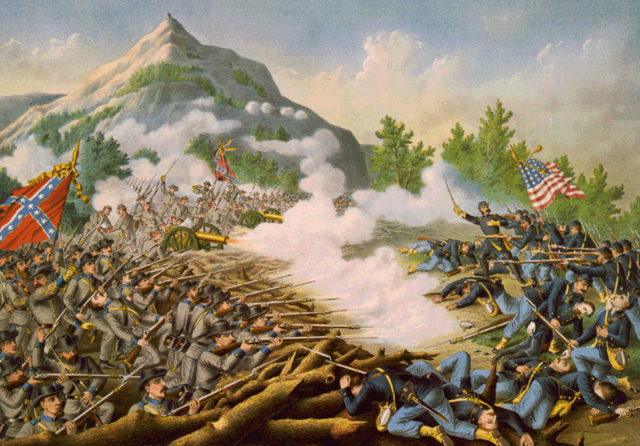
Illustrators also played a crucial role. National publications such as Harper’s Weekly and Frank Leslie’s Illustrated Newspaper featured engravings of battles in Georgia, from Chickamauga to Kennesaw Mountain. Though often dramatized, these drawings brought the war to readers far beyond the state, transforming local events into national spectacles. The engravings showed soldiers clashing, towns in flames, and civilians fleeing—scenes that reinforced both Northern and Southern narratives depending on the publication’s audience.
For Georgians themselves, letters and sketchbooks created by soldiers and civilians provided more intimate visual records. Simple pencil drawings of camps, portraits exchanged between loved ones, or watercolor views of home towns captured moments of personal memory amid upheaval.
Monuments and memorial sculpture after the war
With the war’s end in 1865, Georgia faced the task of reckoning with immense loss. Across towns and counties, communities erected monuments to their dead, usually in the form of obelisks, statues of soldiers, or inscribed plaques. These memorials, often placed in courthouse squares or cemeteries, were among the most visible public art of Reconstruction.
Sculptors and stone carvers supplied a steady stream of granite and marble monuments. Some were imported from northern workshops; others were crafted locally. Their imagery was typically restrained: a lone infantryman standing at rest, a shaft of stone topped by an urn or cross, inscriptions listing names. The purpose was not artistic innovation but solemn remembrance.
The placement of these monuments in central civic spaces reveals how art was enlisted in shaping collective memory. They offered a narrative of sacrifice, dignity, and endurance, even as the broader political struggles of Reconstruction unfolded. At the same time, they signaled a continuing Southern identity rooted in the memory of the Confederacy, a theme that would grow stronger in later decades.
Shifts in architecture and public art
The Civil War destroyed much of Georgia’s built environment, particularly in Atlanta, which was left in ruins after Sherman’s campaign. Reconstruction brought both necessity and opportunity: new buildings rose on old foundations, and architecture became a marker of recovery.
In urban centers, commercial blocks of brick replaced wooden structures. Courthouses and civic buildings were rebuilt with a mixture of neoclassical and Victorian styles, projecting stability in a time of political flux. Churches also took on symbolic importance, as congregations rebuilt sanctuaries destroyed during the conflict. Stained glass, carved woodwork, and new pipe organs represented both artistic renewal and communal resilience.
Public art expanded beyond monuments to include illustrated maps, lithographs of towns, and civic imagery that emphasized progress. Railroad companies, seeking to attract investment and migration, commissioned engravings that presented Georgia as a land of promise. These images, circulated widely, reveal how art served not only memory but also promotion during the state’s recovery.
The Civil War and Reconstruction left Georgia with an artistic legacy marked by contrasts: stark photographs of destruction, solemn monuments to the fallen, rebuilt towns aspiring to modernity, and personal sketches preserved in family trunks. Art in this period was rarely about innovation; it was about witness and commemoration.
The scars of war remained visible in stone and paper, even as Georgia prepared to enter the “New South” era of urbanization and industrial growth. The visual culture of Reconstruction thus served as a bridge—linking the memory of loss to the aspirations of renewal.
Folk Traditions and Regional Expression
While grand monuments and neoclassical buildings marked Georgia’s cities in the 19th century, much of the state’s artistic vitality flowed through humbler channels. In farmsteads, rural workshops, and small communities, a steady stream of handmade objects carried forward traditions of craft, storytelling, and design. These folk arts, shaped by necessity as much as by creativity, formed the cultural backbone of daily life. Their survival and adaptation across generations ensured that Georgia’s art would never be confined only to elite circles but would remain deeply rooted in local expression.
Quilts, pottery, and woodcarving across rural Georgia
Few forms of Southern folk art are as enduring as quilting. In households across Georgia, quilts served both practical and aesthetic roles. Women stitched together scraps of fabric—sometimes the remnants of worn clothing, sometimes purpose-bought cloth—into geometric patterns that combined symmetry with improvisation. Starbursts, log cabins, and nine-patch blocks were common designs, though variations abounded. Each quilt carried a story: of thrift, of family bonds, of shared labor around the quilting frame.
Pottery was another vital tradition, especially in north Georgia’s “jug towns,” where families operated kilns producing utilitarian wares. The Meaders family of White County became particularly known for their work, carrying techniques across generations. The clay of Georgia lent itself to durable, salt-glazed vessels, often marked with earthy browns and grays. Some potters added distinctive “face jugs,” modeled with crude human features that gave a whimsical or eerie character to otherwise functional objects.
Woodcarving supplied both necessity and ornament. Farmers shaped handles, bowls, and tools, but they also carved decorative walking sticks, whirligigs, or toys. In some cases, barns and houses bore carved embellishments—stars, suns, or floral motifs—that connected craftsmanship to everyday architecture.
Distinctive artistic contributions of African American communities
Within Georgia, African American communities preserved and developed artistic traditions that carried both African heritage and new adaptations of American life. Basketry, particularly the coiled sweetgrass baskets of the coastal regions, blended utility with elegance. Patchwork quilting incorporated bold color contrasts and asymmetrical arrangements, sometimes differing from European-influenced designs. Music and rhythm infused visual creation as well: instruments such as homemade banjos and drums were crafted with as much attention to design as to sound.
Enslaved artisans contributed significantly to the built environment, often working as skilled carpenters, brickmakers, or ironworkers. Though their names are seldom recorded, their hands shaped many of the antebellum structures still standing. In some cases, decorative touches—distinctive brick patterns, carved motifs, or unusual joinery—hint at the creative imprint of craftsmen working within constrained circumstances.
After emancipation, African American folk art in Georgia continued to thrive, particularly in rural areas where self-sufficiency encouraged handmade expression. The art was not always intended for sale or public display; often it served community needs or spiritual purposes. Yet these traditions laid a foundation for later recognition of African American artists within the state and beyond.
Storytelling and visual memory in local art
Folk art in Georgia was not limited to objects. Storytelling traditions often intertwined with visual creation. Painted signs outside shops, illustrated family Bibles, or carved grave markers in rural cemeteries carried both imagery and narrative. A hand-lettered sign for a general store might include a painted chicken or plow, simple in execution but vivid in effect. A gravestone carved with symbols of hands, flowers, or tools told stories about the deceased that words alone could not capture.
Such works remind us that art is not only about professional artists but about communities marking meaning in their own ways. In small towns, a barn mural painted to advertise a product or a roadside sculpture assembled from scrap could carry as much cultural resonance as a formal portrait in a city parlor. Folk traditions gave Georgia a visual texture that was immediate, accessible, and deeply tied to place.
Folk art in Georgia during the 19th century was not separate from the state’s broader cultural history—it was its foundation. While elites built mansions and commissioned portraits, the majority of Georgians expressed creativity through quilts, jugs, carvings, and everyday objects. These works, often anonymous, carried the rhythms of local life and preserved identities across generations.
As Georgia entered the industrializing “New South” era in the late 19th and early 20th centuries, many of these traditions persisted, adapting to new materials and markets. Some would gain national attention, while others remained within local memory. Together, they shaped an artistic heritage that balanced sophistication with simplicity, and permanence with improvisation.
Urban Growth and the “New South” (1880–1920)
After the devastation of the Civil War and the uncertain years of Reconstruction, Georgia entered a new phase of economic and cultural transformation. By the 1880s, leaders promoted the idea of a “New South”—a vision of modernization, industrial development, and urban growth that aimed to move the region beyond its agricultural past. For Georgia, this meant a rising Atlanta, a rebuilt Savannah, and expanding towns across the state. Art and architecture reflected these changes: civic buildings and monuments proclaimed stability, public art marked new identities, and institutions for teaching and exhibiting art began to appear. The visual culture of Georgia in this era was both aspirational and practical, bridging memory of the past with the desire for progress.
Atlanta’s expansion and architectural change
Nowhere was the ambition of the New South more evident than in Atlanta. Once reduced to ashes in 1864, the city remade itself into a bustling hub of railroads, commerce, and politics. Its architecture mirrored this rebirth. Brick commercial blocks rose along Peachtree Street, their facades decorated with cast-iron columns and ornamental cornices. Hotels and theaters projected grandeur with domes, arches, and elaborate interiors.
Public buildings also carried symbolic weight. County courthouses built across Georgia in the late 19th century combined neoclassical elements with Victorian exuberance—clock towers, cupolas, and intricate brickwork. These courthouses were not only functional centers of law but also visual anchors of civic pride. Schools, libraries, and city halls followed suit, often funded by local boosters eager to signal their towns’ modern aspirations.
Residential architecture diversified as well. Queen Anne houses with asymmetrical gables, turrets, and wraparound porches dotted neighborhoods in Atlanta, Macon, and Augusta. At the same time, simpler folk Victorian cottages spread across smaller towns, blending decorative trim with affordable design. The built environment of Georgia thus grew more varied, reflecting both prosperity and social hierarchy.
Public art and monuments in cities and towns
The turn of the century also saw a surge in public monuments, many of them dedicated to Civil War memory. In courthouse squares, granite obelisks and soldier statues multiplied, part of a broader Southern trend of commemorating the conflict. These works, usually produced by regional stonecutters or northern firms, were less about artistic originality than about civic ritual. Their presence in the heart of towns underscored the role of public art in shaping identity.
Other forms of public art reflected commercial and cultural vitality. Painted advertisements on brick walls—often bold, colorful, and visible from passing trains—turned cities into canvases of modern commerce. Posters for fairs, expositions, and theaters brought graphic design into everyday life. The 1895 Cotton States and International Exposition in Atlanta, for instance, not only displayed industrial progress but also produced a wealth of visual material, from illustrated guidebooks to ornate fairground pavilions.
In cemeteries, Victorian funerary art flourished. Marble angels, draped urns, and carved lilies adorned graves, particularly in Atlanta’s Oakland Cemetery and Savannah’s Bonaventure Cemetery. These sculptural works combined personal mourning with a broader culture of ornamental remembrance, adding a layer of artistry to sacred landscapes.
Early art institutions and teaching centers
As Georgia’s cities grew, so too did efforts to institutionalize the arts. The 1880s and 1890s witnessed the founding of art schools and clubs, often spearheaded by women’s organizations or civic leaders. In Atlanta, the Atlanta Art Association began exhibiting works and offering instruction, laying the groundwork for what would become the High Museum of Art in the 20th century. In Savannah, art instruction tied to the Telfair Academy expanded access to training and exhibitions.
These institutions brought professional instruction to aspiring artists who had previously relied on private tutelage or travel to the North. They also hosted exhibitions that exposed Georgian audiences to national and international trends. While small by the standards of New York or Boston, these early institutions signaled that Georgia was no longer solely a consumer of art from elsewhere but a participant in America’s broader cultural development.
By 1920, Georgia’s visual culture had entered a new phase. The once-rural state now contained thriving cities filled with commercial architecture, public monuments, and nascent art institutions. The “New South” had been promoted as a vision of progress, and its architecture and art embodied that aspiration. Yet even as urban centers flourished, rural traditions persisted, ensuring that Georgia’s cultural identity remained a blend of the modern and the traditional.
The following decades would deepen this tension, as the Depression, federal programs, and modernist experimentation reshaped what it meant to create art in Georgia. But the late 19th and early 20th centuries remain crucial as the period when Georgia’s art became visibly civic, urban, and institutionally anchored.
The Depression and the WPA Era
The crash of 1929 and the long years of the Great Depression reshaped every aspect of life in Georgia, and art was no exception. With farms failing, mills closing, and urban families struggling to get by, the state faced a crisis that touched both the economy and the spirit. Yet paradoxically, this era also brought a flowering of visual culture, thanks in large part to federal initiatives under Franklin Roosevelt’s New Deal. Programs such as the Works Progress Administration (WPA) created new opportunities for artists, fostered a sense of public purpose in art, and left behind murals, photographs, and exhibitions that still define the period. At the same time, Georgia’s longstanding folk traditions entered national awareness as writers and collectors turned their attention to rural crafts and stories.
Murals and public works programs
Through the WPA’s Federal Art Project and its sister initiatives, artists were employed to produce works for public buildings across the state. In Georgia, this often took the form of murals in post offices, schools, and libraries. These paintings were designed to be both educational and uplifting, celebrating local history, agriculture, and industry at a time when communities desperately needed symbols of endurance.
In towns such as Decatur, Dahlonega, and Cornelia, murals depicted scenes of farming, mining, and daily life. The style tended to be accessible and realistic, favoring clarity over abstraction, since the works were meant for broad public audiences. Farmers bent over plows, mill workers tending machinery, and children at play became common subjects. Such imagery affirmed the dignity of ordinary labor while embedding local stories into civic spaces.
Sculpture and decorative projects also emerged. Stonework, carvings, and reliefs commissioned for courthouses or schools carried themes of education, progress, and justice. The intention was not to experiment with avant-garde forms but to anchor communities in a shared visual language of perseverance.
Documentary photography of Georgia life
If murals celebrated Georgia’s ideals, documentary photography captured its realities. The Farm Security Administration (FSA), a New Deal program, sent photographers across the South to record conditions of rural poverty. Images by figures such as Jack Delano and Marion Post Wolcott showed tenant farmers in worn clothing, children gathered around cabins, and fields stretching under hard skies.
These photographs were not “art” in the conventional sense but government documentation. Yet their stark composition, their play of light and shadow, and their human immediacy gave them undeniable aesthetic force. In many ways, they became some of the most enduring images of Depression-era Georgia, shaping how the state was perceived far beyond its borders. The photographs were reproduced in magazines, government reports, and exhibitions, ensuring a wide audience.
While they often highlighted hardship, they also revealed resilience: women quilting, men repairing tools, families gathering for church. The artistry of daily survival came through, sometimes unintentionally, in the framing of a photographer’s lens.
National recognition of local folk art
The Depression years also marked a turning point in the recognition of Georgia’s folk traditions. Federal and private collectors, searching for authentic American culture, turned to rural communities where crafts had long flourished. Quilts, face jugs, wood carvings, and handmade instruments gained attention not merely as utilitarian objects but as expressions of regional creativity.
Writers and folklorists recorded songs, stories, and oral traditions, often pairing them with photographs or exhibitions of visual work. The result was that Georgia’s folk art—once confined to households and local markets—began to be valued as part of the nation’s cultural heritage. This recognition was double-edged: while it preserved and celebrated traditions, it also risked romanticizing poverty for urban audiences. Still, it marked an important moment in which Georgia’s rural artistry stepped into the national spotlight.
The Depression and WPA era in Georgia left a legacy that was both pragmatic and inspirational. Public murals, post office art, and school projects gave communities a sense of pride during hard times. Documentary photography created a visual archive of Georgia’s struggles and endurance. Folk art moved from private use to public recognition.
When the Depression gave way to World War II, Georgia’s art would once again shift, taking on the challenges of modernism, industrial growth, and postwar identity. But the 1930s remain vital for showing how, even in a time of scarcity, art could serve as both witness and balm—recording hardship while offering hope.
Mid-Century Georgia: Modernism and Tradition
The decades after World War II brought rapid change to Georgia. Industry expanded, cities grew, and suburban development transformed the landscape. Alongside these shifts, the state’s visual culture entered a new phase, balancing inherited traditions with the rising influence of modernism. Artists experimented with abstraction, architects embraced new materials and forms, and cultural institutions gained prominence. Yet folk art and conservative tastes persisted, ensuring that mid-century Georgia’s art remained a dialogue between the innovative and the familiar.
Painters and sculptors exploring abstraction
By the 1940s and 1950s, Georgia artists were increasingly aware of national and international movements. Abstract Expressionism, which emerged in New York, reverberated in Atlanta and beyond. Painters began to abandon strict realism in favor of gestural brushwork, bold color fields, and nonrepresentational forms. While few Georgian artists achieved national fame during this period, many engaged with these trends, displaying works in regional exhibitions and university galleries.
At the same time, some artists blended abstraction with regional themes. A landscape might be rendered not with literal detail but with sweeping strokes that conveyed atmosphere rather than topography. Sculptors experimented with welded metal and carved wood, moving away from commemorative statuary toward forms that invited open interpretation. These developments reflected a desire to place Georgia’s art within the larger conversation of modernism while still maintaining ties to local subjects and experiences.
Yet realism did not disappear. Portraiture remained popular, especially among wealthy families and institutions that continued to commission formal likenesses. The tension between abstraction and realism mirrored a broader cultural negotiation between tradition and innovation.
Architecture from modernist homes to state campuses
Architecture in Georgia during the mid-20th century revealed similar shifts. Modernist design, with its emphasis on clean lines, flat roofs, and functional forms, spread in both residential and public projects. Suburban neighborhoods around Atlanta sprouted ranch houses and split-level homes that reflected national trends in affordability and efficiency.
Universities became showcases for modern architecture. Georgia Tech, the University of Georgia, and other campuses commissioned buildings with glass curtain walls, concrete facades, and minimalist profiles. These structures symbolized progress and technological advancement, aligning the state with postwar optimism.
Commercial architecture also evolved. New office towers in Atlanta adopted International Style features, with steel frames and sleek glass exteriors. Shopping centers and motels catered to the automobile age, incorporating neon signs and bold typography that added a new layer to the visual culture of everyday life.
Despite these modernist currents, traditional styles persisted. Many courthouses and churches continued to be built in neoclassical or Gothic Revival modes, demonstrating that architectural taste in Georgia remained diverse and often conservative.
Balancing inherited forms with new styles
Mid-century Georgia’s art scene was thus defined by balance rather than rupture. Artists and architects experimented with new ideas but did so alongside, not in place of, established traditions. Museums and galleries began to collect and display modern works, yet they also preserved and celebrated folk art and historical portraits.
This duality was visible in exhibitions that juxtaposed avant-garde painting with traditional crafts, or in university art programs that taught both classical drawing and abstract theory. The state was not a radical outpost of modernism, but neither was it isolated from national currents. Instead, Georgia occupied a middle ground, gradually weaving new styles into its cultural fabric while retaining deep respect for the past.
By the 1960s, Georgia stood at a cultural crossroads. Its artists were aware of the boldest experiments of the age, yet they worked in a context where tradition carried weight and folk expression remained vital. The next decades would sharpen these contrasts further, as African American art gained visibility, Atlanta rose as a cultural capital, and the national debates of the Civil Rights era touched every corner of the state’s visual life.
Twentieth-Century African American Art in Georgia
African American artistic expression in Georgia during the 20th century formed a powerful current that both paralleled and enriched the state’s broader cultural development. Rooted in traditions of craft, faith, and community, it expanded into painting, sculpture, and performance that carried distinct voices into local and national conversations. From self-taught creators working in rural settings to professional artists centered in Atlanta, the story of Black art in Georgia during this period is one of persistence, ingenuity, and growing recognition.
Self-taught creators and visionary artists
Georgia became home to some of the South’s most influential self-taught artists. Howard Finster, though best known in later decades, began shaping his “Paradise Garden” in Summerville in the mid-20th century, filling it with paintings, sculptures, and mosaics drawn from religious visions. His work blurred boundaries between folk tradition and modernist experimentation, eventually attracting international attention.
Other creators, often working outside formal institutions, produced art that grew directly from community traditions. Face jugs crafted in African American pottery workshops carried symbolic meanings that scholars have traced to West African ritual forms. Quilts made in rural Georgia displayed bold improvisations of color and pattern that defied the rigid symmetry of mainstream design. These works were rarely intended for galleries but gained increasing recognition as collectors and museums began to value them as distinct contributions to American art.
Such artists revealed that creativity flourished even without academic training. Their works often combined utility with imagination, rooted in daily life but capable of reaching extraordinary expressive heights.
Atlanta’s role as a gathering place for Black artists
By the mid-20th century, Atlanta emerged as a crucial center for African American artistic life in Georgia. The city’s historically Black colleges and universities—including Spelman College, Morehouse College, and Clark Atlanta University—nurtured generations of students and provided exhibition spaces for Black artists when mainstream venues remained closed to them.
The art department at Clark Atlanta, under figures like Hale Woodruff, became a hub of creativity and teaching. Woodruff’s Talladega Murals (created in neighboring Alabama) and his instruction in Atlanta influenced a generation of artists who combined modernist experimentation with themes of history and identity. Through annual exhibitions at the university, artists across the South had opportunities to show their work and connect with peers.
Atlanta also attracted musicians, performers, and writers, creating a cultural environment in which visual art was part of a broader Black creative renaissance. Neighborhoods, churches, and civic groups supported artists, providing audiences and networks that fostered growth even in the face of exclusion from mainstream institutions.
Artistic responses to the era of social change
The mid-20th century brought political upheaval as Georgia became a battleground of the Civil Rights Movement. Artists responded in various ways—some directly, others indirectly. Murals in churches and community centers celebrated themes of liberation and justice. Posters and graphic design provided visual tools for marches, rallies, and educational campaigns. Photography documented protests, leaders, and ordinary citizens asserting their rights.
Not all African American art in Georgia was overtly political, but even works of portraiture, abstraction, or landscape carried significance simply by affirming the presence and creativity of Black artists in a segregated society. For many, art was both personal expression and quiet assertion of dignity.
By the late 20th century, Georgia’s African American artists were achieving broader recognition. Their works entered museum collections, appeared in national exhibitions, and influenced new generations of creators. What began as community-rooted expression grew into a vital strand of the state’s cultural identity, inseparable from its history and resilience.
The story of 20th-century African American art in Georgia is not a single narrative but a constellation of efforts—from self-taught visionaries in rural counties to trained painters and sculptors teaching in Atlanta. Together, they established a tradition that spoke both to local experience and to national artistic currents. Their legacy prepared the ground for the late 20th century, when Atlanta would rise as a cultural capital, hosting major museums, galleries, and international events.
Atlanta as a Cultural Center (1970s–1990s)
By the final decades of the 20th century, Atlanta had fully established itself as Georgia’s cultural capital and a major artistic hub of the American South. Once remembered mainly for its Civil War destruction, the city now projected an image of modernity, ambition, and growth. With the expansion of museums, the rise of galleries, and the interplay of music, performance, and visual art, Atlanta’s art scene came to embody both the state’s traditions and its forward-looking energy.
Growth of museums and the High Museum’s rise
The High Museum of Art became the centerpiece of Atlanta’s artistic identity during this period. Originally founded in 1905 as the Atlanta Art Association, it gained momentum in the mid-20th century, but its transformation into a world-class institution took shape in the 1980s. The commissioning of a new building by the Italian architect Richard Meier in 1983 gave the museum international visibility. Its bright white geometric forms stood out against the city skyline, declaring that Atlanta was serious about its place in the global art world.
The High expanded its collections to include American, European, and African works, and began to host major traveling exhibitions that attracted national attention. Shows of French Impressionism, American masters, and contemporary international artists drew record crowds. For many Georgians, the museum became the first opportunity to encounter works of such scale and prestige without leaving the state.
Other institutions complemented this growth. The Atlanta University Center galleries continued to exhibit the work of African American artists, maintaining a tradition begun decades earlier. Smaller museums and historical societies across the city preserved regional art, from folk traditions to Civil War relics, ensuring that Atlanta’s cultural ecosystem was broad as well as deep.
Galleries, markets, and private collections
Beyond museums, the commercial art world in Atlanta blossomed in the 1970s and 1980s. Galleries in neighborhoods like Buckhead and Midtown began to represent both regional and national artists, giving collectors new opportunities. The art market thrived as Atlanta’s economy expanded, fueled by banking, technology, and corporate headquarters that increasingly purchased artworks for office spaces.
Annual festivals and art markets, such as those in Piedmont Park, brought together professional artists and craftspeople, exposing wider audiences to sculpture, painting, and design. These events also sustained folk and traditional arts, ensuring that Georgia’s crafts remained visible alongside the sleek canvases of contemporary painters.
Private collectors played a major role. Wealthy Atlantans assembled significant collections, some of which later entered public institutions. Their patronage shaped the direction of galleries and exhibitions, demonstrating how art was becoming an integral part of civic pride and personal status in the booming metropolis.
Performance, music, and visual arts intersecting
Atlanta in the late 20th century was not only about galleries and museums—it was a city where art, music, and performance constantly overlapped. The rise of the city as a hub for music, particularly R&B and later hip hop, created an environment in which visual artists and performers collaborated, borrowing from each other’s aesthetics. Album covers, posters, and stage design often carried as much creative energy as traditional paintings.
Theatrical companies and dance groups commissioned set designs and visual installations, blending the visual and performing arts. Public murals, often tied to community projects, began to appear on city walls, signaling the growing importance of art outside institutional spaces. Atlanta’s identity as a “world city” in the making encouraged cross-pollination: an art exhibit could coincide with a music festival or a theatrical premiere, weaving creativity into the wider urban experience.
By the 1990s, Atlanta’s status as a cultural center was undeniable. The High Museum stood as a beacon of institutional ambition, galleries thrived, and grassroots creativity continued to flow through markets, murals, and performances. The city’s role as host of the 1996 Olympic Games further solidified its global profile, with public art projects and international visitors showcasing Georgia’s cultural landscape to the world.
This period set the stage for the 21st century, when Georgia’s artists would engage with both global dialogues and local traditions in increasingly diverse and dynamic ways.
Contemporary Georgia: 21st Century Directions
In the new millennium, Georgia’s art scene entered a phase defined by diversity, experimentation, and global connection. The state’s traditions—folk crafts, African American creativity, civic monuments, and the institutional strength of Atlanta—continued to matter, but new forces transformed the cultural landscape. Technology, international exhibitions, and urban growth shaped the way artists worked and audiences experienced their creations. Georgia in the 21st century stands as a place where local voices and global influences coexist, often in surprising harmony.
Painting, sculpture, and photography since 2000
Contemporary painters in Georgia pursue a wide range of styles, from abstract canvases that echo international modernism to figurative works rooted in regional themes. Atlanta has produced painters who balance bold color with social commentary, while others experiment with minimalism or surreal imagery. Sculpture has likewise diversified: large-scale installations appear in public parks and corporate atriums, while smaller studios produce works in bronze, wood, and experimental materials.
Photography has taken on new prominence. Georgian photographers explore subjects as varied as urban transformation, Southern landscapes, and intimate portraits. Digital technology has lowered barriers of entry, enabling more artists to exhibit their work online and in pop-up shows. Photography also serves as a bridge between fine art and documentary tradition, continuing the state’s legacy from the WPA era while expanding into new media.
Murals, public installations, and street art
Public art has flourished in Georgia’s cities, particularly Atlanta. Murals cover walls in neighborhoods such as Cabbagetown, Old Fourth Ward, and Little Five Points, turning streets into open-air galleries. Some works celebrate local history and figures, while others embrace bold abstraction or political themes. Festivals like “Living Walls” have brought international muralists to the city, encouraging dialogue between local and global street art traditions.
Installations in parks, plazas, and transit stations reflect a broader commitment to art in public space. Sculptures made of steel, glass, or found materials invite viewers to interact, not merely observe. This democratization of art—making it visible to those who may never enter a museum—has reshaped the visual identity of Georgia’s urban areas.
Street art and graffiti, once dismissed as vandalism, have increasingly been recognized for their creativity and cultural impact. Atlanta’s hip hop scene, intertwined with visual expression, has further reinforced the connection between music and street imagery.
Georgia artists in national and international exhibitions
Georgia artists now move easily between local and global stages. Exhibitions in New York, Los Angeles, and abroad feature painters, sculptors, and multimedia artists who trained or launched their careers in Atlanta, Savannah, or Athens. The Savannah College of Art and Design (SCAD), with campuses in Savannah and Atlanta, has been a major driver of this visibility, attracting international faculty and students while mounting ambitious exhibitions that link Georgia to global networks.
The High Museum continues to bring major international shows to Atlanta, from European masters to contemporary innovators, while also dedicating attention to regional artists. This dual focus—local and global—has helped situate Georgia within the broader art world. Meanwhile, smaller galleries and collectives provide platforms for experimental work, ensuring that the state’s art scene does not rely solely on large institutions.
Contemporary Georgia thus presents a layered cultural landscape. Tradition remains strong, from quilting to pottery to church art, but it coexists with digital installations, street murals, and globally connected exhibitions. The state has moved far beyond the days when its art was considered provincial or secondary. Instead, Georgia now offers a dynamic blend of heritage and innovation, rooted in local soil yet open to worldwide currents.
The question that lingers for the future is how Georgia’s artists will continue to balance these forces: the enduring pull of tradition, the demand for global relevance, and the pressures of urban transformation. The answer lies in the art itself, which continues to evolve in surprising, inventive ways.
Memory, Place, and Preservation
As Georgia’s art world has grown more international in scope, the work of remembering, preserving, and interpreting the state’s cultural past has become increasingly important. From historic homes and monuments to folk traditions passed through families, Georgia’s artistic heritage is both fragile and enduring. The effort to safeguard it—whether through restoration projects, museum collections, or local initiatives—has created a dynamic dialogue between past and present. Memory and preservation in Georgia are not passive acts of storage but active choices about what stories to tell, what works to protect, and how to connect living communities with their heritage.
Restoration of historic buildings and monuments
Architecture remains the most visible element of Georgia’s artistic inheritance. Antebellum plantation homes, neoclassical courthouses, Victorian townhouses, and mid-century modern campuses all form part of the state’s visual record. Preservation efforts in Savannah’s historic district, beginning in the mid-20th century, set a national standard for how an American city might safeguard its architectural fabric. Tree-lined squares, restored homes, and carefully maintained churches provide both a living neighborhood and a curated museum of urban design.
Beyond Savannah, smaller towns across Georgia have also invested in restoration. Courthouses once threatened with demolition have been repaired, with original woodwork and plaster carefully conserved. Rural churches—often simple frame structures—have been stabilized to keep their modest but powerful artistry intact. These efforts highlight the recognition that art is not only found in galleries but embedded in the built environment that shapes everyday life.
Memorials present a more complex case. Statues and monuments from different eras—Civil War obelisks, World War memorials, civic plaques—stand across the state. Preservation of these works often raises questions about historical interpretation, yet from an artistic perspective they remain part of the record of how Georgians used art to express identity and memory. Conservators now face the dual challenge of caring for the physical stone and bronze while also engaging with the meanings such objects carry for present-day communities.
Museums, archives, and regional collections
Museums play a central role in preserving and presenting Georgia’s artistic heritage. The High Museum of Art houses collections that range from European painting to Southern folk art, providing a broad context in which local works sit alongside global traditions. The Telfair Museums in Savannah, among the oldest public art museums in the South, continue to display decorative arts and historical painting in settings that evoke the city’s 19th-century cultural life.
Smaller institutions carry equal importance. The Morris Museum of Art in Augusta emphasizes Southern art, while local historical societies preserve paintings, quilts, and furniture tied to specific communities. Archives safeguard photographs, sketchbooks, and letters that document the working lives of Georgia’s artists. Together, these institutions ensure that fragile works survive beyond their immediate context, accessible to scholars and the public alike.
In recent years, digitization projects have extended this preservation into the digital realm, allowing collections to reach audiences far from Georgia. Such efforts highlight the changing nature of preservation: it is not only about protecting physical objects but also about making them visible in new ways.
Folk traditions carried forward in a changing landscape
Not all of Georgia’s art can be conserved in stone or glass cases. Folk traditions—quilting, pottery, music, and storytelling—are preserved by being practiced. Families pass down techniques, and community festivals celebrate local crafts. In the north Georgia mountains, potters still turn clay on wheels; along the coast, basket makers continue coiled designs that link present work to centuries-old practices. Quilters adapt traditional patterns with modern fabrics, ensuring continuity even as styles evolve.
Preservation here is not about freezing a tradition in time but about allowing it to adapt while keeping its roots intact. An artist using electric kilns instead of wood-fired ones, or a quilter experimenting with new motifs, is still part of a lineage that carries Georgia’s folk artistry forward. These living traditions remind us that memory is not static—it is an active process of making and remaking culture.
Georgia’s art today moves confidently between the local and the global, the traditional and the experimental. Yet beneath this diversity lies a consistent thread: the recognition that memory and preservation matter. Whether restoring a historic square in Savannah, curating a folk art collection in a small-town museum, or teaching a quilting pattern to a new generation, Georgians continue to shape how their artistic past survives into the future.
The state’s art history is not only about what has been created but also about what is remembered. Each restored building, each carefully conserved painting, each tradition carried forward ensures that Georgia’s art is not a fading echo but a living inheritance—ready to inspire new work in the centuries ahead.