Salon Art dominated European painting for over two centuries, shaping artistic standards, public taste, and institutional power. Rooted in the grand traditions of the Royal Academy of Painting and Sculpture, Salon exhibitions became the premier stage for artists seeking recognition and patronage. The Salon de Paris, first held in 1667, evolved into the most prestigious art showcase of the 18th and 19th centuries, setting rigid standards for artistic excellence. These standards emphasized technical mastery, historical themes, and idealized beauty, reinforcing the academic hierarchy of genres.
While Salon Art provided structure and legitimacy to artists, it also sparked controversy and resistance. By the mid-19th century, its conservative selection process led to growing dissatisfaction among artists who sought new ways to express modern life. The rejection of Édouard Manet’s Le Déjeuner sur l’herbe in 1863 was a turning point, prompting the creation of the Salon des Refusés, which exhibited works rejected by the official Salon jury. This schism marked the beginning of a new artistic era, paving the way for Impressionism, Post-Impressionism, and later, Modernism. Despite this shift, Salon Art remains an important chapter in art history, continuing to influence aesthetics and artistic education.
This article explores the rise, peak, and decline of Salon Art, highlighting its major artists, themes, and legacy. We will examine the role of the Salon in defining artistic taste, the impact of the Académie des Beaux-Arts, and the eventual rejection of Salon traditions by avant-garde movements. Understanding Salon Art is key to grasping the broader evolution of Western painting, from academic classicism to modern experimentation.
The Origins of Salon Art: From Royal Patronage to Public Exhibition
Salon Art originated in 17th-century France, deeply tied to the ambitions of the French monarchy and the cultural authority of the Royal Academy of Painting and Sculpture. Founded in 1648 under the patronage of Louis XIV, the academy established strict guidelines for artistic training and evaluation. Under the leadership of Jean-Baptiste Colbert, the academy reinforced the primacy of history painting, emphasizing classical themes and idealized forms. By 1667, the first official Salon de Paris was held at the Palais-Royal, offering a platform for artists to showcase their work under royal supervision.
The Salon quickly became the most important public exhibition in Europe, reinforcing the dominance of Academic Art. Artists admitted to the Salon gained prestige, commissions, and access to elite patrons, while rejection often led to obscurity. The Académie des Beaux-Arts, established in 1816, continued to oversee the Salon, maintaining high artistic standards and favoring artists trained in classical traditions. Over time, the Salon grew in scale and influence, moving to the Louvre in 1725 before settling in the Palais des Champs-Élysées by 1855.
Throughout the 18th and 19th centuries, Salon exhibitions dictated artistic taste, enforcing rigid selection criteria. Works were judged based on their adherence to Neoclassical ideals, technical execution, and alignment with historical or mythological subjects. By restricting access to emerging styles, the Salon effectively controlled the trajectory of European painting, favoring established masters over experimental artists. This exclusivity, while reinforcing artistic excellence, also alienated those seeking creative freedom outside academic norms.
Despite its conservative nature, the Salon fostered an environment of high artistic competition, pushing painters to refine their skills. The strict academic training required of Salon artists ensured that their works adhered to rigorous compositional and anatomical principles. However, as artistic preferences evolved, the Salon’s rigid rules became a source of frustration for those advocating for new artistic movements. This tension eventually led to the rise of alternative exhibitions, challenging the Academy’s authority.
The Grand Tradition: Themes and Styles in Salon Art
Salon Art followed a strict hierarchical system of genres, ranking history painting above all others. At the top were grand historical, religious, and mythological compositions, followed by portraiture, genre scenes, landscapes, and still life. History painting was considered the most intellectual and prestigious, as it required mastery of anatomy, perspective, and classical symbolism. These grand compositions often depicted heroic acts, biblical narratives, or Greco-Roman mythology, reinforcing moral and cultural ideals.
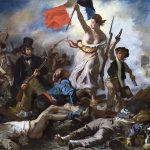
Stylistically, Salon Art embraced Neoclassicism, Romanticism, and Academic Realism, each reflecting different artistic priorities. Neoclassical works, championed by Jacques-Louis David, emphasized clarity, symmetry, and idealized figures drawn from antiquity. Romantic painters, like Théodore Géricault and Eugène Delacroix, prioritized emotional intensity, dynamic compositions, and bold color contrasts. By the mid-19th century, Academic Realism, led by artists like Alexandre Cabanel and William-Adolphe Bouguereau, combined technical precision with polished, sentimental imagery.
Salon-approved works exhibited specific visual characteristics, including smooth brushwork, balanced compositions, and dramatic lighting effects. Artists aimed for a refined, illusionistic quality, avoiding visible brushstrokes or rough textures. This meticulous approach aligned with the Salon’s emphasis on technical mastery, ensuring that paintings conveyed narrative clarity and idealized beauty. These qualities distinguished Salon Art from later avant-garde styles, which favored spontaneity and looser techniques.
Thematically, Salon Art served moral and educational purposes, reinforcing religious, nationalistic, and philosophical ideals. Many works celebrated historical triumphs, biblical parables, or allegorical representations of virtue and justice. Even in portraiture and genre scenes, idealization played a key role, presenting subjects in heroic, noble, or graceful poses. These thematic preferences aligned with the Salon’s mission to uphold tradition and cultural refinement, even as artistic trends shifted toward modernity.
Notable Artists of the Salon: Masters of the Academic Tradition
Several key artists defined Salon Art, shaping its development across different periods. Jacques-Louis David (1748–1825) led the Neoclassical movement, producing monumental works such as The Oath of the Horatii (1784). His sharp contours, rigid compositions, and dramatic use of light reinforced the moral seriousness of historical painting. David’s influence extended to his students, including Jean-Auguste-Dominique Ingres, who refined Neoclassicism with sensuality and grace.
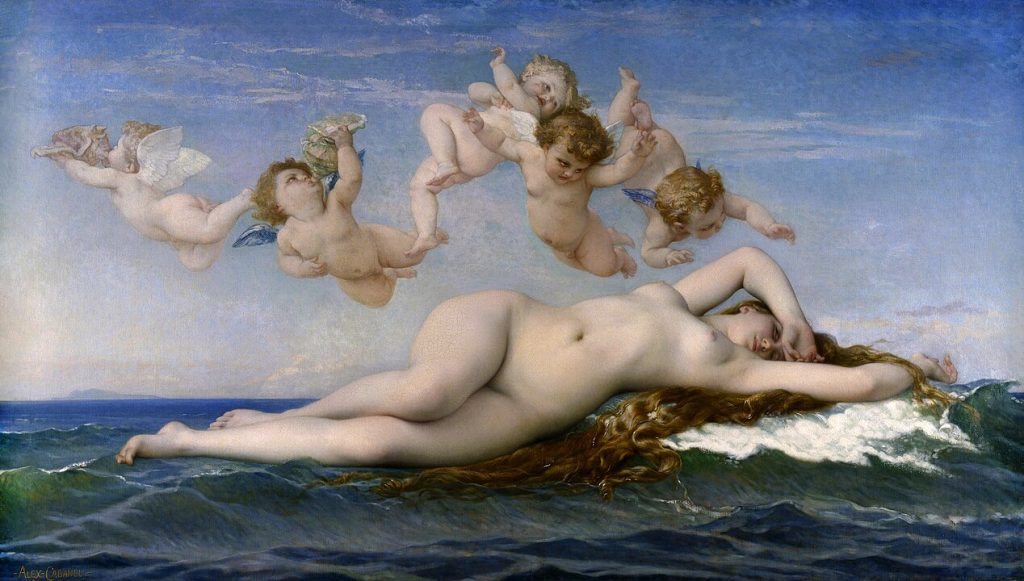
Ingres (1780–1867) exemplified the academic ideal, mastering precise draftsmanship and elongated forms. His masterpiece, La Grande Odalisque (1814), fused classical perfection with exotic themes, reflecting the Salon’s appreciation for polished aesthetics. Alexandre Cabanel (1823–1889) continued this tradition, blending Romantic sensuality with Academic finesse in works like The Birth of Venus (1863). His soft, ethereal brushwork appealed to both the Salon jury and elite patrons, securing his place as a favored artist.
William-Adolphe Bouguereau (1825–1905) epitomized the height of Salon Art, producing technically flawless, emotionally evocative paintings. Known for his depictions of mythological nymphs, innocent children, and idealized women, Bouguereau was celebrated for his meticulous realism. His work, such as The Bohemian (1890), showcased an unmatched level of craftsmanship, making him one of the most commercially successful Salon painters of the 19th century.
These artists upheld the academic traditions that defined Salon Art, but they also faced growing criticism from modernist movements. Their rigid adherence to classical ideals contrasted with the experimental techniques of emerging painters like Édouard Manet and Claude Monet. As the artistic landscape changed, the prestige of Salon-approved artists began to wane, leading to the eventual decline of their dominance.
The Rise of the Salon des Refusés: Challenging Tradition
By the mid-19th century, the strict selection criteria of the Salon de Paris increasingly alienated artists who sought to break free from academic constraints. The jury, dominated by Académie des Beaux-Arts members, rejected any works that deviated from traditional themes, techniques, or compositions. As a result, many talented artists were denied public exposure, leading to frustration within the artistic community. The Salon’s rigid standards became a symbol of conservatism, prompting calls for reform and alternative exhibition spaces.
One of the most significant moments in this rebellion occurred in 1863, when Édouard Manet’s Le Déjeuner sur l’herbe was rejected by the Salon jury. The painting’s unconventional subject matter and bold brushwork scandalized traditionalists, marking a turning point in art history. In response to widespread complaints about the rejection process, Emperor Napoleon III ordered the establishment of the Salon des Refusés (Salon of the Rejected). This alternative exhibition allowed rejected artists to display their work, drawing immense public interest and controversy.
The Salon des Refusés became a pivotal event in the development of modern art, providing a platform for emerging movements. Artists such as Claude Monet, Paul Cézanne, and James McNeill Whistler exhibited their works, challenging traditional notions of artistic excellence. This moment marked the beginning of Impressionism, as painters experimented with light, color, and loose brushstrokes to capture fleeting moments. Although initially dismissed by critics, the works shown at the Salon des Refusés laid the foundation for a radical shift in art.
Despite its impact, the Salon des Refusés did not immediately replace the prestige of the official Salon. Many artists still sought Salon recognition, as it remained the dominant avenue for career success. However, the alternative exhibition exposed the public to new ideas, weakening the Académie’s control over artistic standards. Over the following decades, artists increasingly turned to independent exhibitions and private galleries, signaling the decline of the Salon’s artistic monopoly.
The Decline of Salon Art: The Changing Tides of the Art World
As the 19th century progressed, the authority of the Académie des Beaux-Arts and its Salon exhibitions began to wane. The rise of Impressionism, Post-Impressionism, and other avant-garde movements fundamentally challenged the principles of Academic Art. Artists no longer sought approval from Salon juries, preferring to exhibit their works through independent venues. The artistic community became more diverse, embracing personal expression over technical perfection, leading to the gradual decline of Salon-approved painting.
One of the most vocal critics of the Salon was the writer Émile Zola, who championed artists like Édouard Manet and Paul Cézanne. Zola denounced the Salon’s rigid conventions, arguing that art should reflect contemporary life rather than historical grandeur. By the 1880s, several alternative exhibitions, such as the Impressionist exhibitions (beginning in 1874) and the Salon d’Automne (founded in 1903), offered platforms for artists who rejected academic standards. These exhibitions allowed new artistic styles to flourish, free from the constraints of institutional approval.
The late 19th and early 20th centuries witnessed the emergence of Cubism, Fauvism, and Surrealism, further distancing modern artists from the academic tradition. Pablo Picasso, Henri Matisse, and Salvador Dalí represented a new generation of painters who disregarded the ideals of Salon Art. The emphasis on abstraction, vibrant color, and psychological depth marked a stark contrast to the polished realism of Bouguereau, Cabanel, and Gérôme. By 1900, the official Salon had lost much of its influence, replaced by a more dynamic and fragmented art world.
By the mid-20th century, Salon Art was largely dismissed as outdated and irrelevant, overshadowed by modernist experimentation. Museums and critics favored avant-garde movements, relegating Academic Art to historical footnotes. However, in recent decades, there has been a resurgence of interest in classical realism, with contemporary painters rediscovering the techniques of Salon masters. While the Salon’s dominance faded, its legacy endures in the academic traditions of art education and institutional exhibition practices.
The Legacy of Salon Art: Influence on Modern Aesthetics and Institutions
Despite its decline, Salon Art’s legacy remains deeply embedded in artistic education and aesthetic traditions. Many of the world’s top art academies, including the École des Beaux-Arts in Paris, continue to teach classical techniques rooted in Salon traditions. Perspective, anatomy, and composition—key elements of Salon painting—are still fundamental in academic training. The emphasis on technical mastery, once championed by the Salon, continues to inspire realist painters seeking to preserve classical ideals.
Beyond academia, Salon aesthetics influenced 20th-century cinema, fashion, and advertising, particularly in their use of idealized beauty. The classical compositions and dramatic lighting seen in Hollywood’s Golden Age films reflect the meticulous staging of Salon paintings. Additionally, elements of Academic Art are present in modern luxury branding and portrait photography, where balance and refinement remain essential. While modernism sought to break free from academic traditions, the enduring appeal of elegance, harmony, and technical perfection ensures the Salon’s influence persists.
In recent decades, collectors and museums have reassessed the value of Salon Art, leading to a revival of interest in forgotten masters. Institutions such as the Musée d’Orsay and The Metropolitan Museum of Art have dedicated exhibitions to Bouguereau, Cabanel, and Gérôme, recognizing their contributions to 19th-century painting. Auction houses have also seen a resurgence in demand for Salon masterpieces, with some paintings fetching millions of dollars. This renewed appreciation underscores the lasting significance of Academic Art, despite past criticisms.
Ultimately, the legacy of Salon Art lies in its impact on the evolution of artistic standards. While modern artists rebelled against its constraints, they were shaped by its traditions. Today, a balance exists between classical realism and experimental forms, reflecting the ongoing dialogue between tradition and innovation. Whether embraced or challenged, Salon Art remains a vital part of the history of Western painting.
Collecting and Preserving Salon Art: Museums, Markets, and Revival
Salon Art has found a second life in the 21st century, as collectors, museums, and art historians work to preserve its heritage. Many of the greatest Salon works are housed in prestigious museums, including the Louvre, the Musée d’Orsay, and The Metropolitan Museum of Art. These institutions have actively restored and exhibited Salon paintings, ensuring that their historical and artistic value is not forgotten. Such efforts have led to a renewed appreciation of the technical brilliance and storytelling power of Academic Art.
The art market has also witnessed a resurgence of interest in 19th-century Salon painters, with collectors recognizing their skill and craftsmanship. Works by William-Adolphe Bouguereau, Jean-Léon Gérôme, and Alexandre Cabanel have fetched high prices at Sotheby’s and Christie’s auctions. Once dismissed as outdated, these paintings are now viewed as remarkable achievements of technical mastery. The rise of classical realism among contemporary painters has further driven demand for Salon-style works.
Organizations dedicated to classical realism and atelier training have embraced the methods of Salon masters, ensuring their techniques are passed on to new generations. Institutions like The Florence Academy of Art and The Grand Central Atelier have revived interest in rigorous academic training, emphasizing drawing and oil painting methods rooted in the Salon tradition. This revival demonstrates the enduring appeal of realism and classical ideals in an age of artistic pluralism.
While Salon Art was once overshadowed by modernist movements, its artistic and historical value is now being reexamined. Through museum exhibitions, private collections, and contemporary classical painters, the tradition of Salon Art continues to inspire new audiences.