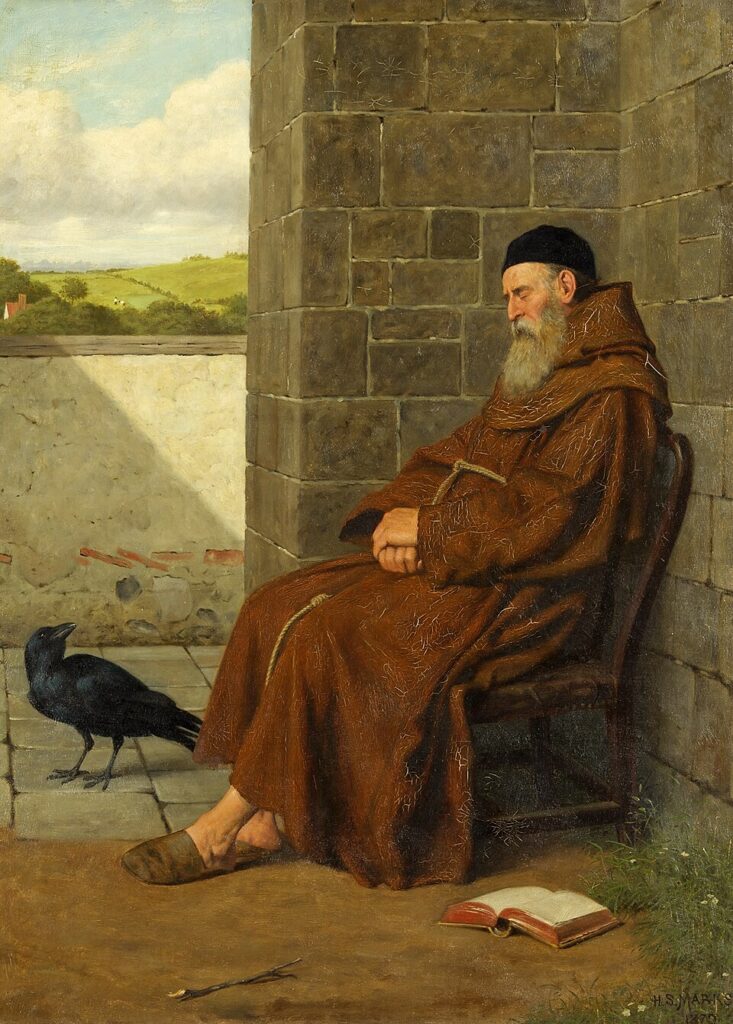
Ravens and crows hold some of the deepest roots in northern European storytelling. In the old Norse world, the raven was tied closely to wisdom and far-sight. The most famous examples are Huginn and Muninn, the two ravens that served as companions and messengers to Odin. Artists in Viking-age Scandinavia carved these birds into wood, metal, and stone, giving them long wings and sharp silhouettes. Their presence suggested a watchful strength. A raven perched on a ship’s prow or carved into a burial stone spoke of guidance, memory, and the steady endurance of a people who lived close to the sea and the cold.
These early images shaped how later northern artists understood the raven. It was never just a bird. It was a symbol of intellect, vigilance, and the unseen knowledge that comes from quiet observation. Even in regions where Christianity had replaced the old faith, the raven’s old dignity lingered in folk memory, giving the bird a place in carvings, ballads, and local decorative arts.
Medieval Manuscripts and Moral Scenes
In medieval Europe, the raven and crow took on more layered meanings. Manuscript illuminators often placed these birds in the margins of religious texts, where they reminded readers of watchfulness or, at times, caution. Medieval writers sometimes associated the raven with solitude or spiritual wandering, drawing on stories in which the raven’s dark feathers made it a fitting companion to hermits or travelers.
At the same time, some moral tales cast the raven as a figure that warns against neglect or temptation. Artists used these stories to illustrate lessons about diligence or the need for steady devotion. Even so, medieval depictions rarely stripped the raven of its dignity. Its sharp eye and purposeful posture made it a creature that demanded respect, not ridicule. Whether perched in a manuscript or carved into a capital, the raven added weight to the page or stone.
Romantic Revival
By the 1800s, Romantic painters and poets rediscovered the raven as a creature of atmosphere. Northern landscapes, already rich with mist, pine, and rocky outcrops, became natural stages for the bird’s dark wings. A single raven circling over a valley or perched on a barren tree helped artists create a sense of solitude and depth. The bird’s call, silent in the painting but suggested by its posture, seemed to echo through the landscape.
Romantic painters appreciated how ravens and crows could stand for endurance in difficult places. Against snow, fog, or a fading sky, the bird’s black form gave the scene a sense of gravity. The viewer felt the passing of time, the quiet of evening, or the weight of memory. These scenes were not meant to frighten; they were meant to stir contemplation.
Symbolist Interpretations
Symbolist painters of the late 1800s and early 1900s often treated the raven as a companion to the inner life. In these works, the bird stands for reflection, hidden thought, or the pull of the unknown. Instead of dramatic action, Symbolists favored stillness. A raven on a stone ledge or resting beside a quiet stream can appear almost like a guardian of secrets. The artists used muted colors, soft backgrounds, and careful composition to give the bird a quiet but commanding presence.
Some Symbolist works use the raven to explore themes of memory and the passage of time. The bird’s association with ancient myth and long winters made it an ideal figure for these reflective paintings. Viewers understood that the raven represented something deeper than simple wildlife: the link between the visible world and the thoughts that lie beneath it.
Folk Crafts and Traditional Decor
Ravens and crows appear throughout northern folk crafts, especially in woodcarving, metalwork, and embroidered textiles. Craftsmen valued the bird’s clear outline, which allowed them to create strong, simple designs that fit traditional patterns. A carved raven on a storage chest, a painted crow on a small wooden panel, or a woven motif on a household cloth brought a touch of old northern tradition into everyday life.
Some regions included ravens in seasonally used masks or festival decorations, honoring their place in local history. These pieces often suggest respect for the bird’s intelligence and resilience. Even in humble materials, the raven carried its old meaning: alertness, memory, and a steady presence in a changing world.