Michelangelo Merisi da Caravaggio and Fillide Melandroni’s relationship was one of passion, artistry, and turmoil, set against the backdrop of Baroque Rome. Caravaggio, a painter of raw intensity and dramatic realism, found in Fillide a muse whose beauty and presence resonated deeply in his work. Yet, their story was not one of pure romance but rather a tangled narrative of artistic obsession, social power, and violent conflict. Whether they were lovers in the traditional sense or bound by mutual fascination remains debated, but their connection undeniably shaped some of Caravaggio’s most compelling paintings.
The streets of Rome in the late 16th and early 17th centuries were a chaotic blend of opulence and danger. The city was a hub for ambitious artists, noble patrons, and figures from the criminal underworld, where alliances were as fragile as reputations. Courtesans held a unique place in this social structure, often wielding considerable influence despite the precarious nature of their status. Fillide Melandroni, one of the most famous courtesans of her time, was a figure of both admiration and controversy, known for her intelligence and connections to powerful men.
Caravaggio, whose fiery temper often overshadowed his genius, was notorious for his involvement in street brawls and legal disputes. His art challenged traditional norms, presenting gritty realism over idealized beauty, a vision that scandalized and mesmerized Rome’s elite. His relationship with Fillide brought together two individuals who navigated the perilous intersections of power, sex, and survival. She was not merely his model; she was a woman who understood the brutal world in which they both lived.
Understanding their relationship requires exploring both the historical records and the artistic legacy left behind. Through Caravaggio’s paintings, Fillide’s likeness endures, allowing modern audiences to glimpse the woman who captivated one of history’s most revolutionary artists. Their story is not a simple love affair but a testament to the way art, ambition, and violence were deeply intertwined in the tumultuous landscape of 17th-century Rome.
Caravaggio: A Genius and a Rebel
Born in 1571 in the town of Caravaggio, Lombardy, Michelangelo Merisi would later take the name of his birthplace as his artistic identity. Orphaned by the age of six, he grew up in a world marked by social instability and disease, conditions that shaped his intense outlook on life. As a teenager, he trained in Milan under Simone Peterzano, a disciple of Titian, where he learned the foundations of Renaissance painting. Yet, Caravaggio quickly developed his own distinctive style, one that rejected the artificial grace of Mannerism in favor of gritty naturalism.
By the early 1590s, Caravaggio arrived in Rome, seeking both patronage and recognition. The city was a thriving artistic center, but it was also ruthless for those who could not secure wealthy backers. He worked for various artists and dealers, painting still lifes and genre scenes, before being noticed by Cardinal Francesco del Monte, who became his first major patron. Under the Cardinal’s protection, Caravaggio’s career flourished, leading to commissions for some of Rome’s most prestigious churches. His works, such as The Calling of Saint Matthew (1599), introduced chiaroscuro, the dramatic play of light and shadow, that would define his legacy.
Yet, despite his artistic success, Caravaggio’s personal life remained tumultuous and violent. He was arrested multiple times for carrying illegal weapons, engaging in duels, and provoking fights. His temper was legendary, and his clashes with fellow artists, law enforcement, and powerful men made him both feared and admired. His growing notoriety did not deter him from pushing artistic boundaries, and he continued to paint with unmatched emotional depth and realism.
It was during this period of rising fame and increasing legal troubles that he encountered Fillide Melandroni. She would become both an inspiration and a central figure in the web of conflicts that eventually led to Caravaggio’s downfall. Their relationship reflected the dangerous world they inhabited—a world where survival depended on both cunning and strength.
Fillide Melandroni: A Courtesan in the Spotlight
Born in 1581 in Siena, Fillide Melandroni moved to Rome as a child, where she would eventually rise to prominence as one of the city’s most sought-after courtesans. Unlike most women of her time, she carved out a degree of independence, using her beauty and wit to attract powerful patrons and influential artists. By the time she was in her late teens, she was well established in Rome’s elite social circles, often attending lavish gatherings and securing relationships with men who could offer her protection and financial stability.
Fillide was not just a passive participant in her own fate; she actively shaped her life, navigating a world that was both glamorous and dangerous. Courtesans held an unusual position in Roman society, enjoying access to wealth and influence while constantly facing the risk of falling out of favor. Many of them, including Fillide, appeared in the records of Rome’s criminal courts, accused of everything from financial disputes to violent altercations. These women had to be intelligent, strategic, and ruthless to survive.
Her name appears in multiple legal documents, often tied to men of high standing, including Ranuccio Tomassoni, a rival of Caravaggio and one of the key figures in the artist’s tragic downfall. While her exact relationship with Tomassoni remains uncertain, he was undoubtedly an important presence in her life. Fillide, like many courtesans, was skilled at managing multiple patrons, ensuring her survival in a world that could be cruel to women in her profession.
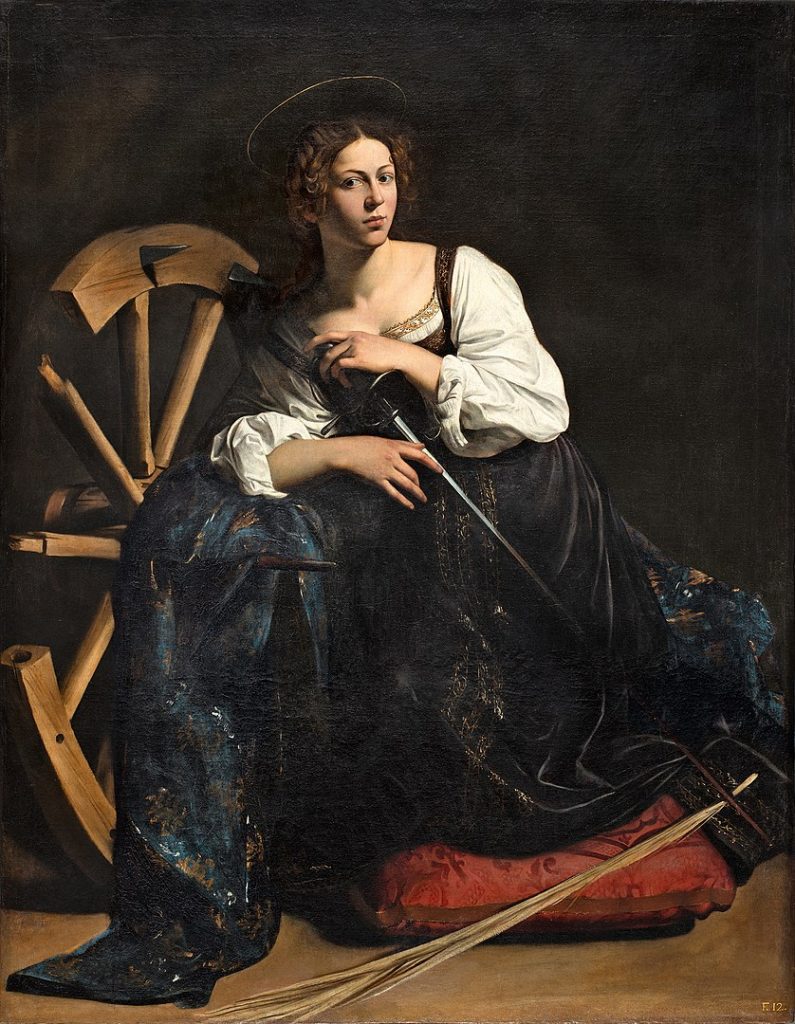
Caravaggio was one of several artists who painted Fillide, but his portraits of her are among the most captivating and expressive. Her features appear in several of his works, including Judith Beheading Holofernes (1599) and Martha and Mary Magdalene (1598–1599). These paintings reflect more than just physical beauty; they convey strength, emotion, and intensity, suggesting that Caravaggio saw in Fillide more than just a muse—he saw a kindred spirit.
Passion and Paint: Their Complex Relationship
Caravaggio and Fillide’s connection was more than just artist and model—it was a relationship built on power, desire, and the harsh realities of survival. Unlike noblewomen, who were confined by societal expectations, courtesans had the freedom to engage in relationships outside of marriage, but this freedom came at a cost. They were subject to jealous patrons, violent disputes, and an ever-present risk of falling into poverty.
Fillide’s likeness in Caravaggio’s paintings is often associated with biblical heroines, women who possessed both beauty and danger. In Judith Beheading Holofernes, she appears as Judith, the woman who seduced and then brutally killed the enemy general Holofernes. The painting is one of uncompromising violence, with Fillide’s Judith portrayed as both composed and determined. The scene is drenched in darkness and intensity, much like the world Caravaggio himself lived in.
Beyond their artistic collaboration, the extent of Caravaggio and Fillide’s romantic involvement remains uncertain. There are no surviving letters or direct accounts of a formal love affair, yet his repeated use of her image suggests a deep personal connection. Whether it was love, admiration, or artistic obsession, Fillide was one of the few women who left a visible mark on Caravaggio’s life.
However, their relationship was ultimately overshadowed by the rivalries and violence that defined Caravaggio’s later years. As tensions escalated between Caravaggio and Ranuccio Tomassoni, Fillide found herself caught between two dangerous men, both of whom were destined for a tragic end.
Conflict, Jealousy, and Violence
The relationship between Caravaggio and Fillide Melandroni became entangled in the dangerous power struggles of Rome’s elite, culminating in a violent confrontation that would alter both their lives. One of the most influential men in Fillide’s circle was Ranuccio Tomassoni, a well-connected figure with ties to the criminal underworld. Whether Tomassoni was merely a patron or something more to Fillide remains uncertain, but he was undoubtedly a rival to Caravaggio. Tensions between Caravaggio and Tomassoni escalated throughout the early 1600s, fueled by both personal grievances and professional jealousy.
The exact reason for their conflict is debated, with theories ranging from a dispute over a gambling debt to Caravaggio’s jealousy over Fillide’s affections. Some accounts suggest that Fillide played a role in the rivalry, either as a prize to be won or as a woman trapped between two dangerous men. Caravaggio, already notorious for his quick temper and violent tendencies, saw Tomassoni as a direct threat. Their animosity reached its breaking point in May 1606, when the two men agreed to settle their dispute in a brutal street duel.
On May 28, 1606, in the Campo Marzio district of Rome, Caravaggio and Tomassoni engaged in a sword fight that ended in tragedy. Witnesses reported that Caravaggio mortally wounded Tomassoni, slicing an artery in his groin and leaving him to bleed to death in the street. The fight may have started as an attempt to injure or humiliate Tomassoni, but Caravaggio’s notorious recklessness turned it into an act of murder. Killing a man in a duel was a serious crime under Papal law, punishable by death.
Realizing the severity of his actions, Caravaggio fled Rome that very night, leaving behind everything he had built. He was now an outlaw, with a price on his head and powerful enemies seeking revenge. This event marked the beginning of his downfall, forcing him into exile and severing him from the world he had dominated for over a decade. Fillide’s fate following the murder remains unclear, but it is likely that she distanced herself from Caravaggio, understanding that any association with him could destroy her own position in Roman society.
The Aftermath: Separation and Tragedy
Caravaggio’s exile took him from Naples to Malta, Sicily, and eventually Porto Ercole, as he sought a papal pardon that would allow him to return to Rome. His paintings during this period grew darker, filled with themes of death, suffering, and redemption. Works like David with the Head of Goliath (1609–1610) are often seen as self-portraits, depicting Caravaggio as the fallen Goliath, symbolic of his own doomed fate. His once-powerful patrons could no longer protect him, and he was forced to live as a fugitive.
Meanwhile, Fillide Melandroni continued her life in Rome, though her influence began to wane. Without Caravaggio’s paintings keeping her in the public eye, she gradually faded from prominence. The life of a courtesan was precarious and unforgiving, and as she aged, her status likely diminished. Though she had secured protection from several powerful men, her association with a murderer in exile would have been dangerous and damaging.
Caravaggio’s years in exile were filled with desperation and paranoia. He attempted to seek forgiveness from the Church, but his enemies in Rome made it nearly impossible for him to return safely. In 1610, believing that he was finally close to receiving a pardon, he set sail for Rome. However, he never arrived. Accounts of his death vary, with some suggesting that he succumbed to malaria, while others claim he was murdered by hired assassins seeking revenge for Tomassoni’s death. He died at the age of 38, alone and far from the city that had made him famous.
Fillide’s own story came to a tragic end just four years later, in 1614, when she died under unknown circumstances at the age of 33. Whether her death was due to illness, poverty, or violence remains a mystery, as few records exist of her later years. Unlike Caravaggio, whose artistic legacy ensured his name would live on, Fillide disappeared into obscurity, remembered only through the paintings she once inspired.
Legacy: Art, Love, and Immortality
Despite the tragedy that befell both Caravaggio and Fillide, their intertwined legacy continues to captivate art historians and audiences alike. Caravaggio’s groundbreaking use of light and shadow, his bold realism, and his raw emotional intensity transformed Western art. His paintings, once controversial, are now celebrated as masterpieces, and his influence can be seen in the works of Rembrandt, Velázquez, and countless modern artists.
Fillide Melandroni’s name may not be widely remembered, but her image endures in some of Caravaggio’s most striking paintings. Through his work, she has been immortalized as a biblical heroine, a contemplative saint, and a fierce avenger. Unlike most courtesans of her time, who faded into history, Fillide’s face remains recognizable centuries later, preserved in works that continue to be studied and admired.
Their relationship, whether romantic or not, represents the intersection of art, survival, and fate in a world where both Caravaggio and Fillide walked a fine line between glory and destruction. She was more than just a muse—she was a symbol of the world he painted, a world filled with both beauty and brutality. He, in turn, ensured that she would never be forgotten, her features forever etched into the fabric of art history.
In the end, their story is not simply a love affair, but a reflection of the world they inhabited. It is a story of passion, violence, and the pursuit of immortality, where art outlived the fleeting nature of human life. Caravaggio and Fillide may have been lost to history as individuals, but together, they created something that will never fade.
Key Takeaways
- Caravaggio and Fillide Melandroni were key figures in Baroque Rome, navigating its artistic and criminal worlds.
- Caravaggio’s violent temperament and legal troubles led to his exile and eventual mysterious death.
- Fillide Melandroni was one of Rome’s most famous courtesans, maintaining relationships with powerful men.
- Their relationship, whether love, admiration, or artistic obsession, shaped some of Caravaggio’s greatest works.
- The legacy of their intertwined lives endures through Caravaggio’s paintings, where Fillide remains immortalized.
FAQs
- Was Caravaggio in love with Fillide Melandroni?
Their relationship remains debated; she was his muse, but whether they were romantically involved is unclear. - How did Fillide Melandroni influence Caravaggio’s work?
She appeared in multiple paintings, often as powerful biblical figures, reflecting her impact on his vision. - Why was Caravaggio forced into exile?
In 1606, he killed Ranuccio Tomassoni in a duel, leading to a death sentence and his flight from Rome. - Where can I see Caravaggio’s paintings of Fillide today?
Some are displayed in the Uffizi Gallery in Florence and museums in Rome. - How did Caravaggio die?
His death in 1610 remains mysterious, with theories ranging from malaria to assassination.