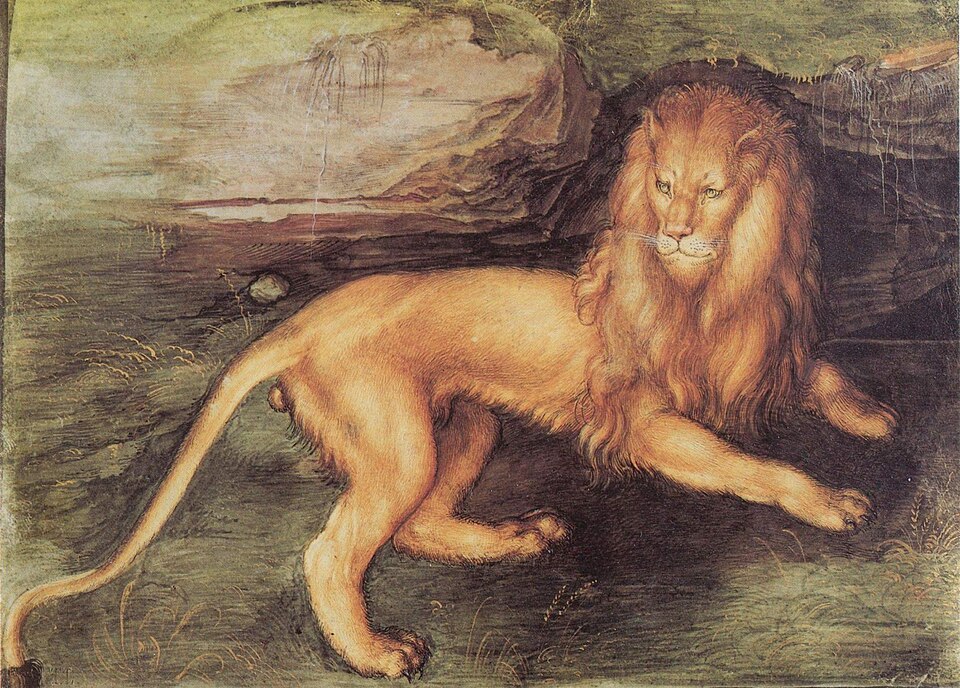
In the early Christian world, the lion stood as one of the most powerful symbols an artist could choose. Medieval craftsmen rarely saw a real lion, yet they gave the creature an imposing presence drawn from Scripture, travelers’ tales, and the memory of Roman sculpture. In carvings from the early Middle Ages, the lion often looks slightly stiff or stylized, but the intention is clear: strength, courage, and a steady spirit. Even when the anatomy is guessed at, the creature carries a noble weight that communicates more moral truth than natural accuracy. These early depictions helped set the stage for how Europeans would imagine lions for centuries.
As manuscript culture grew, monks and scribes gave the lion an established place in visual storytelling. Bestiaries described its habits in ways meant to inspire the reader, and artists followed those descriptions faithfully. When a lion appears near a ruler or a saint, it signals honor, steadfastness, and a kind of moral authority that people of the time considered admirable. The medieval viewer did not look for realism; they looked for the virtues the lion was meant to uphold.
Royal and Heraldic Uses
By the High Middle Ages, the lion had become a leading emblem of kingship, and artists eagerly shaped it into coats of arms, banners, and ceremonial furnishings. The lion promised strength and the right to lead. Knights carried it on shields, and heralds placed it atop crowns or beside the thrones of princes. Even if no one in Europe had ever seen the African savannah, they knew exactly what the lion meant.
Artists took this imagery into panel painting and manuscript illumination, reinforcing the close link between nobility and the majestic beast. A lion rearing on a shield told the viewer that this family claimed bravery and a proud lineage. When the animal appeared near a ruler’s chair or carved into the walls of a palace hall, the message of power was unmistakable. It became one of the most recognizable symbols in European visual culture.
Religious Symbolism
The lion also held a spiritual place in Christian art. Medieval bestiaries claimed the lion slept with its eyes open, which became a symbol of Christ watching over the faithful. Other stories described the lion breathing life back into its cubs, a striking image that stood for resurrection. Artists used these themes in church carvings, stained glass, and manuscript borders, and the faithful understood the deeper meaning without needing lengthy explanation.
Lions also appear with saints whose stories revolve around courage or protection. When a lion is carved outside a cathedral entrance, it stands guard over the threshold, a reminder of divine strength and the duty of believers to guard their own hearts. These religious interpretations shaped how the lion appeared in every form of medieval art, from tiny ivory carvings to the stone capitals of great churches.
Renaissance Interpretations
With the Renaissance came a renewed interest in classical texts and ancient sculpture. Artists studied real animals more carefully, and their lions gained muscle, weight, and a sense of genuine presence. Painters turned to stories from antiquity, especially the labors of Hercules, where the lion served as a test of strength and will. These scenes allowed artists to show both physical detail and moral drama, which suited the Renaissance love of heroic themes.
Cities such as Venice adopted the lion as a civic emblem, giving it a proud and elegant form in frescoes, altarpieces, and public sculpture. In many works, the lion stands not as a wild creature but as a guardian of order and duty. Renaissance artists respected tradition but added natural observation, giving the animal a balance of realism and symbolic weight.
Lions in Decorative Arts
Beyond painting and sculpture, lions filled the decorative arts of Europe. Craftsmen carved them into wooden chests, wove them into tapestries, and shaped them into fireplace andirons. Ironworkers forged lion heads into door knockers, giving a home a sense of strength and dignity even before a guest stepped inside. Wealthy families used lions on silverwork, bookbindings, and architectural ornament, trusting the creature to communicate stability and honor.
Even more modest homes sometimes used simple lion motifs on pottery or furniture, a sign that the dignity associated with the animal had spread beyond the ruling classes. The image of the lion became part of everyday European life, offering a reminder of courage, tradition, and the quiet pride of a well-ordered household.