For many, the grand narrative of Italian art history follows a well-worn path—Florence, Rome, Venice. These cities dominate the story, their names practically synonymous with Renaissance and Baroque glory. Yet, nestled on the rugged Ligurian coast lies a city that, for centuries, matched these giants in wealth, influence, and aesthetic ambition: Genoa. A city built on maritime prowess, banking empires, and aristocratic pride, Genoa carved out a cultural identity as bold and multifaceted as its narrow, sun-dappled alleyways.
The art history of Genoa is not merely a regional footnote—it is a story of cosmopolitan exchange, of strategic patronage, and of a visual culture that straddled north and south, Catholic orthodoxy and worldly sophistication. From the glimmering mosaics of medieval churches to the dazzling frescoes that adorned Baroque palaces, Genoa has always known how to use art to assert status, secure legacy, and project power. Yet despite this richness, Genoa has often been overlooked in mainstream accounts of Italian art. Its treasures, while abundant, are tucked behind modest façades or scattered in private collections, their brilliance hidden in plain sight.
Part of this oversight may stem from Genoa’s own character. Unlike Florence’s civic humanism or Venice’s flamboyant pageantry, Genoa’s cultural ethos was more reserved, aristocratic, and deeply tied to its merchant-oligarchic structure. Genoese art doesn’t shout—it shimmers, it whispers, it reveals itself slowly. Its churches are vaults of devotional intensity. Its palaces, models of restrained magnificence. Its painters, often local and fiercely original, were just as capable of innovation as their better-known peers across the peninsula.
In recent years, scholars and curators have begun to reevaluate Genoa’s contribution to European art, not only acknowledging its local masters—like Bernardo Strozzi and Valerio Castello—but also recognizing the city as a crucial node in the international flow of artistic ideas. Genoa’s ports brought not just silk and spice, but also Flemish panels, Spanish retablos, and the latest Roman innovations. Artists moved fluidly between Genoa and other artistic centers, absorbing and transforming influences in a manner uniquely Genoese.
This series aims to chart the full sweep of Genoa’s artistic history—from its medieval roots to its modern echoes—by exploring its artists, patrons, monuments, and shifting styles. We will walk the Strade Nuove, enter opulent salons, and gaze into luminous altarpieces, peeling back the layers of a visual culture shaped by ambition, piety, and global reach. In doing so, we seek not just to celebrate Genoa’s artistic achievements, but to reintegrate this remarkable city into the broader narrative of European art, where it has long belonged.
Genoa’s Golden Age: A Republic of Wealth and Patronage
By the late 1500s, Genoa was one of the richest cities in Europe. Its location on the Ligurian coast made it a key port in the Mediterranean, and its merchant fleets traded goods as far as the Middle East and northern Europe. But what really made Genoa powerful was money. The city had become a center of banking, and its financiers helped fund wars and empires—especially those of Spain. This steady flow of wealth turned Genoa into a place where art could thrive.
Unlike Florence, where art was often tied to the rise of civic pride, or Venice, where it was used to celebrate the glory of the republic, in Genoa art was more personal. The rich families—like the Doria, Spinola, and Brignole—used art to show off their power and taste. They didn’t need to prove anything to the public. These were tight-knit aristocrats who ruled the city behind closed doors. And behind those doors, they hired painters, architects, and sculptors to decorate their homes in ways that would impress visitors and posterity alike.
The result was a unique kind of artistic culture. There wasn’t a single style or school at first. Instead, artists from all over Italy and beyond came to Genoa to work. This mix of influences gave Genoa’s art a broad, international flavor. You could walk into a palace and see a fresco in the Roman style, a Flemish painting hanging in the hallway, and marble statues that looked like they came straight from Florence or Naples. But over time, Genoa’s own identity began to shine through, especially in the way local artists used color, light, and dramatic scenes to grab attention.
One of the most important changes in this period was the development of the Strade Nuove—new streets filled with grand houses built by the city’s elite. These weren’t just homes. They were statements. The buildings themselves were designed by top architects like Galeazzo Alessi and were filled with art that matched the wealth of their owners. Together, they gave Genoa a new face—one of order, elegance, and authority.
Art wasn’t only for show, though. It also had a religious purpose. Genoa remained a deeply Catholic city, especially during the time of the Counter-Reformation. Rich families poured money into churches, chapels, and oratories. They funded altarpieces, fresco cycles, and elaborate decorations that served both faith and prestige. This connection between religion and power would shape Genoese art for centuries.
By 1600, Genoa had become one of the most visually rich cities in Italy. But what made it different was how private much of that richness remained. The city wasn’t filled with open plazas or massive public monuments. Its treasures were tucked inside churches, family chapels, and palaces—places that only the right people could enter. This sense of exclusivity, of keeping things close to the chest, is part of what makes Genoa’s art so fascinating—and so easy to miss if you don’t know where to look.
Medieval Genoa: Romanesque Roots and Ecclesiastical Art
Before Genoa became a banking powerhouse, it was already an important city in the Middle Ages. Its ships were sailing across the Mediterranean, and its merchants were making deals from North Africa to Constantinople. But even in those early centuries, Genoa was building a strong artistic identity—one that grew out of its deep religious roots and practical ties to the wider Christian world.
The most visible legacy from this era is in the city’s churches. During the 11th to 13th centuries, Genoa followed the Romanesque style, which was popular across much of Europe at the time. Romanesque churches are solid, heavy, and simple in structure. They use thick walls, rounded arches, and small windows. Genoa’s version of Romanesque architecture, though, had its own local flavor. Builders often used black and white stone to create striped façades, a style borrowed from the nearby city of Pisa but made uniquely Genoese in execution. You can still see this today in buildings like the Cathedral of San Lorenzo, where the bands of dark slate and light limestone give the church a sharp, almost graphic look.
These churches weren’t just places to pray. They were also markers of Genoa’s growing pride and independence. Many were built with money donated by merchant families or religious orders. Inside, the decoration was usually simple—frescos with biblical stories, carved capitals with scenes of saints, and mosaics in the apses. But as Genoa’s wealth grew, so did its taste for embellishment. Even during the Middle Ages, you start to see more ambitious sculpture and design, especially in key religious sites.
Another major influence came from the Crusades. Genoa played a huge role in these military campaigns, supplying ships and men to fight in the Holy Land. In return, Genoa gained trade rights and access to Eastern goods and relics. Some of these ended up in Genoese churches. One example is the “Sacro Catino”, a green glass dish that was believed for centuries to be the Holy Grail. It was brought back from the First Crusade and kept in the Cathedral’s treasury. Whether it’s real or not doesn’t matter—it shows how Genoa used religious artifacts to boost its spiritual and cultural status.
Manuscript illumination also thrived during this time. Monasteries like San Matteo and San Donato housed scriptoria where monks copied religious texts by hand, often decorating the pages with gold leaf and tiny paintings. These manuscripts were valuable, both spiritually and materially, and they reflected the skill and devotion of their creators.
By the 13th century, Genoa had not only established itself as a naval and commercial power—it had also built the foundation for a long and complex artistic tradition. The art of this period may seem modest compared to the later Renaissance and Baroque, but it played a vital role in shaping the city’s identity. It blended local craftsmanship with outside influences, Christian devotion with civic ambition, and set the stage for what was to come.
Gothic Genoa: Ligurian Flourishes in a European Context
Genoa didn’t adopt the Gothic style with the same speed or intensity as places like Paris or Milan. That’s partly because the city had already developed a strong Romanesque identity, and also because Genoa’s architecture was often shaped more by function and local pride than by trends sweeping through Europe. But Gothic art and architecture did take hold in Genoa during the 13th and 14th centuries—it just came with a Ligurian twist.
Gothic style, especially in architecture, is usually defined by pointed arches, taller buildings, and an emphasis on vertical lines and light. Genoa, however, never had wide open piazzas for large cathedrals like those in Florence or Siena. Its geography—tucked between sea and mountain—meant the city was dense, vertical by necessity, and built in layers. This influenced how Gothic forms were adapted. Instead of vast cathedrals with towering facades, Genoa produced churches that mixed the vertical style of Gothic with the horizontal stripe work and strong lines of the Romanesque past.
Take San Matteo, for example. It’s a small church in the heart of the city, rebuilt in Gothic style in the 13th century by the powerful Doria family. While it includes pointed arches and ribbed vaults, it also keeps the black-and-white stripes and compact form typical of Ligurian architecture. The Gothic influence is there, but it doesn’t overwhelm the local style.
This balance also appeared in sculpture. Genoese tombs from this time—especially those for noble families—began to show more emotion, movement, and detail, in line with Gothic trends. Carved effigies of knights and saints became more lifelike. Relief panels on sarcophagi depicted biblical scenes with a sense of drama and depth. You can still see some of these in churches like Santa Maria di Castello, which also housed a Dominican monastery and became a major center of learning and artistic production in the 14th century.
Stained glass was less common in Genoa than in Northern Europe, partly because many Genoese churches weren’t built to support large rose windows. But painted altarpieces began to appear more frequently. These early panel paintings combined Italian and Byzantine styles—gold backgrounds, elongated figures, and frontal poses—but over time they began to shift toward more naturalistic forms. These works weren’t always signed, but they were a vital part of the religious life of the city, giving worshippers vivid images to focus their prayers.
Genoa also had strong ties with Avignon during the time the papacy was based there, and this connection brought a wave of French influence into Ligurian art. Some Genoese patrons hired foreign artists or imported works from across the Alps. Others supported local workshops that picked up on the Gothic style and blended it with existing traditions.
So while Gothic Genoa may not have built sky-piercing cathedrals, the city still absorbed the movement’s key ideas and filtered them through its own identity. What emerged was a more restrained, durable version of Gothic—less about grandeur and more about fitting faith into the tight, practical space of a city always in motion.
The Rise of the Palazzi: Architecture and Fresco in the Cinquecento
By the 1500s, Genoa was booming. The city had become one of the wealthiest places in Europe thanks to its banking system and maritime trade. Its elite families, already powerful, wanted to show off their status in a way that couldn’t be ignored. The result was a building spree that transformed the city’s appearance and left a lasting legacy in architecture and art: the rise of the palazzi—grand urban palaces that redefined how Genoese power looked.
The most famous example of this change was the creation of the Strade Nuove, or “New Streets.” These were planned roads lined with luxurious palaces, built mostly in the 16th century by Genoa’s top families. The streets, like Via Garibaldi (once called Strada Nuova), were carefully designed to display wealth and order. This wasn’t just about comfort—it was about image. Genoa’s elite wanted foreign dignitaries, visiting merchants, and fellow nobles to be impressed the moment they arrived.
The architecture of these palaces was based on Renaissance ideals—balance, symmetry, and proportion—but adapted to Genoa’s hillside terrain and tight spaces. Architects like Galeazzo Alessi played a key role in shaping this style. He brought in ideas from central Italy but gave them a local twist, creating facades that looked clean and grand without being too flashy. Inside, though, was another story.
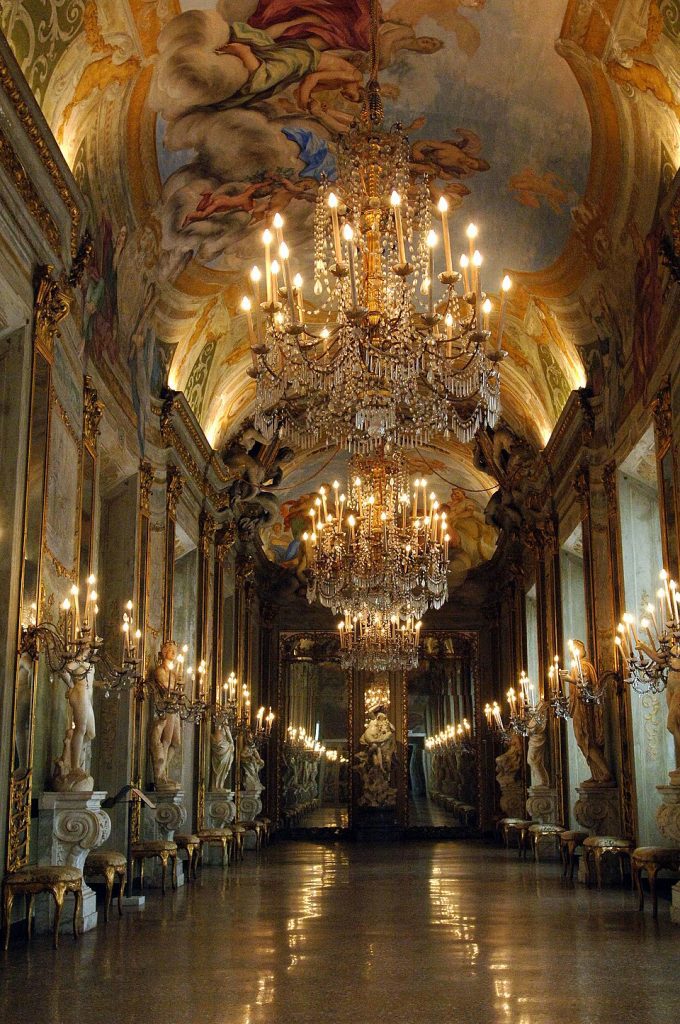
Walk through one of these palazzi and you’ll see what mattered most: the interiors. These spaces were where art flourished. Walls and ceilings were covered in frescoes—painted scenes from mythology, history, and religion—all designed to show off the owner’s education, taste, and family pride. Painters like Luca Cambiaso, one of Genoa’s rising stars, helped fill these homes with powerful, dramatic images. His use of bold figures, strong light and shadow, and clever perspectives made him a favorite among the city’s elite.
These fresco cycles weren’t random decorations. Each room had a theme, often tied to the values the family wanted to project—strength, loyalty, justice, or wisdom. A ceiling might show the labors of Hercules, while a wall could feature a Roman general making a wise decision. It was art as messaging: quiet but clear.
Alongside painting, sculpture and stucco were used to decorate staircases, courtyards, and entrance halls. The mix of materials gave the homes texture and richness, making even private spaces feel important. And unlike churches, which were public, these homes were mostly off-limits to the common citizen. That privacy made them more exclusive—and more effective as tools of social power.
By the late 1500s, Genoa had created a model of upper-class living that rivaled anything in Rome or Venice. The Palazzi dei Rolli—a list of houses approved to host visiting royalty and diplomats—became a formal system tied to civic prestige. If your home was on the list, it meant you had arrived. Today, many of these palaces are still standing, and some are part of a UNESCO World Heritage Site.
This period marks a turning point in Genoa’s art history. The city went from being a place of hidden religious treasures to one where secular, personal art took center stage—at least among the elite. It set the stage for the 17th century, when painting in Genoa would explode in new and unexpected directions.
The School of Genoa: Baroque Masters and the Local Identity
By the early 1600s, Genoa had firmly established itself as a center of wealth and taste. Its aristocrats had their palaces. Its churches had been reshaped by the Counter-Reformation. Now, all eyes turned to painting—and Genoa didn’t disappoint. While Rome, Florence, and Naples often get more credit for the Baroque, Genoa developed a style all its own, thanks to a generation of painters who would come to be known as the School of Genoa.
The Baroque era was all about emotion, movement, and drama. It was a shift away from the balanced calm of the Renaissance. In Genoa, this took on a distinctive energy: bold colors, deep shadows, and vivid storytelling. The painters who led the charge weren’t just copying what was going on in Rome or Milan—they were taking those ideas and adapting them to local tastes.
Bernardo Strozzi was one of the first major names. Born in Genoa and trained as a Capuchin monk, Strozzi eventually left the order to focus on painting full time. His work is intense—rich in color and heavy with atmosphere. He painted everything from saints to still lifes to portraits, all with a rough energy that made his style easy to recognize. Strozzi also introduced a warmth and realism to religious painting that made his scenes feel human, not distant. He became so popular that he was later called to Venice, but his roots were always in Genoa.
Then came Giovanni Benedetto Castiglione, also known as Il Grechetto. He specialized in animals, mythological scenes, and pastoral images filled with life. His works were influenced by Flemish painting, which was often imported through Genoa’s trade networks, but he had a loose, almost sketch-like style that made his figures feel alive and in motion.
Another standout was Valerio Castello, who brought a sweeping, elegant line to everything he touched. His paintings are dynamic and full of life, especially in ceiling frescoes where angels, heroes, and divine light seem to burst out of the walls. Castello was known for fusing the drama of Rubens with the grace of Correggio, giving Genoese painting a unique blend of northern power and Italian softness.
These painters weren’t working in a vacuum. They were hired by the same families who built the palazzi in the previous century. These patrons wanted their homes, churches, and private chapels to reflect their beliefs, their culture, and their social rank. They paid well, and they expected results—spectacle, emotion, and fine craftsmanship. The artists delivered.
Religious institutions also played a role. The Jesuits, who were very active in Genoa, promoted art that could inspire devotion and teach moral lessons. This meant scenes from the life of Christ, the saints, or the Virgin Mary—painted in a way that was dramatic but clear. Genoese artists excelled at this, using sharp contrasts of light and shadow (a technique borrowed from Caravaggio) to focus the viewer’s attention and add a spiritual edge to the work.
By the mid-17th century, the School of Genoa was producing art that could compete with any city in Italy. It was local in subject matter but international in style. It had flair, but also depth. And while it never turned into a formal “academy” like in other cities, it produced generations of artists who trained with each other, borrowed from each other, and shaped a shared visual language that defined Genoese painting for decades.
Caravaggisti and Foreign Influences
By the early 1600s, the name Caravaggio was known across Italy. His raw, dramatic use of light and shadow—what we now call chiaroscuro—changed painting forever. His figures weren’t polished gods or stiff saints; they were real people, often with dirt under their nails and emotion written across their faces. In Genoa, this new way of seeing hit hard. It sparked a wave of local artists who took Caravaggio’s lessons and gave them a Genoese twist.
These artists became known as Caravaggisti—followers of Caravaggio’s style. But in Genoa, they didn’t just imitate. They combined Caravaggio’s sharp realism with the elegance and color that already marked the local school. This gave Genoese Baroque painting a powerful blend of grit and beauty.
One of the key figures in this movement was Domenico Fiasella, sometimes called Il Sarzana. He studied in Rome, where Caravaggio’s style was everywhere, but when he came back to Genoa, he adapted that darkness and drama to local tastes. Fiasella’s religious paintings were emotional and intense, but also balanced and composed. His saints weren’t wild-eyed fanatics—they were dignified and human, caught in real moments of doubt or grace.
Another important Caravaggisti was Orazio Gentileschi, who spent time in Genoa during his travels. While not Genoese by birth, his presence influenced the city’s scene, especially with his clean compositions and sharp lighting. His daughter, Artemisia Gentileschi, also left her mark on Genoa with a few important commissions—though we’ll look at her more closely later on.
But Genoa’s exposure to new ideas didn’t stop with Rome. Thanks to its trade routes and strong links to Spain and Flanders, the city had a constant flow of foreign artists and artworks. Genoese collectors loved Flemish painting. They admired its detail, its texture, and its realism. This brought painters like Anthony van Dyck to the city, where he became a major influence.
Van Dyck arrived in Genoa in the 1620s and found eager clients among the nobility. His portraits—graceful, elegant, and full of psychological insight—set a new standard. Genoa’s elite wanted to be painted like European royalty, and Van Dyck delivered. His time in Genoa had a lasting effect. Local portrait painters began to echo his soft lighting, refined poses, and smooth brushwork. His influence can be seen in dozens of Genoese portraits from the 17th century.
Trade also brought in actual paintings—works by Rubens, Jordaens, and other Northern masters found homes in Genoese collections. These pieces were studied by local artists, who borrowed their bold colors and complex compositions. The result was a unique fusion: southern warmth and drama mixed with northern technique and detail.
This constant exchange of ideas made Genoa one of the most connected art centers in Italy during the Baroque. Artists came and went, styles blended, and no one school dominated for long. Instead, Genoese painting thrived on variety. It took the best of what was happening across Europe and made something new—something distinctly Genoese.
The Role of Women: Lavinia Fontana and Sofonisba Anguissola in Genoa
In most of art history, especially before the 19th century, women artists were the exception—not the rule. They had fewer opportunities, limited access to training, and often weren’t taken seriously. But even in the 16th and 17th centuries, a few women managed to break through. In Genoa, two of the most important were Lavinia Fontana and Sofonisba Anguissola. Both came from outside the city, but each found strong support from Genoese patrons, especially among the powerful families that dominated its art scene.
Sofonisba Anguissola was originally from Cremona, but her reputation as a portraitist spread throughout Italy and Spain. She had served as a court painter to King Philip II of Spain, which gave her major status by the time she arrived in Genoa. There, she married a nobleman and settled into the city’s aristocratic society, continuing to paint portraits of the upper class.
Her work stood out for its subtlety. She avoided stiff, formal poses and instead showed her sitters with relaxed, thoughtful expressions. It made her portraits feel more human, more personal. That style fit well in Genoa, where families wanted their images to show dignity but also warmth. Though many of her Genoese works have been lost or remain in private collections, her influence lingered—especially in how later painters approached portraiture with a softer touch.
Lavinia Fontana, from Bologna, was one of the first professional female artists in Europe to run her own studio and support a family with her work. She came to Genoa in the early 1600s for a major commission: the “Holy Family with Saints” altarpiece for the Church of Sant’Agostino. The piece was well received, and Fontana earned praise for both her technical skill and her ability to paint strong, graceful women—a quality not often seen in male-dominated religious art.
Fontana’s paintings often showed women not just as passive figures but as intelligent and active participants in the story. That approach resonated in a city like Genoa, where noblewomen had real influence—often acting as patrons, collectors, and cultural leaders in their own right.
While these women didn’t start local schools or dominate the scene, their presence was meaningful. They proved that female artists could hold their own in elite circles and influence the style of a city. They also worked within networks of other women—noble patrons, nuns, and intellectuals—who helped support their careers.
In fact, Genoa had several aristocratic women who acted as quiet power players in the art world. They funded chapels, ordered paintings, and sometimes even helped shape the content of the work they commissioned. Though their names rarely appear in big art history books, their fingerprints are all over the city’s artistic legacy.
The stories of Fontana and Anguissola remind us that Genoese art wasn’t just built by men. It grew through networks of influence that included women—some painting, some paying, all shaping the culture in ways that still matter today.
Collectors and Patrons: The Spinola, Doria, and Brignole Families
If you want to understand why Genoa’s art scene thrived, look at the families who paid for it. The Spinola, Doria, and Brignole families weren’t just rich—they were powerful, connected, and deeply invested in how they were remembered. Art was a tool for that. Through painting, sculpture, architecture, and collecting, these families built a visual legacy that shaped Genoa’s identity for centuries.
Let’s start with the Doria. Probably the most famous name in Genoese history, the Doria family produced admirals, statesmen, and patrons. Andrea Doria, the family’s most legendary figure, led Genoa to political independence in the 1500s and styled himself as the city’s protector. To match his new status, he commissioned major works of art and architecture—most famously his villa in Fassolo, designed by Perin del Vaga, a pupil of Raphael. The villa was filled with frescoes that linked the Dorias to ancient Rome and Greek myth, reinforcing their image as noble rulers with classical virtues.
The Spinola family rivaled the Dorias in wealth and influence. They too built palaces along the Strade Nuove and filled them with art that spoke to their power. One of the most important is Palazzo Spinola, now a national gallery. It houses works by Van Dyck, Rubens, and local painters—testimony to the family’s taste and global connections. The Spinolas were also key players in the Rolli system, a list of elite homes that were required to host visiting dignitaries. To be on the Rolli was to be part of Genoa’s ruling class, and the art in these palaces had to live up to that role.
The Brignole family, while slightly later to prominence, left an equally strong mark. Their most famous member, Maria Brignole Sale De Ferrari, was one of the last great patrons of 19th-century Genoa. She donated the family palace and art collection to the city, which became the Palazzo Rosso—part of the city’s civic museums today. The Brignoles collected widely, mixing older works with modern pieces, and helped preserve Genoa’s artistic heritage at a time when much of Europe was selling off its treasures.
What united these families was their understanding of art as a legacy. A palace wasn’t just a house—it was a stage for family history. A portrait wasn’t just decoration—it was a statement of rank and taste. An altarpiece in a chapel wasn’t just religious—it was a permanent symbol of piety and position.
They didn’t just support local artists, either. They bought foreign paintings, hired architects from other cities, and collected books, tapestries, and antiquities. They were builders and curators, constantly shaping the city’s image—both for their own generation and for the future.
Today, when we walk through Genoa’s old town or step inside its museums, we’re seeing the world these families built. Their choices, tastes, and ambitions are frozen in stone and canvas. They were the engine behind Genoa’s golden age of art, and without them, the story of Genoese culture would be a lot shorter.
Sculpture, Stucco, and Decorative Arts
While painting often takes the spotlight in discussions of Genoese art, the city’s legacy wouldn’t be complete without looking at its achievements in sculpture, stucco, and decorative arts. These weren’t just background elements—they were central to how Genoa expressed status, devotion, and taste. In fact, Genoese interiors and church decoration became some of the most richly ornamented in Italy, blending local materials with imported influences to create a visual world that was both grand and intimate.
Marble sculpture played a major role in Genoa’s artistic identity, especially from the late Renaissance onward. The region’s proximity to Carrara—a major source of high-quality marble—meant that Genoese artists and patrons had easy access to one of the most prized materials in European art. Sculptors like Taddeo Carlone and Giovanni Battista Orsolino were known for their elegant tomb monuments, altar pieces, and statues, which often showed saints, angels, and noble patrons in realistic, yet idealized form.
These works were often placed in side chapels or family tombs in churches. They weren’t just decorative—they were personal. A well-made tomb or chapel was a final mark of status, meant to inspire respect and remembrance. Some, like the Durazzo and Sauli family monuments, combined architecture and sculpture into complete visual environments: marble figures, carved columns, and sculpted drapery coming together to create an atmosphere of solemn grandeur.
But Genoa didn’t stop at stone. Stucco work—a type of decorative plaster—became one of the city’s signatures in the 17th century. Stucco was cheaper and easier to shape than marble, but it allowed for incredible detail. Artists like Giovanni Battista Carlone and his workshop created entire ceilings filled with swirling angels, floral motifs, and elaborate frames that bordered frescoes. This was especially popular in churches and oratories, where every inch of space was covered in layered, dynamic ornamentation.
The effect was immersive. You walked into a chapel and felt like you were stepping into a heavenly vision—clouds, gold, saints, and soft light blending into one continuous surface. Genoa may have lacked the giant domes of Rome, but it made up for it in texture, layering, and drama. These interiors were designed to overwhelm the senses and elevate the spirit.
Outside of churches and palaces, Genoa also had a strong tradition in decorative arts: furniture, tapestries, metalwork, and ceramics. Noble families commissioned custom furniture made from walnut and inlaid with ivory or exotic woods. Kitchens and dining halls featured finely made copperware and ceramics, while tapestries—often imported from Flanders—hung in reception rooms to impress visitors.
Even smaller objects, like reliquaries, processional crosses, and liturgical vessels, were made with great care. Local goldsmiths and silversmiths were highly respected, and religious institutions often competed to have the most beautiful ceremonial items.
All of these decorative forms—whether in marble, stucco, or metal—were part of the same ecosystem. They showed how art in Genoa was not just about big paintings or public buildings. It was about detail, surface, and craft. It was about turning even private or sacred spaces into total environments where every piece worked together to tell a story of wealth, belief, and identity.
Religious Commissions: Jesuits, Oratories, and Devotional Art
Genoa was, at its core, a deeply Catholic city. Faith was woven into daily life, politics, and family tradition. While private palaces displayed power and taste, it was in churches, chapels, and oratories that Genoese families displayed devotion—and they did it with art. The Counter-Reformation, which began in the mid-1500s, gave this religious art new urgency. It wasn’t just about decoration anymore—it was about instruction, emotion, and spiritual experience. And Genoa responded in full.
A key driver of this new wave of religious art was the Society of Jesus, better known as the Jesuits. The Jesuits arrived in Genoa in the 1560s, part of a broader movement by the Catholic Church to push back against the Reformation. They believed in the power of images to teach and inspire, and they worked closely with artists and architects to create spaces that would move the faithful.
The Jesuit church of Gesù in Genoa became a model of this approach. It’s packed with color, light, gold, and frescoes that seem to spill off the walls. Inside, you’ll find major works by Peter Paul Rubens and Giovanni Battista Gaulli (also known as Baciccio). These aren’t quiet images—they’re alive with motion, filled with figures reaching toward heaven, light breaking through clouds, and scenes meant to lift the viewer’s soul.
Alongside the Jesuits were the city’s many oratories—small chapels used by lay religious groups called confraternities. These groups, often made up of craftsmen or merchants, weren’t as wealthy as the nobility, but they still commissioned significant artworks. Oratories like San Giacomo della Marina and San Filippo Neri became showcases for local painters and sculptors. Their walls were covered in cycles of paintings showing the Passion of Christ, lives of saints, or acts of mercy—subjects meant to guide and humble the viewer.
What stands out in Genoese devotional art is its intensity. The figures are close, the emotion is real, and the settings often feel like theater. Artists like Domenico Piola, Valerio Castello, and Gregorio De Ferrari filled churches with dramatic scenes that made the sacred seem immediate. Angels descend in clusters. Saints collapse in ecstasy. Light shines in sharp beams. These images were meant to grab the viewer and hold them—reminding them of the power of faith.
Altarpieces were another major form of religious art in Genoa. Families often paid to install them in churches, both as acts of devotion and as displays of legacy. These commissions featured the Virgin Mary, Christ, local saints like St. Catherine of Genoa, and major biblical moments. The works had to be clear, emotional, and respectful of Catholic teaching—especially after the Council of Trent set new rules for religious art.
Even small devotional paintings and sculptures made for private chapels were handled with care. Genoese patrons didn’t skimp, even on items meant for personal use. The blending of deep faith and strong finances created a market for high-quality art across the city—not just in big cathedrals, but in side chapels, convents, and neighborhood oratories.
By the late 1600s, religious art in Genoa had reached a kind of peak: a city filled with images that taught, touched, and reminded. It wasn’t always subtle, but it was always serious. Genoa’s artists, shaped by local tradition and outside influence, gave the city a spiritual landscape as rich and layered as its physical one.
Modern Echoes: Genoa’s Art Scene from the 19th Century to Today
By the 1800s, Genoa was no longer the dominant maritime power it had once been. The world had changed. New nations were rising, the industrial era was underway, and art itself was moving in new directions. But Genoa didn’t vanish from the cultural map. Instead, its artistic story entered a new phase—one marked by preservation, transition, and eventually, reinvention.
The 19th century in Genoa was a time of reflection. The great noble families, many of whom had bankrolled the golden ages of painting and architecture, began to fade from power. But in their place came a new interest in heritage. Museums were established, palaces opened to the public, and private collections were donated to the city. Most notably, Maria Brignole Sale De Ferrari, Duchess of Galliera, gave the Palazzo Rosso, Palazzo Bianco, and a major art collection to Genoa—laying the foundation for the city’s civic art museums.
These museums, now grouped under the Musei di Strada Nuova, helped preserve Genoa’s legacy. They house works by Van Dyck, Rubens, Caravaggio followers, and local masters like Strozzi and Piola. For the first time, the public had regular access to the artworks that had once only been seen by aristocrats and clergy.
At the same time, Genoa began to produce modern artists of its own. Painters like Tammar Luxoro and Ernesto Rayper were part of the Ligurian School, tied loosely to the Macchiaioli movement in Florence. These artists focused on landscape and light, painting the Ligurian coast and countryside with a quiet realism that reflected the changing mood of the time. They moved away from grand historical scenes and focused instead on everyday life.
In the 20th century, Genoa saw the rise of more experimental work. Artists like Edoardo Alfieri and Emilio Scanavino brought modernist and abstract approaches to the city, bridging the gap between tradition and innovation. Scanavino, in particular, became internationally known for his expressive, gestural work that fused line, form, and texture in raw, emotional ways. Though different in style from the Baroque painters who came before him, Scanavino shared something of their spirit—an interest in movement, intensity, and feeling.
Public art also became part of the city’s modern identity. Sculptures, murals, and installations began appearing in Genoa’s parks, train stations, and waterfront areas. After World War II, much of the city had to be rebuilt or restored, and this offered new chances to blend contemporary design with historic settings. The Porto Antico redevelopment, led by architect Renzo Piano in the 1990s, gave Genoa a modern face while respecting its maritime past.
Today, Genoa’s art scene is alive, if a bit quieter than those in cities like Milan or Rome. The city hosts Biennials, gallery shows, and contemporary festivals, while its institutions continue to conserve and promote the old masters. The Accademia Ligustica di Belle Arti, Genoa’s main art school, trains new generations of artists who work in a city steeped in visual history.
What makes Genoa’s modern art story unique is continuity. The city never turned its back on its past. Instead, it built on it—layer by layer, like the architecture of its hills. Walking through Genoa today, you can pass a medieval church, a Baroque palace, a 19th-century gallery, and a contemporary studio in just a few blocks. The art is still there. It never really left.