Tucked away beneath the waves of the Mediterranean Sea, the Cosquer Cave is one of humanity’s most remarkable archaeological treasures. Unlike other prehistoric sites located safely on dry land, Cosquer’s entrance lies submerged, about 120 feet below the surface near Marseille, France. This extraordinary underwater access point makes the Cosquer Cave unique among ancient art sites and poses significant challenges to its preservation. Rising sea levels at the end of the last Ice Age dramatically transformed the landscape, swallowing much of the original cave forever.
Discovered in the modern era by diver Henri Cosquer in 1985, the cave remained unknown to the wider world until a tragic incident forced its disclosure. The cave walls reveal stunning Ice Age paintings and engravings, created by our ancient ancestors tens of thousands of years ago. These works of art, preserved by grace and providence, offer us a rare glimpse into early human creativity and spiritual yearning. The surviving portion of Cosquer Cave has become a symbol of resilience against nature’s relentless changes.
Today, Cosquer Cave is recognized not only for its artistic value but also as a sacred cultural relic that demands our careful stewardship. With over 500 works cataloged, including rare depictions of marine life, the cave stands as a testament to man’s God-given instinct to record, to create, and to leave behind signs of his pilgrimage through a harsh and beautiful world. Through this underwater portal, we are privileged to witness the artistry and virtue of men and women who lived thousands of years ago. Their legacy speaks powerfully across the ages, a chorus of beauty undimmed by time or tragedy.
As sea levels continue to rise and environmental threats grow, Cosquer reminds us that much of what is precious in this world is also vulnerable. In an age often bent on forgetting tradition and sacred heritage, the Cosquer paintings call us back to reverence. They ask modern man not merely to consume or exploit, but to honor and protect. In the shimmering quiet of the underwater cave, we hear the silent prayer of our ancestors — a prayer for remembrance.
The Discovery and Biography of Henri Cosquer
Henri Cosquer, born in 1951 in the French town of Marseille, grew up near the Mediterranean Sea and developed a profound love for the ocean from a young age. His early life revolved around diving and underwater exploration, leading him to a career as a professional deep-sea diver by his early twenties. Trained in technical diving, underwater construction, and maritime rescue operations, Cosquer was no stranger to the risks and rigors of the ocean depths. His education in the demanding field of underwater engineering prepared him well for the discovery that would eventually etch his name into the annals of history.
In the summer of 1985, while exploring the rocky coastline near Cape Morgiou, Cosquer stumbled upon a narrow underwater passageway. Driven by curiosity and caution, he eventually found his way through a series of flooded tunnels to an air-filled chamber adorned with prehistoric art. For several years, he kept the discovery mostly to himself, revisiting the cave in secret, documenting what he could, and marveling at its mysteries. However, disaster struck in 1991, when three divers, unaware of the dangers, drowned while trying to find the cave’s entrance, drawing unwanted attention to the site.
Recognizing the urgent need to protect the cave, Cosquer officially reported his discovery to French authorities in September 1991. Working closely with the French Ministry of Culture and leading prehistorians such as Jean Clottes, Cosquer collaborated in the first scientific surveys of the site. His relationship with the archaeological community was sometimes cautious but ultimately respectful, as he understood the sacred duty to preserve what he had found. Thanks to his bravery and honesty, the world now knows about one of its rarest and most vulnerable prehistoric sites.
Henri Cosquer’s discovery changed not only his life but also the field of Paleolithic art studies forever. His name remains forever tied to the cave that bears it, a testament to the rewards of courage, skill, and the search for truth. Cosquer, now in his seventies, continues to be honored in Marseille and beyond for his pivotal role in safeguarding an irreplaceable part of our common human heritage. In a time when many chase fleeting fame, Cosquer’s legacy reminds us of the enduring power of virtue and duty.
Dating and Historical Context of the Cave Paintings
The art within Cosquer Cave belongs to two distinct periods, providing a broad and fascinating window into prehistoric life. The earliest phase of artwork dates to around 27,000 BC, corresponding with the Gravettian period of the Upper Paleolithic era. This was a time when early Europeans were mastering both hunting techniques and artistic expression, often using caves as sacred spaces for ritual and remembrance. The second phase, around 19,000 BC, falls within the Solutrean period, notable for its advanced flint tool technology and a culture that prized craftsmanship and skill.
These dates were established through careful radiocarbon dating and stylistic analysis conducted by teams of French archaeologists in the 1990s. Traces of charcoal from torches and organic binders in the paints provided reliable samples for scientific examination. Comparisons between the artistic styles at Cosquer and other well-dated sites such as Chauvet and Lascaux further confirmed the cave’s ancient origins. Scholars also noted differences between the earlier and later phases of art, suggesting that the cave was used repeatedly over thousands of years.
The Gravettian and Solutrean periods were marked by significant climatic challenges, as Europe was gripped by the Ice Age. Sea levels were far lower than they are today, exposing vast stretches of coastal plains where animals roamed freely and humans hunted and lived. It is likely that Cosquer Cave, now hidden beneath the sea, once sat several miles inland, far from the reach of the ocean. These ancient artists lived lives of tremendous hardship but also great spiritual richness, as reflected in their astonishing works.
Cosquer Cave’s paintings, therefore, are not merely decorative but speak to the endurance and ingenuity of mankind. They reveal a people who, even in the midst of ice and scarcity, took time to create beauty and record their world. In a modern age obsessed with comfort and convenience, their example stands as a humbling reminder. Our ancestors honored the world God made, and their art continues to honor Him today, thousands of years after their hands first touched the stone.
Subjects and Techniques Depicted in the Cosquer Cave
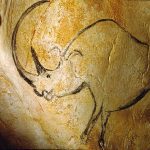
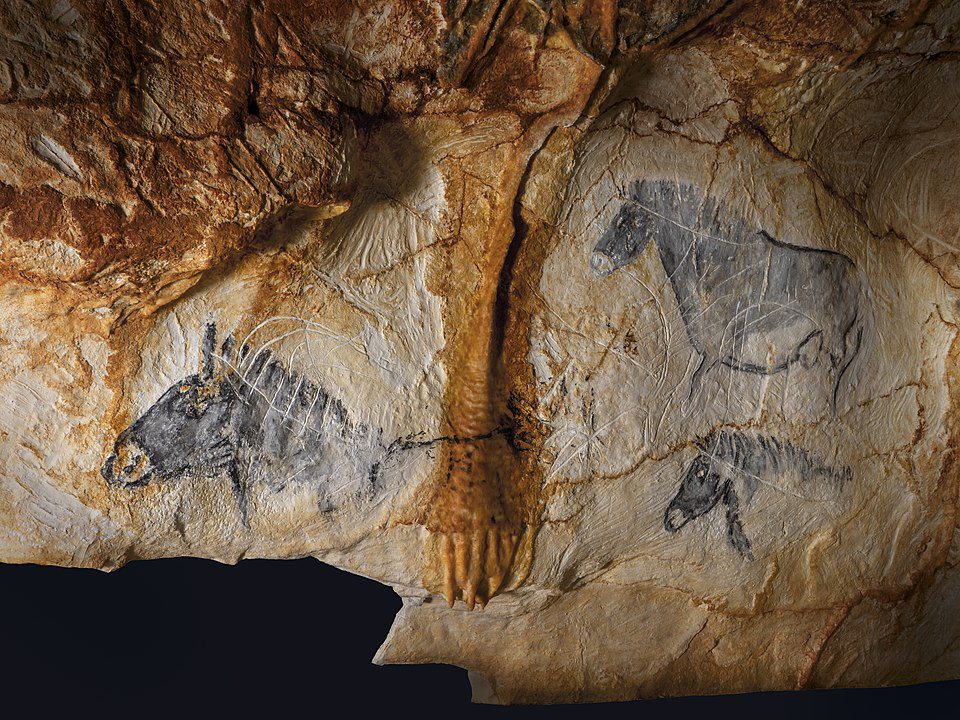
The Cosquer Cave paintings feature an extraordinary range of subjects, showcasing both the land and sea creatures familiar to Ice Age coastal dwellers. Among the most prominent are depictions of horses, bison, ibex, aurochs, and deer, each rendered with remarkable sensitivity to form and movement. Particularly notable are images of seals and penguins, an astonishing inclusion not found in other famous caves. These marine animals, expertly depicted, reflect the unique coastal environment these ancient artists inhabited.
One of the most haunting elements of Cosquer Cave is the collection of human hand stencils. Created by placing a hand against the wall and blowing pigment around it, these stencils offer a direct, almost intimate connection to the individuals who lived and breathed tens of thousands of years ago. Many of the hands appear to be missing fingers, a mystery that has inspired much debate. Some scholars suggest ritual mutilation, others see it as symbolic communication, while a third view proposes that it may simply be evidence of frostbite.
The techniques used in Cosquer Cave display a sophisticated understanding of materials and surfaces. Artists utilized the natural contours of the cave walls to add dimension to their works, exploiting bumps and curves to bring animals to life. Paints were made from natural pigments — charcoal for black, iron oxide for red and brown — and sometimes mixed with animal fat or plant sap to create a lasting bond with the stone. Engraving techniques, using sharp tools to etch outlines into the rock, were also widely employed.
Compared to other celebrated prehistoric sites like Lascaux or Chauvet, Cosquer’s art is distinctive both for its subject matter and for the subtlety of its execution. The marine scenes alone set it apart, hinting at a life deeply intertwined with the sea. While Lascaux celebrated the herds of the great plains, Cosquer bore witness to a world of rocky shores, coastal hunting, and maritime bounty. In every line and brushstroke, the Cosquer artists reveal a profound attentiveness to the living world around them — a reflection of man’s rightful stewardship over creation.
The Flooding and Fragility of Cosquer Cave
At the end of the last Ice Age, around 10,000 BC, Earth underwent dramatic climatic changes that reshaped coastlines across the world. As glaciers melted and poured into the oceans, sea levels rose by hundreds of feet, permanently altering landscapes and swallowing many coastal sites like Cosquer Cave. Once located several miles inland, the cave’s entrance was gradually submerged until it lay hidden beneath the waters of the Mediterranean. Today, only a fraction of the original decorated chamber remains accessible, the rest lost beneath the waves.
The flooding of Cosquer Cave destroyed an untold number of ancient works, making the surviving art all the more precious. Modern divers and scientists face grave dangers in reaching and studying the cave, navigating tight underwater passages and unstable rock formations. Even slight errors in navigation can be deadly, as the tragic deaths of three divers in 1991 grimly proved. The site’s fragility demands extreme caution, as human disturbance, temperature changes, and microbial growth can irreversibly damage the remaining paintings.
In recent years, marine erosion and the chemical effects of saltwater have further threatened the already delicate surfaces of the cave. Scientific teams have taken steps to monitor environmental conditions and limit the number of research expeditions. Every entrance into the cave risks introducing new contaminants or causing physical disruptions. It is a solemn reminder that even our noblest efforts to study and preserve can sometimes endanger what we seek to protect.
The vulnerability of Cosquer Cave underscores the importance of humility, stewardship, and reverence in dealing with the treasures of the past. It challenges modern man to balance knowledge-seeking with the sacred duty of preservation. The paintings are not merely museum pieces or curiosities but a vital testament to the spiritual and artistic soul of early man. They are a gift entrusted to us, and we are bound by duty and honor to guard them as best we can.
Modern Preservation: Cosquer Méditerranée
Recognizing the extreme fragility of Cosquer Cave and the impossibility of allowing public access to the original site, French authorities embarked on a remarkable preservation project. In 2016, work began on a full-scale replica, designed to recreate every detail of the surviving parts of the cave with scientific precision. After years of careful scanning, mapping, and artisan craftsmanship, Cosquer Méditerranée officially opened to the public in June 2022 in Marseille. This replica offers visitors an opportunity to experience the majesty of the cave without risking harm to the original.
The creation of Cosquer Méditerranée was a collaboration between numerous experts: archaeologists, historians, artists, engineers, and conservationists. The French Ministry of Culture oversaw the project, while teams from companies like Kléber Rossillon, known for other heritage reconstructions, brought the vision to life. Using 3D scanning technology, detailed photography, and traditional sculpting techniques, artisans replicated the cave’s surfaces, textures, and even its subtle color gradations. The result is a stunningly faithful reproduction that honors both the artistic and spiritual legacy of the original site.
Visitors to Cosquer Méditerranée can walk through the recreated chambers, marvel at the handprints, and gaze upon the marine animals once painted by ancient hands. The center also offers exhibits explaining the historical context, the geological changes that submerged the cave, and the challenges of underwater archaeology. Educational programs for students, workshops for researchers, and cultural events all help to foster a deeper understanding of prehistoric art. In doing so, Cosquer Méditerranée serves not only as a tourist attraction but as a center of learning and remembrance.
The modern replica reminds us that when direct access would endanger sacred artifacts, careful reproduction becomes an act of honor, not deceit. Cosquer Méditerranée ensures that the legacy of early man’s devotion to beauty, truth, and the created order will not be lost to future generations. It also stands as a rebuke to the spirit of destruction that so often haunts modernity. By cherishing these works, we affirm that truth and beauty are not fleeting trends, but enduring gifts from the Creator, worthy of reverence and protection.
Cultural and Spiritual Meaning of the Cosquer Cave Paintings Today
The Cosquer paintings hold a meaning far deeper than mere historical curiosity; they reveal profound truths about the nature of man and the imprint of God upon the human soul. In a world often consumed by material concerns, these ancient images whisper of eternal realities — beauty, stewardship, creativity, and wonder. The men and women who crafted them were not brutes or savages but image-bearers, capable of contemplation and reverence. Their art is a visible proof of the human vocation to tend and glorify creation.
From a Christian perspective, the Cosquer Cave reminds us that man’s capacity for art is not an accident but a divine gift, woven into his very being from the beginning. Even amid hardship, hunger, and danger, prehistoric man sought to reflect the beauty of the world around him. The careful rendering of a horse’s strong body or a seal’s sleek form points to an ordered love for the goodness of creation. This was no aimless doodling but a disciplined act of memory, worship, and gratitude.
Modern viewers, burdened with endless distractions and false ideologies, would do well to learn from the makers of Cosquer. They lived simply but saw deeply. They honored what was given, rather than trying to remake the world in their own image. Their art speaks against the restless spirit of our age and invites us back to humility, to tradition, and to the quiet wonder that once moved human hearts to pick up charcoal and carve beauty onto stone.
In the end, Cosquer is not only a gallery of ancient art; it is a sacred archive of man’s longing for permanence and transcendence. Its paintings stand as silent witnesses that even in the Ice Age wilderness, man knew himself called to more than survival. He was called to stewardship, to remembrance, and to the shaping of meaning. Today, we are the custodians of that heritage, charged not merely with studying it but with honoring it as a mirror of the sacred order God has placed in the world.
Key Takeaways
- Cosquer Cave was discovered by Henri Cosquer in 1985 but officially revealed in 1991 after a diving tragedy.
- The cave paintings date to around 27,000 BC and 19,000 BC, spanning the Gravettian and Solutrean periods.
- Subjects include rare depictions of marine animals like seals and penguins, alongside more common Ice Age animals.
- The cave is extremely fragile, with much of it already lost to rising sea levels after 10,000 BC.
- Cosquer Méditerranée, a faithful replica in Marseille, preserves and shares the cave’s wonder with the public today.
Frequently Asked Questions
- Who discovered Cosquer Cave and when?
Henri Cosquer discovered the cave in 1985, but it was officially reported to authorities in 1991. - Why is Cosquer Cave different from other prehistoric caves like Lascaux?
Cosquer Cave’s entrance is underwater, and it uniquely features marine life among its artworks. - How old are the Cosquer Cave paintings?
The paintings date to two periods: around 27,000 BC during the Gravettian and around 19,000 BC during the Solutrean. - Can the public visit the real Cosquer Cave?
No, the real cave is inaccessible to the public due to its fragility; only the Cosquer Méditerranée replica can be visited. - What makes the hand stencils in Cosquer Cave unusual?
Many hand stencils show missing fingers, possibly indicating ritual practices, communication, or frostbite.