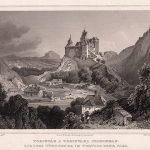
Chillingham Castle stands as one of England’s most foreboding and well-preserved medieval castles. Located in Northumberland, near the Scottish border, it was initially constructed as a monastery in the late 1100s before being fortified into a defensive stronghold by 1298. Its strategic location made it a critical site during the bloody Anglo-Scottish border wars, often acting as a buffer between rival territories. The castle’s stone walls, arched windows, and iron gates evoke a chilling sense of permanence and have become emblematic of the dark romance of Gothic architecture.
By the late 13th century, Chillingham had been transformed from a religious site into a fortress under royal mandate. King Edward I of England stayed at the castle in 1298 on his way to fight William Wallace, further entwining Chillingham with British military history. Over the centuries, the fortress transitioned into a family residence, eventually housing the Grey family, who maintained it through several generations. The structure itself evolved to include Elizabethan additions, stone-carved heraldry, and formal gardens—though the air of medieval severity never truly left its walls.
Noble Lineages and Legacy
The Grey family were the most prominent residents of Chillingham Castle, having taken ownership in the 1600s and maintaining stewardship for over 400 years. Their lineage includes ties to major historical figures and royal courts. In 1749, Charles Grey was born into the family, later becoming the 2nd Earl Grey and Prime Minister of the United Kingdom (1830–1834); he’s also the namesake of the famous Earl Grey tea. While Charles Grey was more politically prominent than haunted, the family’s ancestral home retained its spectral presence and sinister reputation.
In the modern era, Chillingham Castle is owned by Sir Humphry Wakefield, 2nd Baronet, who married into the Grey family and began restoration efforts in the 1980s. Wakefield, born in 1936, is an expert in architectural conservation and has dedicated his life to preserving the castle’s original appearance while opening it to the public. Today, the castle offers ghost tours, weddings, and educational programs—all without abandoning its haunted roots. The castle’s long lineage and meticulous restoration provide not only a portal to the past but also a canvas upon which history and myth are painted side by side.
Spirits of the Stone: Chillingham’s Most Famous Ghosts
Chillingham Castle is widely considered one of the most haunted sites in England, with centuries of spectral tales permeating its dark corridors. One of the most notorious spirits is the “Blue Boy,” whose ghost is often seen in the Pink Room. Visitors have reported seeing a blue flash of light, followed by the heart-wrenching cries of a young boy in distress. In the 1920s, during a renovation, workers uncovered the skeletal remains of a child bricked into the wall, along with scraps of blue fabric—lending chilling credence to the legend.
Another well-known apparition is the White Pantry Ghost, a female spirit often seen standing near the pantry entrance. According to long-standing reports, she appears to staff members and visitors alike, whispering for “water, water,” as if trapped in some eternal moment of thirst. Some speculate she was poisoned and haunts the castle in search of salvation or justice. Her silent cries add to the castle’s unnerving atmosphere, reinforcing its reputation among paranormal investigators as one of the most active ghost sites in Europe.
Torture and the Chilling Dungeons
Perhaps the most horrifying aspect of Chillingham Castle is its torture chamber, which has remained largely intact since medieval times. The room contains original torture devices, including a stretching rack, spiked chairs, and even an iron maiden. John Sage, a notorious torturer who served during the reign of Edward I, is said to have executed over 7,500 prisoners in the dungeons beneath the castle. His gruesome reputation lives on, with visitors claiming to hear cries and footsteps in the torture chamber where so many suffered and died.
The psychological impact of these tales—whether fact or embellished over generations—cannot be overstated. Gothic art and literature often draw from such real-world horrors to construct their disturbing, evocative settings. The dungeon’s dim lighting, narrow stone walls, and metallic scent evoke a sense of imprisonment and despair that artists and writers have long tried to replicate. These haunting details elevate Chillingham Castle from mere historical curiosity to a living embodiment of Gothic terror.
Chillingham’s Role in the Evolution of Gothic Horror
Chillingham Castle fits the mold of the Gothic horror genre so precisely that it almost seems tailor-made for fiction. With its remote location, storm-battered stone towers, and tales of blood-soaked history, it checks every box: isolation, decay, supernatural presence, and a tormented past. The physical attributes of the castle mirror those found in Gothic novels such as Horace Walpole’s The Castle of Otranto (1764), often cited as the first Gothic novel. Chillingham’s architectural features, from winding staircases to shadowed corridors, set the stage for fear and wonder alike.
Its real-life legends may have directly or indirectly inspired some of England’s most influential horror writers. While there is no confirmed evidence that Bram Stoker visited the castle, the parallels between Chillingham and the brooding environments in Dracula (1897) are striking. The ambiance also aligns with the works of M.R. James (1862–1936), the Anglican scholar whose ghost stories relied heavily on old, haunted buildings as key plot devices. Whether by direct exposure or cultural osmosis, Chillingham Castle echoes across the canon of British horror fiction.
Literary Echoes and Allegories
The symbolic weight of Chillingham’s haunted legacy cannot be ignored in literary contexts. Ghost stories centered around the castle often convey allegories of injustice, revenge, and the lingering power of sin. The “Blue Boy,” entombed within the very walls meant to protect, embodies innocence lost and the cruelty of silence. This mirrors Gothic literature’s frequent use of tragic youth or wrongly imprisoned figures as emotional anchors.
Archetypal roles also appear in Chillingham’s haunted narrative, such as the mad noble, the ghostly maiden, and the cursed lineage. These characters echo through novels by the Brontë sisters and other Victorian writers who were fascinated by old estates where family secrets festered like rot beneath stone. In such a literary context, the castle doesn’t merely house ghosts—it becomes one itself. The tales and tragedies embedded in its stones are as important to Gothic fiction as they are to England’s architectural history.
Artistic Interpretations: Haunted Architecture in Gothic Art
Artists across Europe have long been inspired by the kind of ambiance Chillingham Castle embodies: grandeur tainted by decay, history soaked in blood, and isolation heavy with silence. Painters of the Romantic and Gothic Revival periods, such as John Atkinson Grimshaw (1836–1893) and Caspar David Friedrich (1774–1840), explored similar themes. Their works often feature dilapidated castles, overcast skies, and shadowed figures—a visual echo of the gloom and mystery surrounding Chillingham. While these artists may not have painted Chillingham directly, the castle exemplifies the very aesthetic they sought to capture.
Friedrich’s painting Abbey in the Oakwood (1809–1810) shares a spiritual kinship with Chillingham’s eerie gardens and looming trees. The Romantic era’s obsession with ruins was less about destruction and more about transformation—the past bleeding into the present. In Grimshaw’s moonlit depictions of Victorian streets and manor houses, viewers sense a spectral quality akin to the stories told about Chillingham Castle. Gothic art thrives on these intersections between time, place, and the psychological impact of architecture.
The Romantic Fascination with Ruin
In 19th-century Europe, ruins weren’t merely historical remnants—they were symbols of mortality, spiritual decline, and even divine judgment. The Romantic movement embraced this symbolism with fervor, and Chillingham Castle became a living example of how architecture could elicit profound emotion. Its cracked stone facades, creeping ivy, and weather-worn gargoyles seem to whisper the stories of centuries. For Gothic artists, these features are not just visually compelling—they are metaphors for the soul’s descent or entrapment.
This aesthetic also influenced the Gothic Revival in architecture and interior design, popular in England from the 1840s onward. Wealthy landowners, often conservative in taste and values, built homes and churches in a medieval Gothic style to reflect permanence, piety, and ancestral pride. In this context, Chillingham Castle stood not just as a relic but as a model for artistic and architectural emulation. Its haunted grandeur captured the imaginations of those who believed beauty lay in mystery—and mystery, in faith and decay.
The Castle in Cinema and Popular Media
Chillingham Castle has found a second life as a media sensation, reinforcing its place in Gothic culture through television, film, and paranormal investigations. It featured prominently in Most Haunted, a long-running British TV series dedicated to ghost hunting, which aired its first Chillingham episode in 2002. The castle was also spotlighted in Scariest Places on Earth, captivating audiences with night-vision footage and terrified testimonies. These appearances have cemented Chillingham’s place in pop culture and extended its eerie influence to a global audience.
The visual language of horror cinema frequently draws from real haunted sites like Chillingham. Films such as The Woman in Black (2012) and Crimson Peak (2015) borrow heavily from the castle-as-haunted-manor trope, using elaborate staircases, candlelit halls, and shadowy chambers to evoke dread. Though these are fictional settings, their inspiration is firmly rooted in the architectural and atmospheric reality of places like Chillingham Castle. This connection makes the site a living storyboard for directors and production designers.
Location as a Character
In many horror stories and films, the haunted location becomes as important as the people within it. Chillingham Castle exemplifies this narrative device—the stone walls themselves seem sentient, reacting to human emotion and trapping memory in every crevice. The castle doesn’t just set the scene; it shapes the story. This concept has been carried into modern horror video games like Resident Evil Village (2021), which feature labyrinthine Gothic mansions reminiscent of Chillingham.
Digital artists and illustrators have also adopted the haunted castle aesthetic into their portfolios, creating eerie renderings and concept art rooted in real-world references. By using Chillingham as a model, they ensure their creations maintain historical authenticity while amplifying their emotional and psychological power. In this way, the castle continues to haunt the imagination—even for those who’ve never set foot in its halls.
The Psychological Pull of Haunted Places in Gothic Art
Why are people drawn to haunted places like Chillingham Castle? The answer lies in a blend of psychology, faith, and imagination. Gothic art taps into primal emotions—fear, wonder, sorrow—that are stirred by abandoned spaces and ghost stories. Chillingham serves as a perfect symbol of this dynamic, representing both spiritual unrest and the beauty of impermanence.
There’s a certain reverence that Gothic art bestows upon sorrow and decay. Painters, writers, and composers have long treated themes of death and haunting as gateways to deeper truths. A place like Chillingham, with its real-life suffering and long history, fuels this artistic tradition with authentic emotional weight. The castle isn’t just a setting; it’s a vessel for the themes that define Gothic art.
Haunting the Imagination
Artists use light, shadow, and composition to translate haunted emotions into visual form. Dramatic lighting, stark contrasts, and blurred outlines mimic the uncertainty that ghost stories evoke. Chillingham’s candlelit halls and shadow-streaked corridors provide the perfect template for this artistic exploration. These elements form a visual vocabulary that communicates fear without saying a word.
Photographers and illustrators working in the Gothic tradition often rely on real architecture to ground their work. Chillingham’s historic authenticity allows modern artists to root their interpretations in fact while exploring the boundaries of horror and beauty. From oil paintings to digital collages, haunted castles like Chillingham continue to shape how we visualize fear, memory, and the supernatural.
Preserving the Past: Chillingham Castle Today
Today, Chillingham Castle stands not only as a monument to British history but also as a living museum of Gothic culture. It offers public ghost tours, historical lectures, and seasonal events that attract thousands of visitors annually. With its dark lore and real historical artifacts, the castle provides an immersive experience unlike any other. Despite modern amenities, much of the structure remains true to its medieval roots.
Efforts to maintain Chillingham have been led by Sir Humphry Wakefield, who married into the Grey family and took over stewardship in the 1980s. Born in 1936, Wakefield has spent decades restoring the castle using traditional materials and techniques. His vision was not to modernize the building but to preserve its authentic Gothic character for future generations. Under his care, Chillingham has flourished as both a tourist site and a center for cultural education.
Living History and Legacy
Wakefield has emphasized historical accuracy in every corner of the estate, from its timbered ceilings to its heraldic emblems. He’s also expanded its accessibility, offering overnight stays and educational programming that include workshops in history and preservation. The castle has hosted theatrical performances, literary readings, and even fine art exhibitions that explore its influence on Gothic art. These events blend historical learning with creative exploration.
Chillingham Castle stands as a testament to the value of cultural conservation rooted in traditional principles. Rather than sanitizing or rewriting its past, it embraces the raw, sometimes uncomfortable truths that shaped its identity. In doing so, it continues to inspire artists, writers, and ordinary visitors alike. As long as its walls stand, Chillingham Castle will remain a source of haunted beauty and Gothic legacy.
Key Takeaways
- Chillingham Castle is a real, historic site in Northumberland with deep ties to Gothic horror.
- Its legends, such as the “Blue Boy” and torture chamber, have inspired countless ghost stories.
- Gothic artists and writers drew from haunted architecture like Chillingham to develop emotional, symbolic works.
- The castle has appeared in popular media and influenced visual horror aesthetics in film and gaming.
- Preservation efforts led by Sir Humphry Wakefield have kept the castle authentic and accessible.
Frequently Asked Questions
- Is Chillingham Castle really haunted?
Yes, many visitors and paranormal experts claim it’s one of the most haunted places in England. - Can I visit Chillingham Castle?
Absolutely. It is open to the public for tours, events, and overnight stays. - Has Chillingham Castle appeared in movies or shows?
Yes, it has been featured in Most Haunted and other paranormal documentaries. - Who owns Chillingham Castle today?
Sir Humphry Wakefield, 2nd Baronet, owns and manages the property. - Did Gothic artists directly paint Chillingham Castle?
Not directly, but the castle’s aesthetic closely resembles common Gothic artistic themes.