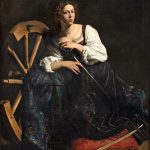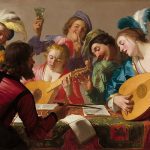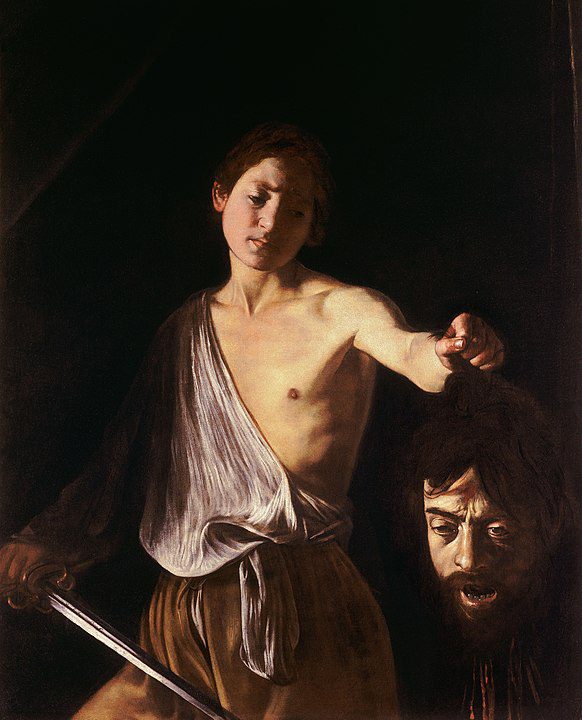
Baroque painting invites viewers into a theater of glowing light and deep shadow. Faces emerge from darkness like actors stepping beneath a bright stage lamp. This visual drama was not accidental, but carefully planned to stir feeling. Artists shaped emotion through the bold contrast known as chiaroscuro.
The Baroque era, stretching from the late 1500s into the early 1700s, prized movement and intensity. Religious leaders and wealthy patrons wanted art that felt immediate and powerful. Chiaroscuro helped painters guide the viewer’s eye across complex scenes. Strong illumination created a sense of divine presence in sacred storytelling.
Why Light Became the Language of Emotion
Painters discovered that light could speak more clearly than gestures or words. A glowing hand or face drew attention to the heart of a story. Darkness softened distractions and built suspense around unfolding events. The viewer’s response became part of the painting’s living drama.
Early audiences in Rome and Florence often described such works as startlingly real. Flickering candlelight in churches made painted shadows feel even more convincing. Viewers sometimes reached forward, expecting figures to step into their space. In this way, chiaroscuro bridged imagination and lived experience.
Origins of Chiaroscuro Before the Baroque Explosion
Long before the Baroque period, artists experimented with shadow to shape the human form. In the 1400s, painters in Italy studied how light fell across faces and clothing. Subtle tonal shifts replaced flat medieval color blocks and stylized outlines. This growing realism prepared the ground for later dramatic contrast.
By the early 1500s, figures in paintings appeared sculptural and grounded in space. Artists explored shading through careful observation of nature and the human body. Sketches and prints became laboratories for new visual techniques and tonal experiments. These studies slowly expanded the expressive range of European art.
From Scientific Observation to Spiritual Drama
Leonardo da Vinci, born on April 15, 1452, and deceased on May 2, 1519, explored how light revealed form and movement. His notebooks show intense curiosity about optics, anatomy, and atmospheric perspective. Historians responsibly speculate that his fascination with shadow encouraged later artists to pursue stronger tonal drama. Venetian painters later enriched this approach with glowing color and softer transitions.
By the late sixteenth century, artists began pushing contrasts to more theatrical extremes. Subtle modeling gave way to bold illumination that felt almost supernatural. This shift reflected changing tastes among patrons and the cultural tensions of the time. Light became not just descriptive, but symbolic and persuasive.
Caravaggio: The Revolutionary Master of Tenebrism
Michelangelo Merisi da Caravaggio was born in September 1571 near Milan and died on July 18, 1610, in Porto Ercole. He trained in Lombardy before seeking opportunity in Rome around 1592. His turbulent personality and occasional brushes with the law shaped his restless artistic career. Yet his commitment to truth in painting transformed European visual culture forever.
Caravaggio rejected idealized saints and heroes in favor of ordinary people drawn from Roman streets. He used extreme darkness, known as tenebrism, to isolate figures against nearly black backgrounds. Patrons such as Cardinal Francesco Maria del Monte supported his daring naturalism and dramatic lighting. Major church commissions around 1600 brought him fame and fierce controversy.
Key Works that Redefined Sacred Storytelling
In works like The Calling of Saint Matthew, painted between 1599 and 1600, a sharp beam of light signals divine intervention. This visual spotlight creates urgency and directs the viewer’s gaze across complex human reactions. Historians responsibly speculate that Caravaggio intended such lighting to mirror sudden spiritual awakening. His approach turned biblical stories into immediate emotional encounters.
Caravaggio’s influence spread rapidly after his death, despite his unfinished projects and unstable reputation. Students and admirers studied his methods through direct observation and copied compositions. His use of shadow suggested moral struggle and human vulnerability. These qualities resonated deeply with audiences across Europe in the seventeenth century.
Spread of Chiaroscuro Across Europe
By the early 1600s, Caravaggio’s innovations inspired a generation of artists known as the Caravaggisti. Painters traveled between Rome, Naples, Utrecht, and Madrid carrying sketchbooks filled with dramatic compositions. They adapted intense lighting to local traditions and religious expectations. This network helped chiaroscuro evolve into a pan-European artistic language.
Dutch painters developed candlelit interiors that emphasized quiet domestic moments and intimate storytelling. Spanish masters favored stark contrasts to express solemn faith and disciplined devotion. French artists often balanced theatrical shadow with classical composition and refined elegance. Each region reshaped the technique to suit its cultural voice and audience.
Artistic Exchanges and Cultural Adaptations
Workshops and guild systems played a key role in transmitting these visual strategies. Apprentices copied masterworks and practiced shading techniques through repeated study. Historians responsibly speculate that informal artistic gatherings accelerated stylistic exchange beyond formal training. Maritime trade routes also allowed ideas to travel as quickly as goods.
Night scenes became especially popular because they showcased the power of controlled illumination. Painters used torches, candles, and moonlight to model faces and fabrics. Such scenes often carried moral lessons about vigilance, temptation, or spiritual guidance. Chiaroscuro thus became both a technical method and a storytelling device.
Rembrandt and the Northern Interpretation of Light
Rembrandt Harmenszoon van Rijn was born on July 15, 1606, in Leiden and died on October 4, 1669, in Amsterdam. He studied with the history painter Pieter Lastman around 1624 before opening his own workshop. His marriage to Saskia van Uylenburgh on June 22, 1634, strengthened his social standing and artistic commissions. Personal loss after Saskia’s death in 1642 deepened the emotional tone of his later works.
Unlike Caravaggio’s sharp illumination, Rembrandt preferred layered shadow and glowing highlights. His portraits reveal subtle transitions between light and darkness that suggest inner thought and memory. He often used a limited palette to focus attention on expression and gesture. This quieter chiaroscuro created a sense of psychological depth and human dignity.
Light as Inner Experience
Paintings from the 1650s and 1660s show aging faces emerging from warm, enveloping darkness. Scholars responsibly speculate that Rembrandt’s financial troubles after 1656 influenced his introspective visual style. Light appears less like a sudden revelation and more like a gradual awakening. This shift gave his work a timeless, contemplative quality.
Rembrandt’s studio trained numerous pupils who carried his methods into Dutch and German art circles. Etchings produced throughout his career spread his approach even further. His thoughtful handling of shadow shaped the direction of portraiture and narrative painting. Today, his legacy remains central to discussions of chiaroscuro’s emotional potential.
Symbolism and Spiritual Meaning in Baroque Light Effects
Baroque artists often used light as a metaphor for divine truth and moral clarity. Illuminated figures could symbolize grace, redemption, or sudden spiritual insight. Darkness frequently framed moments of doubt, temptation, or human weakness. This symbolic language helped viewers connect personal faith with visual experience.
Church authorities encouraged dramatic imagery during the Counter-Reformation to inspire devotion and reinforce tradition. Paintings filled with strong contrast felt immediate and persuasive to congregations. Theatrical staging, influenced by contemporary opera and public spectacles, enhanced this sense of involvement. Viewers felt as though sacred stories unfolded before their eyes.
Reading Hidden Messages in Shadow
Certain gestures or objects placed in shadow hinted at deeper narrative meanings. A concealed face might suggest secrecy, while a glowing hand could indicate divine approval. Historians responsibly speculate that artists sometimes tailored such symbolism to specific patrons’ concerns or beliefs. This layered communication enriched the storytelling power of chiaroscuro.
Lighting effects also guided moral interpretation by emphasizing virtue over distraction. Bright zones encouraged contemplation of central figures and actions. Surrounding darkness simplified complex scenes into focused emotional moments. Through this visual discipline, Baroque painters shaped both artistic style and spiritual reflection.
Legacy of Baroque Chiaroscuro in Modern Visual Culture
The dramatic contrasts pioneered in the seventeenth century influenced later artistic movements across Europe. Romantic painters in the early 1800s used bold lighting to heighten emotional intensity and heroic themes. Realist artists later applied shadow to emphasize everyday struggles and honest labor. Chiaroscuro thus adapted to shifting cultural priorities and social concerns.
Photography in the nineteenth century borrowed heavily from Baroque lighting strategies. Early studio portraits used controlled illumination to sculpt features and suggest character. Filmmakers in the twentieth century expanded these ideas into cinematic techniques such as film noir. Stark shadows and angled light became tools for suspense and psychological storytelling.
Why the Technique Still Captivates Today
Contemporary painters and digital artists continue exploring contrast as a source of visual excitement. Designers use spotlight effects in advertising, theater, and virtual environments. Scholars responsibly speculate that human perception naturally responds to strong tonal variation as a survival instinct. This may explain the enduring appeal of chiaroscuro across centuries.
Modern audiences still feel drawn to images where light reveals hidden truths within darkness. Museums and galleries highlight Baroque masterpieces to demonstrate the origins of this fascination. Students practice shading exercises to understand how contrast shapes meaning and mood. The art of shadow remains a living tradition that bridges past and present.
Key Takeaways
- Chiaroscuro uses strong contrasts of light and shadow to create emotional drama.
- Baroque artists applied the technique to enhance religious storytelling and visual impact.
- Caravaggio and Rembrandt developed distinct approaches that shaped European art.
- Symbolic lighting helped viewers interpret spiritual themes and moral lessons.
- The method continues influencing photography, cinema, and contemporary design.
FAQs
- What does the term chiaroscuro mean in art history?
- Why did Baroque painters rely so heavily on dramatic lighting effects?
- How did Caravaggio’s life influence his artistic style and subject choices?
- In what ways did Rembrandt adapt shadow techniques for psychological depth?
- Where can modern viewers see the legacy of chiaroscuro today?