Before photography revolutionized how we capture and preserve memories, people relied on paintings, engravings, and silhouette portraits to record their likenesses. These methods were time-consuming, expensive, and often reserved for the wealthy or influential. As industrial advances accelerated in the early 19th century, the cultural desire for realism and individual representation grew stronger. Photography emerged from this crucible of curiosity, science, and social change.
Joseph Nicéphore Niépce of France is widely credited with producing the first permanent photograph in 1826, using a process he called heliography. Born on March 7, 1765, Niépce was a French inventor who had experimented with light-sensitive materials and chemicals for years. His earliest surviving image—a grainy view from a window—took over eight hours to expose. Niépce’s experiments laid the groundwork for what would later become mainstream photography.
In 1829, Niépce partnered with Louis Daguerre, a painter and theatrical designer born in France on November 18, 1787. Daguerre had previously created impressive dioramas and stage illusions using light manipulation and artistry. Their collaboration aimed to refine Niépce’s method and make photography more efficient and commercially viable. Although Niépce died in 1833, Daguerre continued to improve the process on his own.
By 1839, Daguerre introduced the world to a refined technique—the daguerreotype. He announced it at the French Academy of Sciences in Paris, where it was heralded as a scientific marvel. That same year, the French government awarded Daguerre a lifetime pension in exchange for placing the invention in the public domain. Thus, photography was no longer an experimental novelty—it had become an accessible and powerful tool for visual documentation in the 19th century.
The Daguerreotype Revolution
The daguerreotype was the first widely used photographic process, utilizing a polished silver-plated copper sheet that was sensitized with iodine vapor. The plate was exposed to light in a camera, then developed using mercury fumes and fixed with a salt solution. The resulting image was a one-of-a-kind, highly detailed reflection resembling a small mirror. Because of its precision, it became a prized medium for portraits and documentary images.
Louis Daguerre’s 1839 public release of the daguerreotype technique marked the official birth of practical photography. France embraced the process immediately, and so did England and the United States. The sharpness and clarity of daguerreotypes stood in stark contrast to painted portraits or earlier photographic efforts. Exposure times improved over the years, decreasing from several minutes to less than a minute by the 1850s.
In America, Samuel Morse—the inventor of the telegraph—played a crucial role in popularizing daguerreotypes. After meeting Daguerre in Paris in 1839, Morse brought the knowledge back to the United States and began teaching photography. One of his most famous students was Mathew Brady, who later gained fame as a Civil War photographer. Before documenting soldiers and battlefields, Brady opened a daguerreotype studio in New York City in 1844.
As demand surged, so did accessibility. Photography studios opened in nearly every major city by the 1850s. These establishments catered primarily to middle- and upper-class clients who could afford the relatively high cost. The fragile plates required protective cases made from leather, velvet, or thermoplastic. Owning a daguerreotype was a status symbol—a visual anchor for memory and identity in an age of emerging modernity.
Understanding Tintypes: A Working-Class Portrait Medium
The tintype, often mistaken as being made from tin, was actually crafted using a thin sheet of iron coated with a dark lacquer or enamel. Developed in the United States during the 1850s, the tintype process involved creating a direct positive image using a collodion emulsion. The finished image was less reflective than a daguerreotype and much more durable. Unlike its elegant predecessor, the tintype was rugged and informal, making it ideal for a different social class.
Hamilton Smith, a chemistry professor at Kenyon College in Ohio, patented the tintype process in 1856. Born on November 5, 1819, Smith’s invention made photography truly accessible to the working man. The tintype’s affordability and quick development—often just a few minutes—made it popular at fairs, carnivals, and along busy street corners. The need for less specialized equipment also meant that more people could enter the business of photography.
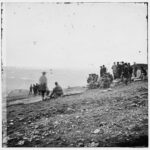
During the American Civil War (1861–1865), tintypes became especially popular among soldiers. Portable and less prone to damage, tintypes allowed men heading to battle to leave behind a keepsake for loved ones. Many were made in makeshift studios near battlefields or in mobile tents set up by entrepreneurial photographers. These images captured soldiers in uniform, often holding rifles or standing in proud poses—vivid snapshots of patriotism and sacrifice.
Tintypes differed from daguerreotypes not just in affordability, but also in aesthetics. While daguerreotypes were sharp and reflective, tintypes were more matte and sometimes hand-colored for a bit of flair. They were frequently mounted on cardboard or simply left loose, reflecting their utilitarian nature. Though they lacked the polish of daguerreotypes, tintypes represented a more democratic form of image-making—one that chronicled everyday life with raw authenticity.
Technical Differences Between Daguerreotypes and Tintypes
At their core, daguerreotypes and tintypes were both early photographic processes that captured images directly onto metal surfaces, but the materials and chemicals used were quite different. Daguerreotypes employed silver-plated copper and required a delicate, multi-step process involving iodine and mercury. Tintypes, in contrast, were made on thin sheets of iron and used a faster, more straightforward collodion process. These technical choices affected everything from cost to safety to final appearance.
One of the major differences lay in image quality and exposure time. Daguerreotypes produced images of incredible detail and clarity, but required long exposures in early iterations—up to 15 minutes. By comparison, tintypes could be exposed and developed in under a minute, thanks to faster photographic emulsions. This speed made tintypes ideal for capturing spontaneous moments, especially in non-studio settings.
Another significant difference was in the presentation and handling of the final image. Daguerreotypes were delicate and usually encased in ornate, velvet-lined cases to protect their mirror-like surfaces. Tintypes, being sturdier, were often handed over without any frame at all or affixed to cardboard for display. This difference also symbolized a class divide in how photographs were valued and preserved.
From a safety standpoint, the daguerreotype process posed notable risks due to the use of mercury vapors during development. Photographers had to be cautious, as repeated exposure could lead to mercury poisoning. Tintypes, while not entirely free of health concerns, were generally safer to produce. These contrasts helped define who made and consumed each type of photograph, contributing to their diverging cultural footprints.
Cultural Impact and Accessibility of Early Photography
The arrival of daguerreotypes in the 1840s marked the first time in history that average people could afford a permanent image of themselves or their loved ones. While early daguerreotypes remained expensive, prices gradually decreased, and by the 1850s, middle-class families could afford a session at a local studio. These portraits became treasured heirlooms, often passed down through generations. For the first time, visual legacy was not the sole domain of aristocrats and the elite.
Tintypes took this democratization even further. By the 1860s, nearly anyone could sit for a tintype portrait, regardless of income or social status. This accessibility created a surge in the popularity of family portraits, sweetheart tokens, and memory keepsakes. Soldiers carried tintypes into battle, mothers preserved them in lockets, and sweethearts exchanged them like letters. It was photography for the people, by the people.
Mourning portraits also became a widespread phenomenon, particularly during and after the Civil War. With death so close at hand, many families commissioned portraits of loved ones on their deathbeds or shortly after passing. These photographs—though unsettling by today’s standards—served as sacred remembrances. The emotional weight carried by these images was immense, offering a tangible connection to those lost.
Early photography shaped social behavior in profound ways. People began to think more consciously about how they presented themselves—clothing, posture, facial expressions. Photography played a role in courtship, family history, and even personal branding. The ability to preserve one’s likeness gave rise to a new kind of visual literacy, rooted in realism and intimacy, that continues to influence our image-obsessed culture today.
Decline and Legacy of 19th-Century Photographic Techniques
By the late 1870s and into the 1880s, newer photographic technologies began to overtake daguerreotypes and tintypes in both popularity and practicality. Albumen prints, developed on paper using egg whites, became the new standard for photographic portraits. These prints were easier to duplicate and store in photo albums, leading to a decline in the demand for one-of-a-kind images. Consumers preferred convenience and reproducibility over uniqueness.
The wet collodion process also gained popularity, especially with the rise of the carte de visite and cabinet card formats. These innovations allowed photographers to take multiple images from a single negative and produce them on paper. The introduction of roll film by George Eastman in 1888, and his founding of the Eastman Kodak Company, marked a major turning point. Photography moved from professional studios into the hands of amateurs.
As a result, daguerreotypes and tintypes were gradually seen as outdated relics of a bygone era. By the 1890s, most commercial photographers had fully transitioned to newer technologies. However, the emotional power and craftsmanship of these early images ensured they were not forgotten. Collectors and historians began to recognize their artistic and historical value in the 20th century.
Today, there is a growing revival among photographers who use 19th-century techniques for artistic purposes. Tintype studios have reemerged in places like Brooklyn, Nashville, and Austin, offering vintage-style portraits with a modern twist. These efforts celebrate the tactile, hands-on artistry of photography’s earliest forms. They also serve as a reminder that even in an age of digital saturation, the past still has something meaningful to teach us.
Collecting and Preserving Daguerreotypes and Tintypes Today
Collecting antique photographs has become a passionate pursuit for many historians, archivists, and private enthusiasts. Daguerreotypes and tintypes often surface at estate sales, flea markets, and online auctions. Their small size, durable materials, and haunting imagery make them attractive to collectors seeking a tangible link to the 19th century. Prices vary depending on condition, subject matter, rarity, and historical context.
Preserving these images requires careful handling and climate control. Daguerreotypes, being particularly sensitive to light and air, should be stored in sealed cases and kept away from humidity. Tintypes, though more robust, are still vulnerable to scratches, rust, and fading. Archivists recommend acid-free storage materials and minimal exposure to light to prolong the life of these artifacts.
Several major institutions hold significant collections of 19th-century photographs. The George Eastman Museum in Rochester, New York, maintains a comprehensive archive of daguerreotypes and tintypes. The Library of Congress and the Smithsonian Institution also offer public access to digitized versions of these early images. These collections serve as important cultural records of American life, identity, and memory during a time of immense change.
One ethical concern that arises is the anonymity of many of these portraits. Countless images were taken without any written identification, leaving their subjects lost to history. Collectors must grapple with the reality that they are preserving the likeness of someone’s ancestor, possibly without their descendants’ knowledge. Nonetheless, these faces from the past offer a silent testimony to the enduring human need to be remembered.
Key Takeaways
- Daguerreotypes were introduced in 1839 by Louis Daguerre and revolutionized image-making with unmatched detail.
- Tintypes, patented in 1856 by Hamilton Smith, made photography faster and affordable for the working class.
- Daguerreotypes required silver-plated copper and mercury fumes, while tintypes used iron and safer chemicals.
- Early photography played a vital role in Civil War memory, courtship, and mourning practices.
- Museums like the George Eastman Museum and Library of Congress preserve thousands of 19th-century photographs.
FAQs
- What is the main difference between daguerreotypes and tintypes?
Daguerreotypes use silver-plated copper and offer sharper images, while tintypes are made on iron and are more durable and affordable. - Who invented the tintype process?
Hamilton Smith, a chemistry professor from Ohio, patented the tintype process in 1856. - Why did daguerreotypes fall out of favor?
Newer technologies like albumen prints and roll film were cheaper, easier, and reproducible, making daguerreotypes obsolete by the 1890s. - Are 19th-century photographs valuable?
Yes, depending on condition, subject, and historical context, daguerreotypes and tintypes can be quite valuable to collectors. - Can I still get a tintype portrait today?
Yes, modern photographers have revived the tintype process in artistic studios across the U.S. and Europe.