Jacob van Ruisdael stands as one of the most influential painters of the Dutch Golden Age, a time when the Netherlands flourished in commerce, science, and the arts. Born in Haarlem around 1628, Ruisdael rose to prominence by capturing the spiritual and physical essence of the Dutch landscape. His moody skies, detailed forests, and dramatic seascapes did more than depict the natural world—they evoked a sense of divine order and emotional depth that set him apart. He redefined landscape painting from a decorative genre into a vehicle for contemplation and national pride.
By the mid-17th century, landscape painting was popular among Dutch collectors, but Ruisdael elevated it into a fine art through his technical skill and visionary eye. His works balanced realism with grandeur, often imbuing humble scenery with a sense of majesty. Today, his paintings remain revered for their precision and soulfulness, continuing to inspire artists and scholars alike. With more than 700 known paintings and 100 drawings, Ruisdael left a vast and consistent body of work.
This article explores Jacob van Ruisdael’s life, his training, artistic innovations, and his enduring legacy. We’ll look closely at his major works, the relationships that shaped his career, and the influence he exerted on future generations of painters. His story is not only a journey through art history but also a reflection of how the Dutch viewed their land and their place in it.
Whether through sun-dappled meadows or stormy coastlines, Ruisdael’s landscapes offer more than scenery—they present a worldview. His legacy as the preeminent landscape painter of his era remains unchallenged, rooted in both technical brilliance and emotional depth.
Early Life and Family Background
Jacob Isaackszoon van Ruisdael was born in Haarlem, Netherlands, in either late 1628 or early 1629. He came from a family closely tied to the arts. His father, Isaack van Ruisdael, was a frame maker and occasional painter, while his uncle, Salomon van Ruysdael, was already an established landscape artist. Though few details of his childhood survive, Jacob likely benefited from this artistic environment early on. His family’s involvement in painting and the art trade provided him with essential exposure and opportunities.
The city of Haarlem was a vital artistic hub during the Dutch Golden Age. In the 1630s and 1640s, it was home to numerous studios and the prestigious Guild of St. Luke. Young Jacob likely apprenticed within the family circle, receiving both practical training and inspiration from Salomon. His earliest dated works appeared in 1646, when he was about eighteen. These paintings already display an astonishing maturity in handling natural elements, particularly trees and skies.
Roots in a Family of Artists
Though there is no record of formal academic training, Ruisdael’s early development was unusually refined. His ability to handle oil paint and compose complex landscapes suggests he received instruction in drawing and composition, possibly from his uncle or other Haarlem artists. Early influences may have included Cornelis Vroom and Jan van Goyen, both known for tonal landscape painting. Jacob quickly surpassed many of his local peers in technical and imaginative range.
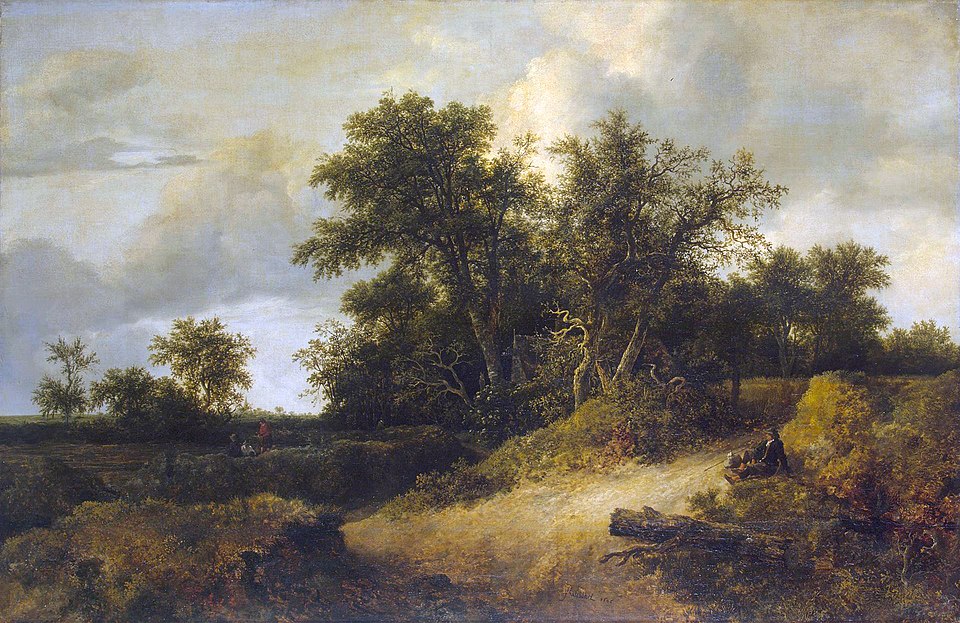
The Ruisdael family originally spelled their name “Ruysdael,” and Jacob later adopted this spelling in his signature. His work from the 1640s already displayed a boldness that hinted at his future greatness. Landscapes like “Peasant Cottage in a Landscape” show a distinct sensitivity to light, shadow, and texture. These foundational years in Haarlem laid the groundwork for a prolific and groundbreaking career.
Artistic Training and Influences
Jacob van Ruisdael’s training remains partly speculative, though his earliest works indicate he was thoroughly grounded in drawing, anatomy, and perspective. By 1648, he had joined the Guild of St. Luke in Haarlem, marking his official entry into the professional art world. His paintings from this period focused on woodland scenes, watermills, and panoramic countryside views. The influence of his uncle Salomon was clear but Jacob’s style rapidly grew more dramatic and emotionally intense. Unlike Salomon’s peaceful riverscapes, Jacob’s works often conveyed grandeur and solemnity.
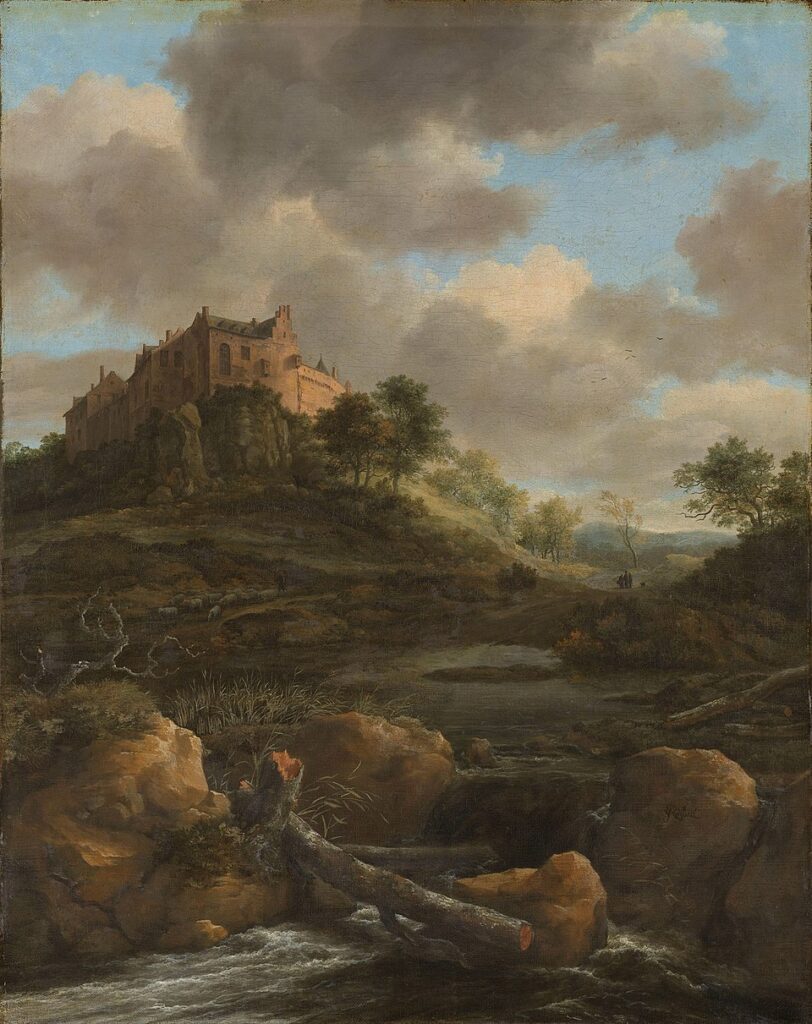
From 1650 to 1653, Ruisdael traveled extensively through the eastern Netherlands and into parts of western Germany, including Bentheim and Kleve. These travels had a significant impact on his style and subject matter. The rocky hills and castle ruins he encountered inspired some of his most dynamic compositions. These scenes—such as “View of Bentheim Castle”—introduced dramatic topography that contrasted with the flat Dutch landscapes of his earlier works. The result was a more theatrical and elevated form of landscape art.
Shaped by Mentors and the Dutch Landscape
Another key influence during this time was the painter Allart van Everdingen, known for Nordic landscapes featuring waterfalls, pine forests, and mountainous terrain. Van Everdingen’s Nordic style was itself shaped by travels through Scandinavia. Ruisdael absorbed and reinterpreted this influence, merging northern motifs with his Dutch sensibility. He began incorporating cascading waterfalls, rugged cliffs, and dark pine trees into his compositions—though he likely never visited Scandinavia himself.
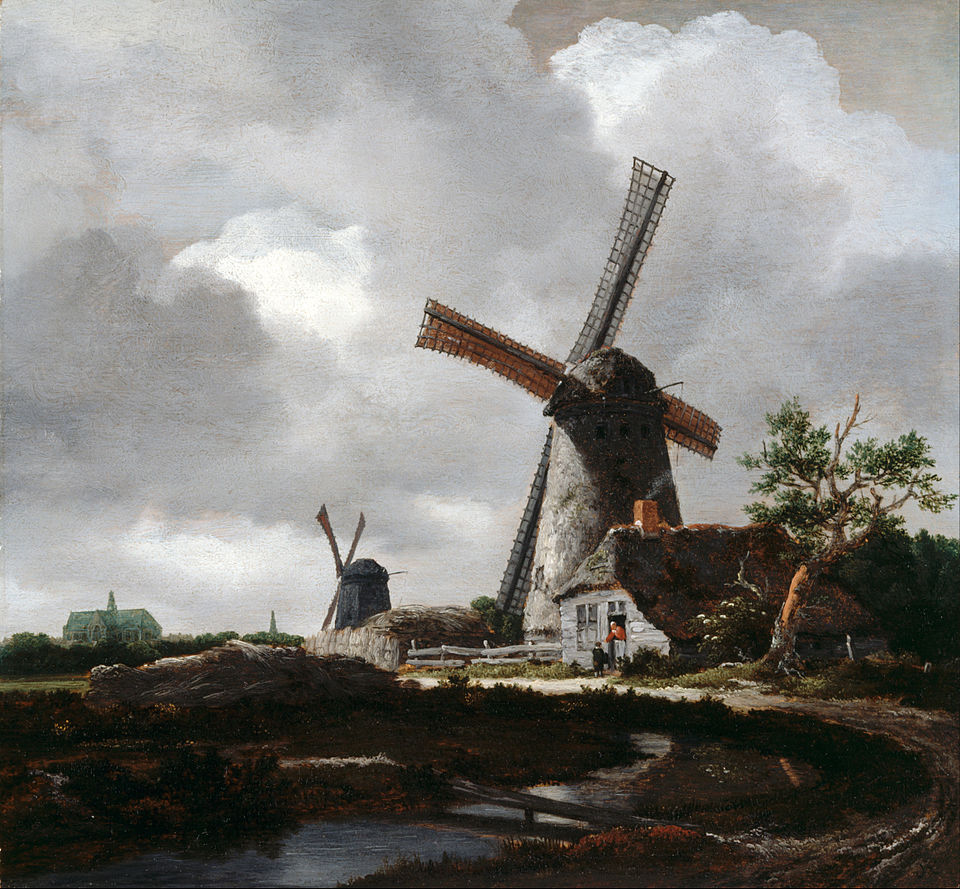
By the early 1650s, Ruisdael had firmly developed his own voice. While still echoing the tonal traditions of Haarlem, he moved toward a more luminous and emotionally expressive mode. He demonstrated an increasing command of spatial depth and aerial perspective. His attention to fine details—such as individual leaves, ripples in water, or distant buildings—revealed a near-scientific curiosity about the natural world, coupled with deep artistic intuition.
Signature Style and Techniques
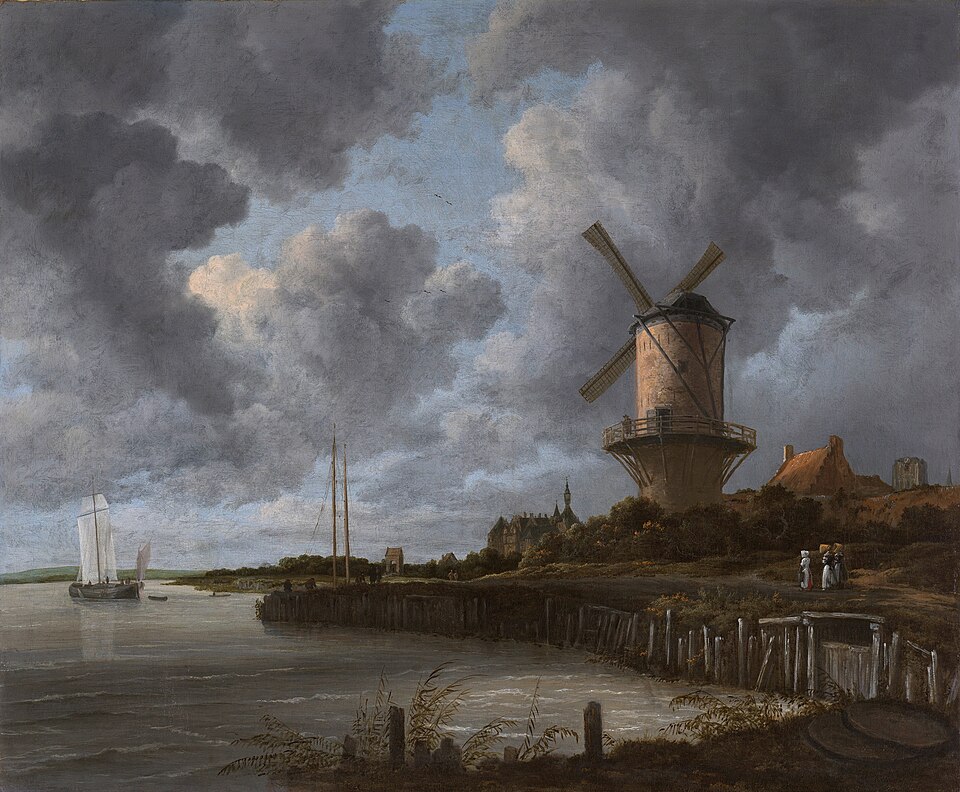
Ruisdael’s signature style is defined by its powerful natural imagery, intense atmospheric effects, and spiritual undertones. He mastered the portrayal of shifting skies, dramatic weather, and the quiet solitude of open space. These elements weren’t mere backdrops—they were the very soul of his paintings. Using oil on canvas, Ruisdael could manipulate layers of color and shadow to bring extraordinary depth to trees, clouds, and water. His technical precision gave even the most turbulent scenes a sense of order and clarity.
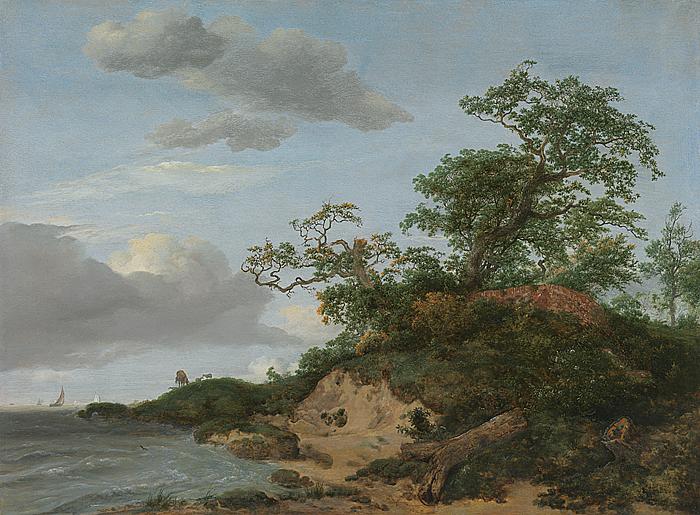
His compositions were often asymmetrical, drawing the eye through winding paths, broken tree trunks, or rivers that disappear into the horizon. He used light not only for realism but to dramatize certain elements—whether illuminating a crumbling tower or casting a brooding shadow over a graveyard. He painted with deliberation, often reworking scenes to heighten their emotional resonance. The mood of his works ranges from peaceful reverie to divine judgment.
From Realism to Sublime Landscapes
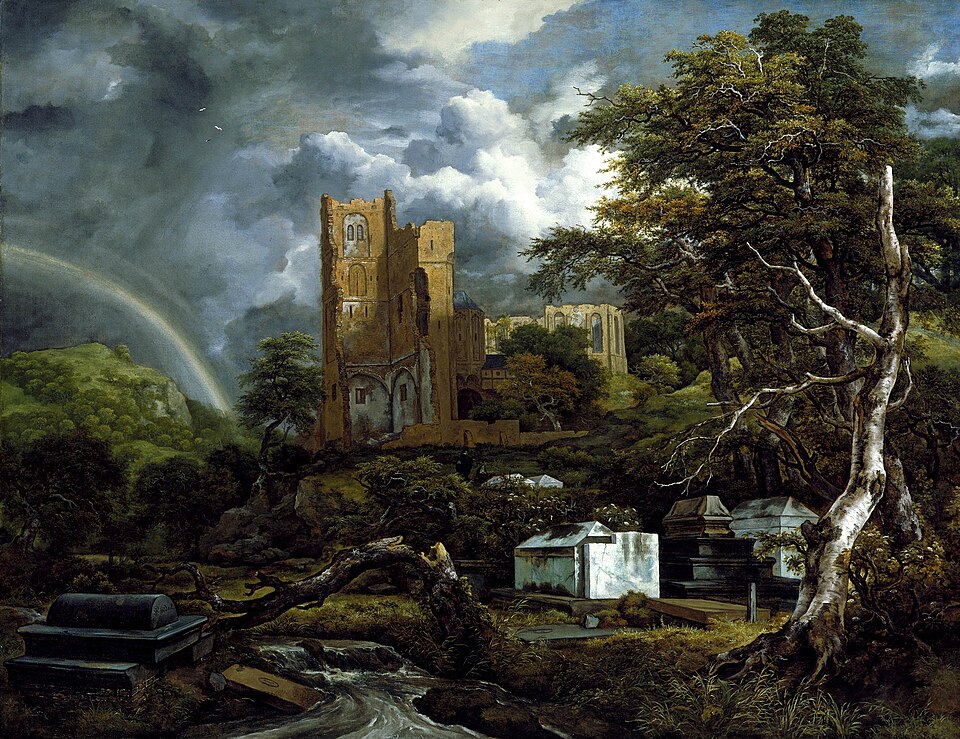
Ruisdael was not a sentimental painter. His realism was grounded in careful observation, but he also imbued nature with spiritual significance. In works like “The Jewish Cemetery,” he used symbolism to convey themes of death, hope, and eternal renewal. Ruined buildings, fallen trees, and turbulent skies suggest not just decay but a moral reflection on human life and divine power. Though the scene is fictional, the emotion it evokes is deeply real.
His ability to balance structure and spontaneity was unmatched. Unlike many of his peers, who produced landscapes rapidly for sale, Ruisdael’s paintings appear meditative and intentional. He often created large canvases, allowing the viewer to feel immersed in the scene. His brushwork ranged from delicate to bold, depending on the subject. In every case, the hand of a true master is evident—one who saw nature not just as scenery, but as a mirror of the soul.
Major Works and Recurring Themes
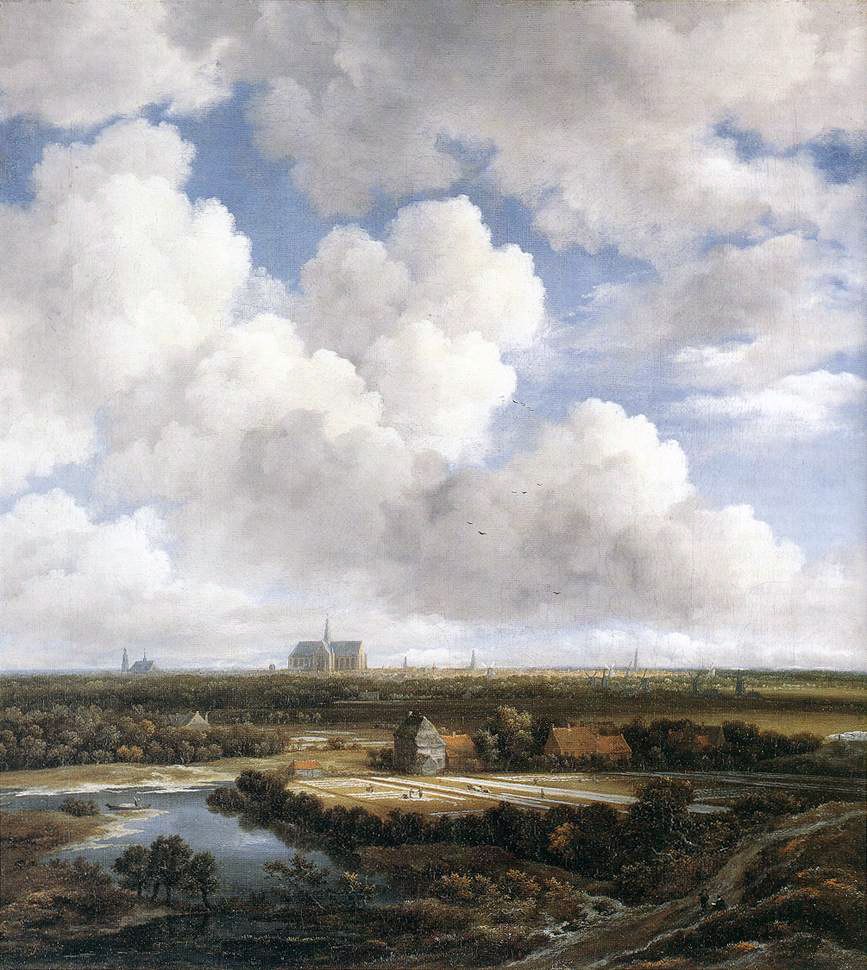
Jacob van Ruisdael’s body of work is as broad as it is profound, encompassing over 700 paintings and numerous drawings. Among his most iconic pieces is “View of Haarlem with Bleaching Grounds” (c. 1670), a panoramic view that exalts the Dutch landscape and celebrates the linen industry. This painting, with its expansive sky and meticulous rendering of tiny laundresses at work, elevates the mundane to the monumental. Another major work is “The Jewish Cemetery” (c. 1655–60), an imaginative and symbolic composition that juxtaposes decaying tombs and stormy weather with a faint rainbow of hope. It captures both the fragility and the eternal cycle of life.
His waterfall scenes—especially those painted after 1650—stand out for their force and novelty. Works such as “Waterfall in a Mountainous Landscape with a Ruined Castle” (c. 1660) feature churning torrents, rugged terrain, and decaying architecture. These were not native to the Dutch flatlands but were inspired by his travels and the Nordic paintings of Allart van Everdingen. They demonstrate his ability to create visual drama without sacrificing naturalism. Though fictive, these scenes feel grounded and authentic, thanks to his eye for texture and scale.
Ruins, Waterfalls, and Windmills
Recurring motifs in Ruisdael’s work include dead trees, crumbling buildings, and ancient ruins—all symbols of the passage of time. Yet these are often counterbalanced by signs of life: a path leading into the distance, sunlight breaking through clouds, or grazing cattle. Windmills, in particular, feature prominently in his mid-career pieces, symbolizing Dutch industriousness and connection to the land. His depiction of churches, bridges, and dikes adds to the sense of a nation shaped by both nature and human effort.
A hallmark of his best work is its immersive quality. Ruisdael invites the viewer to walk through dense forests, to feel the spray of a waterfall, or to contemplate eternity beneath vast clouded skies. Even his smallest canvases have a sense of monumentality. His talent for balancing realism with reverence makes his work timeless. Through meticulous observation and emotional insight, he created a visual language that transcends geography or era.
Relationships and Collaborations
Jacob van Ruisdael, though solitary in much of his working life, was well-connected within the Dutch artistic community. One of his most important relationships was with Meindert Hobbema, who became his pupil and later a successful landscape artist in his own right. Hobbema’s works, such as “The Avenue at Middelharnis,” show the influence of Ruisdael’s structured compositions and attention to detail. Their teacher-student bond helped ensure that Ruisdael’s artistic legacy would continue into the next generation.
He also collaborated with prominent figure painters of the time, adding a human presence to his natural scenes. Artists such as Nicolaes Berchem, Adriaen van de Velde, and Philips Wouwerman would paint small figures, animals, or carts into Ruisdael’s vast landscapes. These collaborations were typical of the Dutch Golden Age, where painters often specialized and combined talents to create richer works. The results fused Ruisdael’s emotional and spatial depth with Berchem’s lively figures or van de Velde’s pastoral elegance.
Collaborating with Masters of the Dutch Golden Age
Ruisdael also had professional ties with Haarlem’s Guild of St. Luke, which he joined in 1648, allowing him to sell his work independently and gain commissions. His move to Amsterdam around 1655 likely expanded his network and clientele. Amsterdam was not only a commercial hub but also a center for intellectual life, and Ruisdael’s art would have appealed to educated patrons with an eye for refined landscapes.
Despite his professional collaborations, there is no record of Ruisdael marrying or maintaining a public household. He appears to have lived quietly and modestly, focusing on his art. This reserved personal life makes his expressive paintings all the more striking. While little is known about his private affairs, his relationships in the artistic world were fruitful and long-lasting, contributing to both his success and his posthumous influence.
Later Years and Legacy
By the late 1650s, Ruisdael had moved to Amsterdam, where he became a citizen in 1659. He continued to produce a large volume of work, experimenting with seascapes, city views, and winter scenes. His style matured further, showing even greater subtlety in light, atmosphere, and composition. However, records suggest he may have faced financial difficulties in his final years, despite his fame. He never married and had no known heirs, which perhaps contributed to his quiet withdrawal from public life.
His last dated works are from around 1670–1675, although he continued painting until close to his death. Jacob van Ruisdael died on March 10, 1682, in Amsterdam, and was buried in St. Bavo’s Church in Haarlem, the same church that houses Frans Hals. His grave remains unmarked, a modest ending for a man whose work conveyed such grandeur. Yet his reputation did not vanish with him—instead, it grew over time, with collectors and artists across Europe recognizing his genius.
Final Works and Enduring Impact
In the 18th and 19th centuries, Ruisdael’s reputation was revived and celebrated by Romantic painters like John Constable and J.M.W. Turner, who admired his handling of light and mood. His ability to depict the power and beauty of nature deeply influenced these later movements. Constable once remarked that Ruisdael “was full of sentiment and nature,” placing him on the same level as the great masters. His work also found favor among American and British collectors, leading to the acquisition of many of his paintings by major museums.
Today, Ruisdael’s paintings are housed in leading institutions such as the Rijksmuseum in Amsterdam, the National Gallery in London, the Louvre, and the Metropolitan Museum of Art. His legacy continues in the academic study of landscape painting, where he is viewed not merely as a technician, but as a visionary. His works are used to teach students about composition, mood, and symbolism.
More than three centuries after his death, Jacob van Ruisdael remains one of the most admired landscape painters in Western art. His ability to elevate nature to the level of the sublime continues to resonate with modern viewers. Through trees, clouds, and ruins, he captured the timeless interplay between man, land, and eternity.
Conclusion
Jacob van Ruisdael’s art speaks across centuries. With a quiet brush and a discerning eye, he captured the soul of the Dutch landscape. His paintings are not just reflections of nature, but meditations on life, death, and enduring beauty. He transformed the ordinary into the eternal.
From his early years in Haarlem to his later life in Amsterdam, Ruisdael left behind a rich legacy that shaped the future of landscape painting. He inspired students, peers, and generations yet to come. His ability to blend realism and symbolism remains unparalleled.
In a world where much art comes and goes, Ruisdael’s landscapes endure. They invite the viewer to pause, reflect, and admire the hand of both artist and Creator. His legacy stands firm—rooted in soil, lifted by sky.
Let his work remind us that even the most familiar fields and trees can become timeless in the hands of a master.
Key Takeaways
- Jacob van Ruisdael was born in Haarlem around 1628 and trained under his uncle, Salomon van Ruysdael.
- He joined the Guild of St. Luke in 1648 and later moved to Amsterdam in 1655.
- His dramatic landscapes were inspired by Dutch countryside and travels in Germany.
- Ruisdael’s work influenced artists like Meindert Hobbema, Constable, and Turner.
- He died in 1682 and is buried in St. Bavo’s Church in Haarlem.
Frequently Asked Questions
- What was Jacob van Ruisdael known for?
He was renowned for his dramatic, emotionally rich Dutch landscapes. - Did Ruisdael have formal art training?
Likely trained by his uncle and possibly influenced by Allart van Everdingen. - Who were Ruisdael’s major influences?
Salomon van Ruysdael, Cornelis Vroom, and Allart van Everdingen. - Where can I see Ruisdael’s paintings today?
Major museums like the Rijksmuseum, National Gallery, and the Louvre. - Did Ruisdael work alone or collaborate?
He collaborated with artists like Nicolaes Berchem and Adriaen van de Velde.