The Basilica di San Marco (St. Mark’s Basilica) is one of Venice’s most iconic landmarks. Known for its stunning architecture and rich history, it stands as a symbol of the city’s grandeur. Visitors from around the world are drawn to its golden mosaics, intricate details, and spiritual significance. The basilica is not only a place of worship but also a cultural treasure that encapsulates centuries of Venetian heritage.
A Glimpse Into the History of Basilica di San Marco
The Basilica di San Marco has its roots in the 9th century. Built to house the relics of St. Mark, it was a statement of Venice’s growing power and piety. According to tradition, Venetian merchants smuggled St. Mark’s remains from Alexandria, ensuring the city’s patron saint would have a fitting resting place. The original church was replaced in the 11th century with the current structure, reflecting Venice’s prosperity and ambition.
Over the centuries, the basilica became central to Venetian identity. Its design evolved as the city expanded its trade routes, incorporating artistic influences from East and West. The basilica also served as the chapel of the Doge, Venice’s ruler, reinforcing its role as both a religious and political center.
Architectural Grandeur of the Basilica
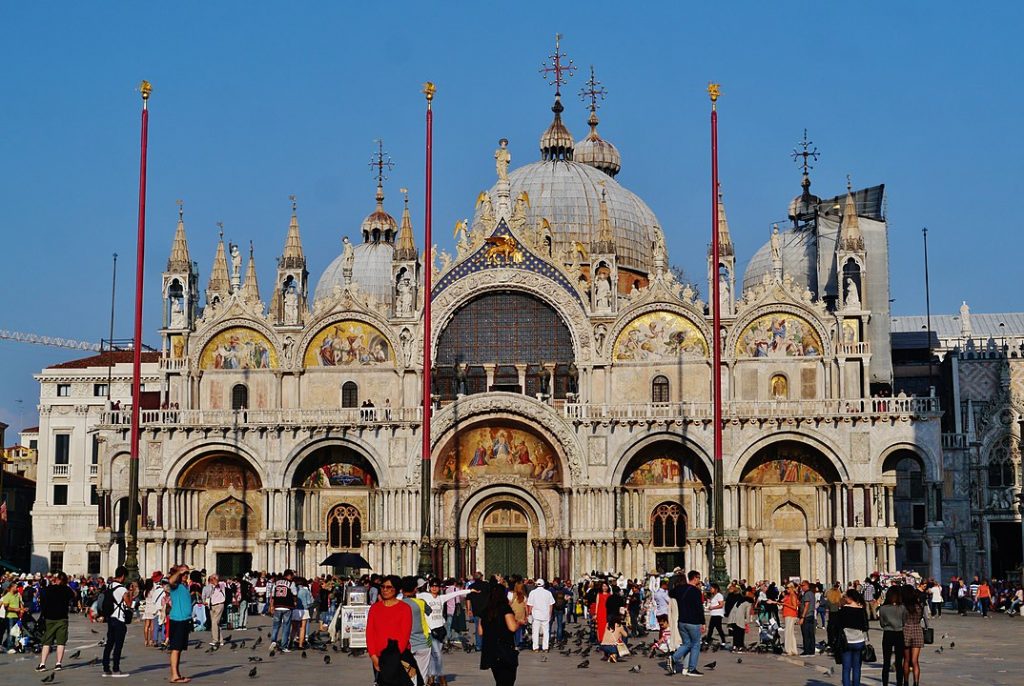
The Basilica di San Marco is a masterpiece of Byzantine architecture. Its design harmonizes Eastern and Western elements, creating a structure unlike any other in Europe. The five massive domes dominate the skyline, symbolizing Venice’s reach and spiritual devotion.
The facade is adorned with intricate carvings and vibrant mosaics, depicting scenes from the Bible and Venetian history. Marble columns and arches frame the entrance, showcasing a blend of Romanesque and Gothic styles. The basilica’s unique architecture reflects the city’s role as a crossroads of cultures, merging influences from the Byzantine Empire and Western Europe.
The Magnificent Mosaics of Basilica di San Marco
The golden mosaics of the Basilica di San Marco are its most striking feature. Covering over 8,000 square meters, they tell biblical stories with stunning detail and color. These mosaics, created by skilled artisans, are an example of the Byzantine art that flourished during Venice’s height.
One of the most notable mosaics is the Creation scene, located in the central dome. Another highlight is the Last Judgment, which showcases intricate depictions of heaven and hell. Restoration efforts over the years have preserved these treasures, ensuring their brilliance endures for future generations. Visitors often find themselves mesmerized by the mosaics’ intricate details and the golden glow that fills the interior.
The Iconic Pala d’Oro
Behind the high altar of the basilica lies the Pala d’Oro, a masterpiece of medieval craftsmanship. Originally created in Constantinople, this altarpiece is adorned with gold, enamels, and thousands of gemstones. The Pala d’Oro was enhanced over centuries, becoming one of the finest examples of Byzantine artistry.
Visitors can marvel at its intricate details, which include scenes of Christ, the Virgin Mary, and saints. The gemstones’ brilliance reflects the wealth and devotion of Venice during its golden age. Viewing the Pala d’Oro is an unforgettable experience, showcasing the basilica’s commitment to beauty and faith.
The Horses of St. Mark (Quadriga)
The famous bronze horses of St. Mark have a fascinating history. Originally crafted in ancient Greece, these sculptures were brought to Venice from Constantinople during the Fourth Crusade. Positioned on the basilica’s facade, they symbolize Venice’s triumph and artistic achievements.
The horses were temporarily taken to Paris by Napoleon in the 19th century but were later returned to Venice. Today, replicas stand on the facade, while the originals are preserved inside the basilica to protect them from the elements. The Quadriga is a reminder of Venice’s connections to ancient civilizations and its role in preserving cultural treasures.
Basilica di San Marco as a Spiritual Landmark
The Basilica di San Marco is not just a tourist attraction; it remains a vital religious site. As the seat of the Patriarch of Venice, it hosts important ceremonies and festivals. Its role in Venetian religious life is deeply rooted in history, with annual events celebrating St. Mark’s feast day and other significant occasions.
For centuries, the basilica served as the private chapel of the Doge. This connection to Venetian leadership emphasized its spiritual and political importance. Even today, stepping into the basilica offers a sense of awe and reverence, connecting visitors to centuries of faith and tradition.
Touring the Basilica: Tips for Visitors
A visit to the Basilica di San Marco is a must for anyone exploring Venice. To make the most of your experience, plan ahead and consider these practical tips:
Essential Tips for Visiting:
- Arrive early to avoid long lines, especially during peak tourist seasons.
- Dress modestly to respect the basilica’s religious significance.
- Book tickets in advance for access to special areas like the Pala d’Oro and the Treasury.
Visitors should also take time to admire the mosaics, climb to the terrace for stunning views of Piazza San Marco, and explore the interior at a leisurely pace. The basilica’s beauty and history are best appreciated when not rushed.
Nearby Attractions to Pair With Your Visit
The Basilica di San Marco is surrounded by some of Venice’s most famous landmarks. Piazza San Marco, the heart of the city, offers stunning views and lively atmosphere. Nearby, the Doge’s Palace showcases Venetian art and political history.
For a different perspective, climb the Campanile, the basilica’s bell tower, for panoramic views of Venice. After your visit, enjoy a coffee at one of the historic cafes in the square or wander through the city’s charming streets and canals. Pairing your visit with these attractions creates a comprehensive Venetian experience.
Fun Facts About Basilica di San Marco
The Basilica di San Marco is full of fascinating details and stories. Here are a few highlights:
Quick Fun Facts:
- The basilica is nicknamed “The Church of Gold” due to its lavish decorations.
- Its mosaics use real gold leaf, applied between layers of glass.
- The basilica’s design incorporates materials brought from all over the Mediterranean.
These facts add to the allure of the basilica, making it a destination rich in both beauty and intrigue.
Preserving a Historical Treasure
Preserving the Basilica di San Marco is a continuous effort. Flooding and environmental challenges threaten its structure and mosaics. The city, along with UNESCO and local organizations, has implemented measures to protect this treasure.
Efforts include advanced drainage systems and restoration of vulnerable areas. These projects aim to balance the needs of modern tourism with the basilica’s preservation. Protecting this masterpiece ensures that future generations can continue to marvel at its splendor.
Conclusion
The Basilica di San Marco is a timeless masterpiece that embodies Venice’s history, culture, and spirituality. From its golden mosaics to its fascinating relics, every corner of the basilica tells a story of artistry and devotion. For travelers, it offers an unforgettable glimpse into the grandeur of Venice’s past and the enduring beauty of its present. A visit to this iconic landmark is not just a journey through history but an experience that inspires awe and reverence.