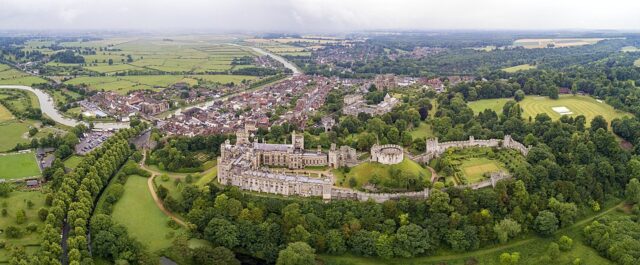
Arundel Castle Gardens in West Sussex, England, are among the country’s most celebrated historic gardens. Stretching across roughly 38–40 acres beside one of England’s longest‑inhabited castles, they blend centuries of horticultural development, formal design, and botanical richness. Visitors encounter a tapestry of terraced slopes, ornamental water features, woodland walks, themed gardens, and expansive seasonal plantings that reflect both heritage and contemporary creativity.
These gardens offer changing landscapes through the seasons, from vibrant spring bulbs to bold summer borders, autumnal hues, and winter structure. Their setting against the rolling hills of the South Downs and the river valley below enhances long views and garden experiences. Today, the gardens are widely regarded not only for their historical associations but also for their thoughtful plant combinations and design ingenuity that attract gardeners, historians, and travelers alike.
Introduction to Arundel Castle Gardens
Arundel Castle Gardens form part of the estate of Arundel Castle, founded in AD 1067 by Roger de Montgomery, Earl of Arundel, shortly after the Norman conquest of England. The castle was established as both a defensive stronghold and a noble residence overlooking the River Arun. Throughout the medieval and early modern periods, the grounds evolved along with the castle architecture, reflecting shifts in status and taste of the families who held the property.
The Dukes of Norfolk, whose lineage and titles trace back through England’s aristocratic history, have maintained Arundel Castle and its landscapes for over eight centuries. While early garden elements from the Renaissance period have not survived in their original form, the 18th and 19th centuries saw a flowering of garden design across England, and Arundel’s grounds were influenced by the broader movement toward landscaped parkland and embellished ornamental planting.
In the late 20th and early 21st centuries, a renewed focus on garden restoration and innovation reshaped the experience for visitors. Garden teams have worked to reinterpret historical terraces, reinstate classical elements such as fountains and parterres, and introduce bold contemporary planting schemes. This blend of tradition and new horticultural ideas makes the gardens both a historic site and a living, evolving landscape.
History & Design of the Gardens
The history of gardening at Arundel Castle mirrors larger trends in English garden design. While the castle was occupied from the 11th century onward, formal gardens did not appear until much later. In the 18th century, many English estates adopted landscape styles that emphasized sweeping lawns, informal planting, and an aesthetic that appeared naturalistic, influenced by designers such as Capability Brown. Although there is limited evidence of Brown’s direct involvement at Arundel, the wider movement shaped local tastes.
By the 19th century, Victorian plant hunters and garden designers brought new energy to estates like Arundel. Exotic plants from around the British Empire and beyond were introduced into gardens across England, and Arundel’s plantings reflected this enthusiasm. Terraces were planted with bold borders, and glasshouses allowed the cultivation of tender species that would not survive outdoors in the Sussex climate.
In the late 20th century, garden restoration at Arundel gained momentum. Stewards sought to honor historical garden forms while also creating imaginative spaces for modern visitors. The result is a series of distinct garden areas that combine structural elements such as retaining walls and water features with richly planted borders and thematic garden rooms.
Garden design influences at Arundel include:
- Formal terracing and axial layouts reminiscent of Renaissance gardens.
- Victorian herbaceous borders and subtropical plant collections.
- Woodland plantings that reflect Romantic and naturalistic traditions.
- Contemporary garden art and creative plant combinations that emphasize color, texture, and seasonal change.
These layered influences make the gardens both a living archive of English garden history and a place of dynamic horticultural innovation.
Explore the Key Sections of the Gardens
The Castle Terraces
The Castle Terraces occupy elevated ground directly adjacent to the castle’s medieval walls. These terraces provide sweeping views over the River Arun valley and the town of Arundel below. Historically, terraces were a way to manage steep slopes and create formal garden rooms in English estates. At Arundel, the terraces are planted with combinations of perennial borders, sculptural trees, and architectural shrubs that define pathways and focal points.
Seasonal color changes are a hallmark of the terraces. In spring, bulbs such as daffodils and tulips create bright swaths of color. Summer brings lush herbaceous borders with tall perennials like asters, rudbeckias, and phlox. Autumn sees late‑season plants and ornamental grasses adding movement and structure into the cooler months.
The Serpent Garden
The Serpent Garden is one of the most distinctive themed areas within the landscape. Its name comes from the sinuous forms created by planting beds that twist through the space like a winding river. The design invites visitors to explore curving paths flanked by bold, often contrasting plantings.
Plant selections here emphasize dramatic foliage and blooms. Garden designers have used combinations of deep purples, fiery reds, and cool greens to heighten visual impact. The Serpent Garden is especially popular during midsummer and early autumn when the borders are at their fullest expression, offering a sense of immersion in texture and color.
The Dell & Fountain Garden
Water has been a significant feature in estate gardens since the Renaissance. At Arundel, the Dell and adjacent Fountain Garden serve as focal points for water features framed by planting that accentuates their reflective surfaces. Historically, ornamental water features were statements of wealth and engineering prowess. In this area, restored fountains and pools are complemented by lush planting that thrives in the moist microclimate.
The Fountain Garden’s design creates a series of rooms where water, stone, and plantings interact. Tall grasses and moisture‑loving perennials such as astilbes and reeds line the water’s edge, while clipped hedges provide structure. The changing light of morning and evening often highlights the gardens’ atmospheric qualities.
The Wild Garden & Woodlands
In contrast to the formal terraces and themed beds, the Wild Garden embraces a more natural aesthetic. This area transitions into woodland walks where native trees, shrubs, and underplantings thrive. It provides habitat for wildlife and seasonal interest through spring ephemerals, summer flowering shrubs, and autumn leaf color.
The woodlands also incorporate designed features such as stumperies—arrangements of tree roots and trunks planted with ferns, mosses, and shade‑loving plants. These evoke Victorian plantings popularized in the 19th century, when plant hunters returned from forested regions of Asia and the Americas with species that fascinated English gardeners.
Seasonal Highlights
The gardens’ seasonal displays are a major part of their appeal. In spring, drifts of bulbs such as narcissus and tulips create bold splashes of color against fresh green growth. A spring festival of bulbs commenced in recent years, spotlighting thousands of bulbs planted under the guidance of garden staff.
Summer sees the borders filled with tall, vibrant herbaceous plants, roses in formal beds, and dramatic subtropical plants in sheltered areas. Autumn introduces a palette of golds, reds, and browns as perennials and shrubs change color and ornamental grasses sway in cooler breezes. Winter brings architectural interest through evergreen shrubs, clipped hedges, and the structure of perennial stems and seedheads.
Top seasonal blooms in the gardens include:
- Spring bulbs: daffodils, tulips, crocus.
- Summer perennials: asters, echinacea, phlox.
- Autumn interest: cosmos, sedum, ornamental grasses.
- Winter structure: evergreen hollies, clipped yews, sculptural seedheads.
Visiting Practicalities
Location & Getting There
Arundel Castle Gardens are located adjacent to Arundel Castle in the historic market town of Arundel, West Sussex. The gardens sit within walking distance of Arundel’s town center and cathedral. The position in southern England makes the site accessible from major urban centers such as London and Brighton via rail and road connections.
Admission, Opening Times & Tickets
Admission to the gardens is based on seasonal opening hours that vary throughout the year. Tickets generally provide access to both the gardens and sections of Arundel Castle, with different pricing categories for adults, children, and concessions. Visitors are encouraged to check opening times ahead of visiting, as horticultural events and special displays may affect schedules.
Best Times of Year to Visit
Each season highlights different aspects of the gardens. Spring and early summer are especially popular for bulb displays and early border blooms. Late summer and early autumn offer full herbaceous borders and rich color combinations. Winter visits provide the chance to appreciate the bones of the garden—its structure, stonework, and evergreen plantings—without the crowds.
Accessibility & Visitor Amenities
Pathways throughout the gardens vary, with some areas on sloping ground suited to moderate fitness levels. Visitor amenities typically include seating areas, restrooms, and refreshments near the entrance to the gardens. Information points and garden maps help visitors navigate key features.
Events, Conservation & Unique Experiences
Garden Walks, Tours, & Seasonal Events
Guided walks and expert talks are offered at various times, focusing on topics such as planting design, botanical history, and seasonal care. Seasonal events, particularly spring bulb celebrations, bring additional displays and thematic experiences that appeal to families, horticulturists, and photographers.
Conservation & Planting Initiatives
The gardening team at Arundel places emphasis on both plant diversity and ecological stewardship. Programs include thoughtful planting combinations that support pollinators, careful water management, and selective use of garden spaces to enhance biodiversity. Woodland areas in particular serve as habitats for native wildlife.
Photography Spots & Visitor Tips
Photographers often favor the Castle Terraces for elevated views over the valley and the Serpent Garden for its dramatic color transitions. Early morning and late afternoon light provide optimal conditions for capturing texture and form throughout the garden.
Nearby Attractions (Arundel Town & Beyond)
The gardens form part of a broader visitor experience that includes the historic town of Arundel, with its narrow streets, independent shops, and the imposing cathedral nearby. The landscape beyond the castle walls extends into the River Arun valley and the South Downs, offering additional scenic views and walking opportunities.
Events, Conservation & Unique Experiences
Garden Walks, Tours, & Seasonal Events
Throughout the gardening year, Arundel Castle Gardens host a variety of seasonal events designed to deepen visitor engagement. Among the most well-known is the Spring Tulip Festival, typically held in April, featuring over 110,000 tulips representing more than 130 varieties, carefully planted across the grounds, terraces, and formal gardens. This event has drawn national press and garden enthusiasts alike, as it transforms the estate into one of the most dramatic spring displays in England.
Other events include guided horticultural tours led by the head gardener or senior staff, offering in-depth knowledge on planting combinations, historical development, and ecological strategies. Visitors may also encounter summer sculpture exhibitions or floral installations that tie artistic interpretation with the surrounding landscape. Harvest displays and autumn garden weekends round out the calendar, celebrating seasonal changes and showcasing late-blooming perennials and foliage transitions.
These events are carefully timed with the garden’s natural rhythms, offering a deeper understanding of how plants are chosen, rotated, and coordinated with the landscape and climate of West Sussex.
Conservation & Planting Initiatives
A strong conservation ethos underpins the garden’s development. The estate follows practices aligned with biodiversity goals, habitat enrichment, and historic integrity. In the Wild Garden and woodland areas, efforts to preserve native plant species and encourage bird and insect populations are evident. Dead wood, leaf litter, and native shrubs provide shelter and food for local fauna, while pollinator‑friendly plantings have been expanded in recent years.
Soil improvement strategies include composting organic garden waste and minimal pesticide use. Water features are managed with a view to sustainable supply and habitat stability. In line with broader efforts to reduce environmental impact, glasshouse heating and irrigation systems are closely monitored for efficiency.
Moreover, the garden team regularly trials new plants for hardiness, suitability, and impact — integrating historical varieties with modern cultivars that perform well under changing climate conditions. Heritage fruit trees, rare ornamental cultivars, and specialty bulbs are all part of the planting strategy aimed at both visual impact and preservation.
Photography Spots & Visitor Tips
For those interested in capturing the garden’s beauty on camera, several locations offer ideal angles and lighting conditions. The elevated Castle Terraces provide dramatic vistas over the Arun Valley and town rooftops, especially in early morning or late afternoon when the light is soft and shadows highlight plant forms and stone textures.
The Fountain Garden is favored for its symmetry, reflective water features, and formal plantings. Meanwhile, the Serpent Garden offers opportunities to photograph strong color contrasts and dynamic curves in border design. Visitors in spring should not miss the tulip-lined paths, where bold color swathes and sharp verticals lend themselves well to close-up photography.
Photography is allowed throughout the gardens for personal use, although tripods may be restricted during busy periods. Visitors are advised to wear sturdy footwear due to mixed terrain, and to allow at least 90 minutes to explore the grounds comfortably.
Nearby Attractions (Arundel Town & Beyond)
The gardens are just one part of the broader historic and cultural experience available in the town of Arundel. Within walking distance of the castle lies Arundel Cathedral, a striking French Gothic–style church completed in 1873, commissioned by the 15th Duke of Norfolk. The cathedral’s tall spire and ornate interior make it a significant religious and architectural site.
The town itself, with its medieval street plan, antique shops, tearooms, and traditional pubs, offers a pleasant setting for a longer visit. Nearby natural attractions include the South Downs National Park, known for its chalk hills, scenic walks, and open views. The Arun River Walk allows visitors to enjoy riverside scenery and spot local birdlife, while history enthusiasts may venture further to visit Amberley Museum or Parham House and Gardens, both within a short drive.
Key Takeaways
- Arundel Castle Gardens span approximately 40 acres and feature formal terraces, themed garden rooms, woodlands, and water features developed across centuries.
- The gardens sit beside Arundel Castle, founded in AD 1067 and continuously held by the Dukes of Norfolk for over 850 years.
- Key attractions include the Castle Terraces, Serpent Garden, Fountain Garden, and Wild Garden, each offering distinct designs and seasonal interest.
- Head Gardener Martin Duncan has led extensive restoration and design work since the early 2000s, earning awards for horticultural excellence.
- Annual events such as the Tulip Festival and conservation programs highlight the estate’s commitment to beauty, history, and sustainability.
Frequently Asked Questions
1. When is the best time to visit Arundel Castle Gardens?
Spring and early summer offer the most vibrant displays, particularly during the Tulip Festival, though autumn color and winter structure also provide unique beauty.
2. Are the gardens suitable for children and families?
Yes. The gardens are accessible, feature open spaces for exploration, and often include seasonal events and displays that appeal to families.
3. How long should I plan for a visit to the gardens?
Most visitors spend 90 minutes to two hours exploring the gardens, though longer stays are common during events or when combined with a castle tour.
4. Are guided tours of the gardens available?
Yes. Guided walks led by garden staff are offered during select dates and special events, providing insights into planting design and horticultural history.
5. Can I take photographs in the gardens?
Photography for personal use is welcome, particularly in scenic areas like the Castle Terraces and Fountain Garden. Tripods may be limited during busy times.