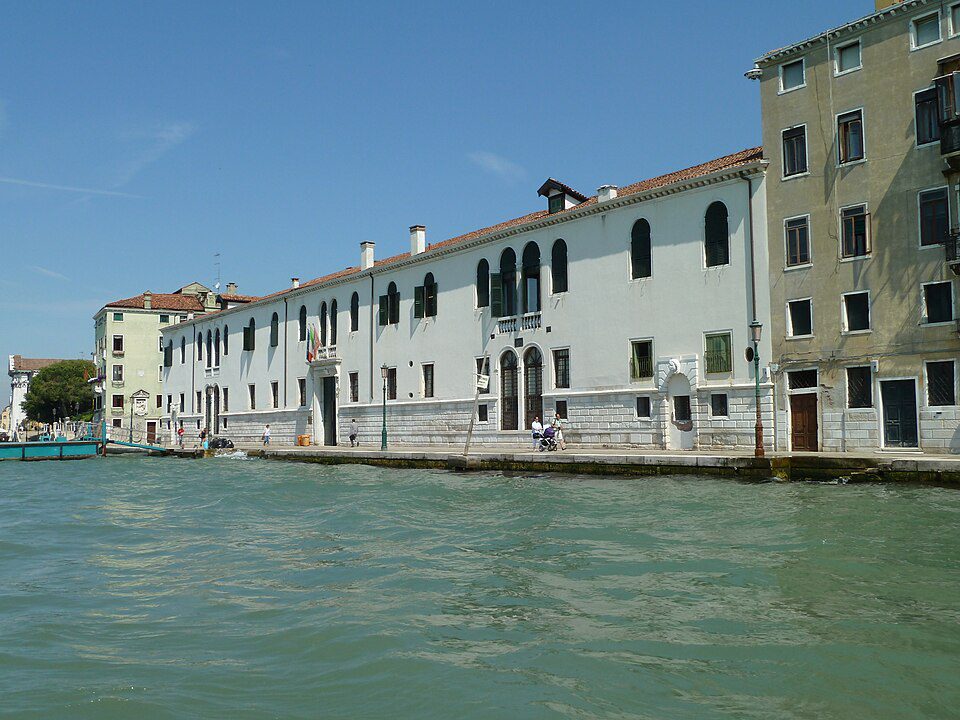
In the mid-18th century, Venice found itself at a crossroads. Once a maritime and cultural superpower, the Venetian Republic was beginning to feel the pressure of European political shifts. However, the city’s artistic identity remained strong, prompting the Venetian Senate to establish a formal institution to preserve and promote the visual arts. Thus, in 1750, the Accademia di Belle Arti di Venezia was officially founded, setting the stage for centuries of artistic achievement.
The founding of the Accademia wasn’t merely a political gesture—it was part of a broader Enlightenment-era belief in structure, education, and civic virtue. At the helm was Giovanni Battista Piazzetta (born 1682, died 1754), an established Rococo painter known for his dramatic use of shadow and emotion. Appointed the Academy’s first director, Piazzetta sought to bring serious academic rigor to the instruction of painting, sculpture, and architecture. His vision blended classical traditions with a distinctly Venetian flair, where color and movement remained central.
Piazzetta was not alone in this effort. He was supported by other significant figures, including Giovanni Battista Tiepolo (born 1696, died 1770), one of Venice’s most admired history painters, who served as an advisor and guiding influence. Architect and theorist Antonio Visentini (born 1688, died 1782) also played a critical role in shaping the Accademia’s curriculum and physical space. These men believed that disciplined training and critical study could elevate artists to moral and civic exemplars, echoing Renaissance ideals.
The early years of the Academy saw it housed near the Piazza San Marco, in a modest location that nonetheless welcomed the brightest students of the city. The institution’s prestige quickly grew, attracting both wealthy patrons and talented apprentices. As Venice faced military and economic decline, the Accademia became a beacon of cultural strength. Its founding marked a turning point—not just for Venice—but for how art was taught and respected across Italy.
Shaping Artists: The Early Curriculum and Vision
From its earliest days, the Accademia di Belle Arti di Venezia emphasized a curriculum grounded in discipline and classical technique. Drawing was the cornerstone of instruction, with students required to master human anatomy, proportion, and linear perspective. They practiced sketching from plaster casts and live models, adhering to Renaissance principles handed down through generations. The goal was clear: to produce artists who understood both the science and soul of visual expression.
The Enlightenment’s influence on the curriculum cannot be overstated. During the latter half of the 18th century, European education was moving toward empirical observation and rational structure. The Accademia mirrored these shifts by encouraging systematic study of nature, architecture, and history. Lectures on art theory, ethics, and civic responsibility were included alongside studio work, blending intellectual rigor with creative labor.
One of the most unique aspects of the early Accademia was its commitment to public engagement. Beginning in the 1760s, the school launched annual exhibitions and competitions, known as “Esposizioni Accademiche,” open to the public and judged by prominent Venetian figures. These exhibitions served both to validate student achievement and to keep the Accademia connected to the city’s social elite. Art was not made in a vacuum; it was meant to be seen, discussed, and evaluated by the community.
Financial support often came from the Venetian nobility, many of whom saw art as a symbol of refinement and civic virtue. Wealthy families such as the Pisani and Manin dynasties contributed scholarships and commissions, helping promising students rise through the ranks. This tight bond between public good and private patronage was a hallmark of the Academy’s early years. By 1800, the institution had not only produced talented artists but had also fortified Venice’s reputation as a cultural capital.
Influential Figures: Teachers, Students, and Patrons
Giovanni Battista Piazzetta, the first director, remains one of the most influential artists tied to the Accademia. Known for his emotive portraits and dramatic chiaroscuro, Piazzetta brought more than talent—he brought vision. From 1750 until his death in 1754, he established the school’s foundational values and teaching structure. His impact echoed through generations of students who learned to balance intellectual depth with emotional resonance in their work.
Among those inspired by the Academy’s mission was Francesco Hayez (born 1791, died 1882), who entered the Accademia as a student in the early 1800s and later became a revered professor. Hayez’s Romantic sensibilities brought a new emotional charge to historical painting, with works such as The Kiss symbolizing both love and nationalistic sentiment. He mentored countless younger artists, shaping 19th-century Italian art with a deeply personal yet politically aware style. His long tenure at the Accademia made him a beloved and transformative figure.
Another towering name in European art, Antonio Canova (born 1757, died 1822), was closely associated with the school, though never formally a student. Canova gave lectures and demonstrations, especially during his frequent visits to Venice, where he shared his neoclassical sculptural techniques. His influence helped guide the Academy’s sculptural department and inspired students to merge beauty with disciplined form. Canova’s support lent the institution national prestige during a time of political uncertainty.
The success of the Accademia was also due in large part to its patrons. The Pisani family, prominent merchants and politicians, sponsored studio spaces and funded international study trips for the most gifted students. The Manin family, whose name was associated with the last doge of Venice, donated art and educational materials. These relationships were not mere transactions—they formed a cultural partnership. Patrons understood that their legacy was intertwined with the flourishing of Venetian art.
The Move to the Carità Complex (1807)
The year 1807 marked a pivotal moment for the Accademia. Under Napoleon’s rule, Venice underwent significant changes, including the secularization and repurposing of religious properties. One such transformation involved the former Santa Maria della Carità monastery, which was handed over to the Accademia. This shift gave the school a new, expansive home and signaled its importance within the newly organized civic framework.
The Carità complex was no ordinary building. Designed in part by Andrea Palladio (born 1508, died 1580), the famed Renaissance architect, its classical lines and spacious interiors were ideal for an academic institution. The large cloisters and chapels provided ample room for studios, galleries, and classrooms. Over the next century, these spaces would witness thousands of students learning the techniques and philosophies of great European masters.
This move also coincided with a shift in the Academy’s direction. With the dissolution of the Republic of Venice and the arrival of French and later Austrian administrators, the Accademia had to navigate political uncertainty. However, its new location gave it a powerful symbolic presence—it was no longer tucked away near San Marco, but boldly positioned within a major historic site. The Academy became a cultural stronghold in a time of civic upheaval.
By moving into the Carità complex, the Accademia also inherited a significant portion of Venice’s artistic legacy. The halls began to fill with works by Bellini, Titian, Veronese, and Tintoretto, many confiscated from churches closed by Napoleon. This eventually led to the founding of the Gallerie dell’Accademia, which would share the complex with the school for nearly two centuries. The move in 1807 forever cemented the Academy’s central role in conserving and teaching Venetian art.
Role in 19th and 20th Century Art Movements
The 19th century brought a whirlwind of change to Italy, including national unification, industrialization, and the redefinition of cultural identity. The Accademia was at the center of these transformations, not merely observing but actively shaping them. Francesco Hayez, by now a professor, became a bridge between traditional history painting and the nationalist fervor of the Risorgimento. His students carried this blend of art and civic spirit across Italy, influencing public monuments, church art, and historical canvases.
In the late 19th and early 20th centuries, the Academy welcomed new voices who embraced realism and, eventually, modernism. One of the most notable was Ettore Tito (born 1859, died 1941), who became director of the Academy in the early 1900s. Known for his academic realism and luminous brushwork, Tito steered the school through turbulent decades while resisting the full abstraction of emerging modern styles. He also promoted gender inclusion by supporting female students and instructors, a rare move at the time.
The founding of the Venice Biennale in 1895 gave the Accademia a new international platform. Students and faculty engaged with artists from across Europe, exposing them to Impressionism, Symbolism, and the early seeds of Futurism. While the Academy never fully embraced avant-garde movements, its artists absorbed and adapted these influences into uniquely Venetian interpretations. The result was a dynamic synthesis of old and new that kept the institution artistically relevant.
The Accademia’s faculty and alumni often walked a delicate line between tradition and innovation. Though the Academy emphasized drawing and classical methods, many students explored bolder ideas, especially after World War I. The school encouraged respectful debate, allowing for creative divergence within a structured framework. This balance helped it survive the often-destructive trends that undermined other art institutions during the 20th century.
Modern Era: Challenges, Growth, and Legacy
In 2004, the Accademia officially parted ways with the Gallerie dell’Accademia, ending a 197-year coexistence in the Carità complex. This allowed the museum and the school to develop independently, giving each more space and autonomy. The school moved into a nearby structure on the Dorsoduro side of Venice, while the gallery focused entirely on conserving its historical masterpieces. Though the separation was bittersweet, it allowed the Academy to modernize and reassert its educational mission.
Since then, the Accademia has embraced contemporary practices, expanding its curriculum to include digital arts, multimedia installations, and design. Yet it remains rooted in classical training, ensuring that students understand foundational skills before experimenting with new forms. This approach has kept the school relevant in a digital age without sacrificing artistic integrity. The blend of old and new continues to define the Accademia’s unique identity.
The school’s alumni network plays a vital role in preserving and promoting its legacy. Many graduates have become conservators, art historians, and educators who carry forward the Academy’s emphasis on skill, discipline, and civic engagement. Restoration projects across Venice, from ancient churches to fragile frescoes, often involve Accademia-trained professionals. In a city vulnerable to environmental decay, the Academy remains a vital guardian of cultural memory.
International partnerships have further extended the Academy’s reach. Exchange programs with institutions in Paris, Vienna, and New York allow students to learn across borders while still appreciating their Venetian heritage. Today, the Accademia di Belle Arti di Venezia stands as both a traditional art school and a forward-thinking incubator. Its continued success reflects a deep commitment to the timeless value of beauty, craftsmanship, and artistic responsibility.
Why the Accademia Still Matters Today
In an age of fleeting digital images and disposable content, the Accademia di Belle Arti di Venezia reminds us of the enduring power of art grounded in tradition. While many art schools chase trends, the Accademia maintains a structured approach that values drawing, anatomy, and visual clarity. Its model proves that deep roots are not a hindrance—they are a foundation for growth. The result is a school that continues to produce thoughtful, skilled, and culturally literate artists.
The Accademia also plays a vital role in nurturing talent while fostering community. It offers scholarships, exhibitions, and mentorships that provide young artists with the tools to succeed. Its public events create dialogue between creators and the wider community, a tradition that dates back to the 18th century. This integration of art and public life ensures that the Academy’s impact is felt far beyond its walls.
Moreover, the Academy is deeply committed to cultural preservation. Through restoration projects, archival work, and art history research, it helps protect the spiritual and visual heritage of Venice. In doing so, it connects modern citizens to centuries of tradition, serving as a living bridge between past and future. In an increasingly globalized world, this rootedness in place and history is both rare and valuable.
Lastly, the Accademia matters because it symbolizes something larger than art itself. It represents continuity, excellence, and the belief that beauty is a form of truth. For those who visit Venice and walk through its historic neighborhoods, the presence of the Academy serves as a silent promise that the city’s soul endures. In every generation of graduates, that promise is renewed and carried forward.
Key Takeaways
- The Accademia di Belle Arti di Venezia was founded in 1750 to promote artistic excellence in a declining republic.
- Notable figures like Giovanni Battista Piazzetta, Francesco Hayez, and Antonio Canova shaped its direction and prestige.
- The school moved to the Carità complex in 1807, sharing space with the Gallerie dell’Accademia until 2004.
- Throughout the 19th and 20th centuries, the Academy balanced classical training with selective modern innovation.
- Today, the Academy blends tradition and modernity while continuing to influence global art and conservation efforts.
FAQs
- When was the Accademia di Belle Arti di Venezia founded?
The Academy was founded in 1750 by the Venetian Senate to formalize art education. - Who were the most influential figures in the Academy’s history?
Piazzetta, Tiepolo, Hayez, Canova, and Tito were among the most important names tied to its legacy. - Why did the Academy move to the Carità complex?
In 1807, under Napoleon’s reforms, the Academy was relocated to the former monastery to provide more space and prominence. - What is the relationship between the Accademia and the Gallerie dell’Accademia?
The Academy and gallery shared a home until 2004, after which they became separate institutions. - How is the Academy relevant today?
It continues to offer high-quality classical and modern art education, supporting cultural preservation and creative development.