The Accademia di Belle Arti di Napoli traces its prestigious origins to 1752, when it was officially founded under the enlightened reign of Charles III of Bourbon, King of Naples and later King of Spain. His vision was to transform Naples into a beacon of art, science, and education that could rival the artistic capitals of Europe, such as Paris and Rome. Inspired by the Accademia di San Luca in Rome and the French Royal Academy of Painting and Sculpture, Charles III aimed to establish an institution that could formally train artists in the classical tradition. The Accademia was first located within the Palazzo degli Studi, today part of the Museo Archeologico Nazionale di Napoli, which allowed it to thrive within the city’s intellectual heart.
The early years of the academy emphasized instruction in drawing, anatomy, perspective, and architecture, all rooted in the classical ideals of harmony, proportion, and rational design. Students were expected to study ancient sculpture, Renaissance masters, and the human form with an intensity that reinforced both skill and discipline. This environment produced a generation of academically trained artists equipped to fulfill commissions from churches, the royal court, and aristocratic patrons. The Neapolitan Baroque style, already dominant in the region, was gradually fused with emerging Neoclassical aesthetics, producing a distinct and refined artistic language.
The Role of Charles III and Bourbon Patronage
Charles III was not merely a political figure but a cultural catalyst who deeply understood the importance of state-sponsored education. His patronage of the arts was rooted in a broader Bourbon strategy to stabilize the kingdom through cultural and civic development. He personally financed the early operations of the academy, appointed renowned painters and sculptors as professors, and ensured the involvement of leading intellectuals in curriculum development. His reforms extended to other civic institutions as well, such as the Royal Printing Press and the Capodimonte Porcelain Factory, aligning artistic and economic development.
This spirit of elite patronage continued through the 18th century, with successive Bourbon monarchs upholding the academy as a symbol of dynastic pride. Though political upheavals occasionally disrupted funding or instruction, the academy endured due to the strong foundation laid by Charles III and his successors. Its motto, often rendered as “Ars Docet et Regit” (“Art Teaches and Governs”), reflected the belief that art was not merely aesthetic but a tool of civilizational order. By the dawn of the 19th century, the Accademia di Belle Arti di Napoli stood as a vital pillar in both the cultural and political life of Naples.
Growth Through the 18th and 19th Centuries
As the 18th century waned, the academy entered a period of tremendous growth, fueled by political reforms and the increasing importance of visual culture in public life. The curriculum expanded to include disciplines such as decorative arts, scenography, and restoration. Courses in anatomy were enriched through dissections and the study of antique casts, while architectural training took students into the streets of Naples to study historical buildings firsthand. Under this vigorous program, the Accademia gained renown across the Italian peninsula and beyond.
The Napoleonic era brought disruption and change to Naples, and the academy was not immune. During the rule of Joseph Bonaparte and later Joachim Murat, French educational reforms were imposed on the institution, placing more emphasis on utility and civic art. While some conservative voices resisted these changes, others embraced them as opportunities to revitalize academic traditions. When the Bourbon monarchy was restored in 1815, the academy readjusted to blend French innovations with its own classical roots, ensuring its survival amid political volatility.
Key Artists and Educators of the 19th Century
The 19th century ushered in a golden age for the academy, highlighted by the appointment of master artists like Domenico Morelli (1823–1901) and Filippo Palizzi (1818–1899) to key teaching positions. Morelli, known for his religious and historical canvases, emphasized emotional expression and painterly technique, moving away from rigid academicism. Palizzi, on the other hand, championed realism and naturalism, introducing students to plein air painting and animal studies—a radical shift at the time. These two artists not only instructed but inspired, serving as mentors to a new generation of Italian painters.
Their influence extended beyond their lifetimes, with students like Giuseppe De Nittis and Antonio Mancini going on to earn international acclaim. The presence of such faculty turned the Accademia into an incubator for revolutionary ideas while maintaining its reverence for tradition. Palizzi, in particular, played a crucial role in pushing the academy toward modernity, without severing its classical roots. By the late 1800s, the Accademia di Belle Arti di Napoli was widely regarded as one of Italy’s foremost centers of artistic excellence.
Influence on Neapolitan and Italian Art
The Accademia’s impact on both Neapolitan and broader Italian art was substantial, especially during Italy’s unification and industrialization. Through its well-trained alumni, the academy shaped the look and feel of the public realm, influencing church interiors, civic monuments, and royal commissions. The techniques taught within its walls spread across the Kingdom of the Two Sicilies and, later, the unified Italian state. Students returning to their hometowns often established satellite schools or studios, thus disseminating the Accademia’s approach throughout Southern Italy.
By reinforcing a strong foundation in classical technique while embracing local traditions, the academy created a distinct Neapolitan aesthetic. This style merged Mediterranean vibrancy with academic rigor, combining sun-drenched color palettes with balanced compositions. The result was a body of work that stood apart from the darker tones of Milan or the mysticism of Florentine Symbolism. Naples became known not just for its music and cuisine, but for its refined visual art, thanks in large part to the academy’s alumni.
Mentorship and the Rise of New Artistic Schools
Mentorship played a critical role in this influence, as senior artists passed down their techniques, philosophies, and personal networks to promising students. Morelli and Palizzi, for instance, mentored Giacomo di Chirico and Francesco Paolo Michetti, both of whom would go on to shape regional art movements. These personal relationships fostered loyalty to the academic method, even as artistic tastes changed. Unlike some northern institutions, the Accademia never fully abandoned tradition in favor of avant-garde experimentation.
This generational mentorship also ensured that regional schools of art, like the Posillipo School, continued to develop without losing their classical underpinnings. The Posillipo School, with its focus on natural landscapes and light, was populated by artists trained at the academy who found a way to bridge nature and academia. Thus, the academy not only produced individual artists but also seeded entire movements. By the late 19th century, its influence was deeply woven into the cultural identity of Naples and Southern Italy.
Twentieth-Century Transformation
The 20th century brought rapid political and social changes to Italy, and the Accademia di Belle Arti di Napoli had to adapt to survive. During the early decades of the century, the rise of National Socialism, Fascism, and other ideological movements across Europe affected artistic institutions deeply. In Italy, art education was increasingly politicized under the Fascist regime, with state-sponsored art required to reflect nationalist themes, rural virtue, and militaristic strength. The academy, though historically rooted in classical ideals, faced censorship and pressure to align with state doctrine.
World War II brought further challenges, including damage to the city and disruption of academic life. Several faculty members and students were drafted or displaced, and the institution operated at reduced capacity during the war years. After 1945, a new wave of democratic reforms swept through Italy, and the academy reemerged with a fresh purpose. It gradually incorporated new subjects and pedagogical methods that reflected the evolving postwar art scene, including abstraction, expressionism, and modern design.
Notable Alumni of the Modern Era
In the decades following the war, the academy nurtured a host of artists who brought Italian art into the modern era. Figures like Gennaro Villani (1885–1948) and Emilio Notte (1891–1982) emerged from the academy’s ranks and made their mark on national and international stages. Villani was known for his vibrant Neapolitan street scenes and expressionistic brushwork, while Notte became associated with the Italian Futurist and later Expressionist movements. Both exemplified how the academy’s classical training could coexist with and even enhance modern artistic innovation.
The 1960s and 70s marked an especially dynamic time, as new media such as photography, video, and installation art were introduced into the curriculum. Young artists began experimenting with form and material, but the academy maintained its rigorous foundation in drawing and composition. This balance helped it retain its prestige in an increasingly fragmented and politicized art world. The legacy of academic training continued to anchor Naples’ contribution to modern Italian art throughout the century.
Architectural and Cultural Significance
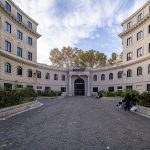
The Accademia di Belle Arti di Napoli is more than a school; it is a landmark of cultural and architectural significance. Located along Via Santa Maria di Costantinopoli, the building sits within Naples’ UNESCO-listed historic center. Its imposing façade blends Baroque ornamentation with Neoclassical symmetry, reflecting the dual artistic traditions nurtured within its walls. Inside, vaulted ceilings, historic frescoes, and marble staircases create an atmosphere steeped in history and grandeur.
Walking through its corridors is like stepping back in time. Students still study in studios filled with plaster casts of Roman statues and oil portraits of former directors and faculty. The very stones of the building seem to whisper with the voices of past masters, making it a sanctuary for those serious about their craft. Its location in the heart of Naples also places it in daily contact with the city’s vibrant street life, infusing classical instruction with contemporary urgency.
Museum and Gallery Connections
One of the most striking features of the academy is its direct connection to the Galleria dell’Accademia, a permanent exhibition space showcasing the works of students, professors, and visiting artists. This gallery functions as a laboratory of visual culture and a public platform for the institution’s best work. The academy also collaborates closely with leading cultural institutions, including the Museo di Capodimonte and the Museo Archeologico Nazionale di Napoli, strengthening its academic and civic presence.
Such collaborations allow students to study masterpieces up close, fostering a deeper understanding of artistic heritage. The relationship between the academy and Naples’ museums is not one of mere convenience but of shared mission. Both seek to preserve and advance the visual traditions that define Neapolitan identity. Through rotating exhibitions, public lectures, and restoration projects, the academy reinforces its role as a cultural cornerstone of the city.
Educational Programs and Curriculum Today
Today, the Accademia di Belle Arti di Napoli continues its mission as a leading institution for fine arts education, adapting classical instruction to meet modern demands. The academy offers a broad range of degree programs, including Bachelor’s (Diploma Accademico di Primo Livello) and Master’s (Diploma Accademico di Secondo Livello) tracks in Painting, Sculpture, Scenography, Graphic Arts, Art Restoration, and Design. Each program emphasizes a studio-based model, combining hands-on practice with theoretical coursework. Students are expected to demonstrate both artistic sensitivity and intellectual rigor in their final works.
Despite the inclusion of contemporary subjects, the Accademia never neglects its classical roots. Life drawing, compositional theory, and art history remain core pillars of the curriculum. Professors instill respect for the old masters—Michelangelo, Caravaggio, Titian—while encouraging students to develop their own voice. Instruction is immersive and personal, often conducted in small ateliers, where students engage in critiques, experiments, and collaborative projects.
International Collaborations and Reputation
Over the past few decades, the Accademia has broadened its international reach through strategic partnerships and exchange programs. It participates in the Erasmus+ program, allowing students and faculty to collaborate with counterparts in France, Germany, Spain, and beyond. This has helped transform the academy into a crossroads of global artistic ideas, without compromising its Italian identity. Workshops with visiting lecturers and study-abroad opportunities ensure that students remain competitive on the world stage.
Moreover, the Accademia is frequently represented at biennials and major international exhibitions. Its students have exhibited at events such as the Venice Biennale, the Biennale de Lyon, and the Documenta in Kassel, showcasing the enduring vitality of Neapolitan artistic training. These global interactions strengthen the institution’s prestige and bring fresh energy into its studios. The academy is now recognized as a cultural envoy for Southern Italy, representing not just a school but a worldview shaped by history, tradition, and creativity.
Legacy and Continuing Influence
The legacy of the Accademia di Belle Arti di Napoli is both profound and enduring. It has influenced generations of artists, architects, designers, and scholars since the mid-18th century. While many art institutions have abandoned their traditions in favor of trend-chasing, the Accademia has successfully balanced reverence for the past with a keen eye on the future. Its alumni continue to shape Italy’s cultural landscape through museum directorships, public commissions, and international exhibitions.
Beyond individual success stories, the academy has had a powerful collective influence on the development of Italian visual education. Its model of combining hands-on training with intellectual formation has been emulated by art schools throughout the country. Moreover, the Neapolitan focus on sensory richness and technical precision has become a hallmark of Italian art more broadly. The academy’s insistence on maintaining the dignity of the artist—as a craftsman, thinker, and cultural agent—remains as relevant today as it was in 1752.
The Accademia in Popular Imagination
Over time, the Accademia has also entered the realm of popular culture and collective memory. It has been featured in travel literature, films, and documentaries that romanticize Naples as a city of contradictions—gritty yet refined, chaotic yet cultured. The institution is frequently mentioned in works that explore Southern Italy’s artistic soul, such as novels by Elena Ferrante and travel pieces by Norman Lewis. These portrayals underscore the academy’s symbolic role as a guardian of Naples’ creative spirit.
Visitors from around the world often pass by the academy without realizing the depth of history contained within its walls. Yet for those in the know—artists, students, historians—it is a sacred site. The Accademia di Belle Arti di Napoli is not merely an art school. It is a living tradition, a monument to Italian excellence, and a lighthouse of classical integrity in a world that often forgets its roots.
Key Takeaways
- The Accademia di Belle Arti di Napoli was founded in 1752 by Charles III of Bourbon to promote classical artistic education in Naples.
- Throughout the 18th and 19th centuries, the academy grew under the influence of prominent artists like Domenico Morelli and Filippo Palizzi.
- The institution played a crucial role in shaping Neapolitan and Italian visual culture through academic rigor and regional pride.
- In the 20th century, the academy adapted to political upheaval, war, and modern art trends without abandoning its classical roots.
- Today, it offers internationally respected programs and serves as a cultural ambassador for Southern Italy.
Frequently Asked Questions (FAQs)
- Who founded the Accademia di Belle Arti di Napoli and when?
Charles III of Bourbon founded the academy in 1752 as part of a broader cultural reform in Naples. - What subjects are taught at the academy today?
The academy offers programs in painting, sculpture, scenography, restoration, graphic arts, and design at the bachelor’s and master’s levels. - Has the academy produced any famous artists?
Yes, notable alumni include Filippo Palizzi, Domenico Morelli, Gennaro Villani, and Emilio Notte, among others. - Where is the academy located?
It is situated in Via Santa Maria di Costantinopoli, near Naples’ historic center and several major museums. - Can international students attend?
Yes, the academy participates in Erasmus+ and has exchange agreements with institutions across Europe and beyond.