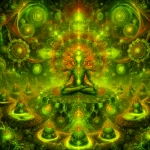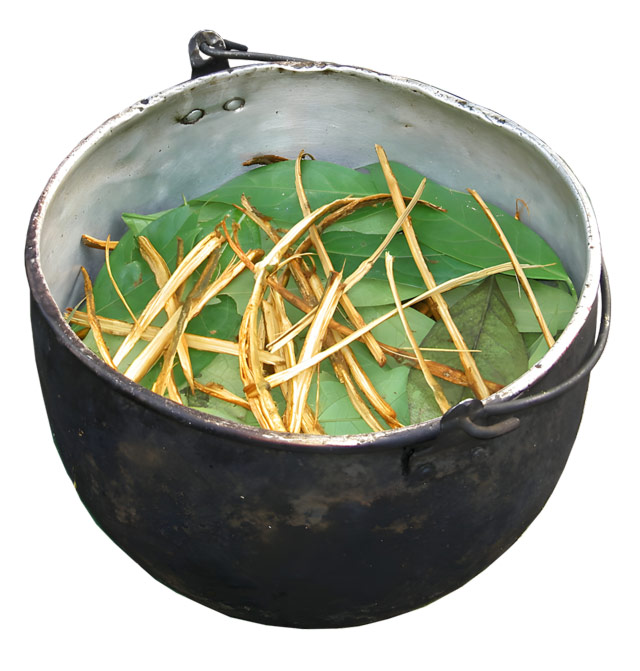
Ayahuasca is a sacred Amazonian brew made from the Banisteriopsis caapi vine and the leaves of Psychotria viridis. Indigenous communities in present-day Peru, Brazil, and Colombia have used it for centuries in spiritual ceremonies. While exact dates are uncertain, anthropologists suggest its ritual use predates European contact in the 1500s. Ayahuasca and visual arts are closely linked because the brew often produces intense imagery that artists later translate into painting, textiles, and carvings.
In traditional ceremonies, a healer known as a curandero guides participants through the experience. The ceremony usually takes place at night, with chanting called icaros shaping the atmosphere. These songs are believed to guide visions and restore spiritual balance. Visual sensations during the ritual often include serpents, geometric grids, and radiant patterns that feel alive.
Indigenous Traditions and Spiritual Framework
The cultural framework surrounding ayahuasca is deeply rooted in family lineage and apprenticeship. A healer might begin training in adolescence and continue for decades before leading ceremonies. The knowledge passes orally, from elder to student, rather than through written texts. Responsible historical speculation suggests that visual motifs developed alongside these oral traditions, though exact timelines remain thin in early records.
Ayahuasca and visual arts connect because the ceremony is not merely medicinal but symbolic. Participants describe layered landscapes, luminous animals, and ancestral presences. These elements later appear in textiles, body paint, and mural work. The artistic record becomes a kind of visual testimony to spiritual encounters.
Indigenous Amazonian Visual Language and Sacred Geometry
Among the most recognized visual traditions tied to ayahuasca is that of the Shipibo-Conibo people of eastern Peru. Their kené designs feature intricate, maze-like lines arranged in repeating symmetry. These patterns appear on textiles, pottery, and even skin. Many Shipibo artists explain that the designs reflect visions experienced during ceremonies.
Kené is not random decoration but a structured visual language. Each line has direction and rhythm, much like music. Some healers claim they can “see” songs as patterns, blending sound and image into one system. This connection strengthens the bond between ayahuasca and visual arts.
Kené Designs and Shipibo-Conibo Artistic Cosmology
The late Pablo Amaringo, born November 24, 1938, in Tamanco, Peru, played a key role in bringing these ideas to global audiences. Though not Shipibo himself, he grew up among Amazonian communities and apprenticed under the healer Juan Tangoa in the 1950s. A severe illness in the late 1970s ended his ceremonial practice. In 1988, he founded the Usko-Ayar Amazonian School of Painting in Pucallpa.
Shipibo artists traditionally learned through family instruction rather than formal academies. By the late twentieth century, collaborations between Indigenous painters and foreign collectors began to grow. This exchange created new economic opportunities but also new tensions. Ayahuasca and visual arts became part of an international conversation.
The geometry seen in kené often resembles flowing rivers or branching vines. Observers sometimes compare it to digital fractals, though it predates computers by generations. Responsible historical speculation suggests these patterns evolved as a mnemonic system to remember songs and healing knowledge. Whether symbolic or literal, they remain central to Amazonian artistic identity.
Pablo Amaringo and the Rise of Visionary Ayahuasca Painting
Pablo Amaringo’s life bridges the worlds of shamanic practice and international art. Born in 1938, he claimed to have trained with Juan Tangoa beginning around 1954. After illness prevented him from continuing as a healer, he began painting full-time in the early 1980s. He died on November 16, 2009, leaving behind a vivid legacy.
His paintings often depict celestial cities, radiant serpents, and layered jungles glowing with light. The works are dense with color, often acrylic on canvas. In 1991, anthropologist Luis Eduardo Luna collaborated with him on the book “Ayahuasca Visions.” That publication helped spread ayahuasca and visual arts into galleries beyond Peru.
From Shamanic Apprentice to International Artist
Amaringo’s founding of the Usko-Ayar school in 1988 marked a turning point. The school trained young artists to paint Amazonian cosmology with discipline and pride. Students followed structured lessons, blending traditional imagery with formal technique. This partnership between teacher and student created continuity.
Exhibitions of his work appeared in Europe and North America in the 1990s. Collectors praised the intricate detail and spiritual depth. Some critics questioned whether commercialization altered authenticity. Even so, his influence on visionary painting remains strong.
Ayahuasca and Western Psychedelic Art Movements
The 1960s psychedelic movement in the United States introduced altered-state imagery into popular culture. Artists experimented with bright colors and swirling patterns inspired by consciousness expansion. While many used synthetic substances, some later explored ayahuasca ceremonies in South America. This exploration influenced modern visionary art.
Alex Grey, born November 29, 1953, became one of the most recognized figures in sacred art circles. He married Allyson Grey in 1977, forming a creative partnership. Together they founded the Chapel of Sacred Mirrors in 2008 in Wappinger, New York. Their collaborative works often feature luminous anatomy and spiritual grids.
From 1960s Counterculture to Contemporary Visionary Art
The visual language of Western psychedelic art includes fractals, radiant skeletons, and cosmic eyes. These motifs overlap with imagery described in ayahuasca ceremonies. Ayahuasca and visual arts thus share aesthetic themes across continents. Yet cultural origins remain distinct.
Some artists openly credit Indigenous inspiration. Others blend influences without clear attribution. Responsible discussion requires acknowledging both appreciation and appropriation. The global art market has amplified these debates since the 1990s.
Symbolism, Serpents, and Sacred Imagery in Ayahuasca Art
Certain motifs appear repeatedly in ayahuasca-inspired work. The serpent, often identified with the anaconda, symbolizes power and transformation. Jaguars also feature prominently, representing strength and vision. Bright geometric webs frame these animals in many paintings.
These images are not random fantasy. They carry cultural meaning tied to healing and cosmology. Ayahuasca and visual arts intersect where symbolism meets experience. The result is art that feels charged with movement.
Recurring Motifs Across Cultures
Common symbols include:
- Serpents and anacondas
- Jaguars and jungle guardians
- Luminous cities
- Plant spirits
Western artists sometimes interpret these symbols in abstract form. Indigenous artists often depict them within ecological context. Responsible historical speculation suggests serpent imagery may relate to the vine itself, which coils like a snake. This interpretation remains debated among scholars.
The intensity of color in these works often reflects reported visual brightness during ceremonies. Hyper-detailed brushwork mimics layered visions. Patterns ripple like heat waves over the canvas. Such techniques reinforce the immersive quality.
Ayahuasca Retreat Tourism and Commercial Visual Culture
Since the early 2000s, retreat centers in Peru and Brazil have expanded rapidly. Murals decorate ceremony halls with bright serpents and geometric forms. Social media after 2010 amplified this aesthetic worldwide. Ayahuasca and visual arts became part of branding.
Many centers commission local artists for large-scale paintings. This practice can support community income. However, it can also shift sacred imagery into marketing material. The tension remains visible.
Branding, Murals, and the Globalization of Visionary Aesthetics
Retreat logos often feature vines, feathers, and glowing eyes. Digital art spreads quickly through online platforms. Younger artists born after 1990 experiment with animation and virtual reality. The visual style continues evolving.
Conservative observers argue that tradition should not be diluted for profit. Cultural continuity matters for future generations. Partnerships must respect origin communities. Responsible growth requires clear boundaries.
The Future of Ayahuasca-Inspired Visual Arts
Museums began exhibiting ayahuasca-related art more frequently after 2010. Academic conferences on psychedelic aesthetics have grown since 2015. Younger Indigenous artists now combine kené with modern media. This blend keeps tradition alive.
Digital tools allow immersive simulations of visionary space. Some artists born in the 1990s explore virtual galleries. Ayahuasca and visual arts may expand into new formats. Yet core symbols remain rooted in the jungle.
Preservation, Innovation, and Cultural Responsibility
Preservation depends on education and respect. Schools like Usko-Ayar continue teaching disciplined technique. Families pass kené knowledge through generations. Cultural memory holds strong.
Innovation will likely continue alongside tradition. Responsible historical speculation suggests that future artists may integrate augmented reality while maintaining sacred motifs. The balance between commerce and reverence will shape the field. The story of ayahuasca and visual arts is still unfolding.
Key Takeaways
- Ayahuasca and visual arts share deep roots in Amazonian spiritual traditions.
- Shipibo kené designs translate ceremonial visions into structured geometry.
- Pablo Amaringo (1938–2009) helped globalize visionary painting.
- Western artists like Alex Grey expanded psychedelic aesthetics after 1960.
- Commercial growth since 2000 has reshaped how sacred imagery circulates.
FAQs
- What is ayahuasca made from?
- Who was Pablo Amaringo?
- How are kené patterns connected to ceremonies?
- Did Western psychedelic art influence ayahuasca painting?
- Are retreat centers changing traditional imagery?