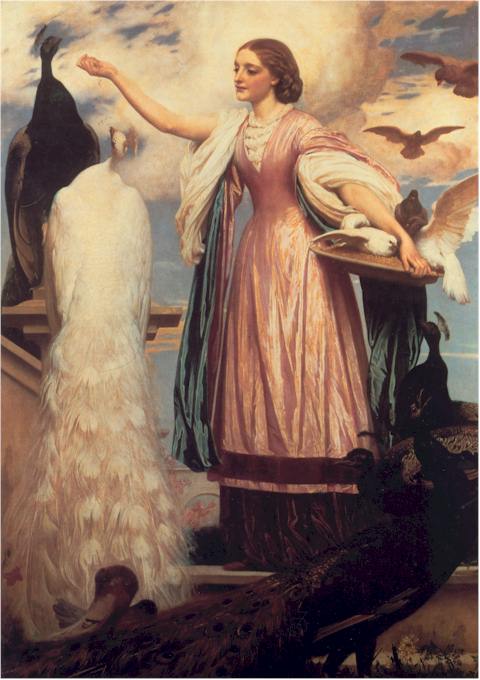
The peacock entered European art through early Christian tradition, where it symbolized renewal and eternal life. Writers of the early Church believed the peacock’s flesh did not decay, a notion that made the bird a fitting emblem for resurrection. Artists in the late Roman world placed peacocks on sarcophagi, mosaics, and carved stone panels, usually in pairs flanking a fountain or chalice. These arrangements pointed toward the hope of life restored. The bird’s natural beauty also appealed to craftsmen. Its upright posture and long feathers added grace to architectural ornament, giving quiet dignity to Christian spaces that valued balance and order.
As the centuries passed, the peacock remained a familiar figure in church decoration. When used carefully, it gave a building or manuscript a sense of refinement rooted in tradition. Artists knew that viewers would recognize the bird’s old meaning, even if they did not know every detail of its symbolism.
Byzantine Splendor
In the Byzantine world, the peacock reached its full artistic richness. Craftsmen used deep blues and shimmering golds to highlight the bird’s regal bearing, placing it in mosaics, textiles, and painted icons. Byzantine art favored symmetry, and the peacock’s graceful form suited this perfectly. You often see two peacocks placed on either side of a central vessel, creating a calm, balanced design that reflects the empire’s taste for harmonious composition.
Metalworkers and enamel artists in Constantinople produced small objects—crosses, reliquaries, and liturgical vessels—decorated with stylized peacock feathers. The repeating eye pattern of the tail became a natural decorative motif. These works did more than adorn church interiors; they showed the skill of Byzantine craftsmen who understood how to turn a living creature into a disciplined symbol of heavenly order.
Mughal and Persian Influences
Farther east, the peacock held a proud place in Mughal and Persian art, where its feathers were celebrated for their brilliance. Court painters used the bird’s sweeping tail to add movement and flourish to palace scenes. Jewelers and textile makers incorporated peacock motifs into garments, carpets, and decorative weapons, giving these objects a touch of courtly luxury. When European travelers encountered these works, they brought back both stories and objects that later influenced western decorative trends.
These eastern traditions made the peacock a bridge between cultures. Even if a European decorator never saw an actual Mughal miniature, the idea of the richly colored peacock entered western taste through trade and the exchange of gifts. This helped prepare the ground for the bird’s return in later centuries.
Victorian Revival
The 1800s saw a renewed interest in peacock imagery, especially in Britain. Victorian designers, inspired by both medieval revivalism and imported Asian art, embraced the bird for its color and elegant lines. Wallpapers, textiles, ceramics, and stained glass from this era often feature elaborate peacock motifs. The long tail, with its many “eyes,” suited Victorian taste for ornate patterning. Designers treated the bird not only as a symbol but as a decorative showpiece that brought variety and liveliness into the home.
Some Victorian painters also included peacocks in garden scenes and interior views, using their striking plumage to add a sense of luxury or quiet drama. The peacock became a familiar emblem of refined domestic life, suggesting a household that appreciated both beauty and tradition.
Jewelry and Metalwork
Jewelry makers found the peacock’s shape ideal for brooches, hairpieces, and pendants. Using enamel, colored stones, and filigree, craftsmen highlighted the bird’s feathers with careful precision. Silverworkers carved peacocks into mirror frames, small boxes, and serving pieces, giving everyday objects a touch of elegance rooted in centuries of symbolism. In both large and small forms, the peacock carried a sense of grace and craftsmanship that suited homes seeking stability and charm.
These decorative pieces kept the peacock alive in the imagination of ordinary families. Even a modest home might contain a ceramic plate or embroidered cloth bearing the bird, a quiet reminder of the long artistic tradition that stretched from early Christian mosaics to the households of the modern age.