Voodoo art, sometimes spelled Vodou or Vodun depending on the region, remains one of the most misunderstood traditions in global religious art. Its dark, mystical reputation in the Western imagination clashes with the deeply sacred and symbolic roots it holds for practitioners. Rich in history, steeped in symbolism, and grounded in spiritual duty, Voodoo art tells stories not only of gods and ancestors, but also of resistance, survival, and identity. This article peels back the layers of myth and misinterpretation to explore the deeper, darker history behind the popular depictions and misuse of Voodoo art.
Roots in West Africa and the Haitian Diaspora
The foundation of Voodoo art lies in the religious practices of the Fon and Ewe peoples of present-day Benin and Togo. Known traditionally as Vodun, this spiritual system emphasized ancestor worship, divine spirits called Loa, and the sacred nature of ritual objects. These beliefs traveled across the Atlantic during the transatlantic slave trade, which began in the 1500s and forced millions into bondage in the Americas. Through pain and survival, enslaved Africans preserved their spiritual traditions, which evolved and adapted in places like Haiti, Cuba, and Louisiana.
In Haiti, Vodou emerged as a hybrid faith, blending African deities with Roman Catholic saints introduced by French colonizers. While colonial authorities saw it as a dangerous cult, practitioners understood Vodou as a sacred link to ancestors and divine guidance. Ritual objects such as bottles, flags, and painted altars were not created for public consumption but served specific religious purposes. Artistic expression in this world was less about ego and more about spiritual presence and reverence.
From Vodun to Vodou: A Cultural Continuum
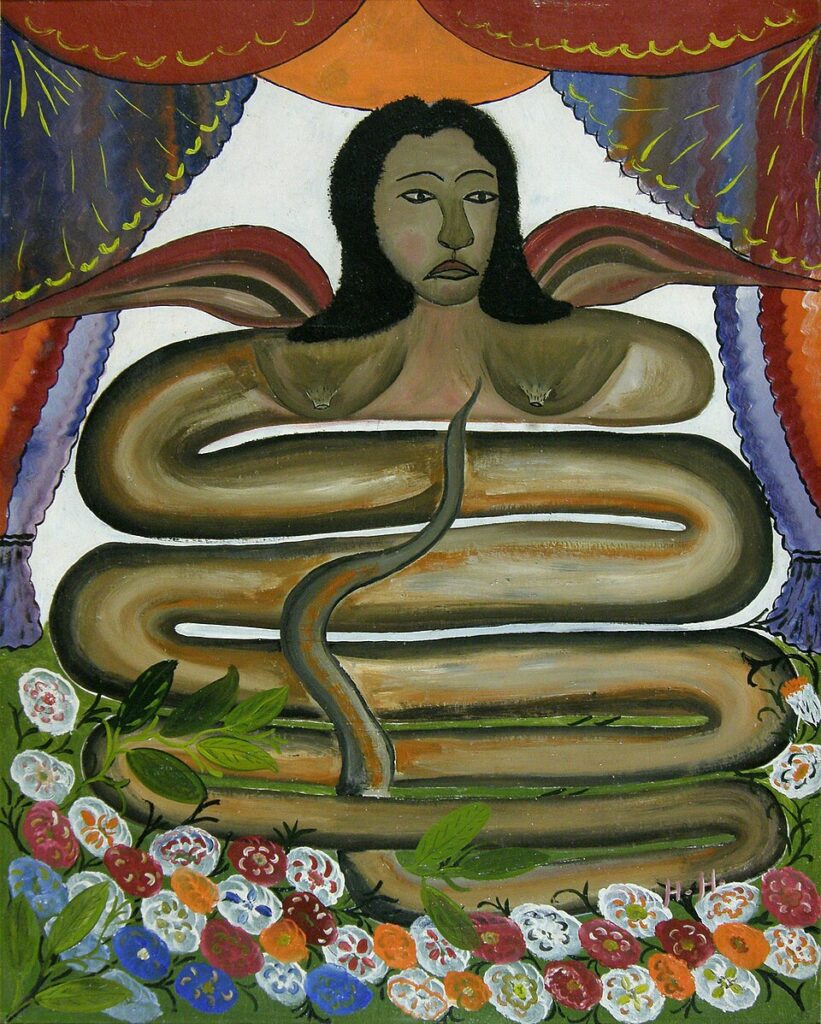
One of the most notable Vodou artists was Hector Hyppolite, born in 1894 in Saint-Marc, Haiti. A third-generation Vodou priest, Hyppolite’s paintings became internationally recognized after he caught the attention of French surrealists in the 1940s. Though self-taught, Hyppolite claimed to be possessed by spirits while painting, allowing divine forces to guide his brush. His vibrant scenes depicted Loa such as Erzulie and Damballa with a reverence absent in colonial or commercial portrayals.
Hyppolite’s work represented a major turning point: sacred Vodou imagery was being accepted in fine art circles, though often stripped of its religious context. He died in 1948, but his legacy endures in museums and private collections worldwide. His story reflects both the power of Vodou art and the risk of its detachment from spiritual roots. In later decades, other artists would follow his path, continuing the tension between sacred creation and secular display.
The Visual Language of Voodoo Art
At the heart of Vodou art is an intricate symbolic language. Practitioners create and use objects not just as representations but as active tools in ritual life. Symbols called Veves, drawn in cornmeal or chalk on sacred ground, are spiritual maps that call down specific Loa. Common motifs include skulls, serpents, crosses, flames, and eyes—all visual markers of the unseen world. Every color, line, and object carries layered meaning known only to initiated practitioners.
Materials in Vodou art often include recycled goods, bones, sequins, mirrors, beads, and textiles. These are not used randomly; each element relates to a specific spirit, prayer, or intention. Drapo Vodou, or Vodou flags, are one of the most iconic art forms, designed to catch light and dazzle the spirit world. Often sewn by hand and richly adorned, these flags serve both aesthetic and liturgical functions. Western viewers often miss the deeper meanings embedded in the designs.
Symbols, Colors, and Sacred Icons
Artist Georges Valris, born in 1948 in Port-au-Prince, became renowned for his sequined flags. His work glitters with spiritual intensity, often depicting Loa like Ogoun or Legba in richly adorned human or animal forms. Though celebrated internationally, Valris has emphasized that his art is meant for religious ceremony, not just galleries. His use of Catholic symbols such as the Virgin Mary stems from the syncretic nature of Haitian Vodou, not from conversion or confusion.
One of the most common misunderstandings stems from depictions of spirits like Baron Samedi, who wears a top hat and dark glasses and governs death. Westerners frequently misread him as a symbol of evil, equating his skeletal imagery with demonic forces. In Vodou belief, however, Baron is a guardian of the afterlife and a necessary figure of balance, not a villain. The misinterpretation of such images underscores how cultural ignorance fuels fear and distorts sacred art.
Colonial Fears and the Demonization of Vodou
From the very beginning of European contact with Africa and the Caribbean, Vodou has been framed as threatening and barbaric. French colonists in Haiti saw its ceremonies and symbols as signs of rebellion and devil worship. After the Haitian Revolution began in August 1791—an event widely associated with a Vodou ceremony at Bois Caïman—colonial writers rushed to paint the religion as violent and inhuman. Their fear was not merely of rebellion but of the unknown spiritual power behind it.
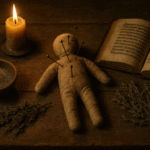
This colonial propaganda fed into 19th-century travelogues, pamphlets, and illustrations that exaggerated or invented grotesque rituals. The infamous “voodoo doll” trope, commonly believed to represent Haitian Vodou, is actually an invention of American pop culture. There is no historical use of such dolls for hexing in Haitian Vodou; similar objects existed in European folk magic long before the term “voodoo” entered popular usage. The image persists due to sensational novels, tabloid articles, and film.
Religion or Sorcery? The Western Lens
Missionaries arriving in the 1800s added moral outrage to the mix, describing Vodou as paganism or devil worship to justify their conversion campaigns. Sacred altars were burned, ceremonies disrupted, and objects confiscated as evidence of sorcery. Artists of the time portrayed Vodou adherents as primitive and possessed, reinforcing racist and religious biases. These portrayals had lasting effects on how the faith and its art were perceived for generations.
One woman caught in this cultural crossfire was Marie Laveau, born around 1801 in New Orleans. A devout Catholic and well-known Vodou practitioner, she became both a local healer and a feared figure in urban legend. By the time of her death in 1881, she had been mythologized far beyond reality. Sculptures and paintings made after her death often depicted her as a mysterious seductress or occultist, ignoring her role as a community leader and spiritual guide.
Voodoo in Modern Media and Horror Culture
By the early 20th century, Vodou was ripe for exploitation in American cinema and pulp literature. Films such as White Zombie (1932) and I Walked with a Zombie (1943) introduced mass audiences to a stylized, horror-based version of Vodou. These films painted a picture of mind control, blood rituals, and zombie armies that had little to do with actual Haitian religious practices. The visual language of sacred symbols was reduced to props for fear and spectacle.
This trend continued in comic books, record album art, and poster design throughout the 1950s and 60s. The image of the Voodoo priestess with glowing eyes or the blood-drenched altar became visual shorthand for danger and mysticism. As horror evolved, these tropes found their way into modern films such as The Serpent and the Rainbow (1988), which attempted a more anthropological angle but still leaned into sensationalism. Hollywood rarely allowed Vodou to speak for itself.
From Sacred to Scary — The Hollywood Effect
In contrast, Haitian-American artists like Edouard Duval-Carrié began to push back against these images. Born in 1954 in Port-au-Prince, Duval-Carrié relocated to Miami and began creating large-scale paintings and installations deeply rooted in Vodou mythology. His work blends surrealism, metallics, and storytelling to challenge colonial misrepresentations. Rather than paint Vodou as dangerous, he paints it as dignified and mythic.
Duval-Carrié’s Loa are not villains but complex figures who embody history, justice, and cultural pride. His art restores what cinema and comics erased: the sacred, beautiful, and intelligent nature of Vodou traditions. He draws on both Catholic and African aesthetics to portray the spiritual realm as layered, not sinister. In doing so, he reclaims the narrative of Vodou art for those who live it, not merely fear it.
The Black Market and Cultural Theft
The rise of global tourism and art collecting in the 20th century brought a darker turn in the life of Vodou art. Western tourists began buying ritual objects in Haitian markets, often without understanding their spiritual function or origins. Ceremonial drums, beaded flags, and even altar figures were bought, sold, and shipped overseas to collectors who saw them as exotic novelties. In many cases, sacred items were taken from active temples or sold under duress.
This commerce extended into galleries and museums, where Vodou pieces were often mislabeled or stripped of context. An ornate bottle meant to house a spirit might be called “folk art” or “tribal curio,” with no reference to its ritual purpose. Worse, some dealers intentionally marketed objects as tools of “black magic” to entice thrill-seekers. The result was a thriving black market that commodified spiritual life for Western amusement.
When Sacred Objects Become Souvenirs
One artist caught in this trend was Pierrot Barra, born in 1942 in Port-au-Prince. A practitioner of Vodou and an artist of great vision, Barra created elaborate mixed-media pieces from found objects, bones, dolls, and beads. His work, deeply spiritual and personal, was regularly purchased by foreign collectors who misunderstood it as kitsch or horror art. Despite this, Barra remained devoted to the spiritual integrity of his craft until his death in 1999.
Museums like the Musée du Quai Branly in Paris have hosted exhibitions on Vodou art, some with care, others with controversy. Critics have argued that displaying sacred objects in secular spaces without community involvement risks further cultural theft. When curators fail to explain the true function of these works, they perpetuate the very misunderstandings the exhibitions claim to correct. The ethics of collecting Vodou art remain as murky as ever, and often depend on intent, attribution, and education.
Artists Who Reclaimed the Narrative
Despite these misuses, many Vodou artists have found ways to reclaim their heritage and reshape how their art is viewed. These creators insist on spiritual authenticity while engaging with global audiences. Their works often blend traditional materials with modern techniques, preserving the faith’s visual language while speaking to contemporary concerns. The goal is not to sanitize or commercialize Vodou, but to return it to its rightful place: a sacred tradition practiced with reverence and skill.
One key figure is Murat Brierre, born in 1938 in Port-au-Prince. A former blacksmith, Brierre became known for his intricate metal sculptures that depict Vodou spirits in stylized, abstracted forms. Using recycled oil drums, he hammered out representations of Loa that reflect both strength and subtlety. His pieces are spiritual icons, not decorative trinkets, and are often used in religious ceremonies as well as galleries.
Painting the Spirits Back into the Frame
Another modern innovator is Myrlande Constant, born in 1968, who has revitalized the drapo Vodou tradition. A rare woman in a male-dominated practice, Constant’s flags are enormous, detailed, and powerful. Her pieces often depict female spirits and saints, celebrating both spiritual and feminine power. Constant’s artistry defies gender expectations and brings attention to the role of women in Vodou history.
These artists do more than preserve a tradition; they expand its boundaries. They teach younger generations the importance of knowing both the visual form and the spiritual substance behind each piece. In doing so, they challenge the dark stereotypes that still cling to Vodou and present it as a complex, vibrant belief system. Their art is an act of cultural memory, resistance, and restoration.
Voodoo Art in the Global Gallery Space
In recent decades, Vodou art has gained more attention in global institutions. Major museums such as the Brooklyn Museum in New York and the Fowler Museum at UCLA have curated exhibitions showcasing its beauty and complexity. These exhibits walk a fine line: can sacred art be displayed in a secular space without losing its meaning? The answer depends largely on how thoughtfully curators present the work and involve the communities behind it.
When done well, exhibitions educate and inspire rather than exploit. They include explanatory panels, audio from practitioners, and input from Haitian scholars. Audiences are introduced not only to the aesthetic power of Vodou art, but also to its role in healing, worship, and resistance. Proper framing dispels fear and promotes understanding, while careless presentation can reinforce old stereotypes.
From Sacred Practice to Institutional Display
The 2018–2019 exhibition Vodou: Sacred Powers of Haiti provided a model of thoughtful curation. Collaborating with Haitian artists and religious leaders, the exhibit presented sacred objects alongside their rituals, songs, and meanings. Visitors left with a deeper appreciation for Vodou’s role in Haitian identity and resilience. Such shows mark progress in how this misunderstood tradition is treated on the world stage.
Going forward, the question is whether museums and collectors will prioritize context and respect over profit and novelty. Partnerships with Vodou communities are essential for preserving integrity. When sacred art is seen as more than decoration—as living tradition—it can thrive beyond borders. The darkness in Voodoo art isn’t in the faith itself, but in how others have misused, misunderstood, and misrepresented it.
Key Takeaways
- Voodoo art has sacred origins rooted in West African and Haitian religious traditions.
- Western misunderstanding has distorted Vodou symbols into horror tropes.
- Artists like Hyppolite and Duval-Carrié have reclaimed Vodou’s dignity through their work.
- Cultural theft and unethical collecting practices remain a serious issue.
- Respectful exhibitions and artist-led narratives offer a path forward.
FAQs
- Is Voodoo art only Haitian in origin?
No, its roots trace back to West African Vodun, particularly among the Fon and Ewe peoples. - Are “voodoo dolls” real?
No, they are a Hollywood invention and not part of authentic Haitian Vodou practice. - Can Vodou art be both sacred and displayed in museums?
Yes, if done respectfully with proper context and input from practitioners. - What materials are common in Vodou art?
Artists often use sequins, beads, bones, recycled materials, cloth, and paint. - Are any modern Vodou artists internationally known?
Yes—Hector Hyppolite, Pierrot Barra, Myrlande Constant, and Edouard Duval-Carrié are prominent figures.