Niko Pirosmani remains one of the most fascinating figures in the history of art, not just in Georgia but across the world. Born into poverty and largely forgotten in his own time, Pirosmani is now regarded as a national icon—a man whose artistic voice, untrained yet unforgettable, captured the heart of a nation. His paintings, marked by their directness and emotional honesty, speak of a simpler, often harsher world: peasants, animals, tavern keepers, and saints, all rendered in his unique visual language. His work didn’t follow academic rules, but it resonated with deep, spiritual truth.
Unlike his European contemporaries who trained in salons and studied in the great academies, Pirosmani never received a formal art education. He painted on oilcloth rather than canvas, used rudimentary brushes, and focused not on the aristocracy or high society, but on the everyday Georgians he knew. His artistic choices were shaped not by theory but by the practical needs of tavern owners and storekeepers who hired him to decorate their walls. And yet, in that raw, unfiltered simplicity, he touched something eternal.
In recent decades, museums and collectors across the globe have come to recognize the depth of Pirosmani’s vision. His works are displayed alongside icons of folk and modernist art, and scholars have explored how his paintings intersect with movements like Primitivism and Outsider Art. But at heart, Pirosmani’s genius lay not in aligning with trends but in remaining deeply faithful to what he saw and felt in rural Georgia.
This article will explore the full story of Niko Pirosmani’s life and legacy—from his early struggles to his quiet death in 1918, and the posthumous fame that elevated him to near-mythical status. His art continues to influence creators today, offering a model of authenticity in a world increasingly dominated by artificial gloss.
Early Life and Humble Beginnings
Niko Pirosmanashvili was born on May 5, 1862, in the small village of Mirzaani in Georgia’s Kakheti region. He came from a humble peasant family, living in a mudbrick home surrounded by vineyards and grazing animals. His early years were shaped by the rhythms of village life, and though they were marked by hardship, they provided a deep well of imagery that would later appear in his paintings. Tragedy struck early—he lost both his parents while still a child, and the family fell into deeper poverty.
Following his parents’ deaths, Niko and his sister moved to the capital city of Tbilisi in 1870, hoping for better opportunities. As a boy in the bustling city, he worked odd jobs: tending livestock, cleaning streets, and later as a servant in wealthy households. He received only a rudimentary education, learning to read and write at a basic level, but he showed a curious mind and a love for observation. Though art was not yet a visible part of his life, the seeds of his visual storytelling were being planted.
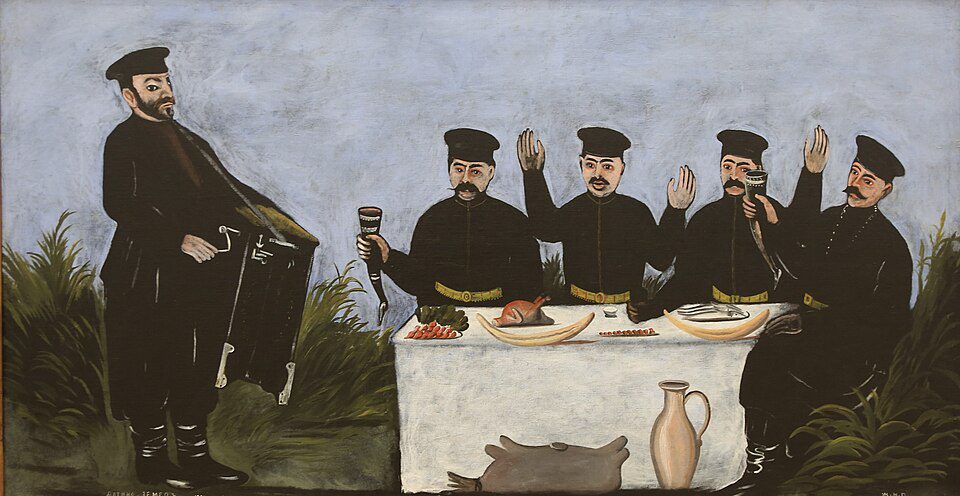
Pirosmani’s first step into the world of practical painting came through his employment with a railway company in the late 1870s. He worked there as a handyman and later as a house painter, learning to mix pigments and apply paint efficiently. This hands-on experience gave him a functional knowledge of materials, and more importantly, awakened his creative impulse. In 1882, he attempted to open a painting workshop with a friend, but financial difficulties caused the venture to fail.
After that setback, he returned to freelance sign painting—a modest but steady line of work in Tbilisi’s busy neighborhoods. He created portraits of shopkeepers, animals, and religious figures, often on oilcloth due to the scarcity and cost of traditional canvases. His clients were tavern owners, merchants, and farmers who appreciated his work not for its elegance, but for its boldness and emotional clarity. During this time, Pirosmani began to develop the distinct visual language that would define his career.
The Self-Taught Artisan: Style and Technique
Niko Pirosmani’s paintings are instantly recognizable for their bold outlines, flattened perspectives, and emotionally resonant figures. Without academic training to constrain him, he approached each piece with directness, often painting frontal figures with symmetrical composition and simplified backgrounds. His style is sometimes labeled as “naïve” or “primitive,” but these terms fail to capture the quiet sophistication of his work. In truth, his artistic voice was born of necessity and a deep connection to his surroundings.
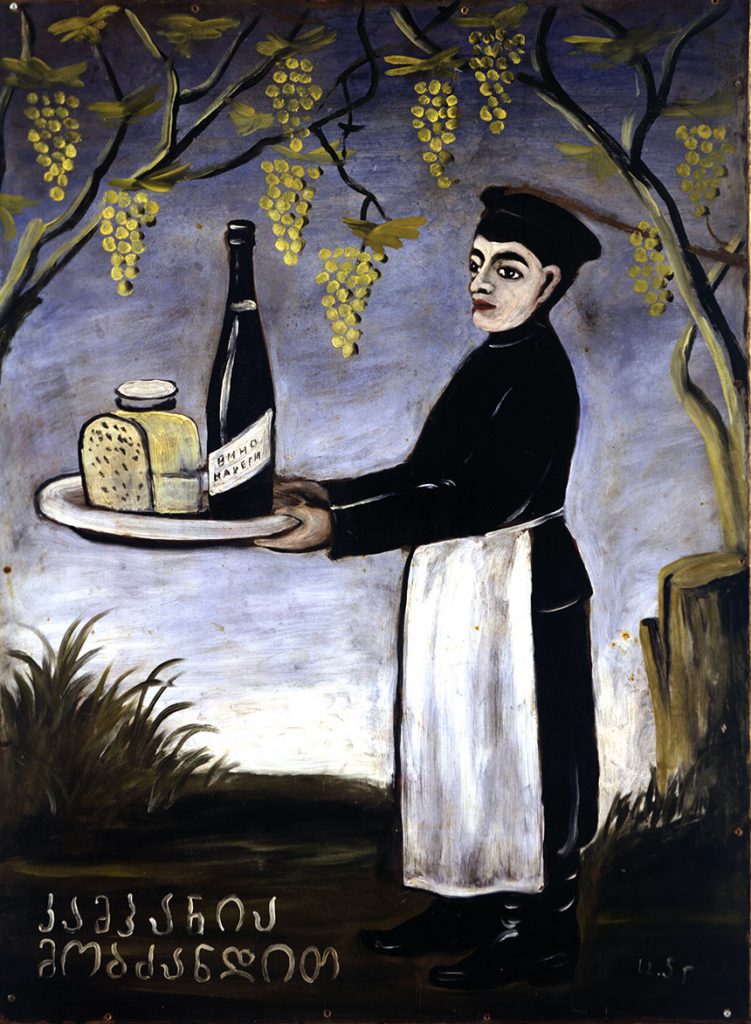
The materials he used played a crucial role in shaping his visual style. Pirosmani often painted on oilcloth, a material normally used for table covers, because it was cheap and readily available. Brushes were sometimes replaced with homemade tools or even fingers. These constraints gave his paintings a raw, tactile quality. Colors were vivid but limited, and he made masterful use of contrast to bring focus to the central figures, usually people or animals from his everyday environment.
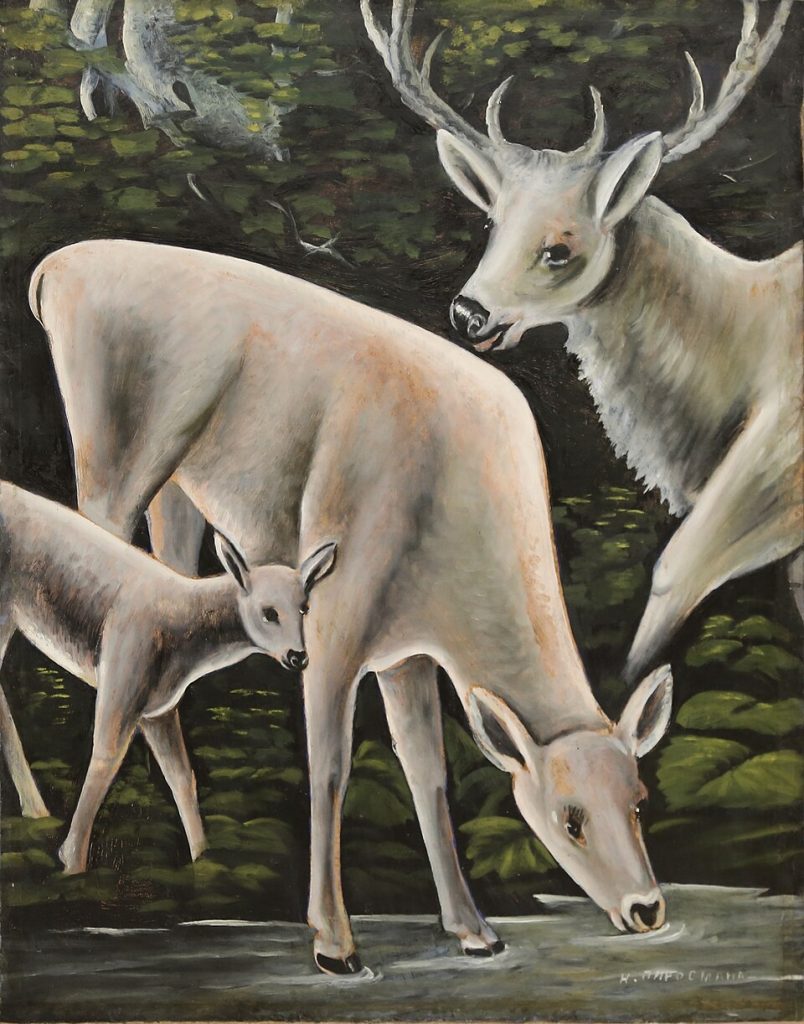
Thematically, Pirosmani returned again and again to scenes of rural Georgian life: merchants with their wares, cattle herders on dusty plains, women in traditional dress, and celebratory feasts with bread and wine. One of his most iconic subjects was the peacock, a symbol of beauty and pride, which he rendered with almost childlike joy. Religious icons and saints also featured prominently, showing his reverence for the Orthodox faith that shaped Georgian identity. These subjects were deeply familiar to him, not exotic or invented, but drawn from life.
Though comparisons are often made between Pirosmani and modern European Primitivists like Henri Rousseau, the Georgian painter was not reacting to academic traditions—he had never been part of them. His work stands apart because it was never intended for gallery walls or elite circles. It was art for the people, rooted in a personal vision of dignity, faith, and community. His style, though lacking in formal polish, was overflowing with soul and substance.
Love, Loneliness, and Legend
One of the most enduring stories about Niko Pirosmani is his ill-fated love affair with the French actress Margarita de Sevres, who visited Tbilisi in the early 1900s. According to legend, Pirosmani fell hopelessly in love with her after seeing her perform at a local theater. He was so smitten that he sold all his possessions—including his few paintings—to buy thousands of roses, which he scattered beneath her balcony in a romantic gesture. This event, though never definitively proven, has become part of Georgian folklore.
This dramatic episode is said to have inspired one of his most emotionally charged works, Actress Margarita. In the painting, she appears elegant and distant, surrounded by a quiet melancholy that mirrors the artist’s unfulfilled desire. The story of Margarita has captivated writers, filmmakers, and poets, many of whom see it as emblematic of Pirosmani’s tragic life. Whether or not the tale is entirely factual, it reflects the kind of lonely, passionate devotion that characterized much of his existence.
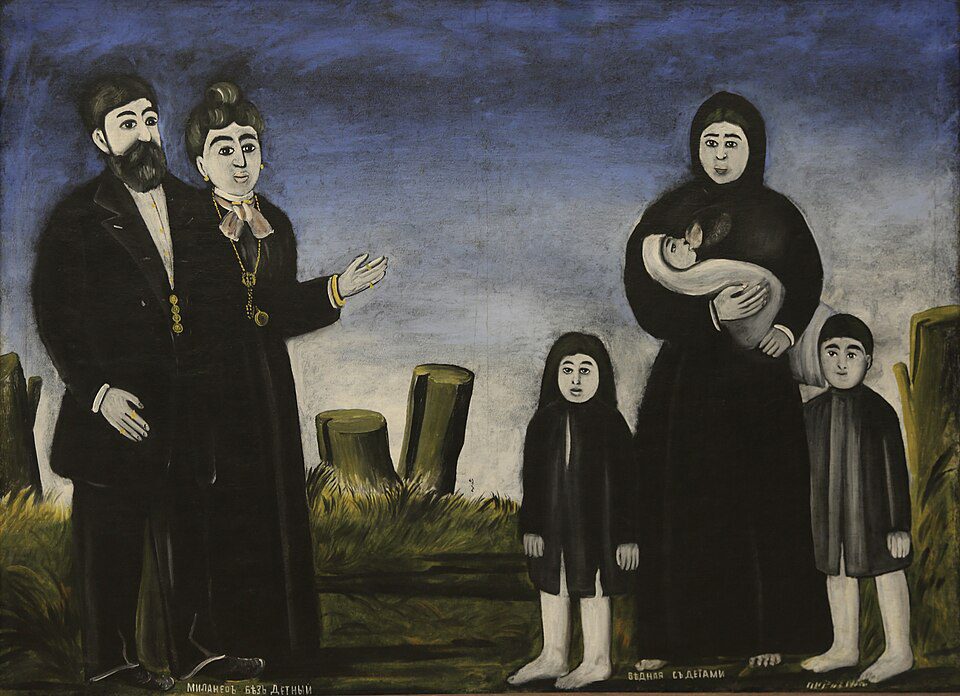
Pirosmani never married and lived most of his adult life alone in small rented rooms or even basements. He was known to wander the streets of Tbilisi with his tools and a bundle of oilcloths, always looking for small commissions. Friends and patrons occasionally helped him with food or lodging, but his pride often kept him from asking for charity. His solitude was both a burden and a source of creative reflection, evident in the quiet intensity of his later works.
As the years passed, his physical health deteriorated, and his emotional state declined. Many of his paintings from this period show figures staring directly at the viewer with soulful eyes, as if silently pleading to be seen and understood. The legend of the lonely painter, rejected in love and neglected in life, took on a life of its own. Today, he is remembered not only as a gifted artist but also as a tragic romantic, a man who gave everything to his art and received little in return during his lifetime.
Recognition During and After Life
In 1912, Niko Pirosmani received a rare opportunity for exposure when his work was included in an exhibition organized by Georgian avant-garde artists in Tbilisi. This event was made possible by Ilia Zdanevich and his brother Kirill, two young artists who saw value in Pirosmani’s raw visual power. They began to champion his work in artistic circles, even publishing articles praising his “genuine” and “unspoiled” approach to art. For the first time, his name appeared in newspapers and art journals.
Despite this momentary spotlight, Pirosmani’s circumstances did not improve significantly. The public and art collectors were still reluctant to take seriously the paintings of a man with no formal education who lived in near-poverty. By the end of the 1910s, he was living in squalid conditions and relying on the goodwill of tavern owners to provide food in exchange for paintings. His health declined sharply due to malnutrition and exposure. On April 9, 1918, he died alone in a cellar in Tbilisi, likely from complications related to liver disease or starvation.
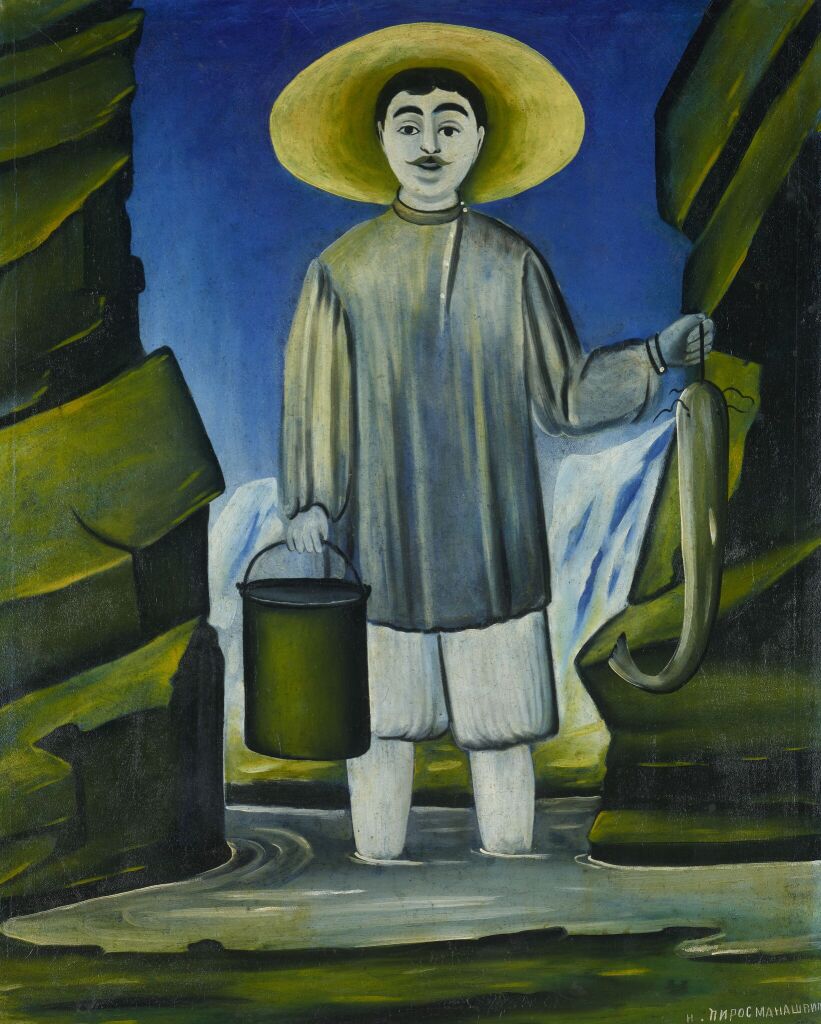
After his death, interest in his art began to grow slowly. In the 1920s and 1930s, Soviet art historians began to reevaluate his work, recognizing its unique contribution to Georgian culture. In 1969, his life was immortalized in the award-winning biographical film Pirosmani, directed by Giorgi Shengelaia. This cinematic portrayal introduced him to a wider audience and reignited interest in his paintings, which were increasingly displayed in museums and galleries.
Today, Pirosmani’s works are housed in major collections such as the Georgian National Museum in Tbilisi, the Pushkin Museum in Moscow, and the Musée d’Art Naïf in Paris. His image has been featured on Georgian currency, postage stamps, and national advertisements. His simple yet profound portrayals of everyday life continue to resonate with viewers around the world. In death, he achieved the recognition that eluded him while he was alive—a bittersweet but fitting end for a man who painted from the soul.
Legacy in Modern Georgia and Beyond
In Georgia, Niko Pirosmani has transcended the status of a mere artist to become a cultural icon. His life and work are taught in schools, and his paintings are printed on postcards, schoolbooks, and souvenirs. The 1969 film Pirosmani remains one of the most beloved Georgian movies, often shown on national holidays. His story symbolizes the enduring power of the individual spirit, a tale of talent triumphing over adversity and neglect.
Modern Georgian artists continue to draw inspiration from Pirosmani’s themes, especially his focus on rural life, religious symbolism, and the dignity of the common man. Exhibitions and retrospectives are regularly held in Tbilisi and other major cities. In 2018, the centenary of his death was commemorated with nationwide events, including special exhibits, performances, and academic symposiums. The Pirosmani Museum in Mirzaani, his birthplace, attracts thousands of visitors each year.
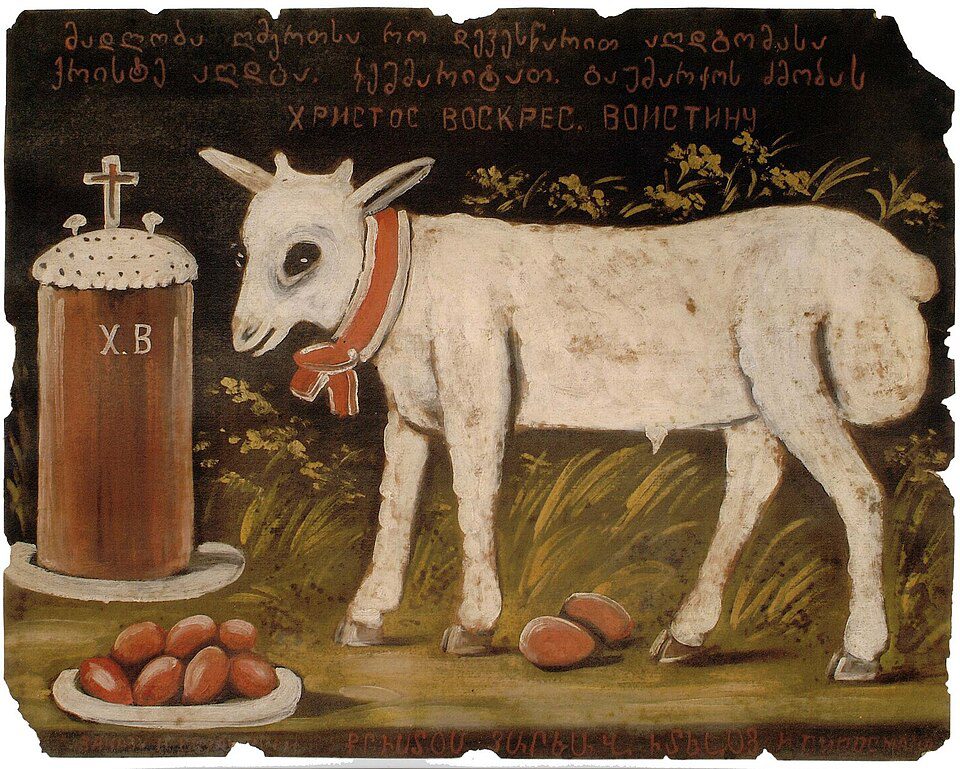
Internationally, Pirosmani’s paintings have been exhibited in Paris, Moscow, Tokyo, and beyond, bringing his distinct vision to new audiences. In 2019, the Fondation Cartier in Paris hosted a major retrospective of his work, drawing praise from global art critics. He is often mentioned alongside other “outsider” artists like Henri Rousseau and Grandma Moses, yet his voice is uniquely his own. Collectors and historians alike see his paintings as pure expressions of national identity and emotional honesty.
In a world increasingly dominated by digital manipulation and mass-produced images, Pirosmani’s hand-painted scenes of village life stand as a refreshing counterpoint. His legacy is a reminder of the value of sincerity, of the artist who paints not for fame but to capture the truth of what he sees. Though he never traveled far from Tbilisi, his impact has stretched across continents. Through simplicity and heart, Niko Pirosmani became a universal artist.
Why Pirosmani Still Matters Today
In an era when modern art is often seen as elitist or inaccessible, Niko Pirosmani’s work speaks directly to the viewer without pretense. His paintings do not rely on complex theory or abstract symbolism—they show life as it was lived in Georgian villages, with all its joys and sorrows. He reminds us that great art can come from humble origins and does not require institutional approval to be meaningful. This authenticity makes his work deeply relevant in our time.
His portrayal of ordinary people—farmers, shopkeepers, herders—gives a voice to those often left out of grand historical narratives. These are not glamorous subjects, yet in Pirosmani’s hands, they are treated with dignity and grace. In today’s polarized world, his paintings serve as a quiet call to remember our shared humanity. The emotional resonance of his work remains undiminished more than a century after his death.
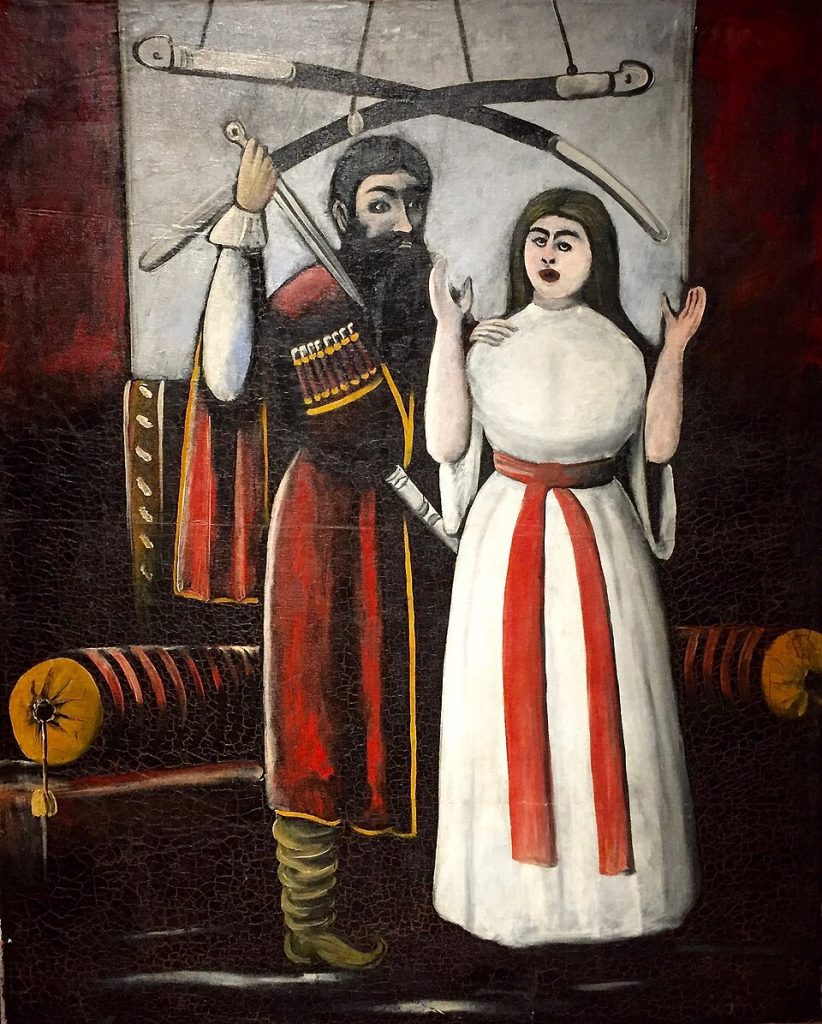
Moreover, Pirosmani’s commitment to national identity, Orthodox values, and the beauty of rural tradition aligns with a conservative appreciation of heritage and faith. In a time when globalist trends often overshadow local culture, his work is a proud affirmation of Georgian character. He offers a powerful model of how to celebrate one’s roots without shame or apology. His art reminds us that beauty is not dictated by the elite, but discovered in the everyday.
Finally, the story of Pirosmani is more than just a biography—it’s a parable. It warns against a society that overlooks the talents of the humble while celebrating the polished and pretentious. And it offers hope to every self-taught creator, every outsider, that truth and passion can still shine through. In the timeless light of Pirosmani’s work, we see not just Georgian life, but the quiet resilience of the human soul.
Key Takeaways
- Niko Pirosmani was a self-taught Georgian painter born in 1862 and died in poverty in 1918.
- He painted rural life, saints, animals, and ordinary people using oilcloth and homemade tools.
- A tragic love for French actress Margarita became a national legend and inspired emotional artworks.
- Though overlooked in life, he gained global recognition posthumously and is now a cultural icon.
- His legacy endures through modern exhibitions, films, and continued influence on Georgian identity.
Frequently Asked Questions (FAQs)
- Where was Niko Pirosmani born?
He was born on May 5, 1862, in the village of Mirzaani, in the Kakheti region of Georgia. - Did Pirosmani ever receive formal art education?
No, he was entirely self-taught and learned painting through observation and practical work. - What is his most famous painting?
One of his best-known works is Actress Margarita, inspired by a romantic legend. - When did he die, and what caused his death?
He died alone on April 9, 1918, likely from complications related to illness and malnutrition. - Where can I see his paintings today?
His works are displayed in the Georgian National Museum, Pushkin Museum, and international exhibitions.