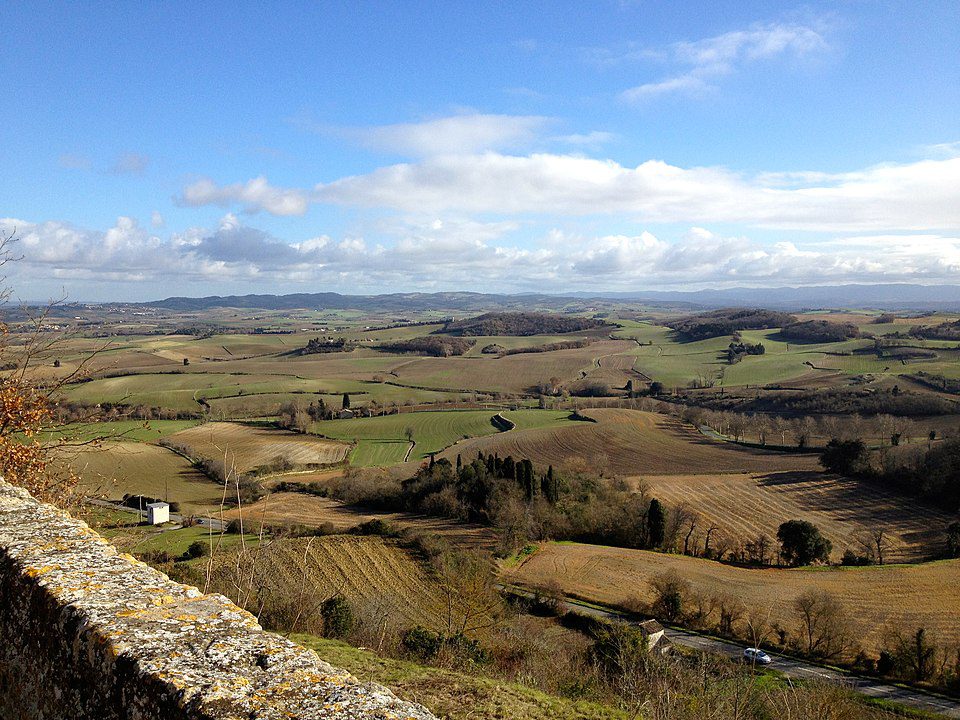
The Bocage country of northwestern France, particularly in regions like Normandy and Brittany, appears at first glance to be a simple pastoral landscape. But on closer examination, this region reveals itself as a sweeping visual composition—layered, intentional, and profoundly evocative. Shaped not just by geology and climate but by generations of agricultural tradition and human restraint, the Bocage is best understood as a giant living work of art. It is a land not so much built as curated, a place where time and tradition have harmonized into something more enduring than even architecture or sculpture.
The word “Bocage” derives from the Old French term boscage, meaning wooded or bushy terrain. It refers to a type of countryside distinguished by small fields enclosed by thick hedgerows and interwoven with sunken lanes, scattered hamlets, and ancient footpaths. This terrain is especially prevalent in the departments of Calvados, Manche, Mayenne, and Orne. Though the Bocage system can be found in other European countries like England and Ireland, its manifestation in France has a uniquely ordered charm, an aesthetic that invites admiration.
What makes the Bocage visually compelling is not only its natural variety but its sense of proportion. Each hedge seems placed not randomly but purposefully; each tree-line frames a view like a brushstroke frames a canvas. There’s an almost classical serenity to the way the land rolls and folds, revealing new vignettes around each bend. No painter could have designed a more pleasing panorama, and yet no single artist is responsible for it.
This is a land made by many hands over many centuries. The Bocage is not a monument to rapid progress or sudden genius—it is a quiet monument to continuity. Like a slowly evolving painting, it has absorbed each generation’s contribution and still holds together as a unified whole. And like all great works of art, it demands contemplation, not just consumption.
The Natural Palette: Greens, Golds, and Earth Tones
One of the first things that strikes any visitor to the Bocage is its rich and varied palette. The land seems to glow with color, particularly under the shifting light of Normandy’s skies. In spring, young leaves flush the hedgerows with bright, almost electric greens, while apple and cherry blossoms sprinkle the air with whites and soft pinks. Fields of new wheat shimmer like seas of green silk, and the land carries a sense of freshness that feels newly painted every year.
By summer, the Bocage warms into deeper hues. Golden wheat and barley ripple in tight fields, while sunflowers and tall grasses lend texture and contrast. The canopy of trees matures into dense, shadowy greens, and old stone farmhouses—some dating back to the 1600s—glow warmly under the midsummer sun. Red clay paths and earthy stone walls add grounding browns, creating a landscape of earthy saturation that painters like Jean-Baptiste-Camille Corot would have admired.
Autumn brings yet another transformation. The hedgerows turn copper, crimson, and bronze. Oak and chestnut trees release their leaves in slow motion, carpeting the sunken lanes in brilliant layers. Farmers begin the harvest, and plowed fields introduce rich dark browns into the visual spectrum. It’s a landscape that mimics the depth of an oil painting, with bold foregrounds and misty, glowing backgrounds.
Even in winter, the Bocage does not dull. Though leafless, the hedgerows remain as skeletal frames of geometry, while moss-covered stones and frosted fields provide soft blues and muted greys. The occasional snow adds a delicate contrast to the darker evergreens. The subdued tones make the land feel quieter but still alive—like a monochrome sketch drawn with immense skill.
Seasonal Palette Overview
- Spring: Fresh greens, blossom whites, gentle pinks
- Summer: Golden wheat, rich greens, warm browns
- Autumn: Bronze hedgerows, rust-orange forests, dark soil
- Winter: Frosty blues, greys, evergreen shadows
Geometry and Design: The Artist’s Structure Beneath the Surface
Beyond its colors and textures, the Bocage captivates through its structure. Aerial views of the region reveal an intricate patchwork of small, irregular fields bordered by dense hedgerows. These boundaries, often composed of hawthorn, beech, or hazel, are not just functional barriers—they create a natural geometry that echoes the compositional balance of classical landscape paintings. The landscape is ordered, but never rigid. It’s an example of design by tradition rather than blueprint.
These hedgerows, known in French as haies, were not thrown up overnight. Most date back to the Middle Ages, particularly between the 10th and 15th centuries AD, when local lords and monastic orders subdivided land for sharecropping and peasant farming. Over generations, farmers maintained these borders, trimming and layering them to create dense, living fences. The resulting enclosures were small by modern standards—often under two hectares—but they contributed to a pattern of alternating form and void, field and border, that feels both intimate and intentional.
The sunken roads (chemins creux) that wind between fields further enhance this natural architecture. Formed by centuries of cart traffic and footfall wearing down the soft soil, these paths now run below hedge level, creating shaded, tunnel-like corridors. Some are so narrow and steep-sided they resemble ditches, while others open up suddenly to sweeping views. These old roads serve no symbolic purpose, yet they echo the curving lines a landscape painter might use to guide the eye toward a vanishing point.
Villages and hamlets nestle comfortably into the contours of this design. Instead of dominating the land, the built environment seems to defer to it. Chapels appear at crossroads, stone wells sit hidden in groves, and homes are often encircled by trees for wind protection—yet another layer of compositional logic. All of this contributes to a landscape that is not chaotic, but curated—a rural harmony achieved without the artificiality of modern planning.
The Human Hand: A Thousand Years of Stewardship
The Bocage did not arise from untouched wilderness. It is a man-made landscape, the result of centuries of quiet labor and conservative land management. Its origins date to the early medieval period, particularly during the Carolingian and Capetian dynasties between the 9th and 12th centuries AD. During this time, feudal landowners—often in concert with monastic institutions—began dividing land into manageable parcels for cultivation. These enclosed plots protected crops from wind and animals, while also helping define property lines in an era before precise surveying.
Farmers of the Bocage practiced rotational grazing and small-scale crop rotation long before such methods were formalized in agrarian science. Over the centuries, their methods shaped the terrain gradually but profoundly. Instead of flattening or draining the land for efficiency, they adapted to it. Natural rises were left wooded, and marshes were preserved as seasonal grazing zones. This flexible, cooperative relationship between man and land is one of the defining features of the Bocage—what you might call “art by stewardship.”
Even the choice of plants was strategic. Hedges were constructed using native species—hazel, hawthorn, oak—not just for visual variety, but because they were resilient, self-repairing, and useful. Hazel was cut back on cycles to provide kindling and woven fencing. Oak trees grew into boundary markers or shade for cattle. The shaping of hedges was done by hand, using traditional tools, and passed down through generations as local know-how rather than written instruction.
To this day, families whose ancestors settled the region in the 1600s or earlier still live on the same land, their surnames rooted as deeply in the soil as the ancient hedges. These are not just farmers—they are caretakers of a living mosaic. The layout of fields, the placement of trees, the location of wells and barns—all were determined with long-term use and visual harmony in mind. In this way, the human hand did not mar the Bocage. It refined it, like an artisan chiseling a form out of rough stone.
Light and Atmosphere: A Sky Fit for Romanticism
Artists have long been fascinated by the way light behaves in the countryside, and the Bocage offers a masterclass in atmospheric richness. The interspersed groves and hedges break the sunlight into patches and patterns, much like the light in a Gothic cathedral passing through stained glass. The low, often misty sky of Normandy creates conditions where light never lands harshly. Instead, it glows, flickers, and diffuses—producing an ever-changing spectacle across the landscape.
Early in the morning, particularly in the cooler months from October to March, a soft mist lingers low over the fields. As the sun rises, the fog begins to lift, revealing hedgerows like ink strokes beneath a translucent veil. These mists have the effect of flattening distance, drawing the eye to middle-ground details—a visual effect not unlike that sought by English Romantic painters such as John Constable or the French landscape master Camille Corot. Their brushwork mirrors the same soft tonal gradations you find naturally here.
At midday, the light takes on a different quality. The high sun creates crisp shadows beneath the trees and sharpens the contrast between the greens of grass and the browns of plowed earth. But the hedgerows still temper this brightness, casting long lines of shade that ripple gently with the breeze. Late afternoon offers perhaps the most picturesque view, as the golden hour light deepens the colors of the stone cottages, and the landscape appears dipped in honey.
The night skies, too, are worth mention. With little industrial light pollution in the deeper Bocage areas, the stars return in full glory. The Milky Way can be clearly seen in summer months, and owls can be heard in the distance. This celestial dimension adds a final, almost spiritual brushstroke to a region that already feels like something painted by the Divine Hand. Light here is not merely illumination—it’s part of the artwork itself.
The Soundtrack of the Land: Beyond the Visual
While the Bocage is undeniably a visual marvel, it is also an acoustic environment with as much order and charm as any classical composition. One cannot appreciate the full atmosphere of the region without considering the layered sounds that emerge from it. Birdsong dominates the early hours. Blackbirds, robins, and nightingales create a daily symphony as they move among the hedgerows. Their melodies follow the rhythm of the sun, beginning with chirps at first light and fading into silence at dusk.
The mid-morning brings different sounds: livestock lowing from nearby fields, horses pulling carts along gravel paths, and the distinct clip of hand tools against wood or stone. These are not sounds of industry or mechanized chaos—they are human and animal sounds integrated into the land. On Sundays, church bells ring faintly across the hills, signaling the continuity of faith that still marks rural French life. Their tolling serves not only the faithful, but the land itself, echoing over the folds like reminders of a higher order.
Wind through the hedgerows produces its own music—gentle rustling in spring, dry whispers in summer, and sighing howls in autumn. The wind carries with it scents of earth, manure, and flowers, mixing olfactory and auditory senses into one seamless experience. The effect is immersive. Just as a painter layers tones to create mood, the sounds of the Bocage build a sense of place far richer than any modern setting can offer.
Even in moments of complete silence, the Bocage speaks. The stillness is not empty—it is restful. The absence of traffic, sirens, or artificial noise allows for the mind to wander and absorb the subtle beauty of its environment. This silence is not accidental. It is a product of a culture and geography that values rootedness, continuity, and modesty—a reminder that the loudest voices are not always the most meaningful.
The Bocage in Wartime: Preservation Under Fire
The Bocage landscape faced its greatest trial during the summer of 1944, during the Battle of Normandy. Following the D-Day landings on June 6, 1944, Allied forces advanced inland into the dense hedgerow terrain, which became a significant military obstacle. American General Omar Bradley famously described the Bocage as “a hedgerow every 100 yards, a potential German foxhole every 50.” The region’s beauty and complexity—so cherished in peacetime—became a battlefield nightmare.
The National Socialist forces used the terrain to their advantage, digging into the hedgerows and using their dense cover to stage ambushes. Fields were often mined, and the sunken lanes created ideal kill zones. It took the Allies weeks of brutal combat to break through this natural fortress. From June through August 1944, particularly during Operation Cobra, fierce fighting devastated many villages and tore apart long-standing hedgerows that had stood for centuries.
Despite the destruction, something remarkable happened in the postwar years. Rather than bulldozing the terrain into submission for ease of reconstruction or modern farming, the French people—especially local farmers—sought to restore the Bocage. New hedges were planted, and destroyed stone walls were rebuilt. Government programs beginning in the 1980s formally recognized the ecological and cultural value of the Bocage, offering incentives to maintain its traditional form. These efforts were not about nostalgia. They were about permanence—repairing a masterpiece, not repainting it.
The scars of war remain visible in certain places—discolored stones, sunken ruins, memorials—but they are few. What dominates is the resilience of the Bocage. It proved that a land shaped for peace could, for a time, endure war, and return intact. Few landscapes in Western Europe can make such a claim. That this region was preserved, rather than sacrificed to modern development, speaks volumes about its enduring value to the people who know it best.
Resistance to Modernity: A Shield Against Sprawl
In an era marked by aggressive urbanization and industrial-scale agriculture, the Bocage has stood its ground. The very features that once made it a battlefield nightmare for Allied troops—its dense hedgerows, narrow lanes, and irregular fields—have ironically made it difficult for modern sprawl to take root. While other parts of rural Europe have been bulldozed for housing developments or streamlined into massive monoculture farms, the Bocage has largely preserved its medieval layout and aesthetic.
This preservation hasn’t happened by accident. Beginning in the 1980s, French environmental and agricultural policies began to recognize the ecological and cultural importance of the Bocage. Regional programs in Normandy, Brittany, and the Loire Valley offered subsidies to farmers who maintained hedgerows rather than removing them. By the 1990s, these efforts expanded into the national conservation framework, with legislation supporting Zones Naturelles d’Intérêt Écologique, or ZNIEFFs. These laws emphasized heritage landscapes—not as museum pieces, but as viable, working systems that offered an alternative to industrial homogenization.
The Bocage has also benefited from its terrain, which naturally resists large-scale mechanization. Fields are too small and boundaries too tight for massive harvesting equipment. This limitation, once considered a disadvantage, has become an asset. It supports localized economies, maintains biodiversity, and keeps young families on ancestral farms, continuing traditions that date back to Charlemagne. The land is still tilled, grazed, and harvested—but with methods that favor sustainability over yield-at-any-cost.
What emerges is not just a visually beautiful landscape, but one with values embedded in the soil. The Bocage affirms traditional limits. It holds the line against sprawling suburbs, commercial monocultures, and the flattening of identity that accompanies them. It is a place where heritage, order, and restraint have protected beauty—not through sentimentality, but through intelligent, practical conservation.
Reasons the Bocage Resists Modern Sprawl
- Maintains biodiversity through varied plant and animal habitats
- Preserves historical farming techniques and layouts
- Limits environmental degradation by preventing runoff and erosion
- Supports local, family-owned agriculture rather than corporate farming
- Retains the architectural character of villages and towns
A Living Icon of Western Civilization
More than just a quaint or charming locale, the Bocage represents something deeper: the visible inheritance of Western civilization. This landscape is built upon foundations of respect for private property, continuity of family life, and a restrained use of technology. Unlike modern cities, which often pride themselves on transience and reinvention, the Bocage honors tradition. Its very design speaks to order, hierarchy, and a reverence for what came before.
Many features of the landscape are explicitly Christian in origin. Roadside chapels still dot the countryside, many erected in the 12th through 18th centuries as markers of protection or pilgrimage. Crosses at intersections, votive grottos, and even tree placements were often made with religious intention. Fields were blessed during the Rogation Days of the liturgical calendar, a practice that persists in some areas even today. This sacred geography is not accidental—it reflects a worldview in which faith was expected to shape the land, not merely exist alongside it.
The family farmstead—often home to three or more generations—is the cornerstone of Bocage society. These homes are not isolated estates but interdependent nodes in a larger web of village life. It’s common to find community wells, stone ovens, and cooperative grain storage facilities dating back centuries. This collective approach to stewardship doesn’t diminish private responsibility; it deepens it. Everyone is a custodian of something older than themselves.
To walk through the Bocage is to walk through the visual expression of principles that once defined the West: harmony between man and nature, reverence for ancestors, and a commitment to beauty not as luxury, but as duty. It is a place where the culture of life still lives—not in slogans, but in sunlit fields, stacked stones, and the slow grace of generational time.
Conclusion: Walk Gently Through This Painted World
The Bocage is not a museum piece. It is a working, breathing world shaped by countless hands and shaped with care. While the modern world speeds forward, this part of France quietly affirms a different truth—that beauty grows best under limits, and that continuity is the highest form of progress. It teaches, not by argument, but by example.
This land has endured conquest, war, revolution, and globalization. Yet its core remains intact. Why? Because it was never built on novelty. It was built on the patient work of men and women who loved their land enough to work it carefully, season after season, generation after generation. Their reward was not just sustenance—but beauty.
In a time where noise and clutter dominate our surroundings, the Bocage offers a kind of silent instruction. It tells us that order is not dull, that tradition need not be oppressive, and that landscape can be a mirror of the soul. This land does not clamor for attention. It simply endures, radiating calm and strength to those who walk its lanes and breathe its air.
So walk gently here. See not just the fields and trees, but the decisions and sacrifices they embody. Let the Bocage remind you of a time when land was not consumed, but kept—when beauty was not manufactured, but inherited. There is no other place like it in the modern West. And that may be its most important lesson.
Key Takeaways
- The Bocage landscape in northwestern France is a centuries-old, human-shaped environment that resembles a vast, living artwork.
- Its structure of hedgerows, sunken lanes, and small farms follows classical aesthetic principles, formed by tradition rather than planning.
- Seasonal changes bring a full palette of colors and light, rivaling the moods and tones of Romantic landscape paintings.
- The Bocage has resisted modern sprawl through legal protections, practical design, and generational stewardship.
- It serves as a model for how rootedness, order, and faith can shape a culture that resists decay and honors its past.
FAQs
- What does the term “Bocage” mean?
Bocage comes from Old French boscage, referring to land enclosed by woods or hedgerows, particularly found in northwestern France. - Why is the Bocage considered a work of art?
Its landscape features—hedgerows, winding lanes, fields—are arranged with a harmony and rhythm that mirror classical artistic composition. - How old is the Bocage landscape?
Many of its defining features date back to the medieval period, especially from the 10th to 15th centuries AD, with some earlier Roman agricultural influence. - Did the Bocage play a role in World War II?
Yes. It was a major battleground after the D-Day landings in 1944, where its dense terrain posed significant challenges to Allied forces. - Is the Bocage still preserved today?
Yes. France has implemented legal protections and agricultural incentives since the 1980s to preserve its structure and cultural significance.