Schönbrunn Palace is one of Vienna’s most iconic landmarks, offering visitors a breathtaking glimpse into Austria’s imperial past. Once the summer residence of the Habsburg dynasty, this magnificent Baroque palace has stood as a symbol of power, elegance, and artistic grandeur for over three centuries. With its 1,441 opulent rooms, vast gardens, and stunning architectural details, Schönbrunn continues to captivate history lovers, art enthusiasts, and tourists from around the world.
Declared a UNESCO World Heritage Site in 1996, the palace represents one of the most well-preserved royal complexes in Europe. Every corner of Schönbrunn reflects the splendor of the Austro-Hungarian Empire, from the gilded halls where emperors once held grand celebrations to the meticulously designed gardens that rival those of Versailles. Beyond its historical significance, the palace remains a vibrant cultural hub, hosting concerts, seasonal festivals, and breathtaking exhibitions throughout the year.
Visiting Schönbrunn Palace is like stepping into a time capsule of imperial Austria. Strolling through its lavish rooms, one can almost hear the echoes of Empress Maria Theresa’s elaborate court gatherings or imagine the young Mozart playing for the royal family. Whether you’re fascinated by European history, drawn to Baroque art, or simply looking for an unforgettable Vienna experience, Schönbrunn Palace is a must-see destination.
In this guide, we’ll take an in-depth look at the palace’s history, architecture, imperial rooms, gardens, and unique attractions. We’ll also explore essential visitor tips to help you make the most of your visit to this spectacular Austrian treasure.
The History of Schönbrunn Palace
Schönbrunn Palace’s origins date back to the 16th century, when it was nothing more than a modest hunting lodge owned by the Holy Roman Emperor Maximilian II. The name “Schönbrunn,” meaning “beautiful spring,” was inspired by the natural springs in the area, which were used to supply the court with fresh water. Over time, the Habsburgs saw the potential to transform this rural retreat into a grand imperial residence, reflecting their increasing power and influence in Europe.
The real transformation of Schönbrunn began under Emperor Leopold I in the late 17th century, who commissioned the celebrated architect Johann Bernhard Fischer von Erlach to design a magnificent Baroque palace. Inspired by the grandeur of Versailles, Fischer von Erlach envisioned an extravagant imperial complex, though budget constraints led to a scaled-down version of his plans. Even so, the palace quickly became an important symbol of Habsburg rule and an opulent retreat for Austria’s elite.
One of the most influential figures in the palace’s history was Empress Maria Theresa, who reigned from 1740 to 1780. She redesigned Schönbrunn into a truly royal residence, adding sumptuous Rococo interiors, lush gardens, and extravagant ballrooms where Vienna’s aristocracy gathered. Under her rule, Schönbrunn became a political and cultural epicenter, hosting European monarchs, dignitaries, and artists, including the prodigious Wolfgang Amadeus Mozart, who performed here as a child.
During the 19th century, Schönbrunn continued to play a central role in Austrian history. Emperor Franz Joseph I, the longest-reigning emperor of Austria, was born and later died in the palace. Even Napoleon Bonaparte left his mark, having used Schönbrunn as his headquarters during his occupation of Vienna in 1805 and 1809. Today, the palace stands as an enduring testament to the grandeur, power, and artistic refinement of the Habsburg dynasty.
The Magnificent Baroque Architecture
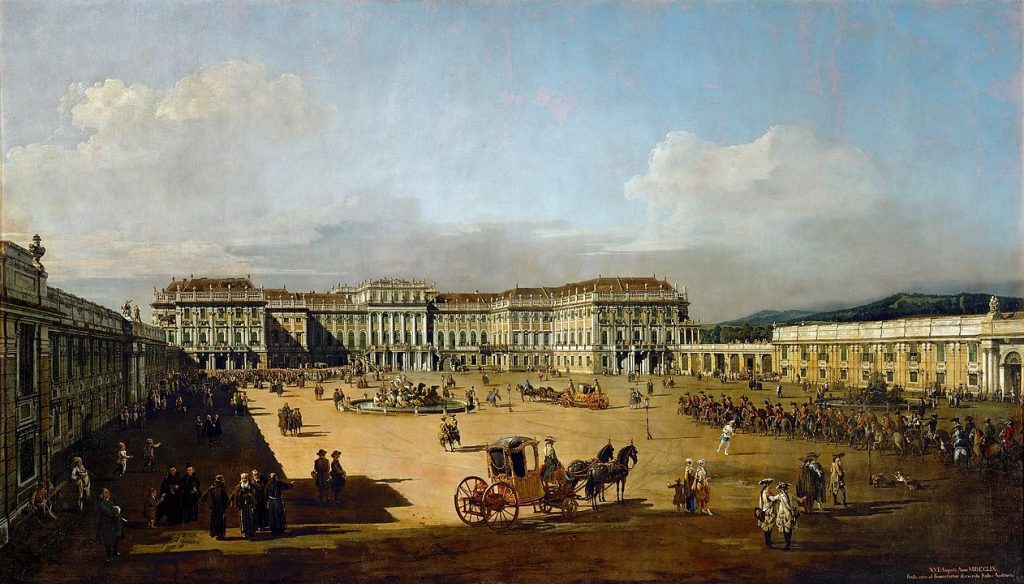
Schönbrunn Palace is one of the finest examples of Baroque and Rococo architecture, blending graceful symmetry, intricate detailing, and opulent decorations into an awe-inspiring masterpiece. Designed with a harmonious façade and grand interiors, the palace embodies the extravagant tastes of the Habsburgs and their desire to rival the great courts of Europe.
The exterior of Schönbrunn is dominated by its distinctive imperial yellow color, which has become an iconic feature of Austrian palaces. This warm, golden hue was personally chosen by Empress Maria Theresa to reflect the regal and welcoming nature of the residence. The symmetrical design of the palace, with its majestic central block flanked by two wings, creates a powerful sense of order and grandeur.
Inside, Schönbrunn’s lavish state rooms and salons are adorned with gilded stucco, frescoed ceilings, crystal chandeliers, and fine marble details. The most famous room, the Hall of Mirrors, is where the young Mozart performed for Maria Theresa in 1762, leaving a lasting mark on the palace’s musical history. The richly decorated Great Gallery, with its immense ceiling frescoes, served as the setting for imperial balls, diplomatic receptions, and grand festivities.
The architectural brilliance of Schönbrunn extends beyond the palace itself into its gardens and surrounding structures. The Neptune Fountain, Gloriette, and Palm House all showcase the elegance and grandeur of 18th-century landscape design, harmonizing nature with artistic expression. Every detail of Schönbrunn was carefully crafted to display the power, wealth, and artistic patronage of the Habsburgs.
The Imperial Apartments and Grand Rooms
Schönbrunn Palace’s imperial apartments and state rooms provide a fascinating glimpse into the lives of Austria’s royal family. Each space reflects a different aspect of Habsburg rule, from lavish ceremonial halls to more intimate private quarters. The interior design is a spectacular fusion of Baroque, Rococo, and Neoclassical styles, showcasing the evolving tastes of Austria’s imperial rulers.
One of the most breathtaking rooms in the palace is the Great Gallery, a 40-meter-long ballroom adorned with massive chandeliers, ceiling frescoes, and gilded stucco work. This grand hall was used for imperial banquets, political meetings, and prestigious celebrations, where Vienna’s aristocracy would gather in their finest attire. The Hall of Mirrors, another dazzling room, is famous for hosting performances by Mozart, who reportedly played for the empress at the age of six.
The Chinese Cabinets highlight the Habsburgs’ fascination with Asian art and culture, featuring exquisite lacquered panels, porcelain collections, and delicate silk tapestries. These rooms, once used as private salons by Maria Theresa, offer a striking contrast to the more formal ceremonial halls of the palace. The Napoleon Room, named after the French emperor who briefly lived at Schönbrunn, serves as a reminder of the palace’s role in European conflicts.
Perhaps the most personal space in the palace is the Bedroom of Emperor Franz Joseph, which remains largely unchanged since his death in 1916. In contrast to the grandeur of other rooms, his bedroom reflects his humble and disciplined lifestyle, featuring a simple wooden bed and modest furnishings. These apartments provide a unique insight into the private and public lives of the Habsburgs, making a visit to Schönbrunn both historically enriching and visually stunning.
The Schönbrunn Gardens: A Green Paradise
Schönbrunn Palace is not just an architectural marvel; its breathtaking gardens make it one of the most enchanting palace complexes in Europe. Spanning over 400 acres, the gardens are a harmonious blend of Baroque landscape design and natural beauty, inspired by the grand gardens of Versailles. Originally designed in the 18th century under Empress Maria Theresa, the gardens were intended to reflect the power, sophistication, and artistic taste of the Habsburg monarchy.
One of the most impressive features of the gardens is the Neptune Fountain, a magnificent water feature adorned with statues of Neptune, tritons, and sea nymphs, symbolizing the emperor’s dominion over land and sea. This dramatic fountain serves as a striking focal point and enhances the grandeur of the palace grounds. Nearby, the Roman Ruins, constructed in the late 18th century, add a touch of romanticized antiquity, designed to evoke the aesthetic of ancient Rome.
A must-visit area within the gardens is the Palm House, a massive iron-and-glass greenhouse that houses an impressive collection of tropical and exotic plants. Built in 1882, it remains one of the largest botanical conservatories in Europe. Visitors can explore different climate zones within the Palm House, from the humid tropics to arid desert environments, making it a unique botanical attraction within Schönbrunn’s sprawling landscape.
For those looking for a bit of fun, the Maze and Labyrinth offer an interactive experience within the palace gardens. Originally designed as a pastime for the imperial family, the labyrinth has been restored for modern visitors to enjoy. Winding pathways and tricky turns lead to a charming viewing platform, offering a delightful perspective of the gardens. Whether you’re wandering through fragrant flower beds, admiring marble statues, or simply soaking in the tranquil atmosphere, the Schönbrunn Gardens are a true paradise for nature lovers.
The Gloriette: A Symbol of Imperial Power
Towering above the palace gardens is the Gloriette, an elegant structure perched on a 60-meter-high hill, offering one of the best panoramic views of Vienna. Built in 1775 during the reign of Maria Theresa, the Gloriette was intended as a monument to Habsburg power and a symbol of Austrian imperial glory. Its name, derived from the French word “gloriette,” reflects its purpose as a decorative pavilion designed for relaxation and spectacle.
The Gloriette’s architectural beauty lies in its colonnaded design, intricate sculptures, and sweeping arches, creating a dramatic silhouette against the sky. It was originally used as a dining hall for the imperial court, where the Habsburgs would host lavish breakfasts and afternoon tea while overlooking the stunning palace grounds. Today, visitors can enjoy coffee and Austrian pastries at the Café Gloriette, which still preserves the elegance of imperial times.
One of the best reasons to visit the Gloriette is the unmatched view of Schönbrunn Palace and Vienna’s skyline. The observation terrace at the top allows visitors to see the entire city, including the Austrian Alps in the distance on clear days. The Gloriette remains a popular photography spot, especially at sunrise and sunset when the golden light enhances the beauty of the structure and its surroundings.
In addition to its aesthetic and historical significance, the Gloriette has also served a military purpose. During World War II, the structure was damaged by bombing raids, but it was meticulously restored in the 20th century. Today, it stands as one of the most recognized symbols of Schönbrunn, attracting thousands of visitors who come to enjoy its architectural charm and breathtaking scenery.
Schönbrunn Zoo: The World’s Oldest Zoo
Schönbrunn Palace is home to the world’s oldest operating zoo, founded in 1752 by Emperor Francis I, the husband of Maria Theresa. Originally designed as a private imperial menagerie, the zoo was intended to house rare and exotic animals from across the empire. Over time, it evolved into a world-class conservation and research institution, frequently ranked as one of the best zoos in Europe.
Today, Schönbrunn Zoo is home to over 700 species, including giant pandas, Siberian tigers, elephants, and polar bears. One of its most famous residents is the giant panda family, which has successfully bred in captivity—an achievement few zoos can claim. Visitors can also marvel at the rainforest house, a replica of a tropical jungle, complete with waterfalls, exotic birds, and free-roaming monkeys.
The zoo is not just about animal exhibits; it is also a leader in wildlife conservation and education. Schönbrunn Zoo actively participates in breeding programs for endangered species, ensuring that rare animals have a future beyond captivity. Special exhibits and interactive programs allow visitors to learn about animal behavior, conservation efforts, and environmental sustainability.
The historic charm of the zoo is part of its appeal. Many of its original Baroque-style enclosures, including the octagonal pavilion, have been beautifully preserved, allowing visitors to experience the imperial atmosphere of the 18th century. Whether you’re a wildlife enthusiast, a family with children, or simply someone looking for a unique experience in Vienna, Schönbrunn Zoo offers an unforgettable journey through nature and history.
Fascinating Stories and Legends
Schönbrunn Palace is steeped in historical legends and fascinating anecdotes that bring its past to life. One of the most famous stories is about young Mozart, who, at just six years old, performed a concert for Empress Maria Theresa in the Hall of Mirrors in 1762. According to legend, after his performance, Mozart was so excited that he jumped onto Maria Theresa’s lap and kissed her, leaving the entire court amused.
Another captivating piece of history is Schönbrunn’s connection to Napoleon Bonaparte. During his military campaigns, Napoleon occupied Vienna twice and used Schönbrunn Palace as his headquarters in 1805 and 1809. His young son, Napoleon II (also known as the Duke of Reichstadt), lived at Schönbrunn until his death in 1832, earning the nickname “The Eagle of Austria.” His room, still preserved, is a haunting reminder of the complex relationship between Austria and France.
The unique “Schönbrunn Yellow” color of the palace is another interesting fact. The warm, golden hue was personally chosen by Maria Theresa, as she believed it symbolized prosperity, warmth, and grandeur. The color has since become synonymous with Austrian imperial architecture, and many other historic buildings across the country have adopted similar shades.
Lastly, the Maze and Labyrinth in the palace gardens have their own mysterious charm. Originally designed as a place of amusement for the royal family, the labyrinth was also used for secret romantic encounters among the nobility. Some stories suggest that noblemen and women played elaborate games of hide-and-seek, making it a setting for both whimsy and intrigue.
Visiting Schönbrunn Palace: What You Need to Know
Visiting Schönbrunn Palace is an unforgettable experience, but planning ahead ensures you make the most of your trip. The palace offers various ticket options, ranging from basic self-guided tours to all-access passes that include the imperial apartments, gardens, and special exhibitions. Visitors can choose between the Grand Tour (40 rooms) or the Imperial Tour (22 rooms), depending on how much time they want to spend exploring the palace’s lavish interiors.
Schönbrunn Palace is open year-round, but its opening hours vary by season. From April to October, the palace is generally open from 8:30 AM to 5:30 PM, while winter hours are slightly shorter. To avoid long lines, it’s recommended to book tickets online in advance, especially during peak tourist months (May–September). Early mornings or late afternoons are the best times to visit if you want to avoid the busiest crowds.
Getting to Schönbrunn is easy, as it is well-connected by public transportation. The most convenient way is by taking the Vienna U-Bahn (Metro) Line U4 to the Schönbrunn stop, which is just a five-minute walk from the entrance. Alternatively, several tram and bus lines serve the area, making it easily accessible from anywhere in Vienna. If you’re driving, on-site parking is available, but it can be limited during high season.
For those looking to enhance their visit, Schönbrunn offers guided tours, special exhibitions, and interactive experiences. The Schönbrunn Concerts, held in the Orangery, provide an opportunity to enjoy classical music in an imperial setting, featuring works by Mozart and Strauss. The Schönbrunn Christmas Market, held every December, transforms the palace grounds into a winter wonderland, offering handcrafted gifts, festive treats, and seasonal performances.
Events and Concerts at Schönbrunn
Schönbrunn Palace is not just a historic site—it remains a cultural hub, hosting spectacular concerts, seasonal markets, and exclusive events throughout the year. These events allow visitors to experience the grandeur of the Habsburg era, bringing imperial Vienna to life with music, art, and tradition.
One of the most famous events is the Schönbrunn Summer Night Concert, held every June in the palace gardens. This free open-air concert, performed by the Vienna Philharmonic Orchestra, attracts over 100,000 spectators, creating an unforgettable atmosphere under the stars. The combination of live classical music and the illuminated palace backdrop makes it one of the most magical evenings in Vienna.
The Schönbrunn Orangery is another iconic venue where classical concerts are held year-round. This historic 17th-century structure, originally used for wintering citrus trees, now hosts Mozart and Strauss concerts, featuring period costumes, opera singers, and orchestral performances. Many of these concerts are paired with elegant dinners, allowing visitors to enjoy an imperial-style evening of fine dining and music.
During the holiday season, the Schönbrunn Christmas and New Year’s Market transforms the palace courtyard into a festive wonderland. Visitors can explore charming wooden stalls offering handcrafted Austrian gifts, mulled wine, roasted chestnuts, and seasonal delicacies. Traditional choirs and brass bands provide live entertainment, creating an authentic Austrian holiday experience.
In addition to concerts and seasonal markets, Schönbrunn also hosts exhibitions, art installations, and educational workshops throughout the year. Whether you’re attending a classical performance in a Baroque hall or exploring a Christmas market beneath twinkling lights, these events make Schönbrunn a dynamic and must-visit destination in Vienna.
Why Schönbrunn Palace Is a Must-Visit
Schönbrunn Palace is more than just a historic landmark—it is a living testament to Austria’s imperial grandeur, artistic heritage, and cultural excellence. Its blend of stunning architecture, breathtaking gardens, and rich history makes it one of the most remarkable palace complexes in the world. No visit to Vienna is complete without experiencing the opulence and elegance of Schönbrunn.
One of the most compelling reasons to visit Schönbrunn is its historical significance. As the former summer residence of the Habsburg emperors, it was the backdrop for royal ceremonies, political negotiations, and artistic achievements that shaped European history. Walking through its opulent halls offers a glimpse into the lives of emperors, empresses, and historical figures such as Maria Theresa, Franz Joseph I, and Napoleon.
The palace’s gardens, Gloriette, and zoo provide a full-day experience for visitors. Whether you’re admiring the Neptune Fountain, climbing to the Gloriette’s viewpoint, or exploring the world’s oldest zoo, there is no shortage of unforgettable sights. The beautifully landscaped grounds, inspired by the grandeur of French formal gardens, offer a tranquil escape from the bustling city.
Beyond its historical and architectural wonders, Schönbrunn is a place where Vienna’s rich cultural traditions continue to thrive. Whether you are attending a classical music concert, exploring a Christmas market, or learning about conservation at the zoo, Schönbrunn offers an immersive and enriching experience. A visit here is not just a trip into Austria’s past, but a celebration of its art, culture, and legacy.
Key Takeaways
- Schönbrunn Palace is one of Vienna’s most iconic landmarks and a UNESCO World Heritage Site.
- The palace features stunning Baroque architecture, opulent imperial rooms, and lavish gardens.
- Schönbrunn Gardens, the Gloriette, and Schönbrunn Zoo make it a full-day attraction for visitors.
- The palace hosts classical concerts, seasonal markets, and exclusive events year-round.
- Schönbrunn offers an unforgettable journey through Austria’s imperial history, making it a must-visit destination.
FAQs
1. How much time should I spend at Schönbrunn Palace?
Plan for at least 3–4 hours to see the palace interiors and gardens, but a full day is recommended for those exploring the Gloriette, zoo, and special exhibitions.
2. Can you visit Schönbrunn Palace for free?
The gardens are free to enter, but access to the imperial apartments, Gloriette, and zoo requires a ticket. Some events and concerts also require reservations.
3. What’s the best way to reach Schönbrunn Palace?
The easiest way is by taking Vienna’s U-Bahn (Metro) Line U4 to the Schönbrunn stop, just a short walk from the entrance. Several tram and bus lines also serve the area.
4. Are there restaurants or cafés at Schönbrunn Palace?
Yes, the Café Gloriette offers coffee and Austrian pastries with stunning panoramic views. There are also several restaurants and snack stands on the palace grounds.
5. What is the best season to visit Schönbrunn Palace?
Spring and summer offer blooming gardens, while winter brings festive Christmas markets. Fall is also a great time to visit with fewer crowds and beautiful autumn foliage.