William McTaggart was one of Scotland’s most influential landscape and marine painters, often referred to as the “Scottish Impressionist” due to his masterful use of color and movement. His paintings captured the wild beauty of the Scottish coastline, rural life, and the ever-changing atmosphere of the natural world. Born into humble beginnings, McTaggart rose to prominence through dedication and an innate artistic talent that set him apart. This article explores his life, artistic evolution, major works, and lasting impact on Scottish art.
McTaggart’s work remains celebrated for its ability to evoke deep emotion while portraying the untamed beauty of Scotland’s landscapes. His paintings reflected a unique blend of Romanticism and early Impressionist techniques, placing him among the most innovative painters of his time. His commitment to depicting Scotland’s natural world, often in tumultuous conditions, showcased his deep connection to his homeland. By examining his career and influence, we gain insight into why McTaggart continues to be revered in art history.
From his early life in Kintyre to his later years in Lasswade, McTaggart’s journey as an artist was shaped by his environment, education, and personal experiences. His ability to capture movement in painting, particularly in the sea and sky, set him apart from his contemporaries. His later works, infused with a sense of nostalgia and loss, reflected his thoughts on emigration and the changing world around him. In this article, we will take a deep dive into his remarkable career, artistic techniques, and the significance of his paintings.
By the end of this exploration, readers will understand how William McTaggart contributed to the evolution of Scottish art and why his paintings continue to captivate audiences today. Whether you are an art enthusiast, historian, or someone discovering McTaggart for the first time, this article will provide an in-depth look at his life and legacy. Let us embark on this journey through the life of one of Scotland’s greatest painters.
Early Life and Education
William McTaggart was born on October 25, 1835, in Aros, Kintyre, a remote and picturesque part of Scotland. His upbringing in a crofter’s family exposed him to the rugged beauty of the Scottish landscape from an early age. The wild coastal scenery, rolling hills, and ever-changing weather patterns became ingrained in his memory, later influencing his artistic vision. As a child, he showed an early interest in drawing, often sketching scenes of nature and people around him.
Recognizing his talent, McTaggart’s family supported his artistic ambitions despite their modest means. At the age of 16, he moved to Glasgow, where he was apprenticed to a pharmacist, a common career path for those with limited opportunities. However, his passion for art persisted, and he soon gained admission to the Trustees’ Academy in Edinburgh. Under the guidance of Robert Scott Lauder, McTaggart honed his technical skills and learned about the artistic movements shaping European painting.
His time at the Trustees’ Academy proved instrumental in shaping his artistic direction. He was exposed to Romanticism, which emphasized emotion, nature, and the sublime, themes that would dominate his later work. Additionally, he studied the works of the Barbizon School, a group of French painters who sought to depict landscapes in a more naturalistic manner. This combination of influences helped McTaggart develop his unique approach to painting, balancing realism with expressive brushwork.
By the time he completed his studies, McTaggart had established himself as a promising young artist. He began exhibiting his works at the Royal Scottish Academy, earning recognition for his skill and originality. His early career focused on portraiture, but his love for the Scottish landscape gradually took center stage. This transition marked the beginning of a lifelong dedication to capturing the raw beauty of his homeland.
Early Artistic Career and Influences
McTaggart’s first major exhibitions at the Royal Scottish Academy introduced audiences to his distinct artistic voice. His early portrait paintings displayed a keen understanding of light, shadow, and texture, earning him commissions and admiration. Despite his success in portraiture, he felt drawn to landscape and marine painting, which allowed him greater creative freedom. This shift in focus aligned with a growing appreciation for naturalistic and atmospheric landscapes in Scottish art.
During the 1860s, McTaggart’s work began to reflect the influence of Romanticism and the Barbizon School. Romanticism encouraged him to emphasize the emotional and spiritual qualities of the Scottish countryside, while the Barbizon painters inspired his move toward plein-air painting. He sought to capture the transient effects of light and weather, a technique that would later align him with Impressionist principles. His landscapes became increasingly dynamic, reflecting the movement of wind, waves, and sky.
Throughout his career, McTaggart formed connections with fellow artists who shared his passion for Scottish scenery. He was particularly admired by the Glasgow Boys, a group of progressive painters who sought to modernize Scottish art. Though not directly affiliated with them, his work influenced their approach to color, composition, and technique. His contemporaries recognized his ability to bring a sense of life and energy to his paintings, setting him apart from more traditional landscape artists.
By the late 1860s, McTaggart had fully embraced landscape and seascape painting as his primary subjects. His ability to capture the raw power of the Scottish coastline gained widespread attention. Unlike many of his peers, he did not seek to romanticize nature but rather to portray its ever-changing and often harsh reality. This approach, combined with his innovative brushwork, established him as one of Scotland’s leading painters.
Artistic Style and Techniques
McTaggart’s painting style evolved significantly over the course of his career, blending elements of Romanticism with a proto-Impressionist approach. He employed loose, expressive brushstrokes that captured the movement of natural elements, particularly the sea and sky. This technique allowed him to create a sense of energy and spontaneity, distinguishing his work from more rigid academic landscapes. His use of vibrant colors and dynamic compositions set him apart as a pioneering force in Scottish art.
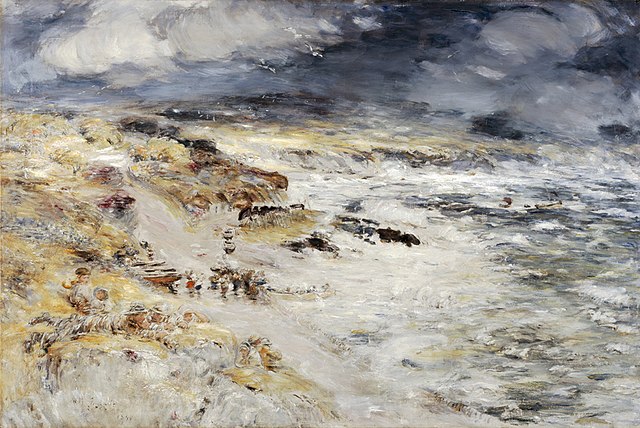
One of the defining characteristics of McTaggart’s work was his masterful treatment of light. He often painted at different times of the day to study the changing effects of sunlight on water and land. His ability to convey shifting weather conditions through color and texture was remarkable. This focus on atmosphere and movement placed him in line with Impressionist painters, even though he worked independently of the French Impressionist movement.
McTaggart’s approach to painting was deeply rooted in his emotional connection to the Scottish landscape. He sought to convey not just the physical appearance of a place but also the feelings it evoked. Many of his paintings explored themes of nostalgia, loss, and the passage of time, particularly in relation to emigration. His work often depicted ships leaving Scotland’s shores, symbolizing the mass migration of Scots to North America and Australia.
Over time, his brushwork became even looser, bordering on abstraction in some of his later works. This shift demonstrated his growing interest in capturing the fleeting moments of nature rather than static representations. His late paintings, though still deeply tied to Scottish landscapes, took on a more universal quality, resonating with audiences beyond Scotland. His artistic evolution solidified his status as one of Scotland’s most innovative painters.
Major Works and Career Milestones
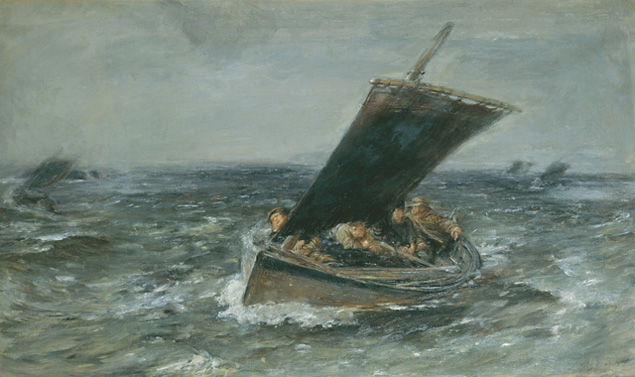
McTaggart’s career was defined by a series of remarkable paintings that captured Scotland’s landscapes and seascapes with unmatched vitality. Among his most famous works, The Storm (1890) stands out as a masterful representation of the power of nature. The painting depicts turbulent waves crashing against the rocky coastline, with fishermen struggling against the elements. Through his use of energetic brushstrokes and a rich palette of blues, greens, and whites, McTaggart conveyed both the beauty and danger of the sea.
Another significant painting, The Sailing of the Emigrant Ship (1895), reflects a recurring theme in McTaggart’s work—emigration and loss. The painting portrays a group of people standing on the shore, watching as a ship sails away, symbolizing the departure of Scots seeking a new life overseas. This theme was particularly relevant in 19th-century Scotland, as many families were torn apart by economic hardship and the Highland Clearances. The painting’s expressive sky and churning waters add to the emotional weight of the scene.
Throughout his career, McTaggart received widespread recognition for his work, exhibiting regularly at the Royal Scottish Academy. His paintings were praised for their originality and depth, setting him apart from many of his contemporaries. As he gained prominence, his influence extended beyond Scotland, with art collectors and critics from England and Europe taking notice of his unique approach. His contributions to Scottish art were further solidified when he became an academician at the Royal Scottish Academy, cementing his status as a leading figure in the art world.
McTaggart’s later works demonstrated an even greater freedom in brushwork and composition, reflecting his continued artistic evolution. Paintings such as The Harvest Moon and Summer Breezes showcased his ability to capture fleeting moments in nature with a near-Impressionist sensibility. By the end of his career, his work had become highly sought after, with major galleries acquiring his paintings for public display. Today, many of his masterpieces can be found in the National Galleries of Scotland, where they continue to inspire artists and art lovers alike.
Personal Life and Later Years
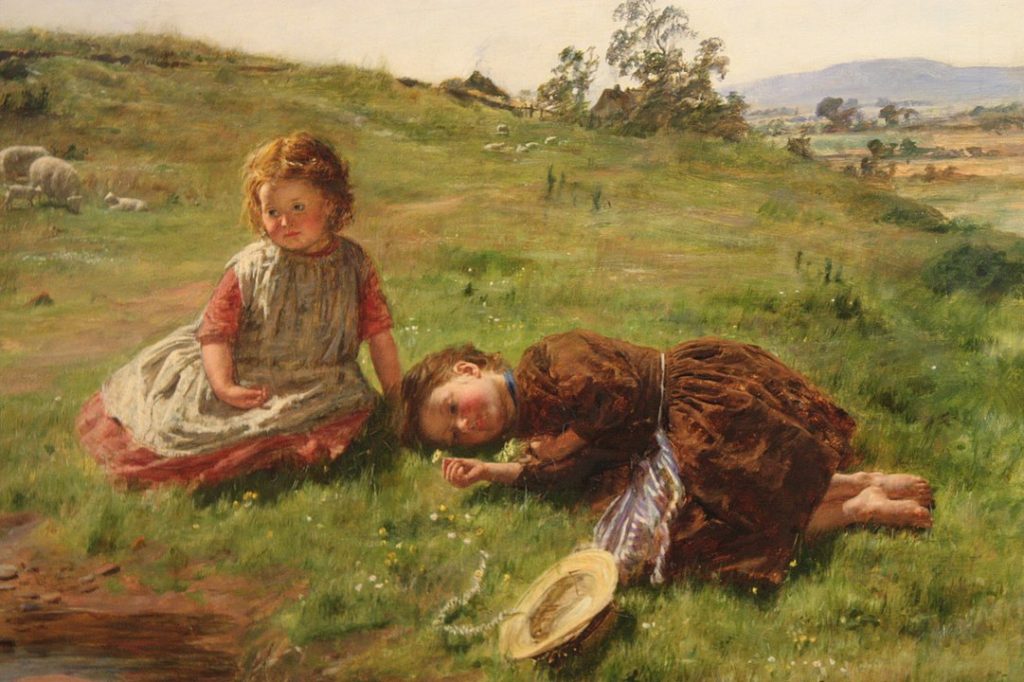
Despite his success, McTaggart remained deeply connected to his Scottish roots and lived a relatively private life. In 1870, he married Marjory Henderson, and together they had several children. His family life played a significant role in his later artistic themes, as he often painted scenes of childhood and family gatherings. These domestic moments were infused with the same sense of movement and emotion that characterized his landscapes, demonstrating his ability to find beauty in both grand and intimate subjects.
In the 1880s, McTaggart moved to Lasswade, a village near Edinburgh, where he found inspiration in the surrounding countryside. The rolling hills, changing skies, and proximity to the sea provided endless material for his paintings. His time in Lasswade marked a period of reflection and refinement, as he continued to push the boundaries of his style. This phase of his career saw a shift toward even looser brushwork, emphasizing the fleeting quality of light and atmosphere.
As he aged, McTaggart faced health challenges that slowed his productivity but did not dampen his artistic spirit. Despite physical limitations, he continued to paint until his final years, leaving behind a rich body of work that captured Scotland’s landscapes with unmatched vibrancy. His dedication to painting was unwavering, driven by a lifelong passion for his craft. Even in his later years, he remained committed to his vision, refusing to conform to passing artistic trends.
William McTaggart passed away on April 2, 1910, leaving behind a lasting legacy in Scottish art. His funeral was attended by fellow artists, students, and admirers who recognized his immense contributions. His death marked the end of an era, but his influence on Scottish landscape painting continued to shape future generations. His work remains a testament to his love for Scotland and his extraordinary ability to bring its landscapes to life on canvas.
Legacy and Influence on Scottish Art
McTaggart’s impact on Scottish art extended far beyond his own lifetime, influencing a new generation of painters. His approach to capturing movement, light, and atmosphere paved the way for later Scottish Impressionists. Many artists who came after him, including members of the Glasgow Boys, drew inspiration from his techniques. His emphasis on plein-air painting and the direct observation of nature encouraged artists to break away from rigid academic traditions.
One of the most enduring aspects of McTaggart’s legacy is his ability to evoke emotion through landscape painting. His works go beyond mere representation, offering viewers a deeply immersive experience. His ability to blend realism with expressive brushwork set a new standard for Scottish landscape art. Today, his paintings continue to be studied in art schools, demonstrating their lasting relevance in the evolution of painting techniques.
McTaggart’s influence can also be seen in the continued appreciation of Scottish maritime and rural landscapes in contemporary art. His ability to capture the movement of waves, the shifting skies, and the quiet moments of everyday life remains unparalleled. Many of his works have been preserved in national collections, ensuring that future generations can appreciate his contributions to art. The National Galleries of Scotland house some of his most celebrated paintings, attracting visitors from around the world.
Beyond Scotland, McTaggart’s work has been recognized internationally for its innovation and beauty. Though he was not formally associated with the French Impressionists, art historians often draw comparisons between his style and that of Monet or Turner. His unique fusion of Romanticism and Impressionist techniques has earned him a place among the great painters of the 19th century. His legacy endures not only in the galleries that display his work but in the hearts of those who continue to be moved by his art.
Conclusion
William McTaggart’s contributions to Scottish art remain as powerful today as they were during his lifetime. His ability to capture the essence of Scotland’s landscapes and seascapes set him apart as one of the most innovative painters of his time. His fearless approach to color, movement, and atmosphere continues to inspire artists and art lovers alike. McTaggart’s work speaks to the timeless beauty of nature and the deep emotional connections we form with our surroundings.
His paintings, rich with movement and light, have ensured that his legacy endures well beyond his lifetime. By combining elements of Romanticism and Impressionism, he developed a style that was uniquely his own. His influence on Scottish landscape painting remains profound, shaping the direction of art in Scotland for generations. As an artist who stayed true to his vision, McTaggart’s work stands as a testament to the enduring power of artistic expression.
For those interested in experiencing McTaggart’s work firsthand, a visit to the National Galleries of Scotland is highly recommended. His paintings continue to captivate audiences, drawing viewers into the landscapes he so passionately depicted. Whether you are an art enthusiast or a casual observer, McTaggart’s work offers a glimpse into the soul of Scotland’s natural world. His legacy remains alive in every brushstroke, every wave, and every sky he painted.
Key Takeaways
- William McTaggart was a pioneering Scottish painter known for his dynamic landscapes and seascapes.
- His style blended Romanticism with Impressionist techniques, emphasizing movement and atmosphere.
- Major works like The Storm and The Sailing of the Emigrant Ship explored themes of nature, migration, and emotion.
- He influenced future generations of Scottish artists, including the Glasgow Boys.
- His paintings are preserved in the National Galleries of Scotland, continuing to inspire art lovers today.
FAQs
1. What was William McTaggart known for?
William McTaggart was best known for his landscape and seascape paintings, which captured Scotland’s natural beauty with vibrant movement and light.
2. How did McTaggart’s style evolve over his career?
His early work focused on portraiture before shifting to landscapes and marine scenes with expressive brushwork and Impressionist-like techniques.
3. What themes did McTaggart often explore in his paintings?
He frequently depicted the power of nature, Scottish emigration, rural life, and the transient effects of light and atmosphere.
4. Where can I see William McTaggart’s paintings today?
Many of his works are displayed at the National Galleries of Scotland, as well as in private collections and regional art museums.
5. How did McTaggart influence Scottish art?
He paved the way for future Scottish Impressionists by emphasizing movement, light, and emotion in landscape painting.